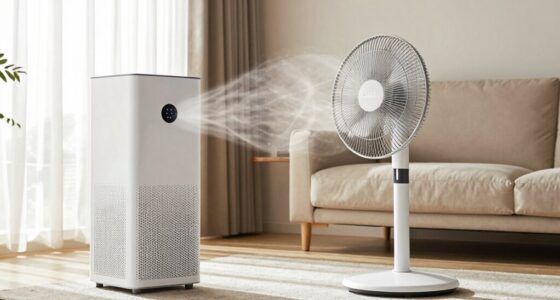
To build a DIY box fan air purifier for emergencies, start by selecting a HEPA filter rated to capture at least 99.97% of particles as small as 0.3 microns, ensuring it fits your fan’s dimensions. Unplug the fan, attach the filter tightly with duct tape or sealant to prevent leaks, and make sure air flows through the filter. Keep safety in mind by placing the fan on a stable surface and avoiding airflow obstructions. If you continue, you’ll discover detailed steps to optimize your setup.
Key Takeaways
- Select a HEPA filter rated ≥99.97% efficiency for particles ≥0.3 microns, ensuring proper size fit for your box fan.
- Unplug the fan before installing or replacing the filter; seal the filter edges tightly with tape for airtightness.
- Attach the filter so air flows through it when the fan is on, maintaining safety and optimal filtration efficiency.
- Regularly inspect and replace the filter and check the fan for damage to sustain effective air purification.
- Place the DIY purifier in a stable, well-ventilated area, avoiding obstructions and moisture to ensure safe, continuous operation.

If you’re looking for an affordable way to improve indoor air quality, building a DIY box fan air purifier is a simple and effective solution. This project doesn’t require advanced skills, just some basic materials and a bit of patience. The key to making your DIY air purifier effective is selecting the right HEPA filter. When choosing a HEPA filter, look for one that is rated to trap at least 99.97% of particles as small as 0.3 microns. You want a filter that is compatible with your fan size, so measure your box fan’s dimensions carefully. A properly fitted HEPA filter ensures maximum filtration efficiency without allowing unfiltered air to bypass the filter. You can find these filters online or at hardware stores, often sold as replacements for air purifiers. Make sure to double-check the size and compatibility before purchasing. Additionally, consider filter replacement frequency to maintain optimal air quality over time.
Once you’ve selected your HEPA filter, the next step is guaranteeing fan safety. Safety tips are vital since you’ll be working with electricity and moving parts. Always unplug the fan before installing or replacing filters. Secure the filter tightly against the fan’s intake side using duct tape or a similar sealant to prevent air leaks, which can reduce the purifier’s effectiveness. Avoid blocking the fan’s vents or airflow pathways, as this can cause overheating or damage to the motor. Keep the fan on a stable, flat surface and verify that it is placed in a well-ventilated area, away from water or moisture that could cause electrical hazards. Regularly inspect the fan for any signs of wear, such as frayed cords or unusual noises, and replace damaged components promptly.
Installing the HEPA filter onto your box fan is straightforward. Attach the filter so that air is pulled through it when the fan runs. Use tape to seal the edges where the filter meets the fan frame, ensuring airtightness. Remember, the fan should be on the clean side of the filter, meaning the air flows from the fan into the filter, trapping particles before clean air circulates back into the room. Keep safety in mind during operation—never block the air intake, and avoid placing the fan in high-traffic or crowded areas where it could be knocked over or damaged. Regularly check the filter for dust buildup or damage, replacing it when necessary to maintain peak filtration. With proper filter selection and adherence to fan safety tips, your DIY air purifier can noticeably improve air quality during emergencies or everyday use.
Frequently Asked Questions
How Long Can a DIY Air Purifier Operate Effectively?
You can typically operate your DIY air purifier effectively for about 6 to 8 hours daily, depending on the filter’s lifespan and your environment. Regularly check the filter for dirt buildup, and replace it when it becomes clogged or shows signs of wear. This helps guarantee peak operation duration and maintains air quality. Remember, overusing the device may reduce filter lifespan, so balance operation time with filter maintenance for best results.
Can This DIY Filter Remove All Types of Airborne Viruses?
Your DIY air purifier can improve viral filtration, but it can’t remove all types of airborne viruses completely. Its virus removal efficiency depends on the filter type—HEPA filters offer high efficiency, capturing most particles, including many viruses. However, no filter guarantees 100% virus removal. For maximum protection, combine your DIY purifier with other safety measures, and consider upgrading to certified HEPA filters for better viral filtration.
What Safety Precautions Should I Take During Assembly?
You should prioritize electrical safety by unplugging the fan before assembly and avoiding contact with water or conductive materials. Guarantee proper ventilation in your workspace to prevent dust buildup and inhalation of particles. Use gloves and safety goggles to protect your eyes and skin. Double-check that all electrical connections are secure, and work in a well-lit area to avoid accidents. Following these precautions keeps you safe throughout the assembly process.
How Often Should I Replace the Filter Media?
You should replace the filter media every 2 to 3 months, depending on usage and air quality. Keep an eye on the filter’s lifespan; if it looks dirty or clogged sooner, replace it earlier to maintain peak filtration. Regular replacement ensures your DIY air purifier works effectively, reducing pollutants and allergens. Remember, timely replacement improves airflow and prolongs the device’s lifespan, keeping your air cleaner and healthier.
Is the DIY Purifier Suitable for Large or Multiple Rooms?
Think of your DIY purifier as a trusty lighthouse guiding clean air through stormy skies. It’s best suited for small to medium rooms, providing solid room coverage. For larger or multiple rooms, you’ll want to take into account filter scalability—adding more filters or fans—to extend its reach effectively. While it can handle some bigger spaces, upgrading your setup ensures you don’t miss any hidden corners where pollutants hide.
Conclusion
Building this DIY box fan air purifier is a quick, cost-effective way to improve your indoor air quality during emergencies. Some say it’s as effective as commercial units, but remember, it’s best for temporary use. While research supports the idea that high-quality filters can substantially reduce airborne particles, always prioritize proper filtration and ventilation. Trust this simple project as a helpful backup, but stay informed about the latest air purification innovations for long-term safety.