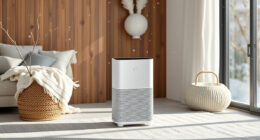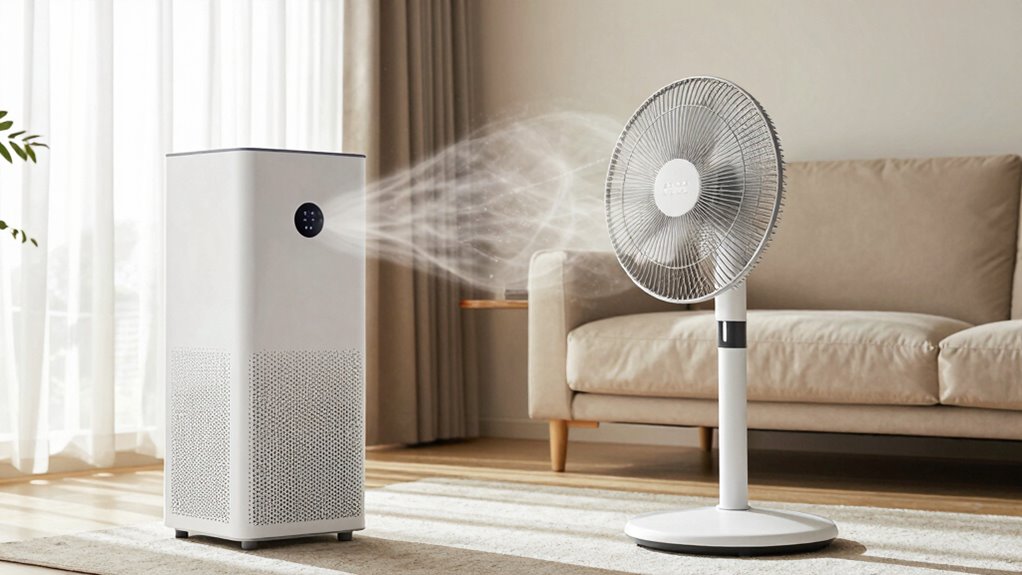
To make your air purifier work better, position fans strategically to direct airflow toward the intake or to circulate air evenly across the room. Use oscillating fans at moderate speeds to prevent stagnant zones, and visualize airflow patterns with smoke or tissue to find dead spots. Keep fans clear of obstructions and adjust settings as needed. If you want to learn how to optimize your space for cleaner air, keep exploring these simple fan hacks.

Get home appliances delivered free with Prime
- Fast, free delivery on millions of items
- Prime Video, Amazon Music and more included
- Member-only deals all year
Key Takeaways
- Place fans to direct airflow toward the purifier’s intake or across stagnant spots for improved pollutant capture.
- Use smoke or tissue tests to visualize airflow patterns and identify dead zones needing circulation adjustments.
- Set fans to moderate speeds with oscillation to evenly distribute air without causing turbulence.
- Regularly clean fan blades, vents, and sensors to prevent obstructions and maintain optimal airflow.
- Open windows or remove obstacles to promote natural ventilation and reduce stagnant air around the purifier.
oscillating fan for air circulation
As an affiliate, we earn on qualifying purchases.
As an affiliate, we earn on qualifying purchases.
Simple Fan Hacks to Boost Your Air Purifier’s Effectiveness
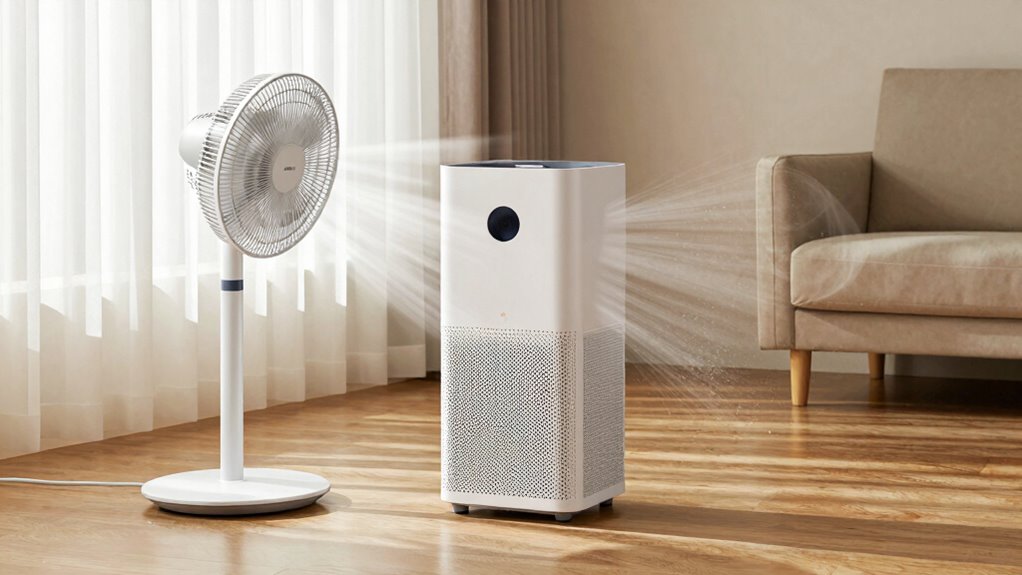
To get the most out of your air purifier, adding a simple fan hack can substantially improve airflow and filtration. Proper fan placement is key; position your fan to direct air toward the purifier’s intake or in a way that circulates air evenly throughout the room. Experiment with airflow patterns by angling the fan to create a steady circulation, preventing stagnant air zones. For example, place the fan near a corner to push air across the room or behind the purifier to help draw in contaminated air more effectively. Keep the fan at a moderate speed to maintain consistent airflow without causing turbulence. Incorporating air circulation techniques can optimize your space for better air quality and ventilation efficiency, ensuring that your space remains accessible and comfortable for everyone while maximizing air purification. Additionally, adjusting fan speed settings can help fine-tune airflow for optimal results, ensuring your purifier works more effectively. These small adjustments can enhance your purifier’s efficiency, ensuring cleaner, healthier indoor air. Proper airflow optimization is essential for maintaining a healthy indoor environment and can significantly boost the overall performance of your air purification system.
air purifier airflow booster fan
As an affiliate, we earn on qualifying purchases.
As an affiliate, we earn on qualifying purchases.
Why Proper Airflow Matters for Cleaner Indoor Air
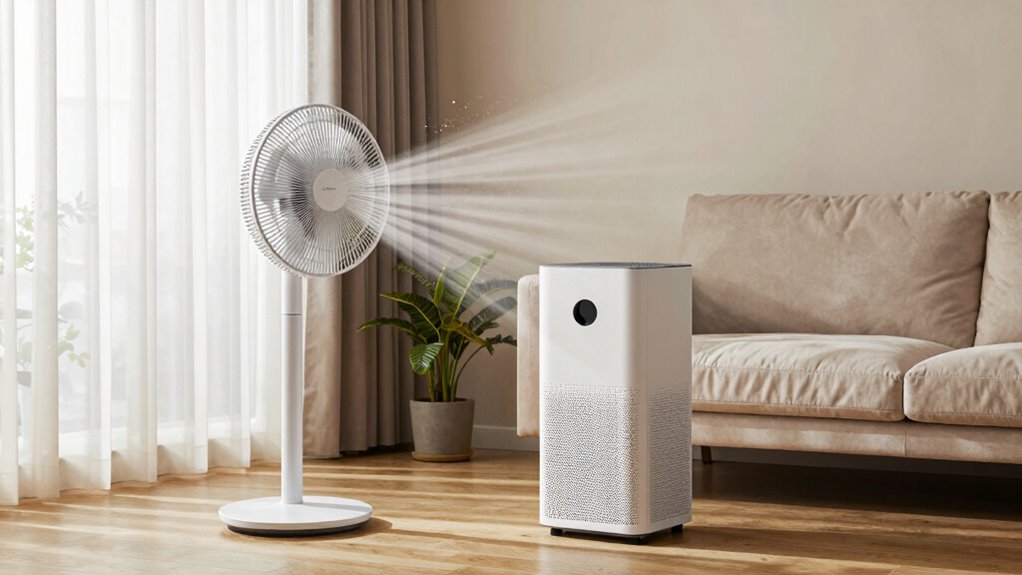
Proper airflow guarantees your indoor air stays fresh and healthy. When circulation is ideal, it prevents stagnant air that can trap pollutants and allergens. By maintaining good airflow, you help create a cleaner, more breathable environment. Additionally, effective airflow can optimize air purifier performance by ensuring that filtered air circulates thoroughly throughout the space, especially when using fans to enhance air circulation.
Optimal Air Circulation
Ensuring good airflow in your space is essential for maintaining cleaner indoor air. Proper airflow patterns help distribute purified air evenly and prevent stagnation. To achieve this, choose the right fan types—oscillating fans, ceiling fans, or tower fans—that promote continuous circulation. These fans create consistent airflow, reducing pockets of stale air and helping your purifier work more efficiently. Position fans strategically to encourage a steady flow across the room, avoiding dead zones. The goal is to establish a balanced airflow pattern that moves air smoothly throughout the space, preventing buildup of pollutants. When you optimize air circulation with suitable fans, you enhance the purifier’s ability to clean the air thoroughly, leaving your environment fresher and healthier. Incorporating proper fan placement can further maximize airflow effectiveness and improve overall indoor air quality. Additionally, understanding airflow dynamics can help you design a more effective ventilation setup for your space, ensuring optimal air circulation patterns for cleaner indoor environments. Properly managing airflow efficiency is crucial for maintaining a healthy indoor atmosphere.
Prevents Stagnant Air
Good airflow keeps your indoor space fresh by preventing areas where air becomes stagnant. Without proper circulation, pollutants and odors can settle, reducing air quality. Efficient airflow patterns ensure fresh air reaches every corner, while open ventilation gaps promote continuous movement. To achieve this, you might notice:
- Fans creating consistent movement across rooms
- Placement that encourages air to flow around furniture
- Avoiding blocked vents or airflow barriers
- Opening windows to supplement mechanical ventilation
- Using oscillating fans to cover dead zones
Additionally, securing proper tool use and following safety tips while adjusting fans or vents can prevent accidents and enhance airflow efficiency. Utilizing strategic placement of fans and vents helps optimize circulation and airflow distribution. Incorporating airflow optimization techniques can further improve the effectiveness of your purifier. Being mindful of airflow patterns ensures pollutants don’t linger and your purifier works more effectively. Understanding air circulation principles can help you design better airflow routes within your space. These simple steps help prevent stagnant air, ensuring pollutants don’t linger and your purifier works more effectively. Proper airflow keeps fresh air circulating, reduces stuffiness, and maintains a healthier indoor environment. Remember, good airflow isn’t just about fans—it’s about strategic placement and open pathways.
tower fan for improved air circulation
As an affiliate, we earn on qualifying purchases.
As an affiliate, we earn on qualifying purchases.
How to Identify Stagnant Air Zones in Your Room
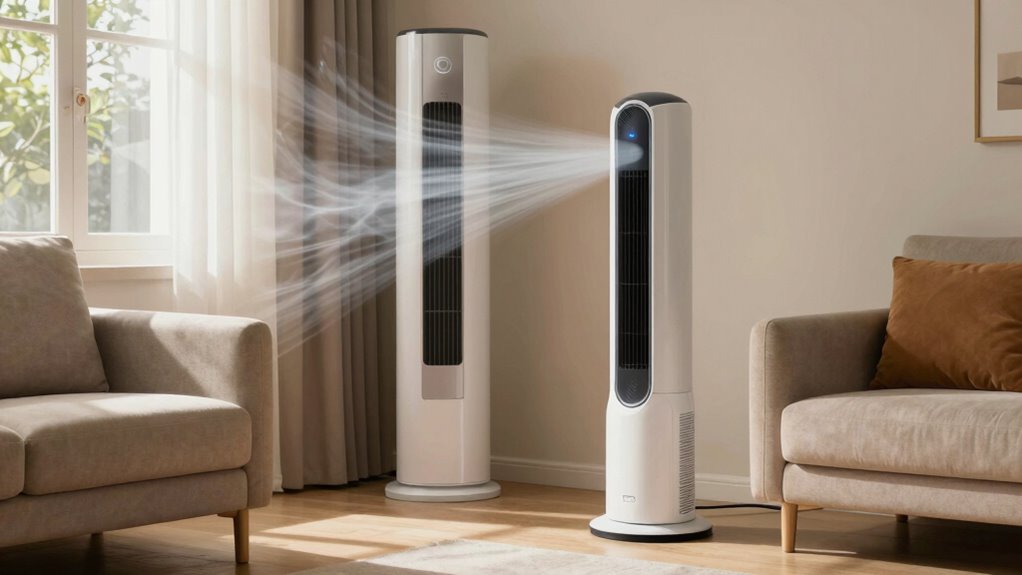
You can spot stagnant air zones by paying attention to areas where air feels still or stuffy. Using smoke tests helps reveal these spots by showing how air moves around the room. Observing airflow patterns allows you to identify and address areas with poor circulation effectively. Recognizing airflow patterns can also help you optimize the placement of fans and purifiers for better efficiency. Additionally, understanding room airflow can prevent the buildup of pollutants and ensure a healthier environment. Being aware of air circulation dynamics is essential for maintaining fresh and clean indoor air quality. Monitoring indoor air quality can further assist in pinpointing problem areas and improving overall ventilation, especially in stagnant zones, for a more comfortable living space.
Detect Air Stagnation Spots
Detecting air stagnation spots in your room starts with paying close attention to how the air flows around you. Look for signs of uneven airflow or areas where air seems to linger. Common indicators include a lack of movement near corners or behind furniture, where stagnant zones often form. To identify these zones, observe the airflow patterns during different times of the day. Feel for areas where the air feels still or stuffy. Consider using simple tools like a piece of tissue or lightweight paper to see if it moves consistently. Stagnant zones usually appear where airflow is weak or disrupted. Additionally, understanding air circulation principles can help you optimize airflow and reduce stagnant zones more effectively. Recognizing these patterns enables you to target specific areas with fans or purifiers to enhance overall air quality and circulation.
Use Smoke Tests
Have you ever wondered how to identify stubborn air pockets that typical observations might miss? Smoke visualization is a simple yet effective method for airflow mapping. Light incense or a smoke pen near vents and around the room, then watch how the smoke moves. If the smoke lingers or moves slowly in certain areas, those spots likely have stagnant air. This quick test clearly reveals zones where airflow is weak or blocked. By observing smoke patterns, you can pinpoint dead zones that need better circulation. Smoke tests give you visual confirmation of airflow issues, making it easier to optimize fan placement and purifier positioning. Use this technique regularly to ensure your room maintains consistent, fresh air throughout.
Observe Air Movement
Wondering how to spot areas in your room where air isn’t circulating properly? Observe the airflow patterns by paying attention to subtle signs. Feel for stagnant zones where the air feels still or stale. Notice the fan noise—louder sounds may indicate disrupted airflow or turbulence. Watch for dust settling in corners or on surfaces, which suggests poor circulation. Check for curtains or furniture blocking airflow paths. Use a lightweight ribbon or tissue near vents; if it remains still, air isn’t moving efficiently. These clues help identify stagnant zones so you can target your fan placement or open windows for better circulation. Improving airflow in these areas ensures your purifier works at peak efficiency, making your space healthier and more comfortable.
fan placement for air purifier efficiency
As an affiliate, we earn on qualifying purchases.
As an affiliate, we earn on qualifying purchases.
How to Choose the Best Fan Settings for Better Air Circulation
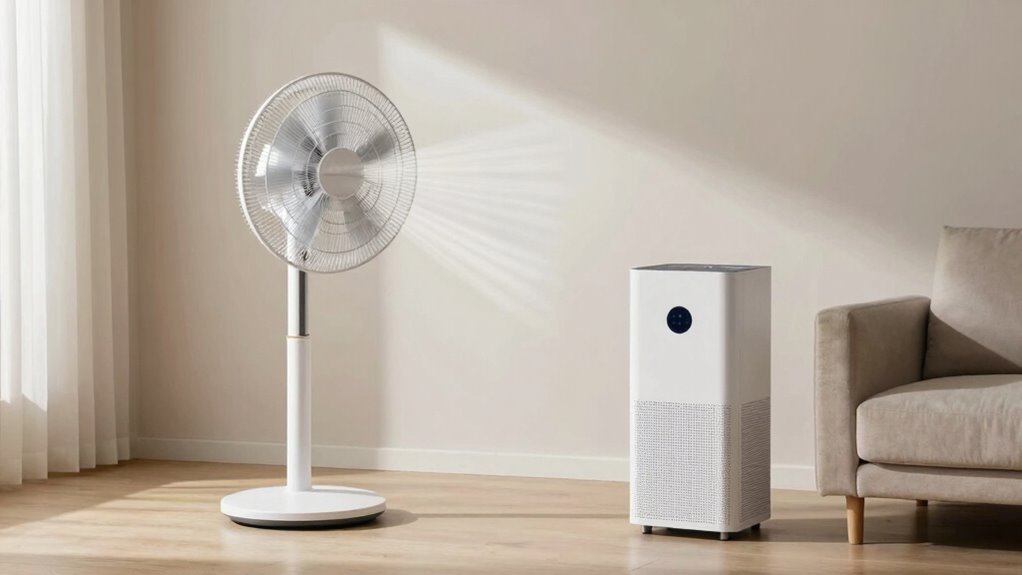
Choosing the right fan settings can substantially improve airflow and comfort in your space. Start by adjusting the fan speed to match your needs—lower speeds are quieter and perfect for gentle circulation, while higher speeds quickly move air and cool the room. If your fan has oscillation control, enable it to distribute air evenly across the area. Oscillation helps prevent stagnant zones and ensures fresh air reaches every corner. Experiment with different combinations of fan speed and oscillation to find what works best for your environment. Keep in mind that higher fan speeds can increase noise, so balance comfort and quietness. Properly selecting and adjusting these settings will enhance your air circulation, making your purifier more effective and your room more comfortable.
Where to Place Fans for Optimal Air Purifier Performance
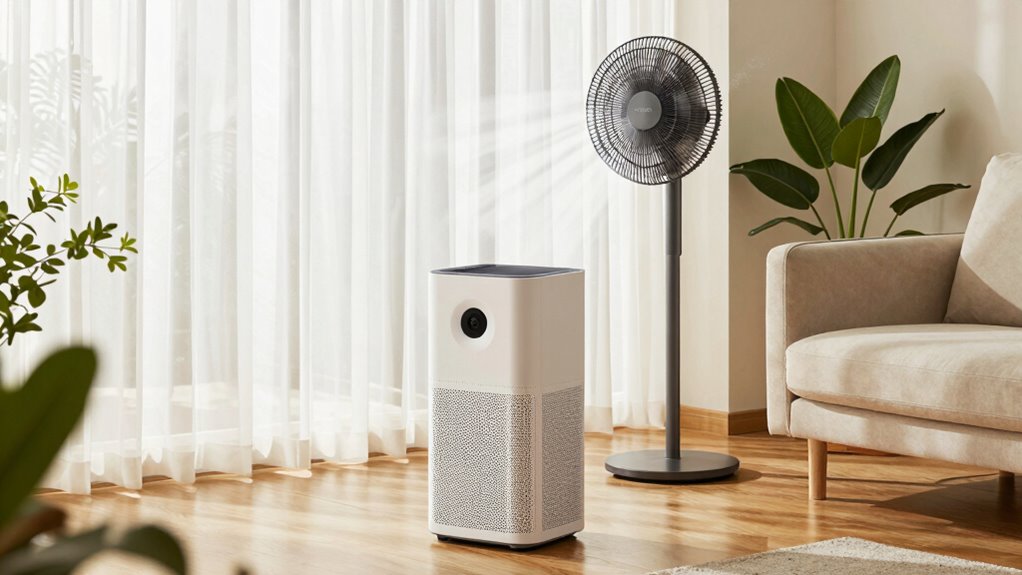
To guarantee your air purifier works effectively, placing fans strategically can considerably improve airflow. Proper fan placement helps target key airflow zones, ensuring cleaner air reaches every corner. Position your fan near the purifier’s intake to boost air circulation directly into it. Keep fans away from walls or furniture that block airflow. Place fans in open areas to cover multiple airflow zones efficiently. Consider placing one fan near windows to draw in fresh air and another across the room to circulate it better. Avoid cluttered spots or corners where airflow stalls. This strategic placement maximizes the purifier’s efficiency, maintaining a steady flow of clean air throughout your space. Clear airflow zones are essential for achieving ideal air quality with your purifier and fan combo.
Troubleshooting Airflow Problems and Easy Fan Fixes
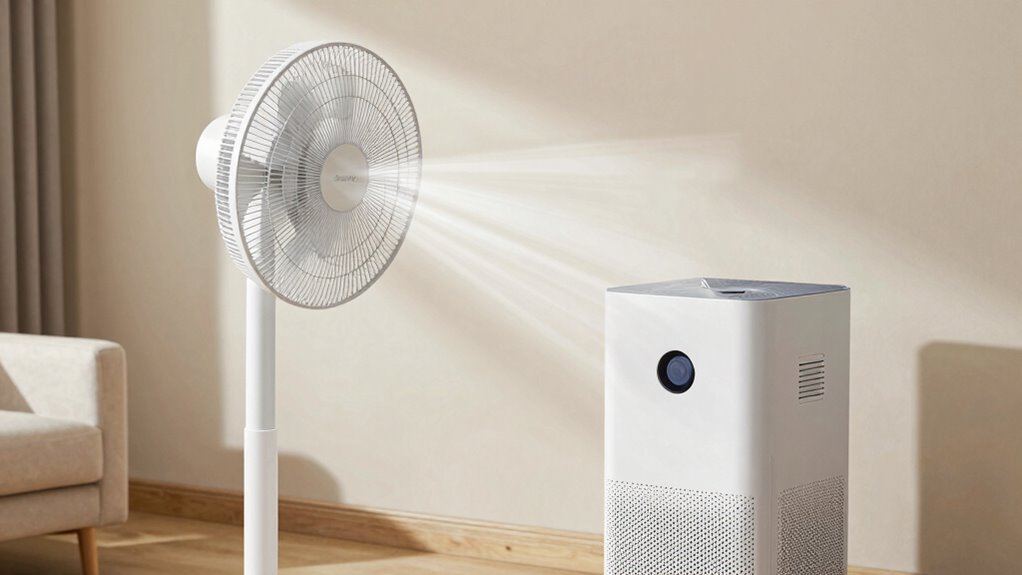
If your airflow seems weaker than it should be, the problem might be a simple fix rather than a major repair. First, check your fan’s airflow sensors, as dust or debris can block or misread them, reducing efficiency. Regular fan maintenance, like cleaning blades and vents, can also improve performance. Make sure nothing is obstructing the fan’s blades or airflow path. If your fan has adjustable settings, ensure they’re set correctly. Sometimes, dirt or buildup can cause the motor to work harder, decreasing airflow. Clearing out dust, wiping down components, and inspecting for loose connections can restore proper airflow. These simple troubleshooting steps often resolve common airflow issues without needing professional help, making your fan and purifier work together more effectively.
Tips for Maximizing Indoor Air Quality With Fans and Purifiers
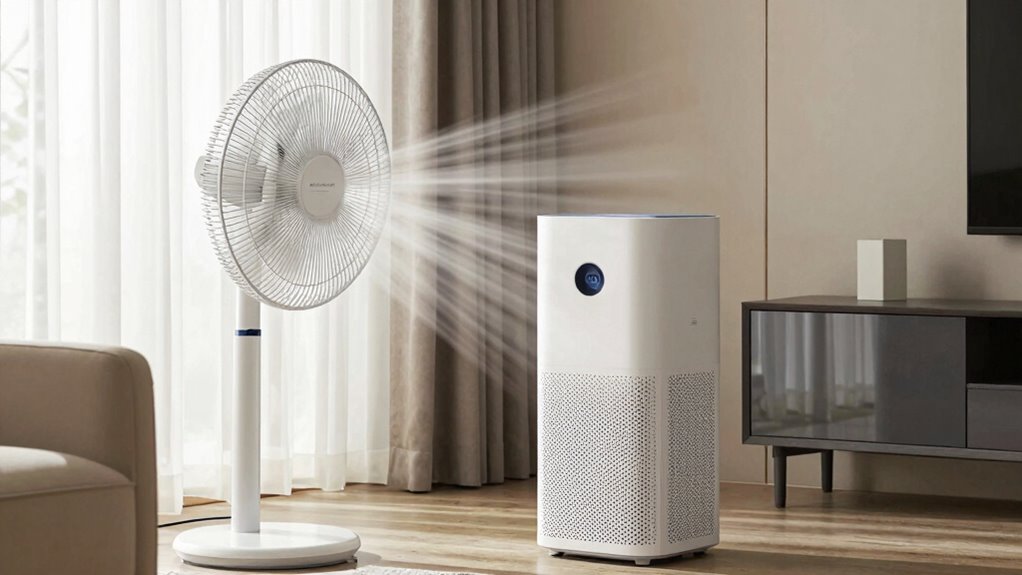
Maximizing indoor air quality with fans and purifiers requires strategic placement and proper use. To enhance airflow patterns, position fans where they can circulate air effectively without creating dead zones. Proper fan placement ensures that purified air reaches all corners of the room. Consider these tips:
- Place fans near purifiers to help distribute clean air evenly
- Use oscillating fans to cover wider areas
- Avoid blocking airflow paths with furniture or curtains
- Position fans to direct airflow toward ventilation sources
- Experiment with fan angles for ideal circulation
Frequently Asked Questions
Can Ceiling Fans Improve Purifier Efficiency Better Than Portable Fans?
Ceiling fans can improve purifier efficiency more effectively than portable fans because they create consistent airflow patterns throughout the room. Proper fan placement, like positioning the ceiling fan to circulate air evenly, helps distribute clean air faster and prevents stagnant zones. Unlike portable fans, ceiling fans operate silently and cover larger areas, boosting your purifier’s performance without causing clutter or noise, making your air healthier and fresher.
How Often Should I Clean or Replace Fan Filters for Optimal Airflow?
For fantastic airflow enhancement, you should clean your fan filters every 1 to 3 months and replace them when they show signs of wear or reduced efficiency. Regular filter maintenance keeps your fan functioning flawlessly, preventing dust buildup and ensuring peak airflow. By staying consistent with cleaning and replacing, you maximize airflow, improve air quality, and maintain a healthier environment, all while prolonging your fan’s lifespan and efficiency.
Are There Specific Fan Types More Effective for Circulating Purified Air?
You’ll find oscillation patterns and fan blade design vital for circulating purified air effectively. Fans with adjustable oscillation spread air evenly across the room, enhancing purifier performance. Look for fans with aerodynamically designed blades, which generate better airflow with less noise. These features help guarantee the purified air reaches every corner, maximizing your air quality. Choose a fan with these qualities for maximum circulation and cleaner, healthier indoor air.
Can Using Multiple Fans Create Better Airflow Than a Single Larger Fan?
They say two heads are better than one, and the same applies to fans. Using multiple fans can create more effective airflow patterns, as long as you focus on smart fan placement. Position fans to promote circulation across the room, avoiding dead zones. This approach often outperforms a single larger fan, providing more thorough air movement, improving purifier efficiency, and ensuring cleaner air throughout your space.
What Safety Precautions Should I Take When Using Fans and Purifiers Together?
When using fans and purifiers together, prioritize electrical safety by ensuring all cords and plugs are in good condition and avoid overloading outlets. Maintain airflow balance by positioning fans and purifiers properly, avoiding blockages that could cause overheating or reduce efficiency. Keep devices away from water, and never leave them unattended during use. Regularly inspect and clean to prevent dust buildup, ensuring safe operation and the best air quality.
Conclusion
By mastering simple fan hacks, you turn your room into a well-orchestrated breeze, making your air purifier work smarter, not harder. When you position fans thoughtfully and tweak settings, you create a dance of fresh, clean air swirling effortlessly through your space. Think of it as tuning a musical instrument—small adjustments lead to harmony. With these tips, you’ll breathe easier, turning your room into a sanctuary where clean air flows freely like a gentle stream.
Fall yard work Picks
leaf blowers
As an affiliate, we earn on qualifying purchases.