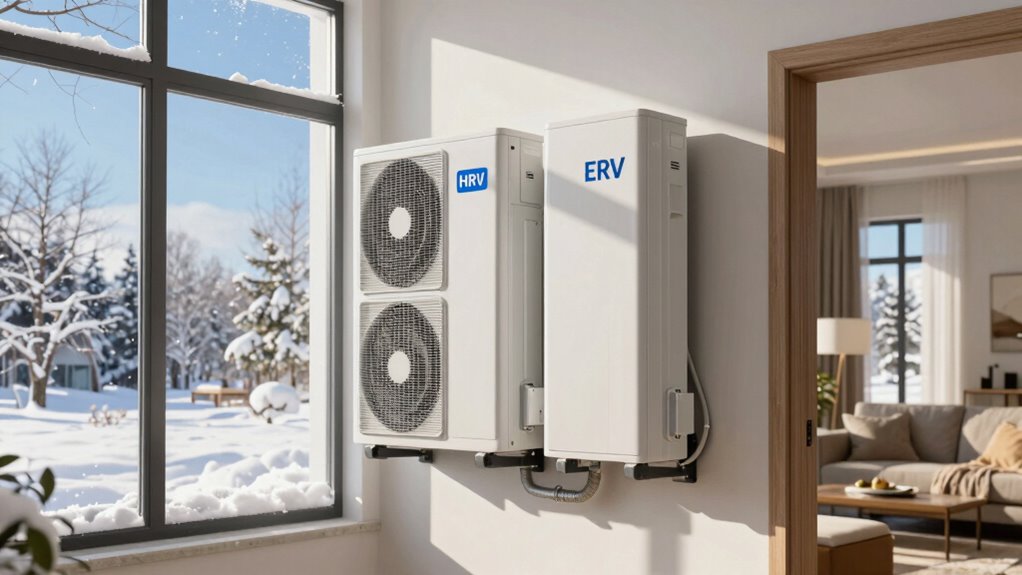

Choosing between HRV and ERV depends on your climate and indoor air needs. If you live in a dry or cold region, an HRV helps recover heat and control humidity. In humid or variable climates, an ERV manages both heat and moisture, keeping indoor comfort balanced. Consider your local weather, and you’ll find the best fit. To make the right choice, explore more about how each system performs in different conditions.
Key Takeaways
- HRVs are ideal for cold, dry climates, focusing on heat recovery and reducing humidity, while ERVs excel in humid or variable environments by transferring both heat and moisture.
- In temperate regions with mild seasons, HRVs help control indoor humidity and prevent mold growth, making them suitable for such climates.
- ERVs are better in climates with significant humidity fluctuations, as they maintain stable indoor moisture levels and improve comfort year-round.
- Proper system choice depends on climate; installing an HRV in a humid environment can cause excess dryness, whereas an ERV in cold, dry climates may not optimize energy savings.
- Consider local temperature and humidity patterns to select the system that best enhances indoor air quality, energy efficiency, and comfort in your specific climate.

VENTS-US Frigate HRV 120s Heat Recovery Ventilator – Whole House Ventilation Fan with Up to 118 CFM and Freeze Protection
HVI Certified Whole-House Air Exchange: A complete system that ensures continuous, balanced fresh air supply and stale air…
As an affiliate, we earn on qualifying purchases.
As an affiliate, we earn on qualifying purchases.
What Are HRV and ERV Systems and How Do They Work?
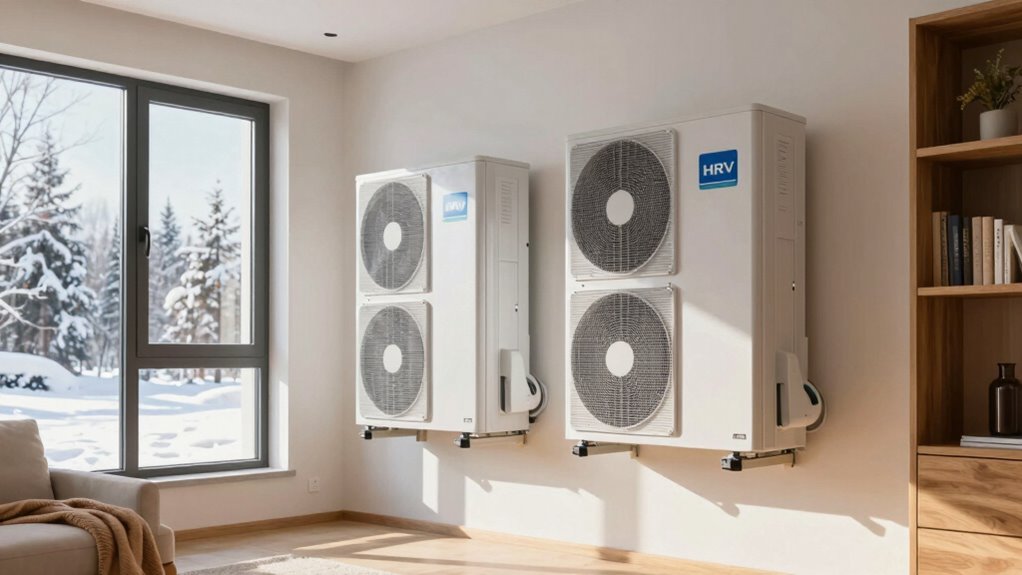
Heat Recovery Ventilation (HRV) and Energy Recovery Ventilation (ERV) systems are designed to improve indoor air quality while saving energy. They work by exchanging stale indoor air with fresh outdoor air, capturing heat or coolness from the outgoing air to pre-condition the incoming air. This process substantially boosts energy efficiency, reducing heating and cooling costs. HRVs focus on transferring only heat, making them ideal for colder climates, while ERVs also transfer moisture, helping to maintain indoor comfort in more humid environments. As you install these systems, you’ll enjoy cleaner air and a more comfortable living space without increasing energy bills. Both systems operate continuously, ensuring consistent airflow and a healthier indoor environment.

Panasonic Intelli-Balance Elite Energy Recovery Ventilator (ERV), 110 CFM, SmartFlow ECM Motor, MERV 13 Filtration, FV-11ES1
SmartFlow ECM Motors: Dual brushless motors automatically adjust speed for optimal airflow and quiet operation under varying pressure…
As an affiliate, we earn on qualifying purchases.
As an affiliate, we earn on qualifying purchases.
How Does Climate Affect Your Indoor Air Quality and Ventilation Needs?
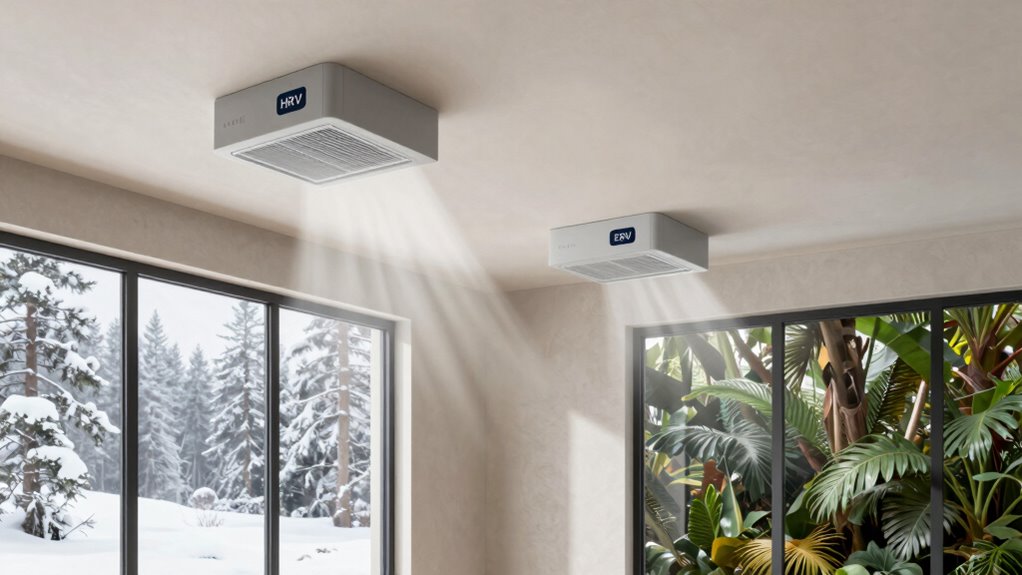
Climate plays a crucial role in determining your indoor air quality and the ventilation system that best suits your needs. In humid environments, you’ll need systems focused on humidity control and effective air filtration to prevent mold and maintain comfort. Conversely, dry climates require ventilation that adds moisture and filters pollutants. Properly assessing your climate ensures optimal indoor air quality and system efficiency. Additionally, microplastic pollution in dust can significantly impact indoor air quality, making proper filtration essential. Understanding how Free Floating particles behave in different air conditions helps tailor your ventilation choices for healthier indoor environments and can influence the design of ventilation strategies specific to your climate.
humidistat for ERV
As an affiliate, we earn on qualifying purchases.
As an affiliate, we earn on qualifying purchases.
Which Climates Are Best Suited for HRV Systems?

If you live in a temperate climate with moderate humidity levels, an HRV (Heat Recovery Ventilator) system is often an excellent choice. HRVs excel in providing consistent humidity control and moisture management, helping to keep indoor air comfortable without excess dryness or dampness. They work well in conditions where outdoor air isn’t too humid or dry, making them suitable for regions with mild seasons. With proper ventilation, an HRV recovers heat from outgoing air to warm incoming fresh air, reducing energy costs. Since moisture levels are usually stable in these climates, you won’t need additional systems to regulate humidity. Additionally, air quality management is simplified with HRVs, as they promote healthy indoor environments by efficiently exchanging stale indoor air with fresh outdoor air. In such climates, the energy efficiency of HRVs can significantly contribute to lowering utility bills. Moreover, their ability to control humidity levels ensures that indoor air remains comfortable and balanced. Their capacity to adapt to regional climate variations makes HRVs particularly effective in maintaining consistent indoor conditions. Overall, HRVs are ideal for maintaining air quality and comfort in environments with balanced humidity, ensuring your home stays comfortable year-round.

Air Vent Filters Roll,12" x90" Cut to Fit Air Filter Material(60+Filters),MERV 8 Triple Filtration Electrostatic Vent Filter for Home Floor,Ceiling,Furnace, AC & HVAC-Includes 48 Adhesive Hook Tape
Keep Your Air Clean & Fresh:Keep your home cleaner and healthier with our vent filters. Designed to capture…
As an affiliate, we earn on qualifying purchases.
As an affiliate, we earn on qualifying purchases.
When Should You Use an ERV? Ideal Conditions for Energy Recovery Ventilators
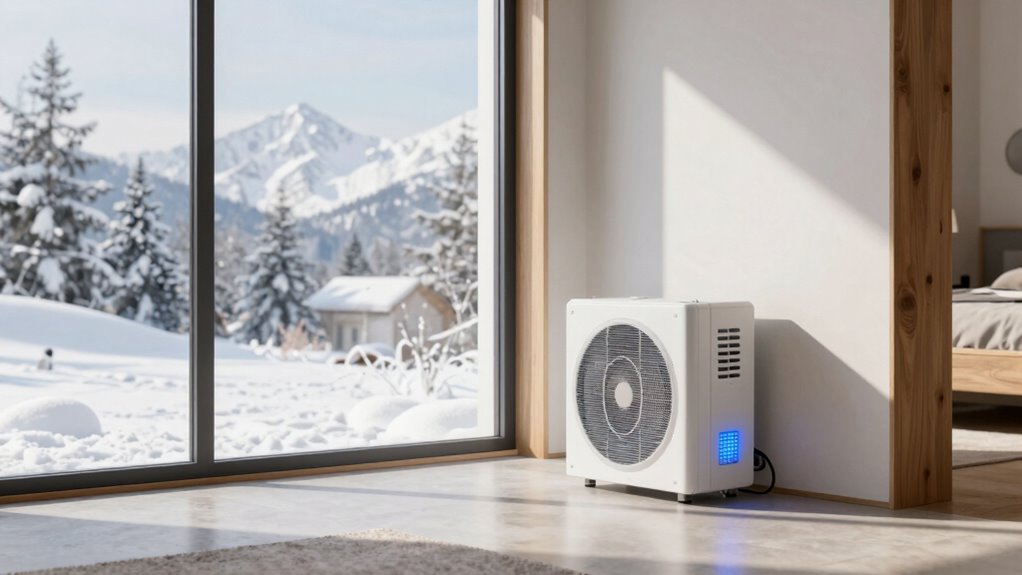
In environments with more extreme temperature fluctuations or significant humidity variations, an ERV (Energy Recovery Ventilator) can be a smarter choice than an HRV. It helps maintain better air quality by balancing humidity levels and reducing indoor moisture buildup. ERVs are ideal when you need to control both temperature and humidity, especially in climates with high humidity or cold winters. They also require regular system maintenance to keep performance *ideal*. If you notice stale air or excessive humidity indoors, an ERV can improve ventilation while conserving energy. Keep in mind that choosing an ERV in these conditions *assures* better indoor comfort, healthier air, and more efficient operation, making it the right solution for environments with challenging climate extremes. Proper maintenance of your ERV is essential to ensure it continues to function effectively and provide optimal indoor air quality.
How Do HRV and ERV Save Energy and Cut Costs?
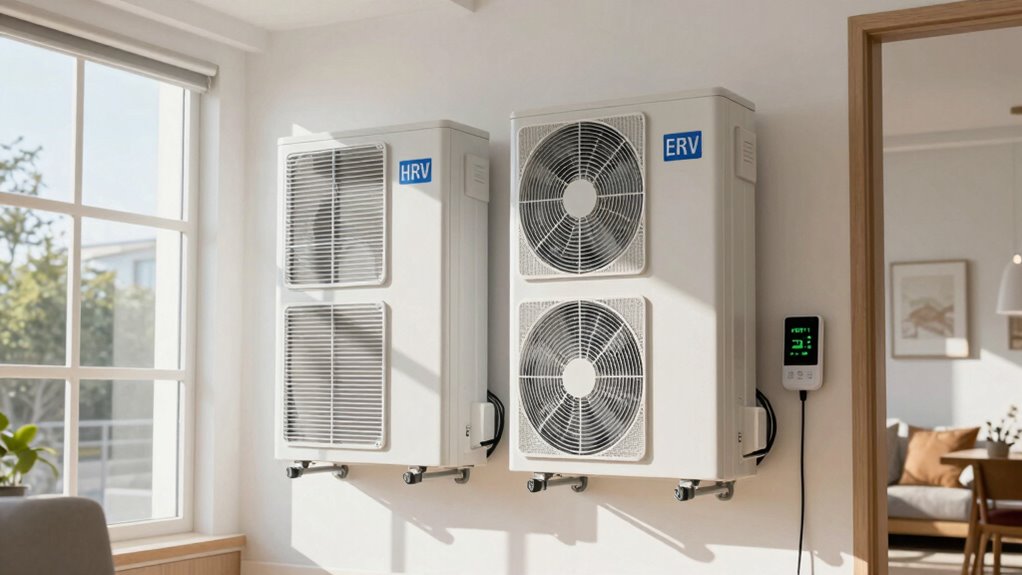
HRV and ERV systems help you save energy by reducing the need for heating and cooling. As a result, you’ll notice lower energy bills each month. These systems make your home more efficient without sacrificing comfort. Incorporating ventilation systems can further improve indoor air quality and energy efficiency. Proper maintenance of ventilation units also ensures optimal performance and longevity. Additionally, integrating governance and security measures can help ensure the safe and compliant deployment of these systems. Regularly inspecting safety precautions related to heating devices, like portable oil radiators, helps prevent accidents and ensures safe operation. Understanding dog breed characteristics can also inform the selection of energy-efficient and appropriate climate control solutions tailored to your household needs.
Reduced Heating and Cooling
By reducing the exchange of indoor air with outdoor air, HRV and ERV systems help maintain comfortable temperatures without overworking your heating and cooling units. This process also helps improve indoor air quality, which is an important aspect of healthy, modern living environments. This improves energy efficiency because less energy is needed to heat or cool incoming air. As a result, your HVAC system doesn’t have to run as often or as intensively, saving you money on energy bills. Additionally, maintaining a stable indoor temperature enhances indoor comfort, making your living space more pleasant year-round. HRV and ERV systems recover heat and, in the case of ERVs, moisture from exhausted air, which further reduces the workload on your heating and cooling systems. These systems are especially beneficial in climates with extreme temperatures, where climate considerations can influence the choice between HRV and ERV. Moreover, understanding energy recovery ventilation systems can help homeowners optimize their climate control strategies. Recognizing ventilation system efficiency is essential for selecting the right system to maximize energy savings and indoor comfort. Being aware of system installation and maintenance is also crucial for ensuring these systems operate at peak performance. Ultimately, these systems support a more energy-efficient home while maintaining a consistent, comfortable environment.
Lower Energy Bills
Investing in HRV and ERV systems can substantially lower your energy bills by reducing the workload on your heating and cooling units. These systems boost your home’s energy efficiency by recovering heat and humidity from exhausted air and transferring it to incoming fresh air. As a result, your HVAC system doesn’t have to work as hard to maintain comfortable temperatures, leading to significant cost savings over time. HRVs are especially effective in colder climates, while ERVs excel in moderating humidity and temperature in more variable environments. Additionally, biosensors can help monitor indoor air quality and optimize ventilation settings for maximum efficiency. Properly maintaining and monitoring these systems further enhances their energy-saving capabilities, ensuring optimal performance. By improving overall energy efficiency, both systems help cut your utility bills and reduce energy consumption. Ultimately, choosing the right ventilation system can make a notable difference in your monthly expenses and your home’s environmental footprint.
How Do HRV and ERV Improve Indoor Air Quality in Different Environments?
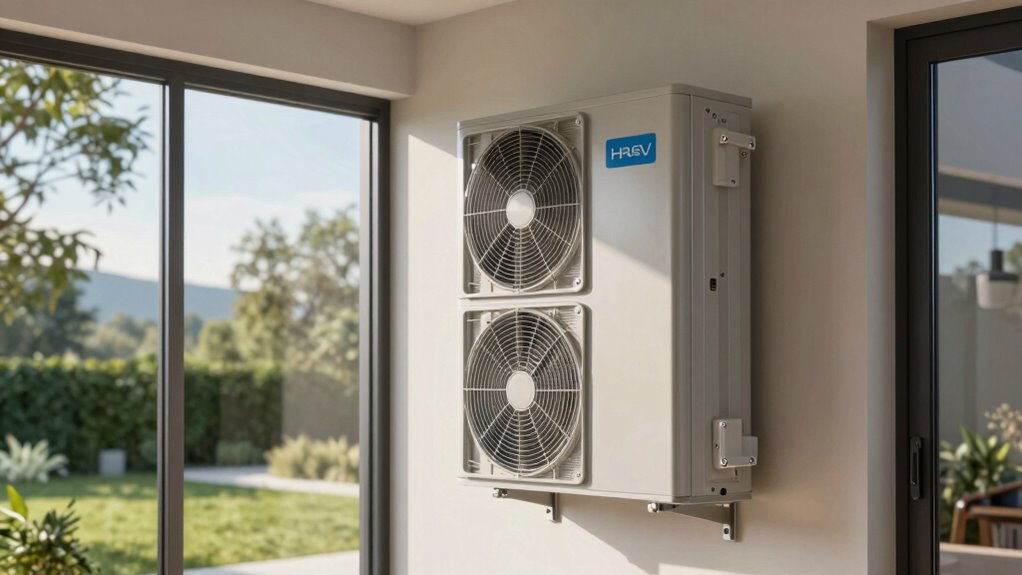
In different environments, HRV and ERV systems play essential roles in enhancing indoor air quality by actively exchanging stale air for fresh, filtered air. HRVs focus on removing excess humidity and odors, making them ideal for dry or temperate climates. ERVs, on the other hand, help regulate humidity levels by transferring moisture between incoming and outgoing air, which is especially useful in humid or variable conditions. Both systems improve air freshness by filtering pollutants and reducing indoor odors. They also prevent mold growth and maintain a healthier living space. By managing moisture and odors effectively, HRV and ERV systems ensure your indoor environment stays comfortable, clean, and well-ventilated, regardless of the specific climate challenges you face.
What Installation Factors Should You Consider for HRV and ERV Systems?
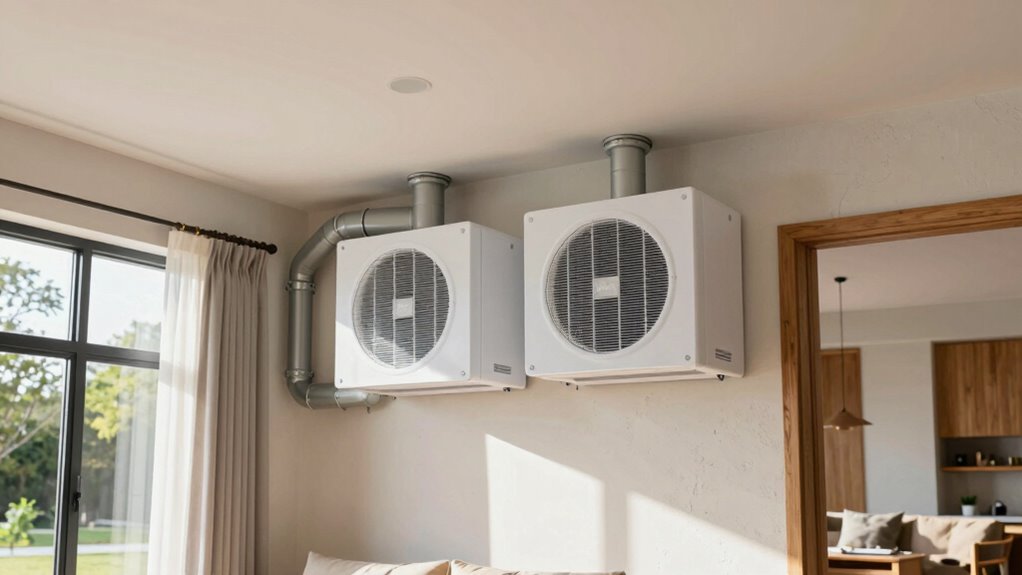
Choosing the right installation setup for HRV and ERV systems guarantees they operate efficiently and deliver the air quality benefits you expect. Start by considering your building materials, as they affect insulation and airtightness, influencing system performance. Proper duct placement is essential—avoid sharp bends and ensure airtight connections to maximize airflow. Make certain the system is accessible for routine maintenance; frequently, filters and core components need cleaning or replacing. Follow maintenance tips to keep your system running smoothly and prevent indoor air quality issues. Additionally, consider the system’s proximity to moisture-prone areas like bathrooms or kitchens, which could impact efficiency. Correct installation in line with your home’s construction details ensures peak operation, longevity, and cleaner indoor air.
Common Mistakes to Avoid When Choosing Between HRV and ERV for Your Climate
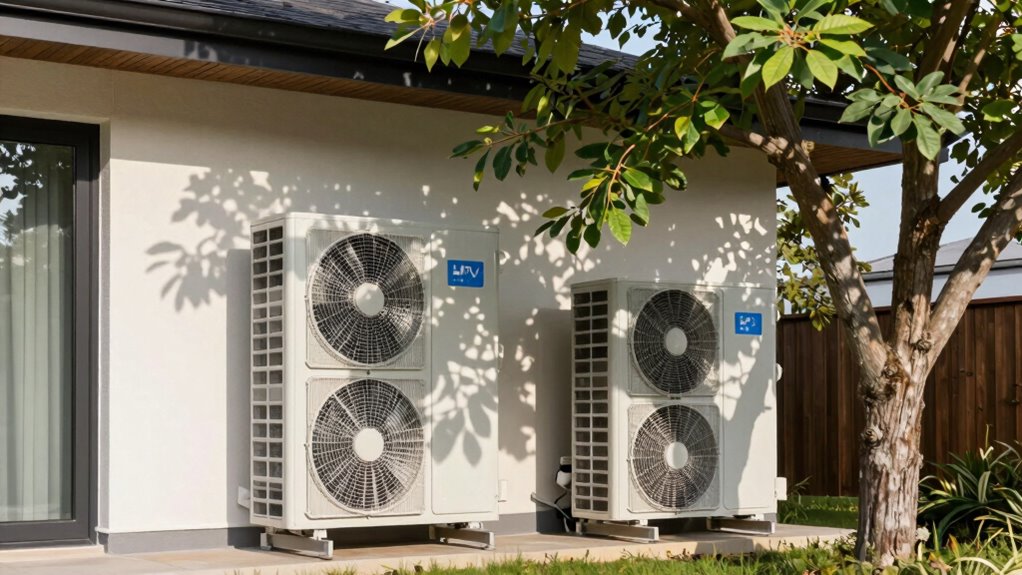
One common mistake is ignoring your climate’s specific needs, which can lead to choosing the wrong system. You might overlook how your environment impacts ventilation efficiency and energy use. Making these oversights can result in uncomfortable indoor air quality and higher costs.
Ignoring Climate Specifics
Failing to contemplate your local climate can lead to mismatched ventilation choices that compromise your home’s comfort and energy efficiency. If you ignore climate specifics, you risk selecting an HRV or ERV that doesn’t suit your environment’s demands, reducing overall ventilation efficiency. For example, in humid climates, an ERV might be better to manage moisture, while in colder regions, an HRV could prevent unnecessary humidity loss. Overlooking these factors hampers climate adaptability, causing energy waste or discomfort. Don’t assume that one system fits all situations; understanding your climate helps you choose the right ventilation method. Making informed decisions based on your local conditions ensures top performance, saving energy and maintaining a healthier, more comfortable indoor environment.
Overlooking Ventilation Needs
When selecting between an HRV and an ERV, understanding your home’s ventilation needs is essential. Overlooking these needs can lead to poor air quality or humidity issues. If you ignore your climate’s influence on ventilation, you risk inadequate moisture control or insufficient fresh air exchange. To avoid this mistake:
- Assess your local climate’s humidity levels to choose the right system
- Consider your home’s air quality requirements
- Factor in seasonal changes that affect humidity and ventilation
- Match your system’s capabilities with your household’s ventilation demands
Real-Life Examples: Which Ventilation System Works Best in Various Weather Conditions?
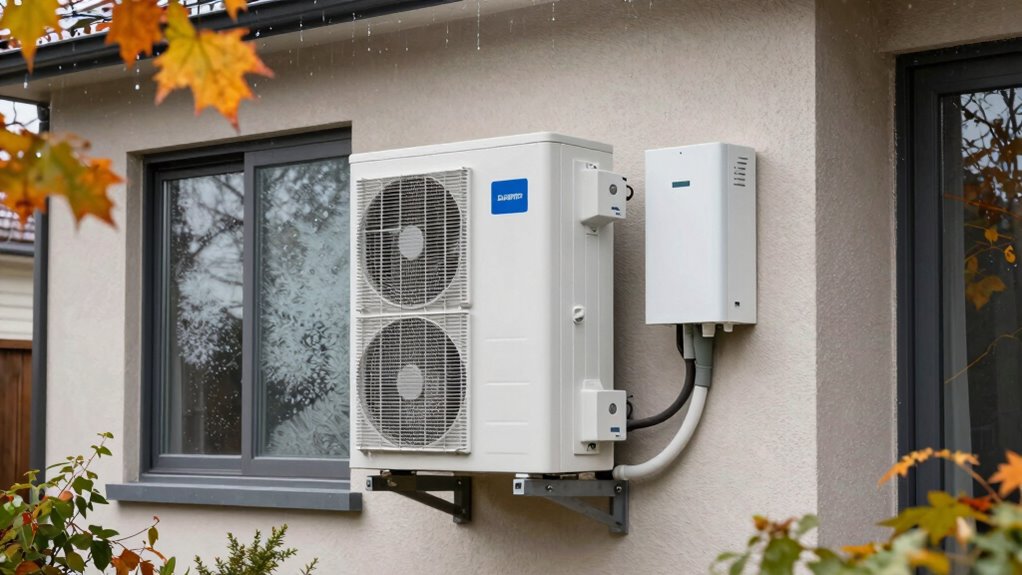
Choosing the right ventilation system depends heavily on the weather conditions you face. In cold climates, an HRV is ideal because it recovers heat from exhausted air, reducing energy loss and maintaining warmth. It also offers excellent air filtration, which helps keep indoor air clean during winter. In humid or mixed climates, an ERV works better by transferring both heat and moisture, helping control humidity levels and prevent mold. Regular system maintenance is essential to keep ventilation efficient and ensure proper air filtration. In dry or hot environments, supplemental dehumidification may be necessary. By matching your climate with the appropriate system, you optimize comfort and indoor air quality while minimizing energy costs. Always consider your local weather patterns when choosing between HRV and ERV.
Is an HRV or ERV System Right for Your Climate? Final Tips for Decision-Making
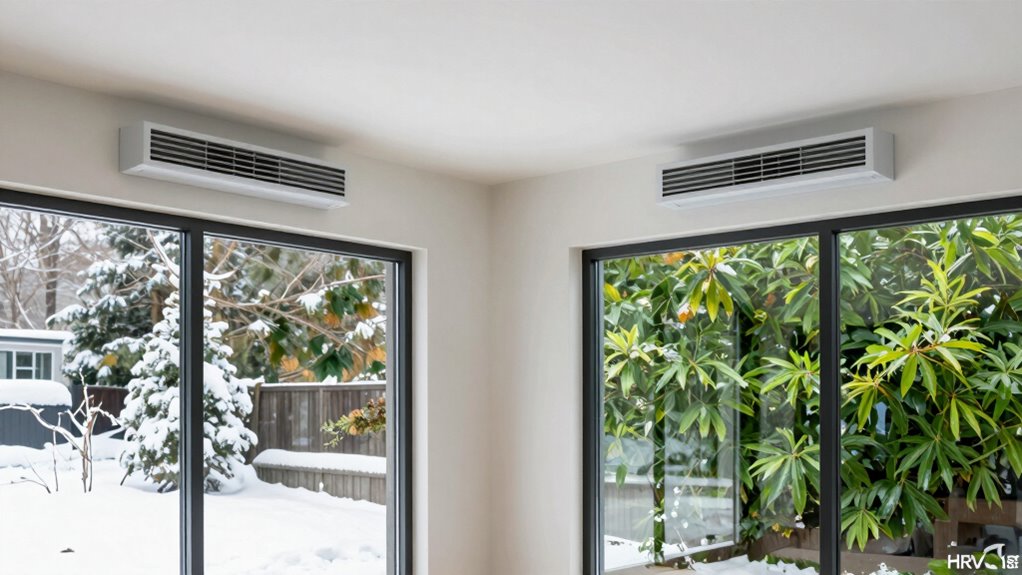
Selecting the right ventilation system hinges on understanding your climate’s specific needs. To decide between HRV and ERV, consider how your environment influences climate adaptation and air quality. If you live in a cold, dry climate, an HRV can efficiently exchange stale indoor air while conserving heat. Conversely, in a humid or mixed climate, an ERV helps control moisture and maintains balanced humidity levels.
To make an informed choice:
- Assess your local climate’s temperature and humidity patterns
- Prioritize air quality improvements
- Consider energy efficiency needs
- Think about how seasonal changes affect your home’s comfort
Making this decision guarantees your ventilation system enhances climate adaptation and optimizes air quality for year-round comfort.
Frequently Asked Questions
Can HRV and ERV Systems Be Combined for Optimal Performance?
Yes, you can combine HRV and ERV systems for better performance optimization. Integration possibilities allow you to leverage the strengths of both systems, ensuring better indoor air quality and energy efficiency. By coordinating their operation, you optimize ventilation based on real-time needs, reducing energy waste and maintaining comfort. This hybrid approach is especially beneficial in variable climates or situations requiring precise control over indoor ventilation and humidity levels.
How Do Maintenance Needs Differ Between HRV and ERV Units?
You’ll find that HRV units generally require less maintenance, mainly involving periodic filter replacements and occasional system calibration to guarantee peak performance. ERV systems, however, often need more frequent filter changes and calibration, especially in humid climates where moisture can impact the system. Regularly checking filters and calibrating your unit helps maintain efficiency, reduce energy costs, and prolong the lifespan of both HRV and ERV units.
Are There Specific Brands or Models Recommended for Certain Climates?
Imagine tailoring your home’s ventilation to fit a unique climate. For your needs, climate-specific models from trusted brand recommendations like Zehnder, Broan, or Venmar excel in various conditions. These brands offer options designed to optimize energy efficiency and air quality, ensuring comfort year-round. Choose a model that’s rated for your area’s humidity and temperature swings, and you’ll enjoy reliable performance tailored perfectly to your climate.
What Are the Typical Lifespan and Warranty Options for HRV and ERV Systems?
You can expect both HRV and ERV systems to last around 10 to 15 years with proper maintenance. System durability depends on installation quality and usage. Most brands offer warranty coverage ranging from 5 to 10 years, covering parts and repairs. To maximize lifespan, choose reputable models and keep up with regular inspections. This guarantees your system remains efficient and protected throughout its warranty period.
How Do Noise Levels Compare Between HRV and ERV Ventilation Systems?
You’ll notice that ERV systems are generally quieter than HRV units, with noise levels often under 25 decibels, comparable to a whisper. The sound insulation of ERVs is typically better, thanks to their design, which minimizes vibrations and noise transfer. This means you can enjoy fresh air without disruptive sounds, making ERVs ideal for bedrooms or quiet spaces where low noise levels are a priority.
Conclusion
Choosing between HRV and ERV depends on your climate, but sometimes it’s just a matter of timing—what works now might change tomorrow. As you evaluate your home’s needs, remember that understanding your environment can unexpectedly lead to better air quality and energy savings. In the end, making the right choice feels less like a coincidence and more like aligning your home’s comfort with the climate’s natural rhythm.