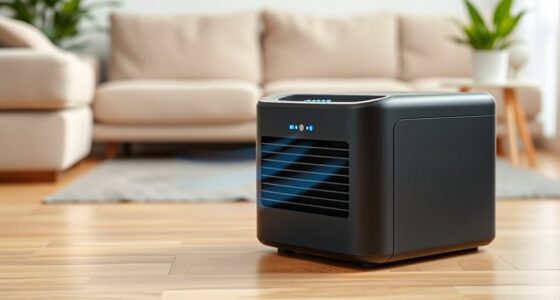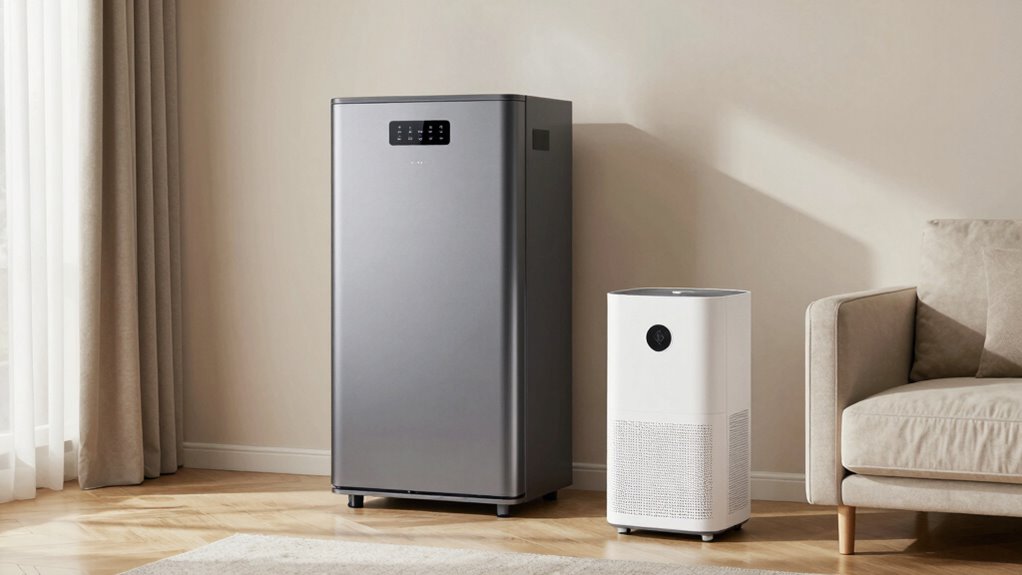
When choosing between whole-house and portable dehumidifiers, you’ll notice changes in installation, capacity, and cost. Whole-house units are integrated into your HVAC system, providing consistent control across your home but require professional setup and have a higher upfront cost. Portable units are easy to move, set up quickly, and suit smaller spaces but use more energy per use. To find the best fit for your needs and budget, explore the details further.

Get home appliances delivered free with Prime
- Fast, free delivery on millions of items
- Prime Video, Amazon Music and more included
- Member-only deals all year
Key Takeaways
- Whole-house dehumidifiers offer integrated, continuous humidity control across entire homes, while portable units target specific areas.
- Installation differs: whole-house systems require professional setup; portable units are easy to install and move.
- Capacity and coverage vary: whole-house units handle larger spaces, portable models suit small, localized areas.
- Operating costs favor whole-house systems due to energy efficiency, despite higher initial investment.
- Suitability depends on home size, moisture issues, and budget, influencing the choice between permanent and portable solutions.
whole house dehumidifier with smart controls
As an affiliate, we earn on qualifying purchases.
As an affiliate, we earn on qualifying purchases.
What Are Whole-House and Portable Dehumidifiers?
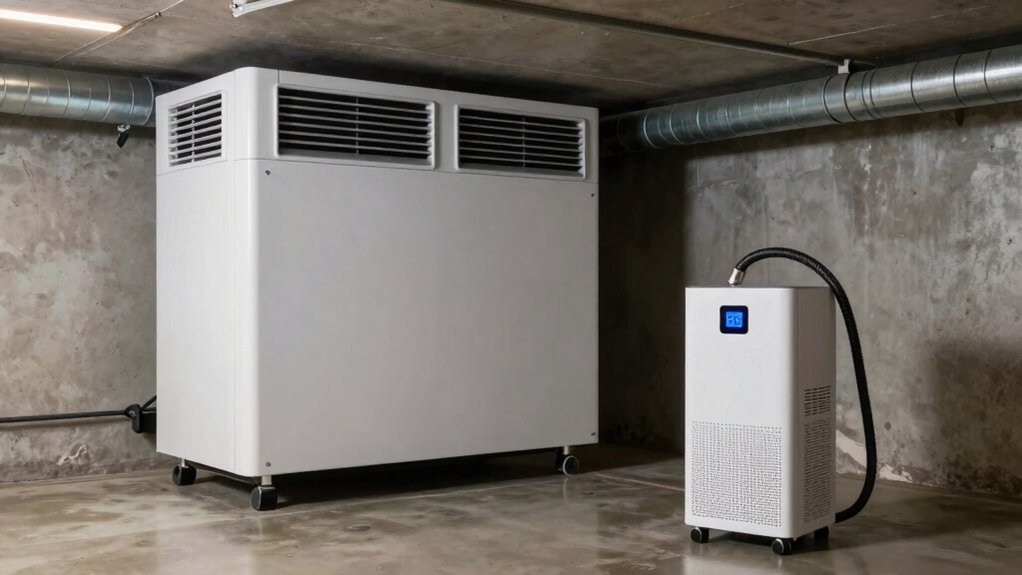
Dehumidifiers are essential tools for controlling indoor humidity, but not all are created equal. Whole-house dehumidifiers are integrated into your HVAC system, working silently to regulate humidity throughout your entire home. They’re ideal if you want consistent indoor air quality and mold prevention across multiple rooms. Portable dehumidifiers, on the other hand, are standalone units you move from room to room. They’re perfect for targeting specific areas with excess moisture or mold issues. Both types help improve indoor air quality by reducing dampness that fosters mold growth. While portable models offer flexibility, whole-house units provide a complete solution, maintaining ideal humidity levels throughout your home. Your choice depends on your needs, space, and the level of humidity control you require. Understanding dehumidifier types can help you make an informed decision. Additionally, considering the technological features of each type can further optimize performance and energy efficiency. For example, some models include smart controls that allow remote monitoring and adjustment for more precise humidity management. Incorporating energy-efficient designs can also help reduce ongoing operational costs and environmental impact.
portable dehumidifier for small rooms
As an affiliate, we earn on qualifying purchases.
As an affiliate, we earn on qualifying purchases.
How Easy Are They to Install and Set Up?
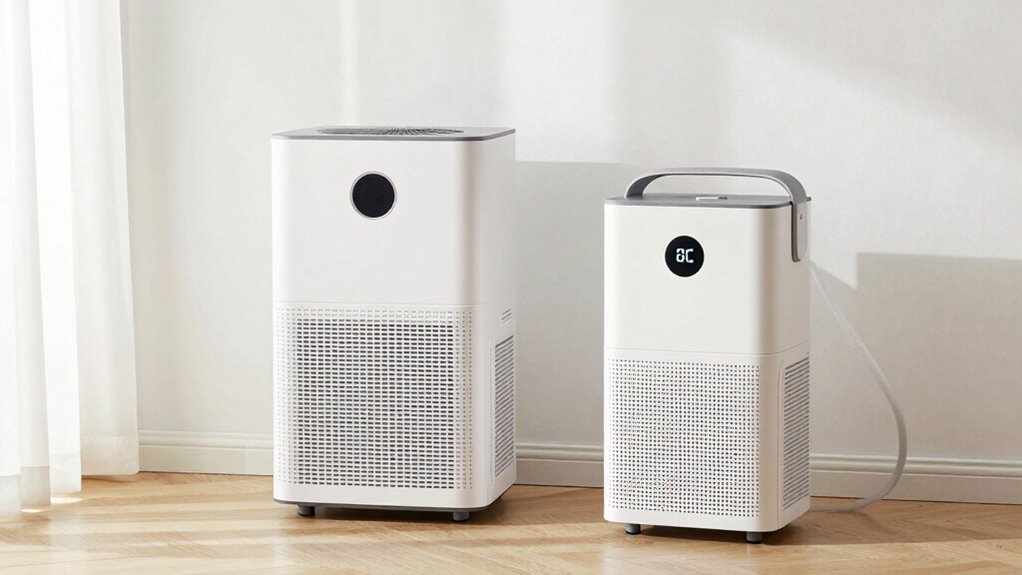
Installing and setting up dehumidifiers varies considerably between whole-house and portable models. Whole-house systems often require professional installation, involving ductwork, electrical connections, and integration with your HVAC system. This process can be complex and time-consuming, impacting installation simplicity. In contrast, portable dehumidifiers are designed for easy setup; you simply place them where needed, plug them in, and they’re ready to use. The setup process for portable units is straightforward, usually involving minimal assembly and no specialized tools. Overall, portable dehumidifiers score high on installation simplicity, making them ideal for quick deployment. Whole-house models, while more involved initially, provide continuous dehumidification for the entire home once installed. Ease of setup is a key factor to consider when choosing between these types. Your choice depends on how much effort you’re willing to invest upfront. Additionally, installation complexity can influence your decision based on available resources and expertise. For many homeowners, the initial setup process significantly impacts their overall satisfaction with the dehumidifier choice. Understanding the installation requirements helps ensure a smoother experience and better long-term performance. Furthermore, knowing the power source needs is essential to ensure your home can support the dehumidifier’s operation without issues.
As an affiliate, we earn on qualifying purchases.
Which Dehumidifier Offers the Right Capacity and Coverage?

Choosing the right dehumidifier depends largely on the size of the space you need to cover. To effectively manage humidity control and moisture removal, you need a unit that matches your room’s square footage and moisture levels. Portable dehumidifiers are suitable for smaller areas like bedrooms or basements, offering targeted coverage and adjustable settings. Whole-house systems, on the other hand, are designed to handle larger spaces or entire homes, providing continuous moisture removal through your HVAC system. Assess your space’s size and humidity levels to determine capacity and coverage needs. Selecting a dehumidifier with the appropriate capacity ensures ideal humidity control and efficient moisture removal, preventing mold growth and structural damage while maintaining a comfortable environment. Matching capacity to space size is essential for optimal performance and energy efficiency. Additionally, understanding the room’s moisture levels can help you choose a more effective dehumidification solution. Knowing how to evaluate moisture levels accurately can also prevent over- or under-dehumidifying, which saves energy and maintains comfort.
professional installation dehumidifier
As an affiliate, we earn on qualifying purchases.
As an affiliate, we earn on qualifying purchases.
How Do Energy Efficiency and Operating Costs Compare?
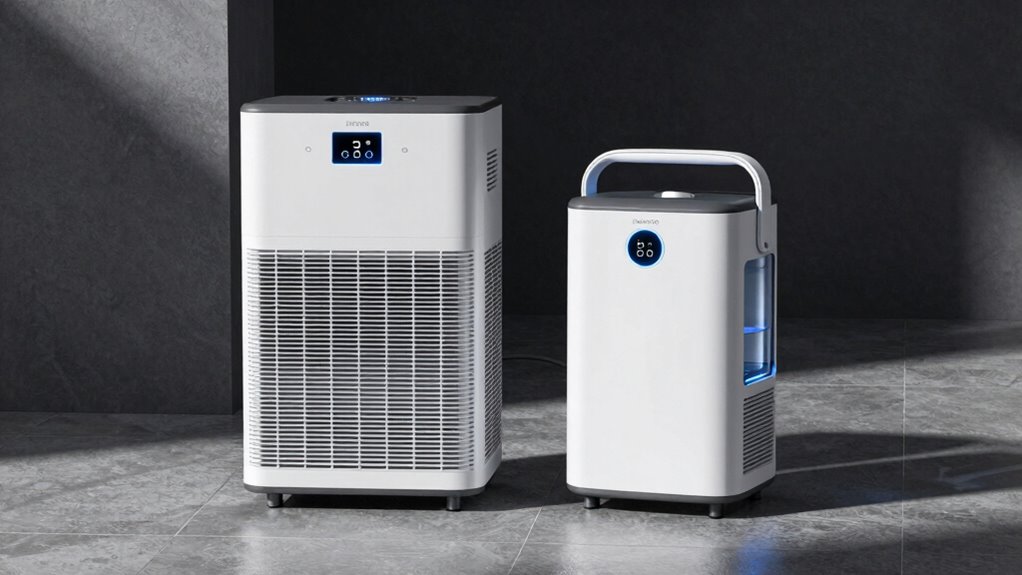
While both whole-house and portable dehumidifiers aim to reduce moisture effectively, they differ considerably in energy efficiency and operating costs. Whole-house units, integrated with your HVAC system, often have lower energy consumption per unit of moisture removed because they run continuously and cover larger areas efficiently. In contrast, portable dehumidifiers typically use more energy relative to their capacity, especially if run for extended periods, making them less cost-effective over time. Portable units also require frequent emptying and maintenance, which can add to operating costs. If you’re looking for long-term savings and energy efficiency, a whole-house dehumidifier generally offers better cost effectiveness. Additionally, system integration can impact overall energy savings, making whole-house units more advantageous for comprehensive moisture control. Proper size selection is essential to ensure the unit operates efficiently without excessive energy use. Considering energy-efficient features when choosing a unit can further reduce operating costs over the lifespan of the dehumidifier. Selecting a unit with smart controls can optimize operation and further enhance energy savings. Furthermore, modern technological advancements continue to improve the efficiency and functionality of whole-house units, making them an increasingly attractive option. However, initial investment and installation can be higher, and portable units may be more practical for smaller spaces or short-term needs.
Which Dehumidifier Is the Best Fit for Your Home and Budget?
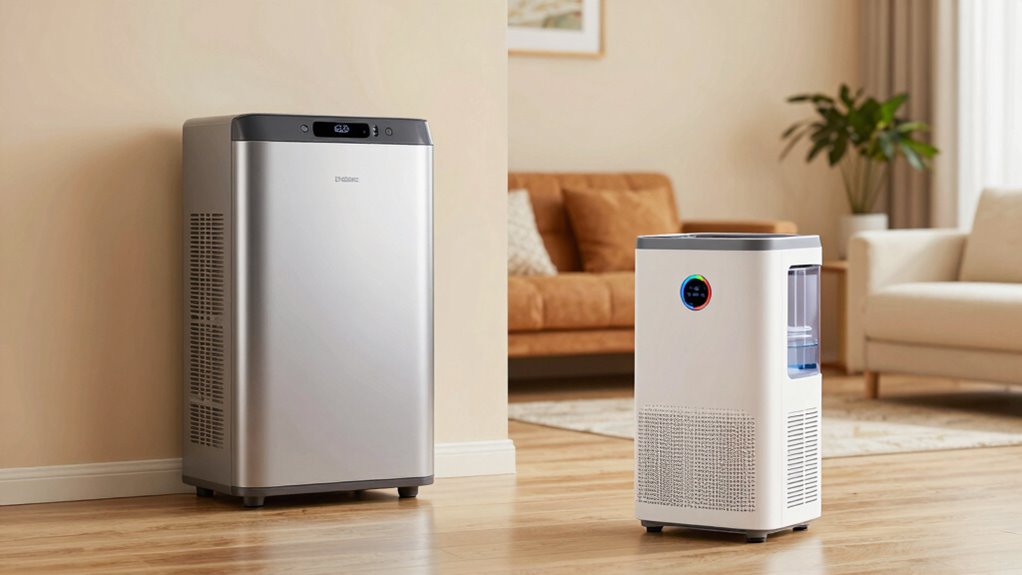
Selecting the right dehumidifier depends on your home’s size, your moisture control needs, and your budget. For smaller spaces, portable dehumidifiers are usually affordable and easy to move around, improving indoor air quality quickly. They tend to have higher noise levels, which might be a concern if you prefer a quieter environment. Whole-house systems are more expensive upfront but offer consistent moisture control and better indoor air quality throughout your home. They’re ideal for large areas or homes with persistent humidity issues. Consider your budget carefully, balancing initial costs with long-term energy savings. If noise levels are a priority, look for models with quiet operation features. Additionally, incorporating smart yard care technology like automated sensors can help optimize indoor humidity levels efficiently. Proper moisture management is essential for maintaining a healthy home environment and preventing mold growth. It’s also beneficial to evaluate the energy efficiency of different models to reduce operating costs over time. Ultimately, choosing the best fit means matching your home’s size and needs with a dehumidifier that aligns with your budget and comfort preferences.
Frequently Asked Questions
Can Portable Dehumidifiers Handle Large Basements Effectively?
Yes, a portable dehumidifier can handle large basements effectively if it has enough capacity. You should choose a dehumidifier with a high capacity to combat basement moisture and maintain ideal humidity levels. Keep in mind that smaller units may struggle with large spaces, so check the dehumidifier capacity before purchasing. Proper placement and regular maintenance will also help guarantee it works efficiently in your large basement.
How Often Do Whole-House Dehumidifiers Require Professional Maintenance?
Did you know that proper maintenance can extend a dehumidifier’s lifespan by up to 30%? Whole-house dehumidifiers typically need professional maintenance annually, depending on installation requirements and usage. You should schedule an inspection to check filters, refrigerant, and drainage systems. While they may consume more energy, regular professional upkeep guarantees ideal performance, prevents costly repairs, and keeps your home’s humidity levels balanced effectively.
Are There Noise Level Differences Between Whole-House and Portable Units?
You’ll find that sound levels differ between whole-house and portable dehumidifiers. Whole-house units tend to operate quieter because they’re integrated into your HVAC system and have soundproofing features. Portable dehumidifiers often produce more noticeable noise since they sit in a room and have fans running constantly. The noise comparison depends on the model, but generally, whole-house systems are quieter, making them less disruptive in daily activities.
What Are the Typical Lifespan Differences Between These Dehumidifier Types?
You’ll find that whole-house dehumidifiers usually last longer, around 10 to 20 years, thanks to their durability and sturdy build, whereas portable units typically last about 3 to 5 years. This means replacement costs for portable dehumidifiers are lower initially, but they may need replacing more often. Whole-house units have higher upfront costs but tend to be more cost-effective over time due to their durability differences.
Do Portable Dehumidifiers Improve Indoor Air Quality Significantly?
Yes, portable dehumidifiers can markedly improve your indoor air quality by aiding air purification and humidity control. They reduce excess moisture, preventing mold growth and dust mites, which can trigger allergies. By maintaining ideal humidity levels, they help keep the air cleaner and healthier. Just make certain you select a model suitable for your space and use it consistently for the best results in air quality.
Conclusion
Choosing between whole-house and portable dehumidifiers is like selecting the perfect paintbrush for your masterpiece. Each option has its own brushstrokes—one covers your entire home like a sweeping rainbow, the other targets specific spots like a fine-tipped brush. Consider your needs, budget, and space, then pick the tool that helps you breathe easy. With the right dehumidifier, you’ll turn your home into a fresh, inviting oasis, no matter the weather outside.
NFL season / tailgating Picks
team gear
As an affiliate, we earn on qualifying purchases.