If your basement smells musty, feels damp, or shows visible signs of moisture on walls and floors, it’s time to act. Persistent condensation, peeling paint, or warped wood also hint at high humidity levels that can cause mold growth and property damage. Lingering moisture after flooding or humidity-related odors are clear signs you need a dehumidifier now. Keep going to learn how these issues can be prevented and your space protected.
Key Takeaways
- Persistent dampness and a musty odor indicate high humidity requiring immediate dehumidification.
- Visible mold growth on walls, floors, or stored items signals urgent humidity control needs.
- Peeling paint, warped wood, or efflorescence show structural damage from excess moisture.
- Condensation on windows, pipes, or walls suggests elevated humidity levels needing prompt regulation.
- Lingering moisture after flooding or water damage increases mold risk, calling for a dehumidifier immediately.
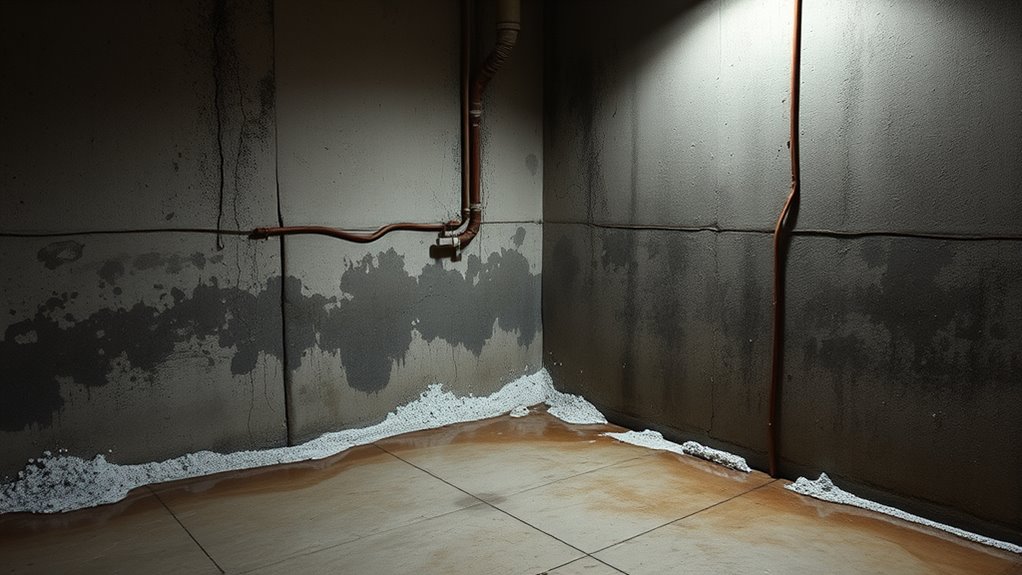
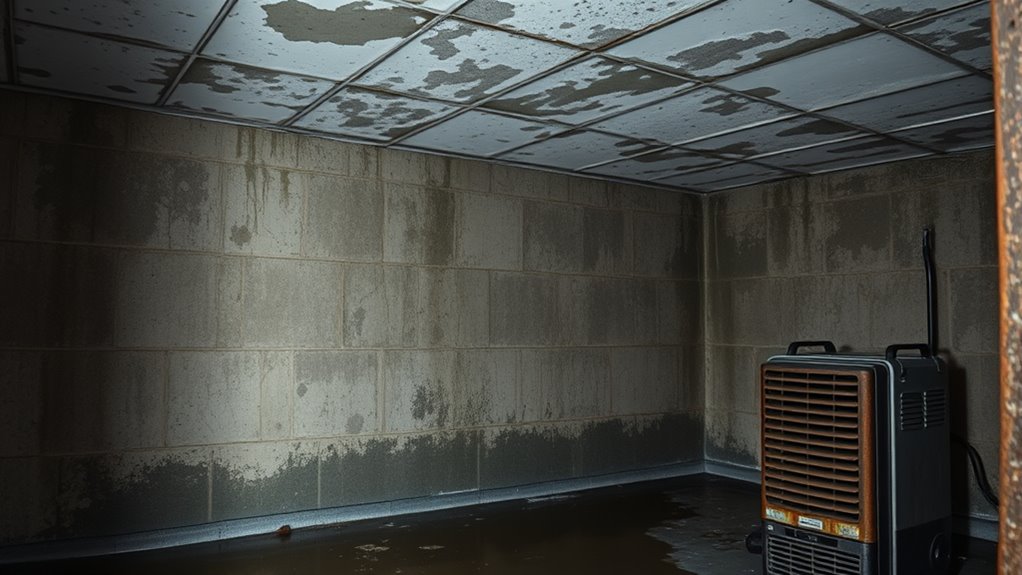
If you notice persistent dampness or a musty odor in your basement, it’s a clear sign that you need a dehumidifier right away. Excess moisture creates the perfect environment for mold growth, which not only damages your property but also poses health risks. Mold prevention becomes nearly impossible without effective humidity control, especially in spaces prone to dampness. When humidity levels stay high, mold spores can settle on walls, flooring, and stored items, leading to costly cleanups and potential health issues like allergies or respiratory problems. Addressing these signs early by installing a dehumidifier helps maintain a balanced moisture level, discouraging mold development and preserving your home’s integrity.
Persistent dampness signals the need for a dehumidifier to prevent mold and protect your home.
High humidity isn’t just a matter of comfort; it directly impacts the structural health of your basement. When moisture lingers, it can seep into walls and foundation, causing materials to weaken or rot over time. This damage often goes unnoticed until it becomes severe, making humidity control essential. A dehumidifier actively pulls excess moisture from the air, reducing dampness and preventing the deterioration of structural components. If you see peeling paint, warped wood, or efflorescence on your walls, these are clear indicators that your basement needs better humidity management. Prompt action can save you from costly repairs and extensive mold remediation down the line.
You might also notice condensation forming on windows, pipes, or walls, especially during colder months. This excess condensation signifies that your basement’s humidity levels are too high. Without a dehumidifier, this moisture can create a cycle of dampness and mold growth. Not only does this compromise the air quality, but it also encourages the proliferation of bacteria and dust mites, which thrive in humid environments. Using a dehumidifier helps regulate humidity, making the air less hospitable for these allergens and pathogens. It’s a simple, effective way to improve indoor air quality and make your basement a healthier space.
Finally, if you’ve already experienced water damage or flooding, humidity control becomes even more critical. Moisture trapped in your basement can linger long after the water recedes, fostering mold and mildew that are difficult to eradicate. A dehumidifier accelerates drying, prevents mold spores from settling, and restores a safe, dry environment. Don’t wait until visible mold appears or your belongings are damaged; taking proactive steps with a dehumidifier is the best way to protect your home’s foundation, your health, and your peace of mind. Additionally, employing a dehumidifier is especially important in spaces where proper ventilation and humidity control are not naturally maintained.
Frequently Asked Questions
Can a Dehumidifier Prevent Mold Growth Long-Term?
Yes, a dehumidifier can prevent mold growth long-term by actively controlling moisture levels in your basement. It reduces excess humidity, which is essential for mold prevention. When you use a dehumidifier regularly, you create an environment less favorable for mold to thrive. Consistent moisture control helps protect your space from mold-related issues and maintains healthier air quality, making your basement safer and more comfortable over time.
How Loud Are Typical Basement Dehumidifiers During Operation?
Basement dehumidifiers typically produce noise levels that range from quiet hums to moderate sounds, depending on the model. You might notice the operational sounds being barely audible or somewhat noticeable, especially during the fan’s activity and compressor operation. While some units run quietly enough for bedrooms or living areas, others generate more noticeable noise. Always check the noise levels prior to purchasing to guarantee they suit your comfort and noise sensitivity preferences.
What Is the Energy Consumption of a Standard Dehumidifier?
A standard dehumidifier typically consumes between 300 to 700 watts of power, depending on its size and capacity. You can improve energy efficiency by choosing an ENERGY STAR-rated model, which uses less power while effectively controlling humidity. Keep in mind that higher capacity units might use more power, but they also remove moisture faster. Regular maintenance and setting the right humidity level help optimize power usage and keep your basement dry efficiently.
Are There Specific Dehumidifier Models Recommended for Basements?
If you’re seeking the ideal match for your basement’s needs, look for dehumidifiers with a suitable capacity to tackle basement moisture effectively. Models like the Frigidaire FFAD2533W1 or the hOmeLabs 4,500 Sq. Ft Energy Star Dehumidifier are highly recommended. These units excel at maintaining excellent humidity levels, ensuring your basement stays dry and comfortable while efficiently managing energy use for your space.
How Often Should I Empty or Maintain My Basement Dehumidifier?
You should empty or maintain your basement dehumidifier at least once a week, especially during humid months. Follow a regular maintenance schedule to prevent mold and guarantee ideal performance. Check the water collection tank and clean filters as needed. If you notice it’s not cycling properly or the room feels damp, use troubleshooting tips like inspecting the drain hose or cleaning the coils to keep it running smoothly.
Conclusion
If you notice persistent musty odors, visible mold, or peeling paint, your basement urgently needs a dehumidifier. Ignoring these signs can lead to structural damage and health issues. Did you know that humidity levels above 60% can cause mold growth in just 24-48 hours? Don’t wait until it’s too late—taking action now can protect your home and your family’s health, keeping your basement dry and safe year-round.