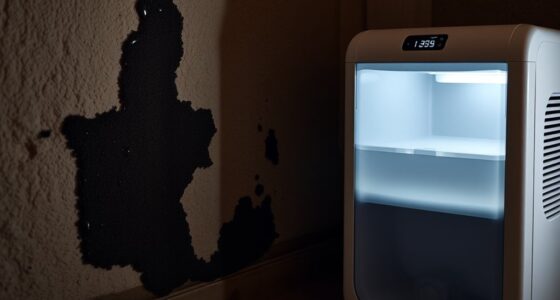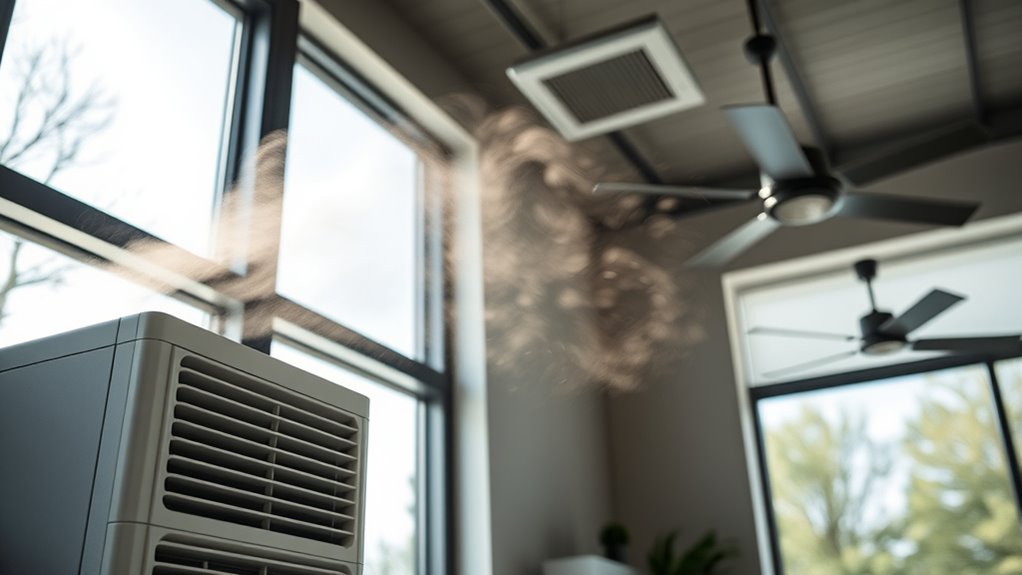
To improve airflow and support your dehumidifier’s efficiency, position it centrally in the room and avoid blocking vents or furniture. Use fans to promote even circulation, and periodically open windows or doors to enhance air exchange. Guarantee no drafts or obstructions disrupt movement, and consider installing exhaust vents for continuous airflow. Proper circulation prevents humid pockets and speeds up moisture removal—discover more tips to create a healthier, mold-free space.

Get home appliances delivered free with Prime
- Fast, free delivery on millions of items
- Prime Video, Amazon Music and more included
- Member-only deals all year
Key Takeaways
- Position dehumidifiers centrally and avoid obstructions to promote even airflow.
- Use fans to direct and enhance circulation within larger or poorly ventilated spaces.
- Open windows or doors periodically to facilitate natural air exchange and reduce stagnation.
- Install exhaust fans or vents to improve continuous airflow and moisture removal.
- Regularly monitor and clear blockages or leaks that disrupt proper airflow patterns.
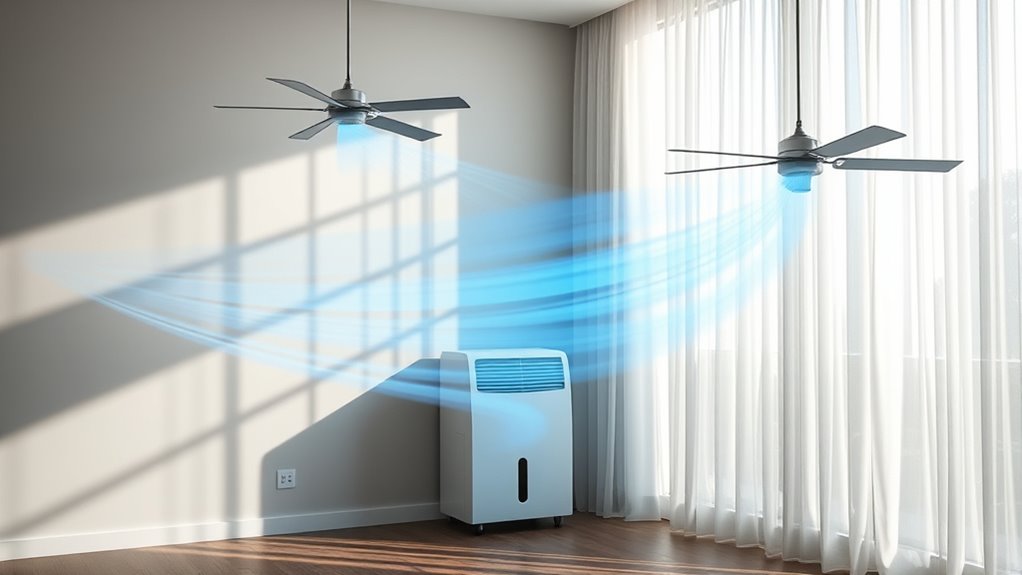
Have you ever wondered how proper airflow impacts the effectiveness of dehumidifiers? If you want your dehumidifier to work efficiently, you need to pay attention to ventilation optimization and airflow patterns. When airflow moves freely and evenly through a space, your dehumidifier can better extract moisture from the air. Poor airflow, on the other hand, creates stagnant spots where humidity levels remain high, making your dehumidifying efforts less effective. By understanding how airflow works within your environment, you can take steps to improve circulation and, ultimately, create a healthier, more comfortable space.
Proper airflow enhances dehumidifier efficiency by preventing stagnant spots and promoting even moisture removal.
Ventilation optimization involves positioning your dehumidifier in the right spot and ensuring proper air exchange. If your dehumidifier is tucked away in a corner or behind furniture, it won’t draw in enough moist air to do its job well. Instead, place it in a central location where air can circulate freely around it. Additionally, opening windows or doors periodically helps introduce fresh air and prevent stale, humid air from lingering. If natural ventilation isn’t enough, consider installing exhaust fans or air vents that promote continuous airflow. These adjustments help maintain a steady airflow pattern, preventing moisture buildup and supporting your dehumidifier’s function.
Airflow patterns play a crucial role in how effectively your dehumidifier pulls moisture from the air. Ideally, you want a consistent, circular flow that distributes dry air evenly throughout the space. To achieve this, use fans to guide airflow, especially in larger rooms. Positioning fans to create a gentle circulation helps prevent humid pockets from forming and ensures your dehumidifier can operate optimally. Remember, airflow should be unobstructed; avoid blocking vents or placing furniture directly in front of fans or vents. When airflow is well-managed, moisture is more evenly removed, reducing the chances of mold growth and musty odors.
Maintaining good airflow isn’t just about equipment placement; it’s also about understanding how air moves in your environment. Regularly check for drafts, leaks, or obstructions that could disrupt circulation. Simple adjustments, like opening a window or using a fan, can significantly enhance ventilation and airflow patterns. Proper airflow management** ensures your dehumidifier functions at its best and helps keep humidity levels in check. These improvements make your dehumidifier more effective, helping it reach target humidity levels** faster and keep your space consistently comfortable. When airflow is vitalized, your dehumidifier doesn’t have to work as hard, which saves energy and extends its lifespan.
In essence, enhancing airflow and ventilation isn’t a complicated task—it’s a crucial part of supporting your dehumidifier’s performance. By paying attention to airflow patterns, positioning your equipment correctly, and ensuring unobstructed circulation, you maximize moisture removal. This leads to a healthier environment, free from excess humidity, and lessens the chances of mold, mildew, and other moisture-related issues. Proper airflow management is the key to making your dehumidifier work smarter, not harder.
dehumidifier air circulation fan
As an affiliate, we earn on qualifying purchases.
As an affiliate, we earn on qualifying purchases.
Frequently Asked Questions
How Do I Identify Poor Airflow Areas in My Home?
You can identify poor airflow areas in your home by observing signs like stagnant air, musty odors, or uneven temperature. Check for airflow barriers such as closed vents, blocked registers, or clutter obstructing vents. Use ventilation strategies like opening windows or installing fans to improve circulation. Feel for drafts or cold spots, which indicate restricted airflow. Address these issues to make certain of proper ventilation and better complement your dehumidifier’s efficiency.
Can Improving Airflow Reduce the Need for a Dehumidifier?
Yes, improving airflow circulation can reduce the need for a dehumidifier by enhancing moisture control in your home. When you boost airflow, you help disperse humid air and promote ventilation, which decreases indoor humidity levels naturally. Proper airflow prevents moisture buildup in hidden corners and improves overall air quality, making your environment less reliant on mechanical dehumidification. Keep vents open, use fans, and guarantee good circulation for ideal moisture management.
What Household Items Can Boost Airflow Naturally?
You can boost airflow naturally with household items like fans, open windows, and vents to improve air circulation and promote natural ventilation. Placing oscillating fans near windows helps draw fresh air in and push stale air out. Keep interior doors open to allow better airflow between rooms. Using window or attic vents also enhances natural ventilation, reducing humidity and supporting dehumidifier efficiency without relying solely on mechanical systems.
How Often Should I Maintain My Airflow Enhancements?
Oh, you want a perfect airflow routine? Well, you should check your ventilation schedules monthly—yes, every 30 days—to guarantee they’re still doing their magic. Don’t forget filter maintenance; replace or clean filters every 1-3 months, depending on use. This way, your airflow enhancements stay effective, and your home stays fresh. Keep up with these simple steps, and you’ll never have to wonder if your dehumidifier’s working overtime!
Are There Specific Airflow Patterns That Optimize Dehumidifier Efficiency?
You should aim for consistent airflow circulation that evenly distributes air throughout your space. Position vents strategically—preferably near corners and in central locations—to optimize dehumidifier efficiency. Avoid blocking vents, and guarantee they promote smooth, unobstructed airflow. By adjusting vent placement and encouraging steady airflow patterns, you’ll enhance moisture removal, reduce humidity, and improve overall comfort in your environment.
exhaust vent for moisture removal
As an affiliate, we earn on qualifying purchases.
As an affiliate, we earn on qualifying purchases.
Conclusion
Think of your space as a lush garden. Just like plants need the right breeze to thrive, your dehumidifier relies on good airflow to do its job. When you enhance circulation, you’re guiding the air like a gentle wind, helping moisture escape and keeping your environment fresh. With this simple act, you’re the gardener nurturing a healthier, drier space, ensuring your home stays vibrant and comfortable all year round.
As an affiliate, we earn on qualifying purchases.
airflow optimization for dehumidifiers
As an affiliate, we earn on qualifying purchases.
As an affiliate, we earn on qualifying purchases.
NFL season / tailgating Picks
team gear
As an affiliate, we earn on qualifying purchases.