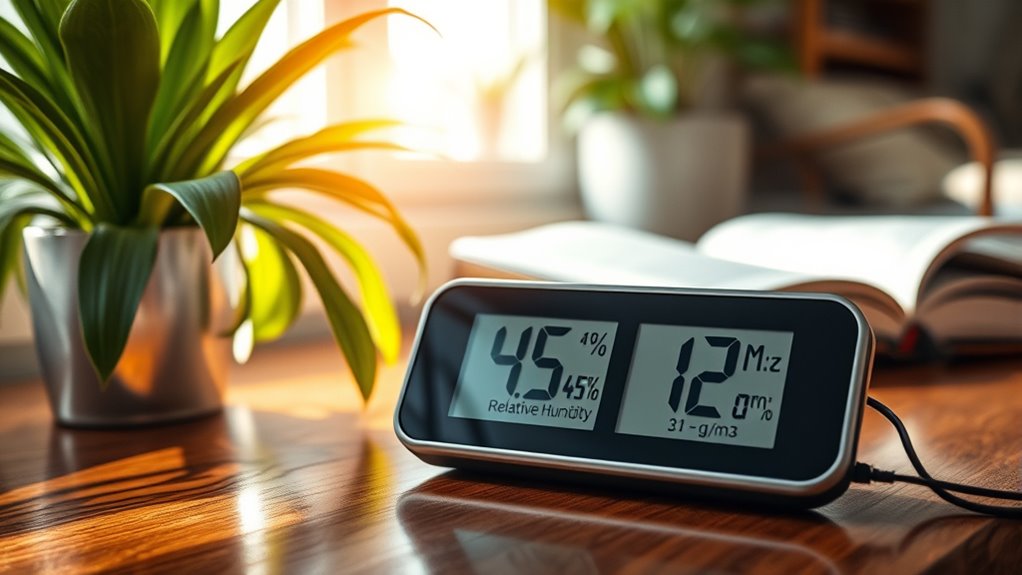

Understanding the difference between relative and absolute humidity helps you create a more comfortable home environment. Relative humidity measures moisture compared to the maximum amount the air can hold at a specific temperature, while absolute humidity tracks the actual water vapor in the air regardless of temperature. Monitoring both allows you to optimize indoor conditions for your comfort and plants, and improve HVAC efficiency. Keep exploring to learn how balancing these humidity levels can benefit your home even more.
Key Takeaways
- Relative humidity indicates moisture levels relative to maximum capacity at a specific temperature, affecting comfort and plant health.
- Absolute humidity measures the actual water vapor in the air, providing precise moisture data for indoor environment management.
- Maintaining 40%-60% relative humidity promotes optimal home comfort and healthy indoor plant growth.
- Proper humidity control reduces HVAC energy usage and prevents issues like mold and pests.
- Understanding both measures helps tailor humidity adjustments for improved system efficiency and overall home well-being.

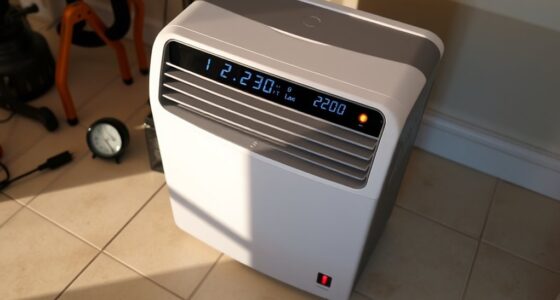
Humidity can be confusing because there are two main measures: relative humidity and absolute humidity. Understanding these two concepts is vital for maintaining ideal home comfort, especially when it comes to indoor plant health and HVAC system efficiency. Relative humidity tells you how much moisture is in the air compared to the maximum amount the air can hold at a specific temperature. For example, if the relative humidity is 50%, the air holds half of the moisture it can at that temperature. Absolute humidity, on the other hand, measures the actual amount of water vapor in the air, regardless of temperature, usually expressed in grams per cubic meter. Both measures are important but serve different purposes in managing indoor environments. Monitoring humidity levels**** can help you make informed decisions about when to adjust your home’s humidity.
When you focus on indoor plant health, relative humidity plays an essential role. Many houseplants thrive when the relative humidity stays between 40% and 60%. If the air is too dry, plants may show signs of stress like browning leaf edges or wilting. On the flip side, overly humid conditions can promote mold growth and attract pests. Knowing the relative humidity helps you adjust your home’s environment, whether by using humidifiers or dehumidifiers, to keep your plants healthy and thriving. Absolute humidity provides more precise data when evaluating how much moisture is present in the air, which can be useful when planning how to modify indoor conditions.
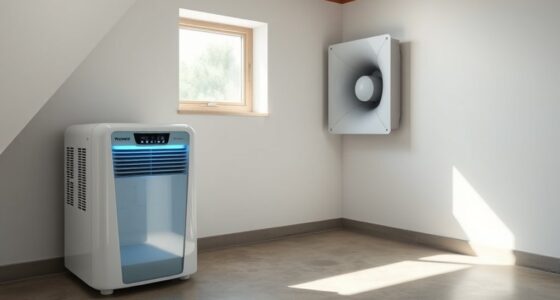
Your HVAC system’s efficiency is directly impacted by both measures of humidity. When relative humidity is too high, your cooling system has to work harder to remove excess moisture, increasing energy consumption and wear on the equipment. Conversely, if the air is too dry, your heating system might run more frequently to compensate for the lack of moisture, which can lead to increased energy costs and discomfort. By understanding and controlling both relative and absolute humidity, you can enhance your HVAC system’s operation, saving energy and extending its lifespan. Proper humidity levels also help prevent issues like mold growth, dust mites, and respiratory problems, making your home safer and more comfortable.
Frequently Asked Questions
How Does Humidity Affect Indoor Air Quality?
Humidity impacts indoor air quality by influencing airborne allergens and overall comfort. When humidity levels are too high, mold and dust mites thrive, worsening allergies and asthma. Too low, and dry air irritates your respiratory system. By practicing humidity control, you reduce airborne allergens and create a healthier, more comfortable environment. Proper humidity balance helps prevent health issues and improves indoor air quality, making your home safer and more pleasant to breathe.
What’s the Ideal Humidity Level for Allergy Sufferers?
You should aim for a humidity level of 40-50% to ease allergy symptoms. Using humidifiers can add moisture if the air feels dry, while dehumidifiers help reduce excess humidity that can worsen allergies. Keeping the humidity in this range minimizes dust mites, mold, and pollen, making your home more comfortable. Regularly monitor your indoor humidity levels to prevent allergy flare-ups and improve overall air quality.
How Can I Measure Absolute Humidity at Home?
Think of measuring absolute humidity as tuning a musical instrument. To do this at home, you need a precise hygrometer, which may require calibration to guarantee accuracy. You can also create homemade humidity sensors using simple materials like a sponge or salt solution. By measuring the water vapor content directly, you get the absolute humidity, helping you maintain ideal comfort levels and improve air quality in your home.
Does Humidity Impact Indoor Mold Growth?
Yes, humidity impacts indoor mold growth. When humidity levels are high, it creates dampness that promotes mold development. To prevent mold, focus on dampness control by keeping indoor humidity between 30-50%, using dehumidifiers if needed. Proper ventilation and fixing leaks are also essential for mold prevention. By maintaining balanced humidity levels, you reduce the chances of mold thriving and protect your home’s air quality.
How Does Humidity Influence Energy Costs?
Imagine you’re living in the 19th century, and today, humidity considerably impacts your energy costs. Humidity influences your home’s cooling and heating efficiency; high humidity makes you run your AC or dehumidifiers more often, increasing energy bills. Using humidity control devices and dehumidification strategies helps maintain ideal moisture levels, reducing the workload on your HVAC system and saving you money. Proper humidity management is a wise way to cut energy costs.
Conclusion
Now that you understand the difference between relative and absolute humidity, you can better tune your home’s comfort like a skilled gardener tending to delicate plants. Think of humidity as the weather inside your home—balancing it keeps your environment cozy and healthy. By paying attention to these measurements, you’ll create a space where comfort blooms, not wither, making every breath you take feel just right, like a gentle breeze on a warm day.