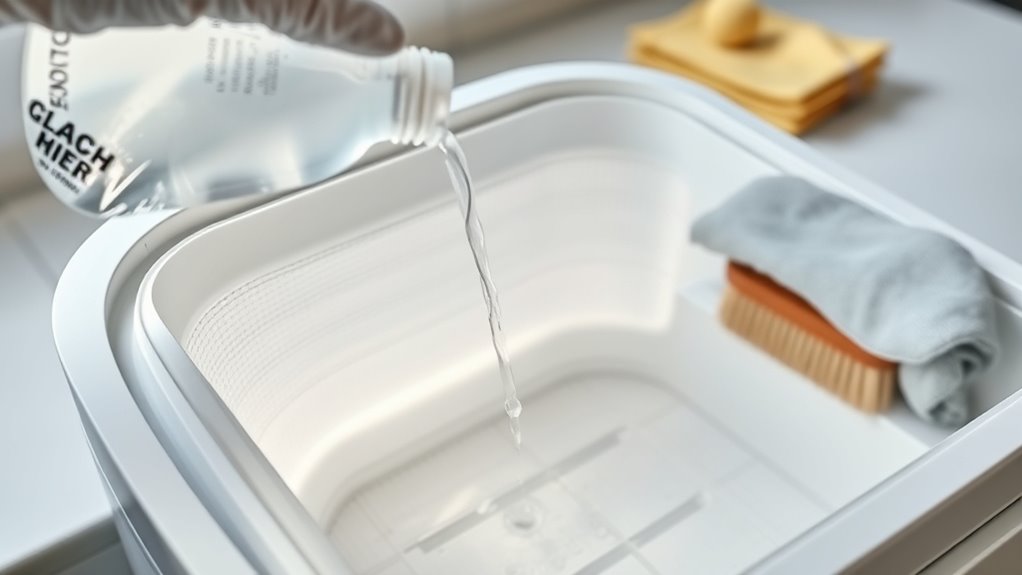

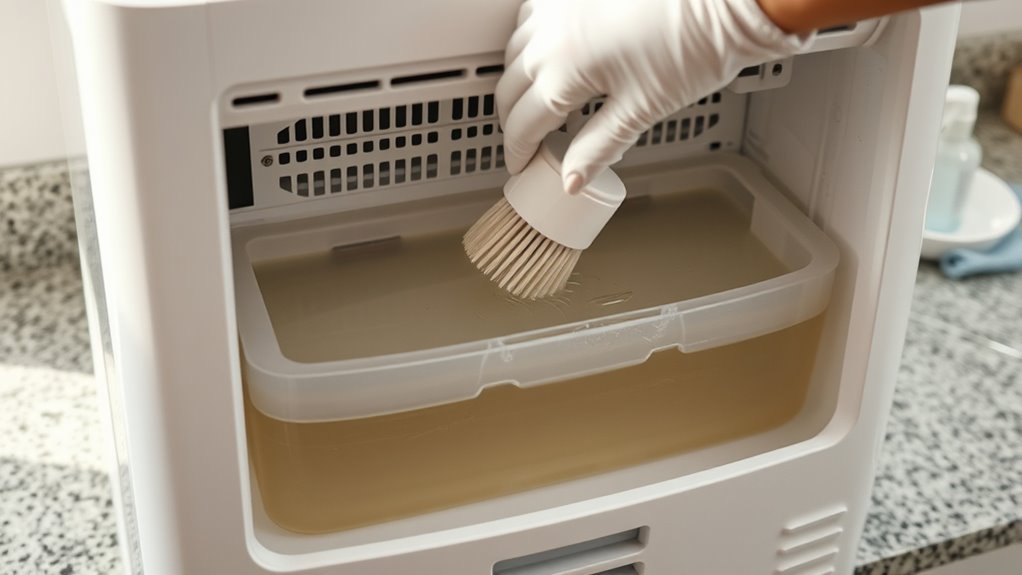
To clean and disinfect your dehumidifier tank, first unplug the unit and empty any remaining water. Wipe the interior with a mixture of vinegar and water or use a mild cleaner. Scrub stubborn deposits gently with a soft brush, then rinse thoroughly with clean water. Dry completely before reassembling. Regular cleaning helps prevent mold, odors, and bacterial growth, ensuring ideal performance. If you stay with us, you’ll discover more tips for maintaining a healthy, efficient dehumidifier.
Key Takeaways
- Unplug the dehumidifier and empty the water tank before cleaning.
- Wipe the interior with a mixture of vinegar and water or mild disinfectant.
- Use a soft brush to scrub stubborn deposits or mold buildup inside the tank.
- Rinse the tank thoroughly to remove any cleaning residues and dry completely.
- Regularly inspect, disinfect, and replace the tank as needed to prevent mold and odor.
A clean and disinfected dehumidifier tank is indispensable for maintaining healthy indoor air quality and guaranteeing your appliance works efficiently. Regularly inspecting and maintaining the filter is a critical part of this process. When you keep the filter clean, it prevents dust, mold, and other debris from accumulating, which can cause bacteria growth inside the tank. Check your dehumidifier’s filter at least once a month. Remove it carefully, wash it with mild soap and water, then let it dry completely before reinstalling. If the filter shows signs of wear or damage, replacing it promptly will help keep your unit running smoothly and prevent contaminants from circulating back into your room.
Keeping your dehumidifier filter clean prevents mold and bacteria buildup for healthier indoor air.
Water tank replacement is also key to maintaining peak performance. Over time, mineral deposits or mold can develop inside the tank, making cleaning more difficult and less effective. If you notice persistent odors or visible mold, it’s best to replace the water tank altogether. Many models have removable tanks that are easy to swap out; check your user manual for specific instructions. Replacing the tank once or twice a year, depending on usage, ensures you’re not just cleaning but also upgrading to a fresh component that won’t harbor bacteria or mold.
When you clean your tank, start by unplugging the dehumidifier for safety. Empty out any remaining water and wipe the interior with a mixture of vinegar and water or a mild cleaning solution. This helps eliminate mold and bacteria that may be hiding inside. Use a soft brush or cloth to scrub away any stubborn deposits. After cleaning, rinse thoroughly with clean water and dry the tank completely before reassembling. Disinfecting is equally important — after cleaning, wipe the interior with a disinfectant solution, such as diluted bleach or white vinegar, to kill any lingering bacteria or mold spores. Make sure to rinse well afterward to prevent chemical residues from affecting the air quality. Regular maintenance, including filter care, is vital for optimal dehumidifier performance.
Maintaining your dehumidifier’s filter and replacing the water tank as needed not only prolongs its lifespan but also guarantees it operates efficiently. This routine care prevents mold growth, reduces unpleasant odors, and improves indoor air quality. Remember, a well-maintained tank and filter keep your dehumidifier functioning at its best, helping you breathe easier in your home. Regular attention to these components is a simple but essential step towards healthier, cleaner air every day.
Frequently Asked Questions
How Often Should I Replace My Dehumidifier’s Filter?
You should replace your dehumidifier’s filter every 1 to 3 months, depending on usage and air quality. Regular filter maintenance keeps your device running efficiently and prevents mold or bacteria buildup. Check the replacement schedule in your user manual, and if the filter looks dirty or clogged sooner, replace it immediately. Consistent filter maintenance ensures peak performance and healthier air inside your home.
Can I Use Bleach to Disinfect the Dehumidifier Tank?
You can use bleach to disinfect your dehumidifier tank, but you must follow bleach safety guidelines. Dilute one cup of bleach in a gallon of water, then thoroughly rinse the tank afterward to prevent residue. If you’re concerned about harsh chemicals, consider disinfectant alternatives like white vinegar or hydrogen peroxide. These options are effective, safer, and environmentally friendly, helping you keep your dehumidifier clean without risking damage or health issues.
What Are Signs My Dehumidifier Needs Professional Repair?
Think of your dehumidifier as a finely tuned orchestra—when it’s out of sync, problems arise. If you notice unusual dehumidifier noise or water leakage, it’s time to call a professional. These signs suggest internal issues, like motor problems or clogged coils, that can’t be fixed at home. Addressing them early prevents further damage and keeps your space comfortable and dry.
Is It Safe to Run the Dehumidifier While Cleaning?
It’s not safe to run your dehumidifier while cleaning it because of dehumidifier safety concerns. Always unplug the unit first to avoid electrical hazards. Follow cleaning precautions by removing the tank and wiping it down thoroughly. Running the dehumidifier during cleaning could cause damage or injury. Wait until all parts are dry and reassembled before turning it back on to guarantee safe operation and prevent mold or bacteria buildup.
How Can I Prevent Mold Growth in the Tank?
To prevent mold growth in your dehumidifier tank, regularly perform tank maintenance by emptying and drying it thoroughly after each use. Use a mixture of water and vinegar or mild disinfectant to clean the tank weekly, which helps with mold prevention. Confirm the tank is completely dry before reinserting it. Keeping humidity levels in your space controlled also minimizes mold risk and promotes a healthier environment.
Conclusion
Now, imagine your dehumidifier’s tank sparkling clean, ready to silently protect your home from excess moisture. Each time you empty and disinfect it, you’re giving your space a fresh breath, like a cool breeze on a warm day. Keep up this simple routine, and your dehumidifier will continue to work quietly and efficiently, preserving your home’s comfort. A clean tank isn’t just maintenance; it’s your secret weapon against mold and musty odors.