Combining air purifiers with houseplants improves indoor air quality by capturing airborne particles with HEPA filters and breaking down chemical pollutants with plants like snake plants and peace lilies. Position both in main living areas for maximum benefit, and maintain them regularly through cleaning and watering. This synergy results in cleaner, healthier air and a more comfortable home. If you keep going, you’ll discover how to optimize your setup for even better results.
Key Takeaways
- Combining air purifiers with HEPA filters and houseplants enhances overall indoor air quality by removing both airborne particles and chemical pollutants.
- Proper placement of plants and purifiers in high-traffic areas maximizes their ability to absorb toxins and filter the air effectively.
- Maintaining healthy plants through regular watering and leaf cleaning ensures they efficiently break down indoor pollutants.
- Selecting plants like snake plants, pothos, and peace lilies, along with effective air purifiers, optimizes pollutant removal.
- Integrating plant care into cleaning routines boosts their air-purifying capacity, creating a healthier indoor environment.
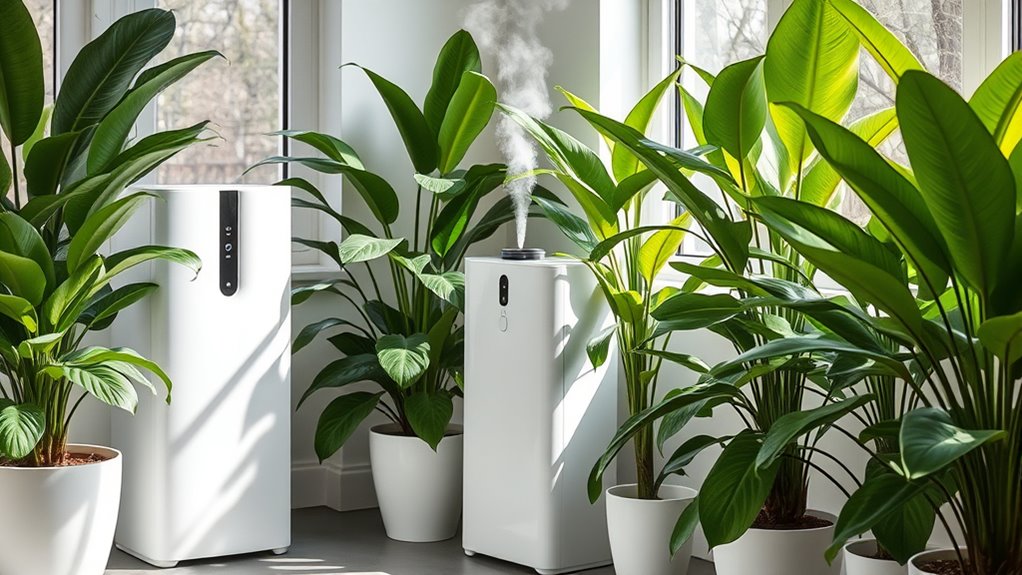
Indoor air pollution often includes volatile organic compounds (VOCs), dust, pet dander, and other allergens that can trigger respiratory issues or worsen allergies. Air purifiers equipped with HEPA filters are excellent at capturing airborne particles, but they don’t actively remove certain chemicals or increase humidity levels. Houseplants, on the other hand, excel at breaking down chemical pollutants like formaldehyde, benzene, and trichloroethylene, which are common in indoor environments due to furniture, cleaning products, and paints. This synergy means your air is cleaner overall—less dust, fewer chemicals, and reduced allergens.
However, to maximize the benefits, you need to pay close attention to plant maintenance. Healthy plants are more efficient at filtering air, so regular watering, pruning, and cleaning their leaves are essential. Dust and debris on plant surfaces can hinder their ability to absorb toxins effectively, so wiping leaves with a damp cloth keeps them functioning effectively. Overwatering can lead to root rot and other health issues for your plants, so understanding each plant’s watering needs is vital. Proper plant maintenance not only ensures their health but also sustains their capacity to improve your indoor air quality.
Placement matters too. Position your air purifier in the main living areas where you spend the most time, and place plants strategically around your space—near windows, in corners, or on shelves—so they can absorb the maximum amount of airborne pollutants. Keep in mind that both air purifiers and plants work best when used together consistently, rather than intermittently. Regularly replacing filters and caring for your plants ensures they continue to operate at peak performance. Additionally, selecting air purifiers with HEPA filters can significantly enhance your home’s air quality by efficiently capturing small particles and allergens.
Incorporating houseplants into your cleaning routine isn’t complicated, but it does require some attention. Choosing the right plants with air-purifying capabilities—like snake plants, pothos, or peace lilies—can make a noticeable difference. Pairing these with a quality air purifier and maintaining both properly creates a cleaner, healthier environment. This combined approach not only reduces indoor air pollution but also boosts your overall well-being, making your home a sanctuary for better health.
Frequently Asked Questions
How Do Air Purifiers and Houseplants Complement Each Other?
Air purifiers and houseplants complement each other by enhancing air quality and adding decorative appeal. You actively improve indoor air by using purifiers that filter pollutants, while houseplants naturally absorb toxins and boost humidity. Together, they create a healthier, more inviting space. The purifier provides quick, effective air quality enhancement, and the plants add a natural, aesthetic touch that makes your environment feel fresher and more vibrant.
Are There Specific Plant Types Best for Air Purification?
You should choose plants like snake plants, pothos, and peace lilies for air filtering. These plants excel in plant selection for air purification because they naturally remove toxins and improve indoor air quality. When selecting plants, focus on varieties known for their air filtering capabilities, ensuring they’re healthy and suited for your space. Combining these plants with an air purifier creates a powerful duo for cleaner, fresher indoor air.
Can Combining Both Reduce Indoor Allergens Effectively?
You can reduce indoor allergens effectively by combining air purifiers with houseplants, as this dual approach enhances air quality improvements. While air purifiers actively filter out dust, pollen, and pet dander, houseplants naturally absorb airborne toxins and increase humidity. Together, they create a healthier environment, minimizing allergens and promoting better respiratory health. This synergy offers a practical way to combat indoor allergens more efficiently than using either method alone.
What Are the Maintenance Requirements for This Combination?
You need to regularly replace the air purifier filters, typically every 3 to 6 months, to keep them effective. For your houseplants, follow a consistent watering schedule—usually once a week—ensuring they stay healthy and continue improving air quality. Keep an eye on both, cleaning filters as needed and watering plants appropriately, so the combination works efficiently without causing mold or filter clogging.
Is This Combination Safe for Pets and Children?
Yes, this combination is generally safe for pets and children if you choose non-toxic houseplants and keep air purifiers well-maintained. Pet safety and child safety depend on selecting plants like pothos or snake plants, which are less toxic. Make sure to keep plants out of reach and regularly clean the air purifier filters to prevent dust buildup. Always research specific plants and device safety features to guarantee a safe environment.
Conclusion
By combining air purifiers with houseplants, you create a powerful duo that markedly improves your indoor air quality. While some might think plants alone are enough, pairing them with an air purifier ensures a broader removal of pollutants, including those that plants can’t absorb. This balanced approach not only enhances your environment but also offers a touch of nature’s beauty. So, don’t overlook the benefits of combining these methods—your air and your well-being will thank you.