
PM2.5 particles are the biggest indoor threat because their tiny size allows them to penetrate deep into your lungs and bloodstream, carrying harmful toxins that can cause long-term health issues. In contrast, PM10 particles are larger and tend to stay in your upper airways, posing less danger. Understanding the differences helps you prioritize effective air filtration and cleanliness. Keep going to discover how to better protect yourself from these invisible hazards indoors.

Get home appliances delivered free — and shop member deals
- Fast, free delivery on millions of items
- Access to Prime Big Deal Days deals on October 6–7
- Prime Video, Amazon Music and more included
Key Takeaways
- PM2.5 particles are smaller, penetrate deeper into lungs, and can enter the bloodstream, posing higher health risks indoors.
- PM10 particles mostly affect upper airways, causing irritation but generally less systemic health impact.
- Due to their size, PM2.5 are harder to filter and require high-efficiency filters like HEPA for effective removal.
- PM2.5 often carry toxic chemicals, increasing their potential to cause long-term health issues indoors.
- Overall, PM2.5 are the more dangerous indoor threat because of their ability to reach deep lung tissues and systemic circulation.
HEPA air purifier for PM2.5 removal
As an affiliate, we earn on qualifying purchases.
As an affiliate, we earn on qualifying purchases.
What Are PM2.5 and PM10, and Why Do They Matter Indoors?
Have you ever wondered what those tiny particles floating in the air are and why they matter indoors? PM2.5 and PM10 are particles with different sizes, affecting air quality differently. PM2.5 particles are smaller than 2.5 micrometers, while PM10 particles are up to 10 micrometers. Their particle composition varies, including dust, pollen, smoke, and microscopic pollutants. These particles can penetrate deep into your lungs and even your bloodstream, causing health issues. Filtration techniques, like HEPA filters, are vital for removing these particles from indoor air. Understanding the differences in particle size and composition helps you choose effective filtration methods. Proper filtration reduces exposure, improves air quality, and keeps your indoor environment safer and healthier. Recognizing the presence of microplastics in dust can further inform your efforts to maintain a cleaner indoor environment, especially since airborne microplastics are increasingly recognized as a concern for indoor air quality. Additionally, particle size classification plays a crucial role in determining the appropriate filtration technology for your space. Moreover, understanding particle behavior can help you implement better strategies for air purification and health protection. Indoor air pollutants may also include chemicals and biological contaminants, which can compound health risks associated with particulate matter.
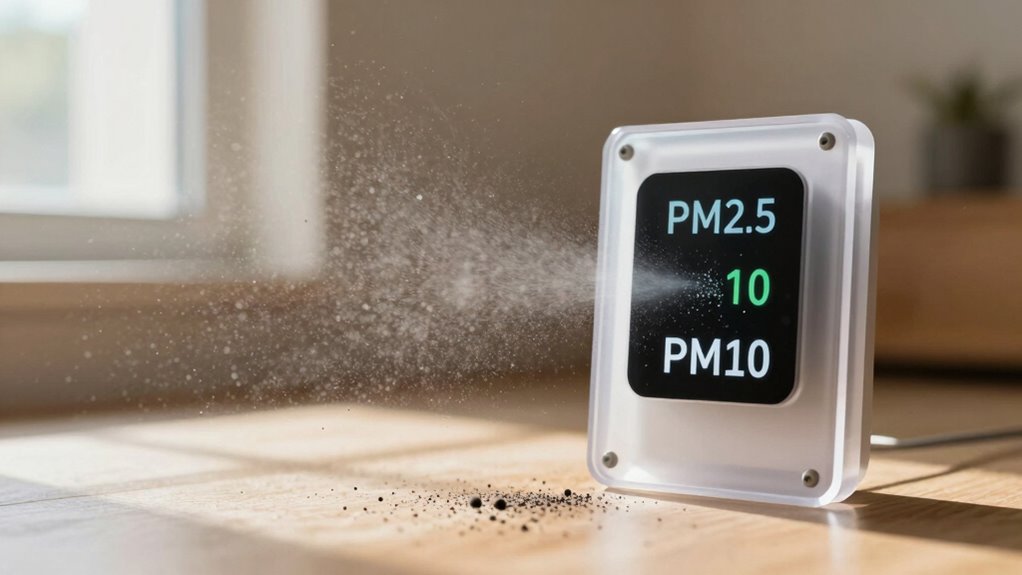
indoor air quality monitor PM2.5 PM10
As an affiliate, we earn on qualifying purchases.
As an affiliate, we earn on qualifying purchases.
Where Do Indoor PM2.5 and PM10 Come From?

Indoor PM2.5 and PM10 particles originate from a variety of sources both inside and outside your home. These particle sources can substantially impact your air quality, but effective air filtration can help reduce their presence. Understanding the sources of indoor particles is essential for targeted mitigation strategies. Here are four common indoor particle sources:
- Cooking fumes and grease that linger in the air.
- Tobacco smoke that pollutes your space.
- Dust and pet dander stirred up by daily activities.
- Indoor activities like cleaning or burning candles.
Additionally, many indoor particles are linked to indoor air quality issues caused by inadequate ventilation or poor filtration systems. Indoor air circulation plays a crucial role in dispersing or trapping these particles within your environment. Proper ventilation systems can greatly improve the removal of indoor pollutants. Outside air pollution also seeps in, making outdoor sources just as critical. Understanding these origins allows you to target particle sources and improve your air filtration system, creating a healthier indoor environment free from invisible threats. Additionally, utilizing high-quality air purifiers with HEPA filters can significantly reduce indoor PM2.5 and PM10 levels.
high-efficiency particulate air (HEPA) filter
As an affiliate, we earn on qualifying purchases.
As an affiliate, we earn on qualifying purchases.
How Does Particle Size Affect Respiratory Impact?
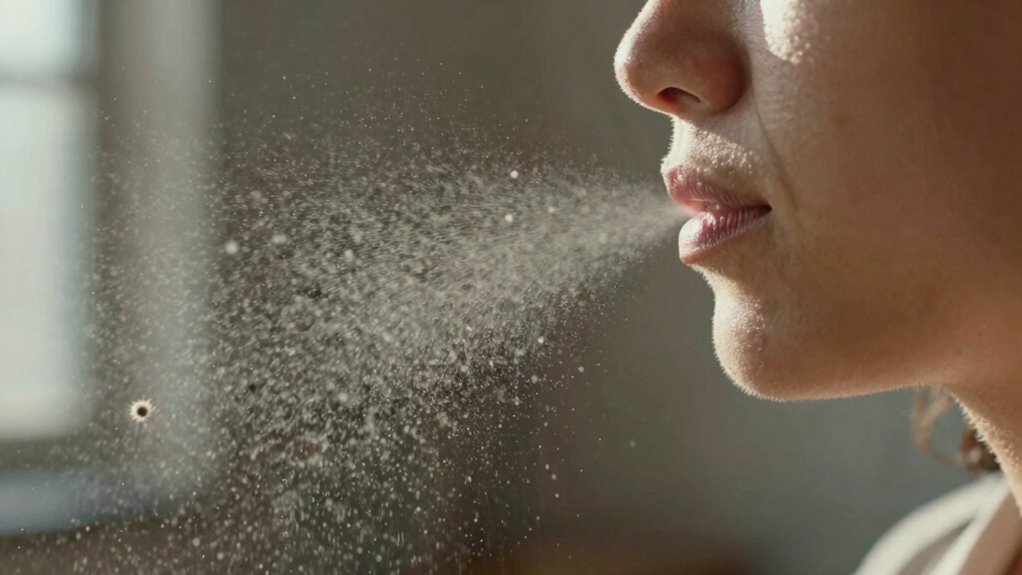
Smaller particles, like PM2.5, can penetrate deeper into your lungs, reaching your alveoli. Larger particles, such as PM10, tend to stay in your upper airways. This difference in penetration depth influences the health risks associated with each particle size.
Penetration Depth in Lungs
How does particle size influence how deeply pollutants can penetrate into your lungs? Smaller particles, like PM2.5, can reach the deepest parts of your lungs, where they deposit more efficiently. This particle deposition means these tiny particles can bypass your body’s natural defenses. Larger particles, like PM10, tend to settle in your upper airways, making them easier to clear out. But with PM2.5, the risk is greater because they evade lung clearance mechanisms, lingering longer and increasing health risks.
- Deeper penetration means more exposure to sensitive lung tissues.
- Higher particle deposition leads to potential inflammation.
- Persistent presence hampers lung clearance.
- Increased health threats, especially for vulnerable populations.
Health Risks by Size
Because particle size determines how deeply pollutants can enter your lungs, smaller particles like PM2.5 pose a considerably higher health risk than larger ones such as PM10. PM2.5 can penetrate deep into your respiratory system, reaching your alveoli and even entering your bloodstream. This increases your risk of respiratory problems, cardiovascular issues, and other health complications. Indoor plant care can help improve air quality by naturally filtering some pollutants and increasing humidity levels, which supports respiratory health. Effective particle filtration is essential for reducing these dangers, especially with air purification systems designed to target tiny particles. HEPA filters, for example, are highly effective at capturing PM2.5, improving indoor air quality. By choosing proper air purification methods, you can minimize exposure to the most harmful particles and protect your respiratory health from the dangers posed by fine particulate matter. Additionally, understanding particle filtration can help you select the most suitable air purifiers for your needs. A thorough understanding of air quality management techniques further enhances your ability to reduce indoor pollution levels effectively. Being aware of the market standards for air purifiers can also guide you toward more reliable and efficient products.
air purifier for dust and pet dander
As an affiliate, we earn on qualifying purchases.
As an affiliate, we earn on qualifying purchases.
Do PM2.5 or PM10 Penetrate Deeper Into Your Lungs Indoors?
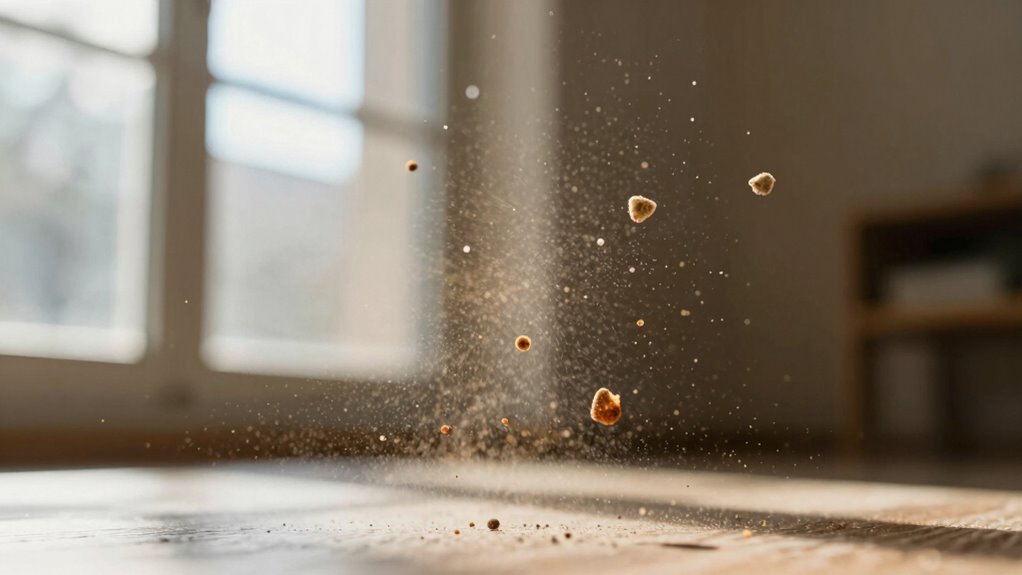
Since PM2.5 particles are smaller than PM10, they can penetrate deeper into your lungs indoors. Their tiny size allows them to bypass many filtration systems, making particle deposition more likely in the alveoli, where gas exchange occurs. This means you’re at greater risk of long-term health effects if these particles reach your lungs. Proper ventilation practices can help reduce indoor particle concentrations and improve air quality.
PM2.5 particles penetrate deeper into lungs, increasing long-term health risks indoors.
Consider these points:
- Smaller particles evade standard filters, reducing filtration efficiency.
- They settle deeper in your respiratory system, increasing health risks.
- Particle deposition varies with size; PM2.5 can reach the alveoli.
- Your indoor environment’s filtration determines how many particles make it through.
Understanding this helps you realize why PM2.5 poses a more significant threat indoors than larger particles.
What Are the Health Risks of Indoor PM2.5 and PM10?
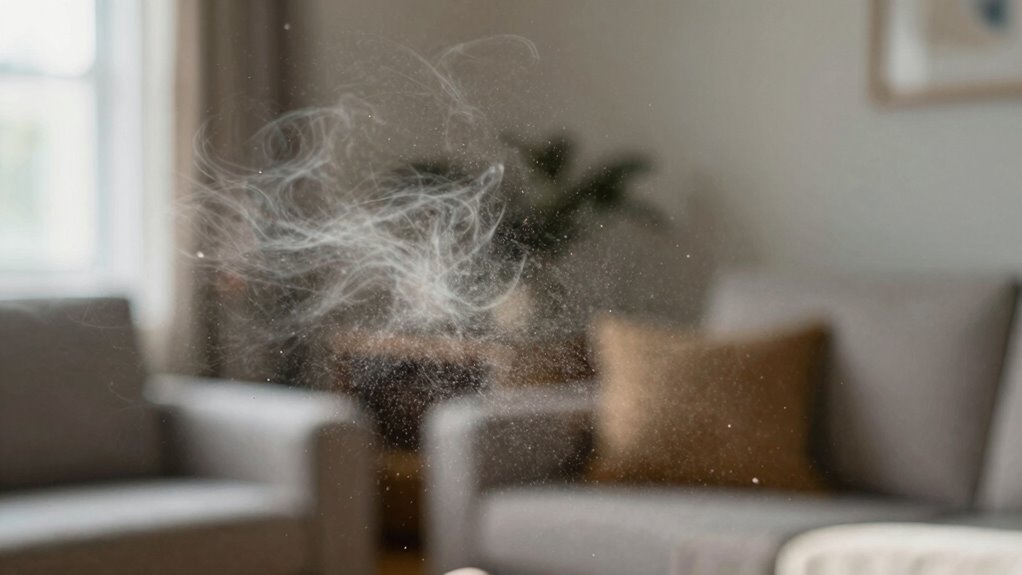
Indoor PM2.5 and PM10 particles can pose serious health risks, especially when inhaled regularly. Fine particles like PM2.5 can penetrate deep into your lungs and even enter your bloodstream, increasing your risk of respiratory and cardiovascular issues. Coarser PM10 particles can irritate your airways and cause coughing or asthma flare-ups. To reduce these risks, you need effective ventilation strategies that improve indoor air quality. Proper ventilation helps remove airborne particles and reduces their concentration. Additionally, choosing an air purifier with high efficiency can markedly cut down indoor PM levels. Enhanced ventilation techniques, such as exhaust fans and air exchange systems, can further improve air quality by continuously removing contaminated air. Regular maintenance of air filtration systems is also essential to ensure they operate at optimal performance. Implementing air quality monitors can provide real-time data, allowing you to take immediate action when pollutant levels rise. The right combination of ventilation and air purification minimizes your exposure, protecting your health from these harmful particles. Staying proactive about indoor air quality is essential for maintaining overall well-being. Incorporating air quality monitoring devices can help you track particle levels in real-time and take timely action.
How Can You Measure Indoor PM Levels?
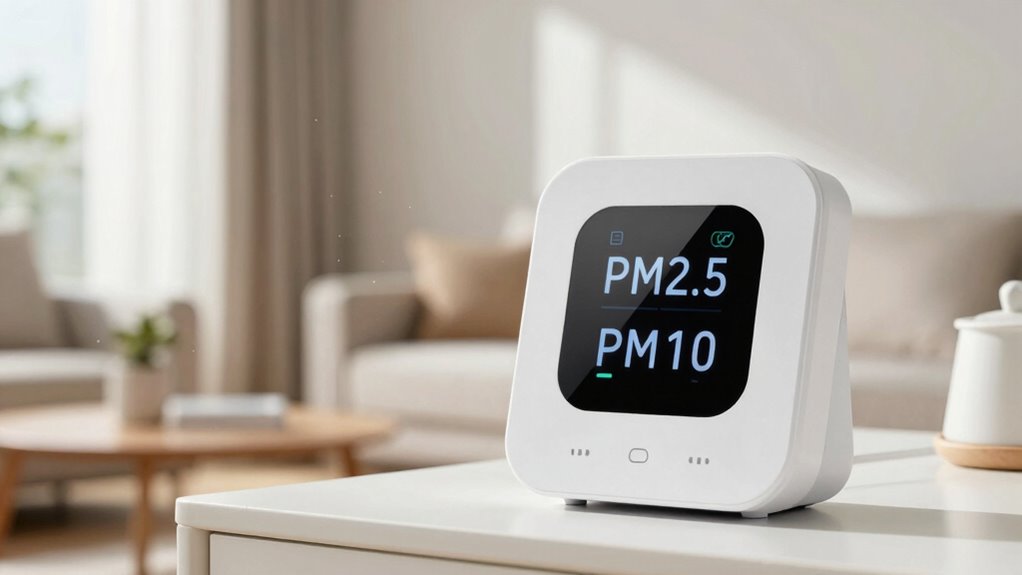
How can you accurately gauge the levels of PM particles floating in your home? The key is using effective air quality monitoring tools, like indoor air sensors. These devices provide real-time data, helping you understand your environment’s air quality instantly. For instance, incorporating air quality sensors into your routine can contribute to overall health, including better respiratory health. Here are four ways to measure indoor PM levels:
- Install smart indoor air sensors for continuous monitoring.
- Use portable particle counters to assess specific rooms.
- Check sensor readings regularly to identify pollution spikes.
- Connect sensors to apps for easy tracking and alerts.
How Can You Reduce PM2.5 and PM10 Indoors?
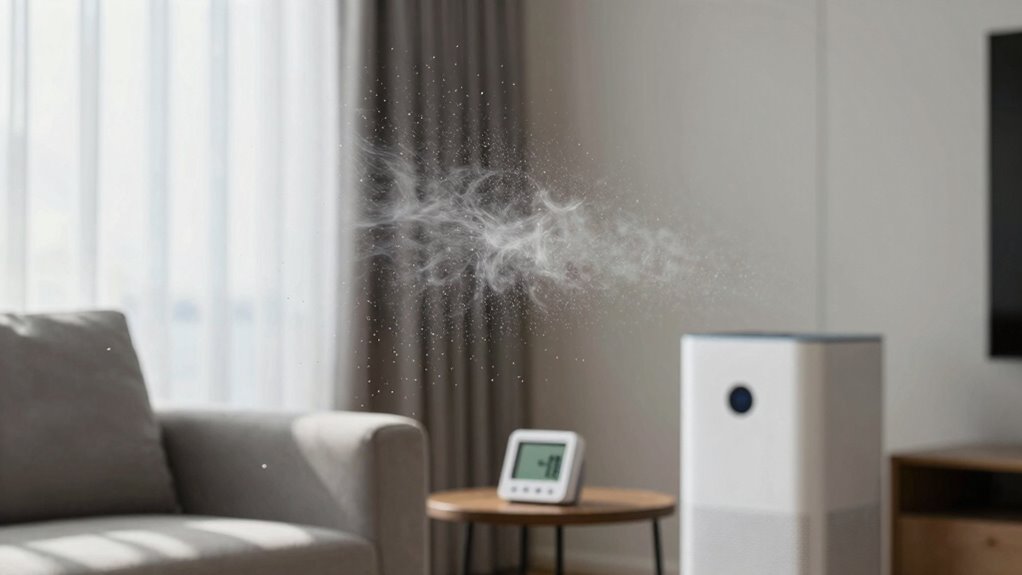
To effectively reduce PM2.5 and PM10 levels inside your home, start by improving ventilation and minimizing sources of pollution. Keep windows open when outdoor pollution levels are low, and avoid indoor activities that generate dust or smoke. Regularly maintain and replace air filters to ensure they effectively trap fine particles. Using HEPA filters can considerably improve air quality. Be mindful of outdoor pollution, especially during high pollution days, and limit outdoor activities that bring pollutants inside.
| Action | Benefit |
|---|---|
| Improve ventilation | Dilutes indoor particles, reduces buildup |
| Regular air filter maintenance | Keeps filters effective against PM2.5 and PM10 |
| Limit outdoor pollution exposure | Prevents bringing additional particles indoors |
Should You Be More Concerned About PM2.5 or PM10 Indoors?
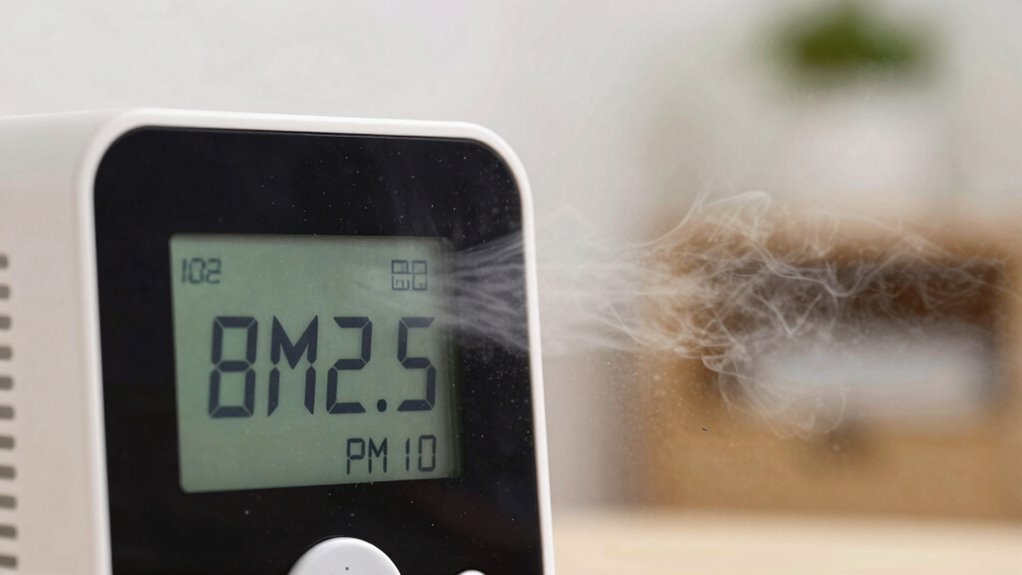
You might wonder if PM2.5 or PM10 poses a bigger threat indoors. Since particle size affects how deeply pollutants penetrate your lungs, understanding their health impacts is vital. Considering your indoor pollution sources and taking appropriate precautions can help you stay safer.
Particle Size and Impact
Because of their small size, PM2.5 particles can penetrate deeper into your lungs and even enter the bloodstream, making them more harmful than larger particles like PM10. Their tiny particle composition allows them to bypass your body’s natural defenses, especially when environmental factors like indoor humidity or airflow increase their concentration. These microscopic particles pose a silent threat, possibly causing long-term health issues. Consider these points:
- PM2.5’s ability to reach your bloodstream heightens the risk of heart and lung diseases.
- Their small size means they stay airborne longer, increasing exposure.
- Environmental factors, such as poor ventilation, amplify their impact.
- Their composition often includes toxic chemicals, making them deadlier than larger particles.
Stay aware—smaller particles are the real indoor threat.
Indoor Pollution Sources
When it comes to indoor air quality, understanding the sources of pollution helps determine which particles pose the biggest threat. Common indoor pollution sources include cooking, smoking, cleaning products, and even outdoor air that enters your home. These activities often release both PM2.5 and PM10 particles, but their impact depends on the source and particle size. To effectively reduce indoor pollution, you need an air purifier with high efficiency in indoor air filtration, especially one capable of capturing smaller PM2.5 particles. While larger PM10 particles settle quickly, fine PM2.5 particles stay airborne longer and penetrate deeper into your lungs. Knowing where these particles originate helps you choose the right filtration system and improve your indoor air quality.
Health Risks and Precautions
Indoor air pollution poses significant health risks, but understanding which particles are more dangerous helps prioritize precautions. PM2.5 particles are tiny enough to bypass your body’s defenses, leading to deeper lung absorption and increased health issues. To protect yourself, consider these precautions:
- Use high-quality air filtration systems designed to trap fine particles.
- Regularly replace filters to maintain effectiveness against PM2.5.
- Increase ventilation to dilute indoor pollutants.
- Limit activities that generate airborne particles, like smoking or burning candles.
Focusing on reducing PM2.5 levels is essential because these particles pose a greater threat due to their ability to penetrate deeply into your lungs and bloodstream. Clear awareness enables you to take targeted steps for a safer indoor environment.
Tips for Improving Indoor Air Quality and Protecting Your Health
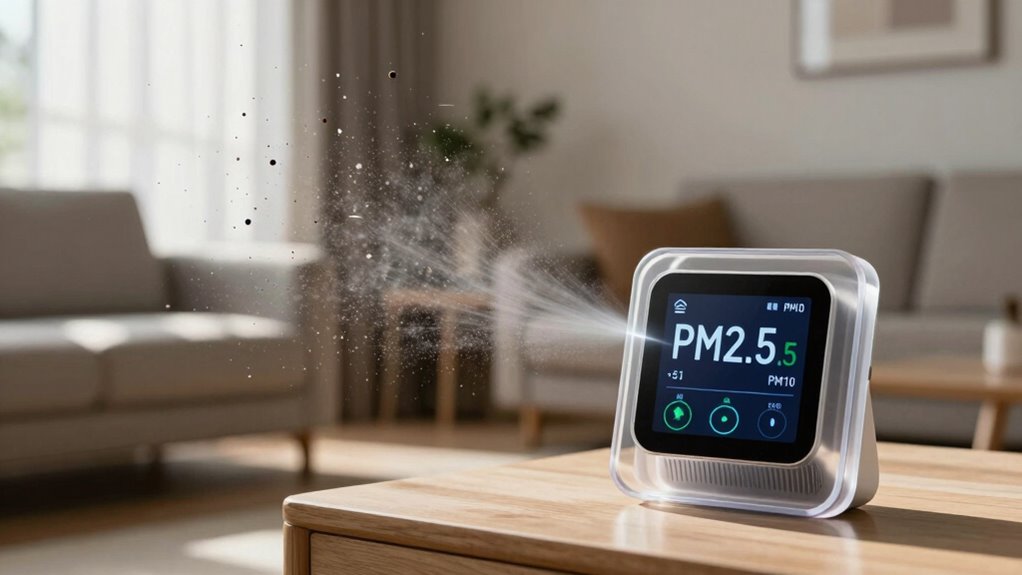
Improving your indoor air quality is essential for safeguarding your health, especially since you spend a considerable amount of time indoors. Understanding particle behavior helps you choose effective air filtration methods. Use high-efficiency filters, like HEPA, to trap PM2.5 and PM10 particles more effectively. Keep your home well-ventilated, opening windows when outdoor air quality allows, to reduce particle buildup. Regularly clean and vacuum with a HEPA filter to prevent dust and allergens from accumulating. Avoid smoking indoors and minimize the use of aerosols or strong chemicals. Maintaining humidity levels around 40-50% also helps reduce airborne particles. By actively managing your environment and selecting proper air filtration, you can notably improve indoor air quality and protect your health from harmful particles.
Frequently Asked Questions
Can Indoor Plants Effectively Reduce PM2.5 and PM10 Levels?
Indoor plants can help with particulate reduction, but their plant efficacy in markedly lowering PM2.5 and PM10 levels is limited. You might notice some improvement in air quality, but relying solely on plants won’t eliminate these particles effectively. To better protect yourself, combine plants with proper ventilation, air purifiers, and regular cleaning. Plants provide some benefits, but they shouldn’t be your primary defense against indoor particulate pollution.
How Often Should Indoor Air Filters Be Replaced for Optimal Protection?
Don’t wait until it’s too late to change your air filters. For maximum filter lifespan, you should replace your indoor air filters every 1 to 3 months, depending on usage and air quality. Regular filter replacement frequency ensures your system runs efficiently, reducing indoor particles effectively. Staying on top of this task is key to maintaining healthy air, so mark your calendar and stick to the schedule.
Do Air Purifiers Target Both PM2.5 and PM10 Equally?
Air purifiers don’t target both PM2.5 and PM10 equally. Their efficiency depends on the particle filtration technology used. HEPA filters, for example, excel at capturing PM2.5 particles due to their fine mesh, while some filters may not be as effective against larger PM10 particles. To maximize your indoor air quality, choose an air purifier with high efficiency and advanced filtration designed specifically for both particle sizes.
Are There Specific Building Materials That Emit More Indoor Particulate Matter?
Certain building materials, like pressed wood products, paints, and sealants, emit more indoor particulate matter through building material emissions. These pollutant sources release fine particles and chemicals that can affect your indoor air quality. You should choose low-emission materials and guarantee proper ventilation to minimize exposure. Regular cleaning and air purifiers can also help reduce particulate buildup from these pollutant sources, creating a healthier indoor environment.
How Do Weather Conditions Influence Indoor PM Levels?
Weather conditions markedly impact indoor PM levels through outdoor pollution and seasonal variations. When outdoor pollution is high, especially during windy or dry seasons, more particles enter your home. Cold weather traps pollutants inside, raising indoor PM levels, while warmer seasons may allow better ventilation. You can reduce this impact by sealing gaps, using air purifiers, and keeping windows closed during pollution spikes or adverse weather, maintaining cleaner indoor air.
Conclusion
Ultimately, understanding whether PM2.5 or PM10 poses a greater indoor threat is like unraveling a mystery—each particle size plays a sneaky role in your health. By staying informed and taking action, you hold the power to clear the air and protect yourself. Don’t let invisible enemies win—arm yourself with knowledge, because your lungs deserve the best defense in this silent battle for clean air.
Fall yard work Picks
leaf blowers
As an affiliate, we earn on qualifying purchases.