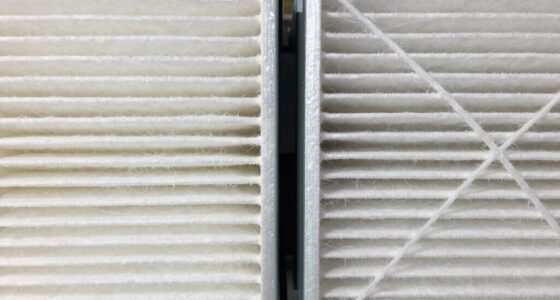
Smart sensors in your air purifier or HVAC system constantly monitor air quality by detecting particles, VOCs, and gases using advanced sensing technologies. They analyze real-time data to assess whether your indoor air is “dirty” based on preset thresholds for pollutants. If the levels rise, sensors differentiate between slight and severe pollution, triggering the auto mode to activate purification. To discover how these smart systems make such decisions, keep exploring how sensors use algorithms and environmental factors.

Get home appliances delivered free with Prime
- Fast, free delivery on millions of items
- Prime Video, Amazon Music and more included
- Member-only deals all year
Key Takeaways
- Smart sensors detect pollutants like PM2.5, VOCs, and gases, comparing readings against set thresholds to determine air quality levels.
- Continuous real-time data collection allows sensors to identify sudden increases in pollutants indicating ‘dirty’ air.
- Proper sensor placement and calibration ensure accurate detection and reduce false alarms when assessing air quality.
- Advanced algorithms analyze sensor inputs, environmental factors, and pollutant severity to decide when auto mode activates.
- Sensor sensitivity and multi-pollutant detection help differentiate between slight and severe air quality deterioration.
Products Worth Considering

Blueair Blue Pure 511i Max Smart Air Purifier

Levoit Core 300S-P Smart Wi-Fi Air Purifier

Blueair Blue Pure 211i Max Smart Air Purifier
As an affiliate, we earn on qualifying purchases.
What Are Smart Sensors in Air Purifiers and HVAC Systems?
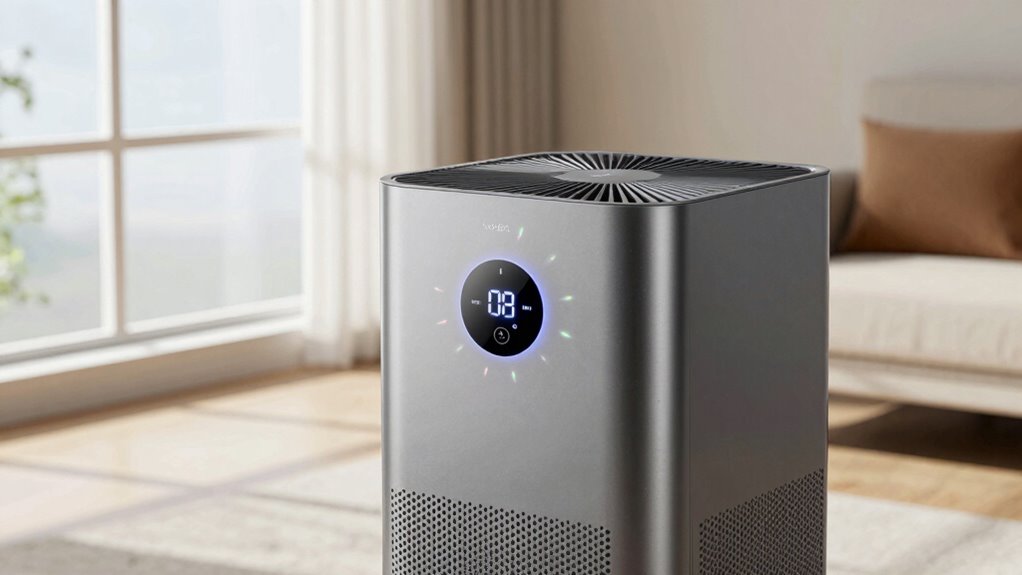
Smart sensors are the key components that enable air purifiers and HVAC systems to adjust their performance automatically. Proper sensor placement is crucial; placing sensors in locations with representative air quality ensures accurate readings. For example, avoiding spots near vents or direct airflow prevents skewed data. Calibration techniques are also essential—they help maintain sensor accuracy over time by adjusting readings to known standards. Regular calibration, whether manual or automatic, ensures the sensors respond correctly to changes in particles, gases, and other pollutants. These sensors detect air quality levels in real-time, allowing your system to react swiftly, whether increasing filtration or ventilation. Additionally, understanding the sensor placement strategy helps ensure that your system receives accurate data for optimal performance. Understanding how sensor calibration and placement work together helps you optimize your system’s efficiency and maintain healthier indoor air, especially in environments where air quality can fluctuate due to external factors such as outdoor pollution or indoor activities. Properly sensor maintenance also extends the lifespan of your monitoring system and ensures consistent performance. Implementing proper sensor positioning can significantly enhance the accuracy of air quality readings, leading to more effective system responses.
How Do Sensors Measure Air Quality? Particles, Gases, and More
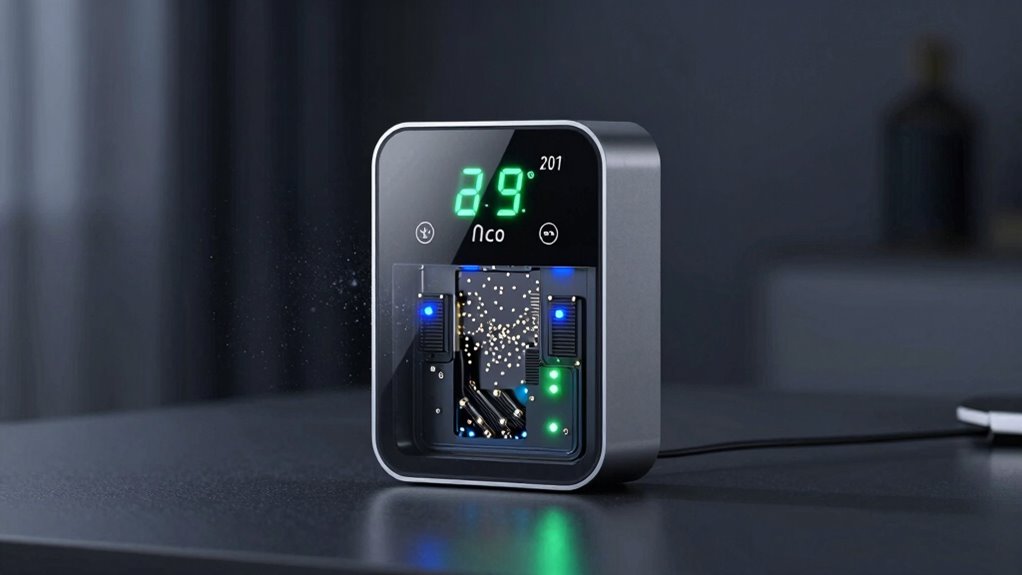
Sensors measure air quality by detecting specific pollutants such as particles and gases through various sensing technologies. These sensors identify airborne contaminants like dust, pollen, volatile organic compounds (VOCs), and harmful gases such as carbon monoxide and ozone. The effectiveness of these sensors depends on their sensitivity, which determines how accurately they detect low levels of pollutants. Higher sensor sensitivity allows for more precise readings, ensuring your device responds quickly to changes in air quality. Different sensors use techniques like laser scattering to measure particles or electrochemical sensors for gases. Sensor sensitivity plays a crucial role in providing reliable data for air quality monitoring. By continuously monitoring airborne contaminants, these sensors provide real-time data that helps your system decide when to activate purification or ventilation, keeping your indoor air clean and safe. Additionally, advances in sensor calibration improve the accuracy and dependability of air quality measurements over time. Moreover, implementing advanced sensing technologies enhances the detection capabilities, leading to better environmental control. Improved signal processing algorithms also contribute to reducing false alarms and increasing data reliability.
How Do Real-Time Data and Continuous Monitoring Keep Your Air Clean?
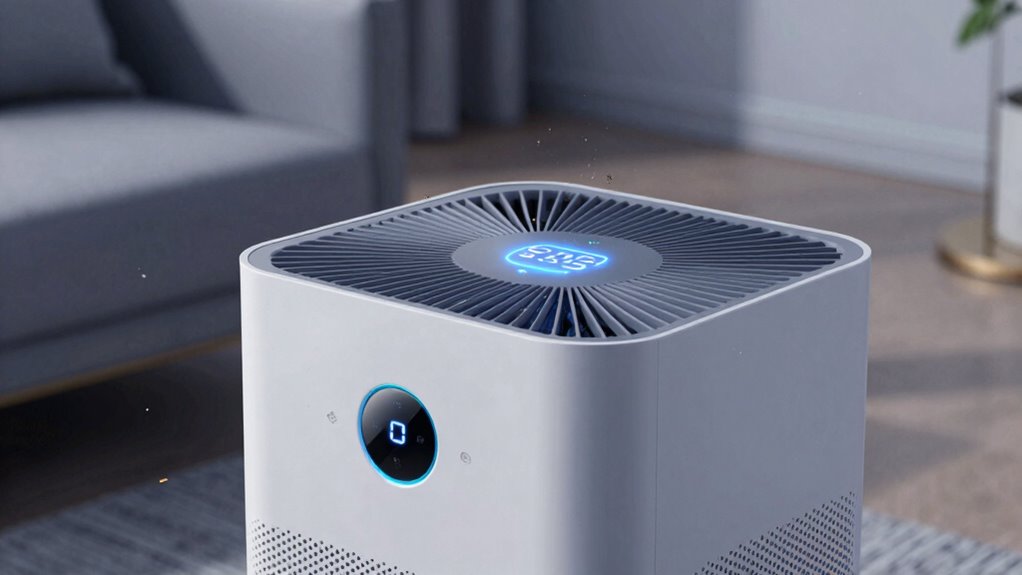
Real-time data and continuous monitoring work together to keep your indoor air clean by providing immediate insights into air quality changes. With instant updates, your smart sensors can detect when air quality drops below established air quality standards. Sensor technology advancements have made these devices more accurate and responsive, enabling them to track fluctuations constantly. This continuous feedback allows your ventilation system or purifier to activate promptly, preventing pollutants from accumulating. By constantly monitoring, you avoid delays that could lead to unhealthy indoor environments. This real-time approach ensures your air remains safe and comfortable, adapting instantly to changes. Additionally, sensor accuracy improvements have significantly enhanced the reliability of real-time monitoring, ensuring more precise detection of pollutants. The integration of advanced sensor technology further boosts the effectiveness of these systems, providing homeowners with greater peace of mind. Moreover, implementing real-time alerts can notify you immediately of any air quality issues, allowing for swift action. These features rely on continuous data flow, which is crucial for maintaining optimal air quality. For example, sensor calibration plays a vital role in ensuring ongoing accuracy of readings. Ultimately, it’s this seamless flow of data that helps maintain ideal air quality and protects your health.
What Criteria Do Sensors Use to Detect Poor Air Quality?
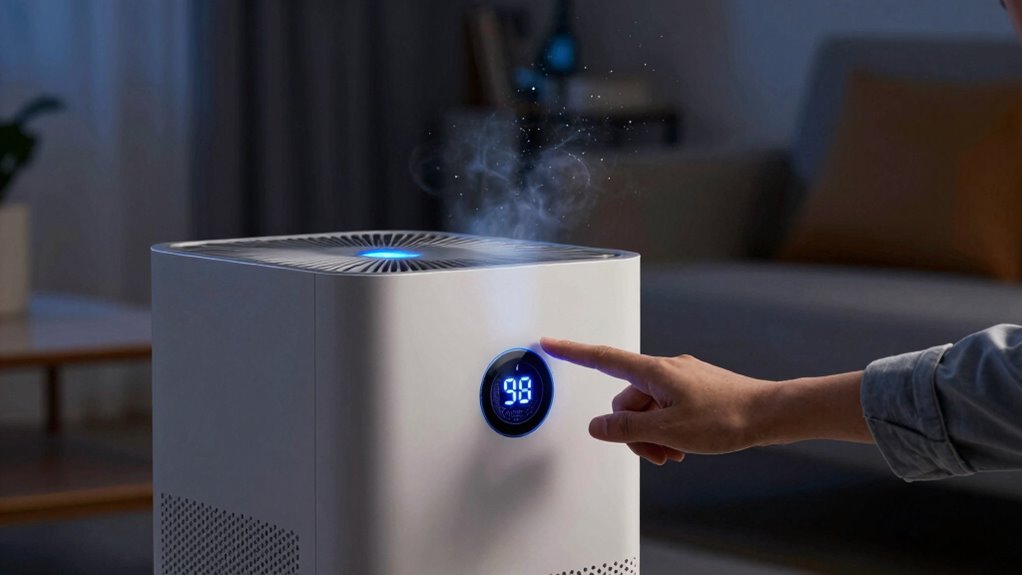
To detect poor air quality effectively, devices analyze specific pollutants and environmental conditions that indicate unhealthy air. Sensors evaluate factors like pollutant levels, humidity, and particulate matter, adjusting their sensitivity to guarantee accurate detection. Sensor sensitivity determines how easily a sensor responds to changes, impacting air filtration decisions. Here’s a quick overview:
| Pollutant/Condition | Typical Threshold | Sensor Sensitivity Impact |
|---|---|---|
| Particulate Matter (PM2.5) | 35 µg/m³ | Higher sensitivity detects lower levels |
| Volatile Organic Compounds (VOCs) | 0.5 ppm | Adjusts filtration response |
| Carbon Dioxide (CO2) | 1000 ppm | Sensitive sensors trigger air circulation |
| Humidity | 40-60% | Affects mold growth, influences sensor readings |
| Smoke | Visible or 0.3 ppm | Sensor responsiveness varies with sensitivity |
These criteria guide sensors, ensuring your air filtration system responds promptly to poor air quality. Additionally, advancements in sensor technology allow for more precise detection of air pollutants, further enhancing system responsiveness. Enhanced sensor calibration and environmental data integration improve detection accuracy, making systems more reliable. Proper calibration helps account for local environmental conditions, ensuring consistent performance across different settings. Furthermore, multi-pollutant detection capabilities enable sensors to identify various contaminants simultaneously, increasing monitoring efficiency. As sensor technology continues to evolve, the ability to detect multiple pollutants simultaneously further enhances the effectiveness of air quality monitoring systems.
How Do Threshold Levels Determine When the Air Is Too Dirty?
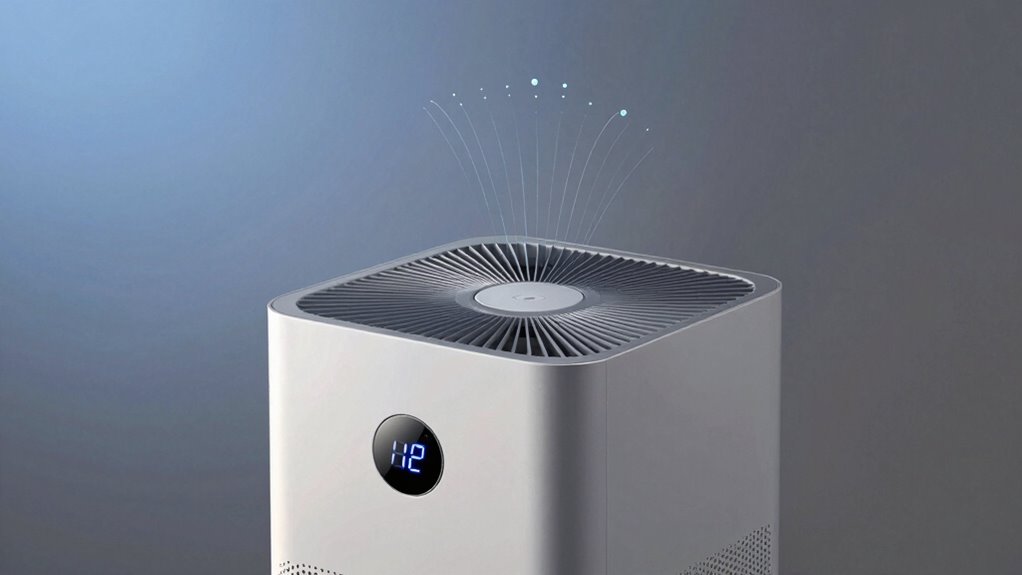
Threshold levels rely on sensor calibration standards to guarantee accuracy, so you can trust the readings. When air quality worsens, the threshold adjustment mechanism determines if it’s time to activate auto mode. Proper calibration and adjustments help your system respond promptly to dirty air conditions. Regular maintenance, including filter checks, ensures sensors and purifiers operate at peak performance. Additionally, adhering to child development principles ensures that sensor responses are reliable and safe for indoor environments. Maintaining sensor calibration standards is essential for consistent detection and response accuracy.
Sensor Calibration Standards
Sensor calibration standards set the foundation for how air quality monitors detect when the environment becomes too dirty. These standards ensure that sensors provide accurate and reliable readings across different devices and conditions. Consistent calibration prevents false alarms or missed detections, maintaining standards consistency. When calibrating sensors, manufacturers follow strict procedures to set baseline measurements and adjust for environmental variables. This process involves:
- Using reference air samples with known pollutant levels
- Adjusting sensor outputs to match these benchmarks
- Regularly verifying calibration accuracy over time
- Documenting calibration procedures for quality control
Adhering to calibration standards guarantees that threshold levels are based on precise data, allowing your device to accurately determine when the air is too dirty.
Threshold Adjustment Mechanism
Understanding how threshold levels are set and adjusted is key to knowing when your air quality monitor signals that the environment is too dirty. The threshold adjustment mechanism relies on sensor placement, guaranteeing sensors are positioned where they accurately detect air quality changes. Proper placement minimizes false alarms and improves sensitivity. Calibration frequency also plays an essential role; regular calibration helps maintain accurate readings and prevents drift that could skew threshold settings. When thresholds are properly calibrated and sensors are well-placed, the system can reliably determine when air pollution exceeds acceptable levels. These thresholds act as decision points, triggering alerts or auto mode actions. By understanding this mechanism, you can better interpret your monitor’s signals and ensure your environment remains healthy.
How Do Sensors Tell the Difference Between Slight and Severe Pollution?
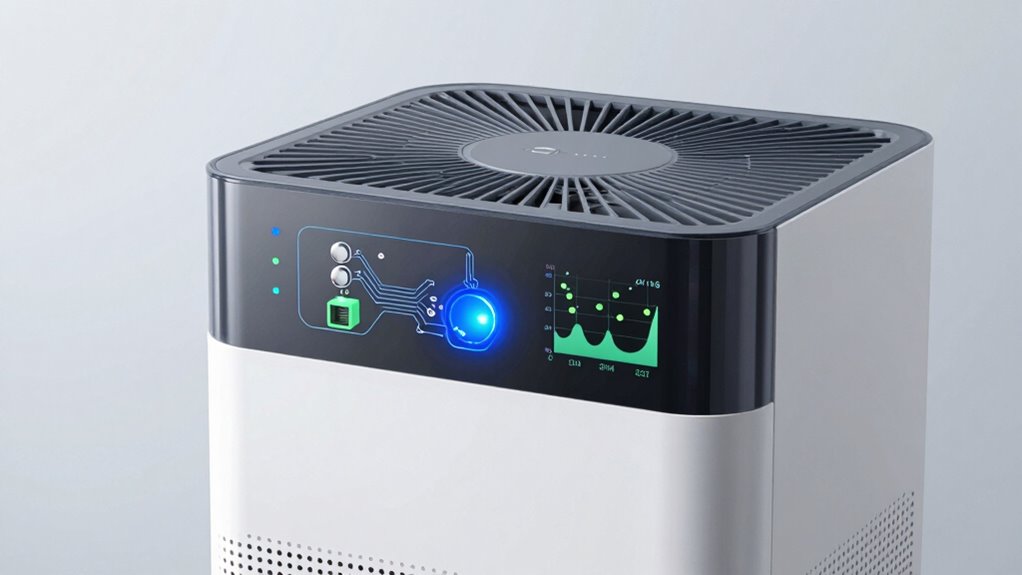
To distinguish between slight and severe pollution levels, sensors analyze the concentration of pollutants in the air. Sensor sensitivity plays a key role, allowing sensors to detect even minor changes. Pollution differentiation depends on how precisely sensors measure pollutant levels, ensuring accurate readings.
Sensors detect pollutant concentrations to differentiate slight from severe pollution levels accurately.
You should consider these factors:
- Sensor calibration adjusts sensitivity for accurate detection.
- Threshold levels define the boundary between slight and severe pollution.
- Real-time data processing helps identify rapid increases in pollutant concentrations.
- Multiple pollutant sensors work together to improve pollution differentiation.
How Do Smart Algorithms Use Sensor Data to Activate Auto Mode?
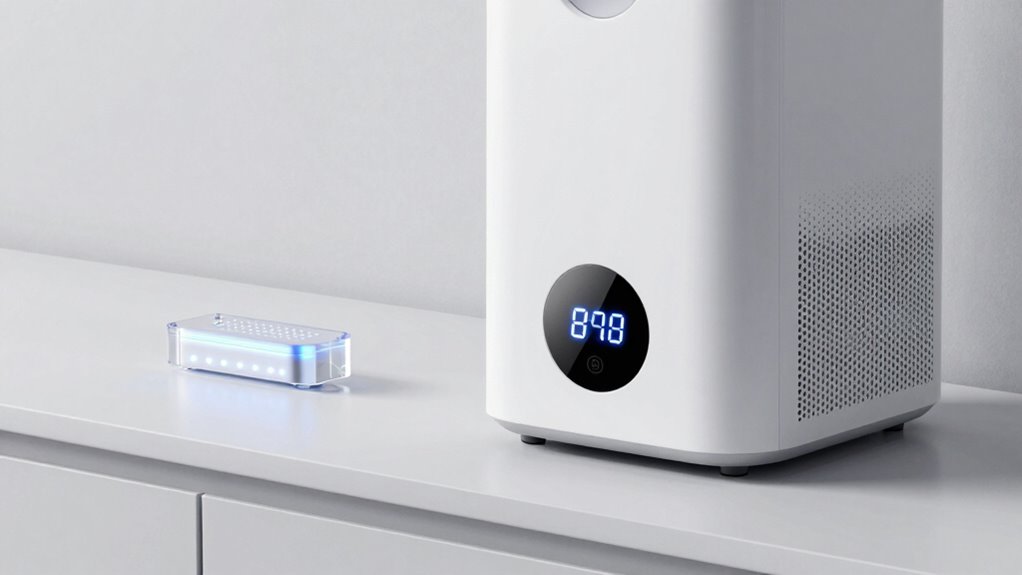
Smart algorithms analyze sensor data to determine when to activate Auto Mode, ensuring your device responds appropriately. They interpret various signals, like pollution levels or temperature, to make quick decisions. This process combines sensor data interpretation with algorithmic decision-making to keep your environment optimized.
Sensor Data Interpretation
Sensors continuously gather real-time data from your vehicle’s surroundings and internal systems, providing the foundation for auto mode activation. Your smart algorithms interpret this data by analyzing patterns and thresholds to decide when to trigger specific actions. Proper sensor placement guarantees accurate readings, while data visualization helps you understand the sensor inputs at a glance. To interpret sensor data effectively, the system considers:
- Sensor calibration and positioning for reliable readings
- Cross-referencing multiple sensor inputs to avoid false positives
- Filtering out noise and irrelevant data for clarity
- Recognizing patterns indicating environmental changes, like air quality shifts
This process allows your vehicle to respond swiftly and accurately, activating auto mode precisely when needed to maintain comfort and safety.
Algorithmic Decision Making
When your vehicle detects specific patterns and threshold breaches in sensor data, its algorithms quickly analyze these signals to determine whether auto mode should activate. They use sensor fusion to combine inputs from air quality sensors, temperature, and humidity, creating a thorough picture of the environment. Machine learning models then interpret this data, recognizing patterns that indicate poor air quality or other issues. These algorithms weigh the sensor inputs against predefined thresholds and learned behaviors, deciding if conditions warrant switching to auto mode. This process happens in real-time, ensuring the system responds swiftly and accurately. By continuously learning from new data, the algorithms improve their decision-making over time, making your vehicle smarter and more reliable in maintaining ideal air quality automatically.
What Factors Like Humidity and Odors Affect Sensor Readings?
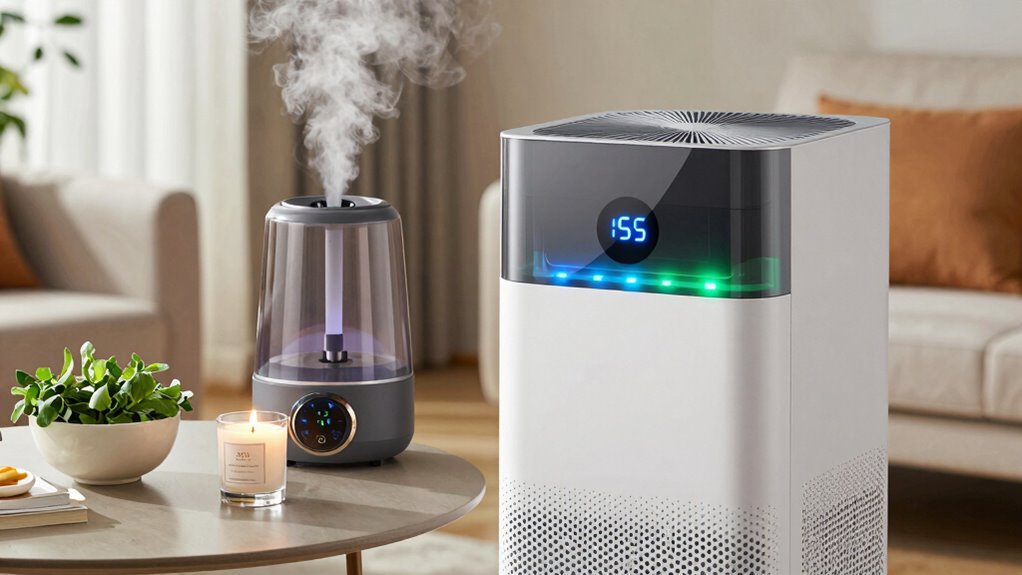
Factors like humidity and odors can substantially influence sensor readings, sometimes causing inaccurate results if not properly accounted for. Humidity impact can skew sensor sensitivity, leading to false positives or negatives. Odor detection may be affected by persistent smells or airborne chemicals, confusing the sensor’s assessment of air quality. To understand these influences better, consider these factors:
- Elevated humidity levels can cause sensors to misread as dirtier air due to moisture interference.
- Strong or lingering odors may trigger false alarms in odor detection systems.
- Rapid changes in humidity can lead to inconsistent sensor data.
- Chemical odors from cleaning agents or perfumes can interfere with accurate readings.
Being aware of these factors helps you interpret sensor data more accurately and guarantees ideal air quality management.
How Do Sensor Accuracy and Maintenance Impact Auto Mode Performance?
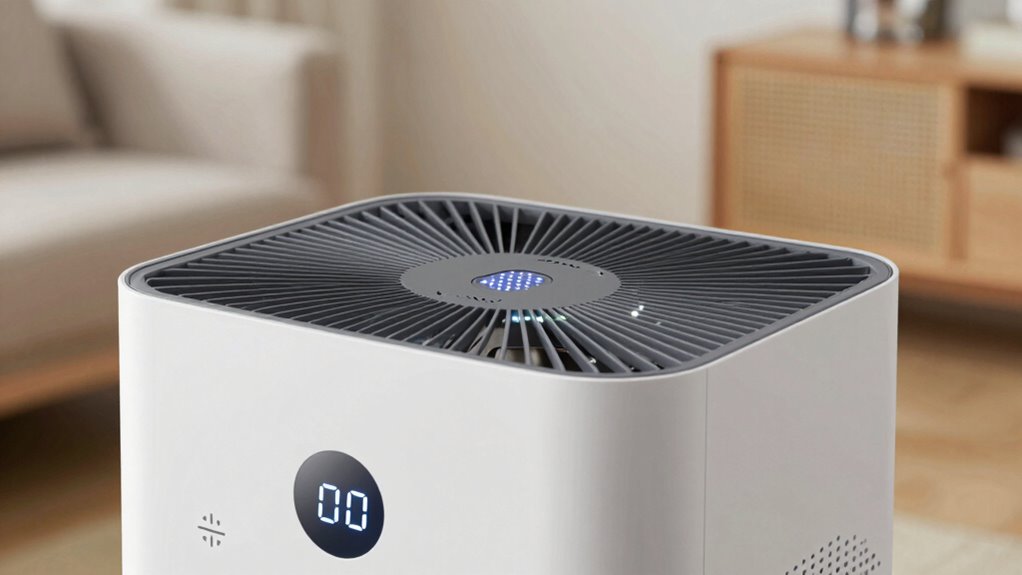
Maintaining sensor accuracy is essential for the reliable performance of Auto Mode. Over time, sensors experience a limited sensor lifespan, which can cause readings to drift if not properly maintained. Regular calibration frequency helps guarantee your sensor provides precise data, preventing false positives or negatives that could lead to unnecessary air purifying cycles or missed detection of pollutants. If you neglect calibration or ignore signs of sensor degradation, Auto Mode’s decision-making becomes less reliable, potentially compromising air quality. Proper maintenance, including timely calibration and awareness of sensor lifespan, keeps your system functioning at its best. Consistent care ensures your smart sensor continues to accurately assess air quality, allowing Auto Mode to respond appropriately and maintain a healthy indoor environment.
Frequently Asked Questions
Can Smart Sensors Distinguish Between Different Types of Airborne Pollutants?
Yes, smart sensors can distinguish between different types of airborne pollutants through pollutant specificity. They analyze specific chemical signatures, but their accuracy depends on proper sensor calibration. Regular calibration guarantees the sensors accurately identify and differentiate pollutants like dust, smoke, or VOCs. This helps your air purifier respond effectively, targeting the right pollutants and improving air quality.
How Do Sensors Adapt to Changing Environmental Conditions Over Time?
Sensors adapt to changing environmental conditions by undergoing regular calibration, ensuring accurate readings over time. They also incorporate environmental learning, which allows them to adjust their sensitivity based on patterns and fluctuations in air quality. This continuous process helps sensors maintain precision despite temperature, humidity, or pollutant level changes, so your air quality readings stay reliable and your air purifier responds effectively to real-time conditions.
Are There Limitations to Sensor Detection in Large or Complex Spaces?
Yes, there are limitations to sensor detection in large or complex spaces. You might find that sensor calibration impacts their accuracy, especially if they aren’t properly adjusted for the environment. Additionally, limited spatial coverage can cause blind spots, meaning some areas might not be monitored effectively. To improve detection, verify sensors are well-calibrated and strategically placed to maximize coverage, reducing blind spots in complex or expansive spaces.
How Quickly Do Sensors Respond to Sudden Changes in Air Quality?
Like a lightning-fast email, sensor response time varies, but most react within seconds to minutes. You’ll notice sensors detect air quality fluctuations quickly, often instantly adjusting air purifiers or ventilators. For sudden changes, such as smoke or strong odors, sensors are designed to respond rapidly, usually within a few seconds, ensuring you breathe cleaner air without delay. This swift reaction helps maintain ideal indoor air quality at all times.
What Role Do User Settings Play in Sensor-Based Auto Mode Decisions?
Your user preferences and customization options directly influence how sensor-based auto mode decisions are made. You can set specific air quality thresholds or choose automatic adjustments, ensuring the system responds to your comfort levels. By customizing these settings, you enable the sensors to prioritize your preferences, making the air purification process more tailored and efficient. This personalized approach helps maintain ideal air quality according to your unique needs.
Conclusion
Understanding how smart sensors work helps you see that your air purifier’s auto mode is like a vigilant guardian, constantly watching over your indoor environment. They detect even tiny changes in air quality, ensuring you’re always breathing clean air. Just like a watchful eye, these sensors keep your space comfortable and safe, adapting quickly to pollution spikes. When maintained and calibrated properly, they’re your best allies in creating a healthier home environment.