
To effectively reduce nicotine residue and cigarette odors in your room, choose an air purifier with a high-quality activated carbon filter combined with a HEPA filter. The carbon removes odors and chemical residues, while the HEPA captures microscopic particles like tar and nicotine. Guarantee the device matches your room size and is used consistently for best results. Keep filters maintained and positioned properly. Continue exploring for more tips on creating a cleaner, fresher environment.
Key Takeaways
- Choose air purifiers with both HEPA and high-efficiency activated carbon filters to effectively remove nicotine residues and odors.
- Ensure the purifier’s CADR rating matches your room size for optimal air cleaning performance.
- Properly position the purifier in a central, unobstructed location to maximize air circulation and filtration efficiency.
- Regularly replace filters according to manufacturer guidelines to maintain maximum removal of nicotine and chemical residues.
- Use the purifier consistently during and after smoking to reduce secondhand smoke particles and lingering nicotine residue.
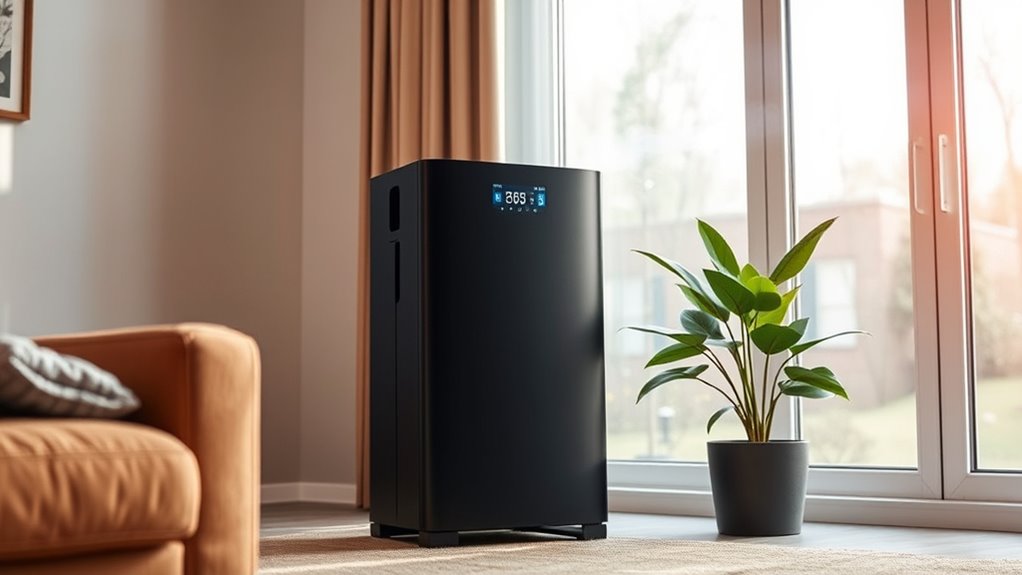
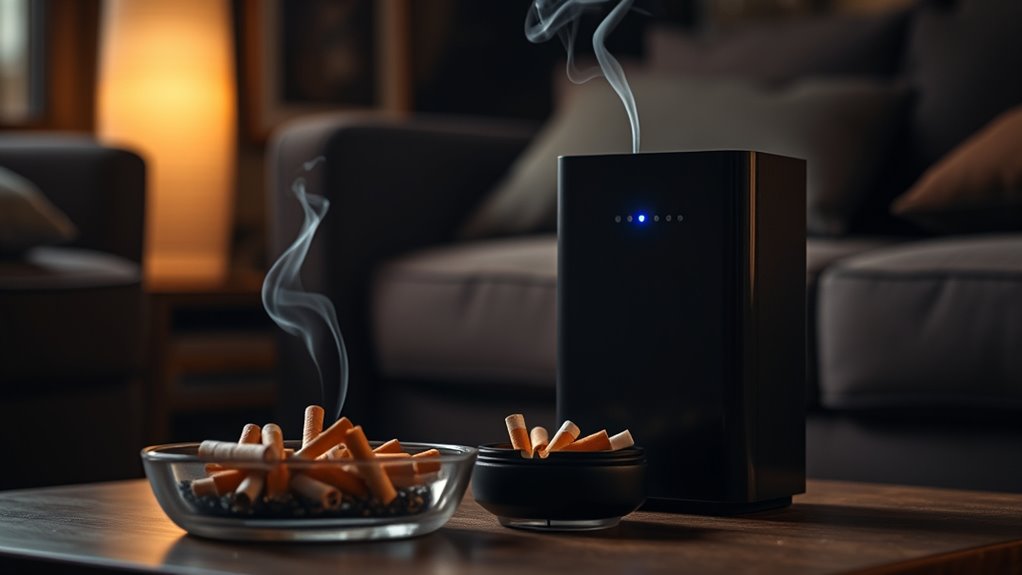
Have you ever wondered how to keep your indoor air clean despite smoking indoors? If you’re a smoker or share your space with someone who smokes, you know how challenging it can be to eliminate the lingering smell of cigarette smoke and ensure healthy air quality. Secondhand smoke isn’t just unpleasant; it’s also a health hazard, containing toxins that settle into furniture, walls, and fabrics. That’s where an air purifier designed for smokers’ rooms becomes essential. These devices are specifically built to target cigarette smoke particles, odors, and nicotine residue, making the air safer to breathe and your space more comfortable.
A good air purifier for smokers should prioritize odor elimination. Cigarette smoke contains thousands of chemicals, many of which stick to surfaces and become embedded in the air. Standard purifiers may not be enough; you need one with advanced filtration. Look for models equipped with high-efficiency activated carbon filters, which are excellent at absorbing and neutralizing smoke odors. These filters act like sponges, trapping odor molecules and preventing them from circulating back into the room. The effectiveness of odor elimination directly impacts how fresh your space feels, especially in rooms where smoking occurs regularly.
Beyond odor, secondhand smoke particles are a major concern. These microscopic particles linger in the air long after the cigarette is out. HEPA filters are vital here because they can capture airborne particles as small as 0.3 microns, including the fine nicotine particles and tar that float in the air. Combining a HEPA filter with a high-quality activated carbon filter provides a comprehensive approach to reducing secondhand smoke exposure. This combination ensures that both the visible and invisible residues are minimized, considerably improving indoor air quality. Additionally, choosing an air purifier with a high CADR rating can ensure more efficient and faster cleaning of the air in larger rooms.
When selecting an air purifier for a smoker’s room, consider the size of the space and the purifier’s coverage area. A unit that’s too small won’t effectively clean the air, while an oversized one might be unnecessary and cost more than needed. Proper placement of the purifier also matters; position it where air circulation is ideal, such as away from corners or obstructions. Regular maintenance, including replacing filters as recommended, is essential to keep it functioning at peak performance.
Frequently Asked Questions
Can Air Purifiers Eliminate All Nicotine Residues Completely?
Air purifiers can’t eliminate all nicotine residues completely because chemical reactions and air filtration have limits. While high-quality filters, like HEPA or activated carbon, can substantially reduce airborne nicotine and related chemicals, some residues settle on surfaces and can’t be fully removed by air filtration alone. To minimize nicotine buildup, you should combine air purification with regular cleaning and ventilation, ensuring a healthier environment for everyone.
How Often Should Filters Be Replaced for Optimal Nicotine Removal?
For ideal nicotine removal, you should replace filters regularly. Typically, follow the filter lifespan suggested by the manufacturer, often every 3 to 6 months. Stick to a strict replacement schedule to guarantee your purifier continues to work effectively. Neglecting timely changes can lead to reduced filtration power, allowing nicotine residues to linger. Stay proactive with your filter maintenance to maximize freshness and keep the air clean and clear.
Are There Specific Air Purifier Models Best Suited for Smokers’ Rooms?
You should look for air purifiers with HEPA filters and activated carbon for smokers’ rooms. HEPA filters trap nicotine particles and other airborne pollutants, while activated carbon absorbs odors and residual chemicals. Models like the Molekule Air, Blueair Classic 605, or Winix 5500-2 are excellent choices, as they combine these features to effectively reduce nicotine residue. Choose a purifier designed for high airflow and continuous use for best results.
Do Air Purifiers Also Remove Odors Caused by Smoking?
Yes, air purifiers effectively remove smoke smell and odor from smoking. They trap and neutralize airborne particles, including nicotine residue and volatile organic compounds, that cause lingering odors. With HEPA filters and activated carbon layers, they target both the visible smoke particles and the unseen smell molecules. By doing so, air purifiers clean the air, eliminate the smoke smell, and improve your indoor environment’s freshness and safety.
Can Air Purifiers Improve Health Symptoms Related to Nicotine Exposure?
Yes, air purifiers can improve your health symptoms related to nicotine exposure. They filter out secondhand smoke particles, which helps reduce irritants that affect your respiratory health. By capturing airborne nicotine and other harmful chemicals, a good air purifier can lessen coughing, wheezing, and other respiratory issues caused by secondhand smoke, making your indoor environment safer and more comfortable for your lungs.
Conclusion
Using an air purifier in a smoker’s room is like having a vigilant guardian, constantly working to clear out nicotine residue and odors. It’s a simple step that makes a noticeable difference, creating a cleaner, healthier environment. By choosing the right purifier, you’re not just removing smells—you’re protecting your space from lingering toxins. So, invest in a good air purifier and breathe easier, knowing you’re actively improving your environment, just like a shield guarding against unseen threats.