To keep your vacation home moisture-free during seasonal absences, schedule a professional HVAC checkup, replace filters, and set a humidistat to maintain ideal humidity levels. Seal all entry points, clear gutters, and store belongings away from the foundation. Use dehumidifiers and install moisture sensors in key areas to monitor environment conditions. guarantee proper ventilation and address leaks promptly. For more detailed strategies to protect your home year-round, stay tuned for additional tips.
Key Takeaways
- Schedule HVAC maintenance before seasonal departures to ensure efficient humidity control during your absence.
- Use dehumidifiers and moisture sensors in basements and crawl spaces to monitor humidity levels remotely.
- Seal all entry points and address leaks to prevent moisture intrusion and pest entry while away.
- Leave interior doors slightly open or install vent fans to promote airflow and reduce stagnant humidity.
- Remove or elevate belongings near foundations and gutters to prevent moisture accumulation and water damage.

Have you ever wondered how to keep your vacation home dry and free from moisture problems when you’re not there? One of the most effective ways is to prioritize HVAC maintenance. Your heating, ventilation, and air conditioning system plays a vital role in regulating humidity levels inside your property. Before you leave for the season, schedule a professional HVAC checkup to guarantee it’s running efficiently and properly controlling moisture. Replace filters if needed, and consider installing a humidistat to monitor indoor humidity. Keeping your HVAC system in top shape prevents excess moisture buildup, which can lead to mold growth and structural damage over time.
Alongside HVAC maintenance, pest prevention is another key aspect of moisture control. Pests such as rodents and insects are attracted to damp environments, which can cause additional problems beyond just hygiene. To deter them, make sure all entry points—such as gaps around windows, doors, and vents—are sealed tightly. Store firewood, boxes, and other belongings away from the foundation to avoid creating inviting hiding spots. Using pest-resistant barriers and maintaining a clean, dry environment discourages pests from settling in and exacerbating moisture issues.
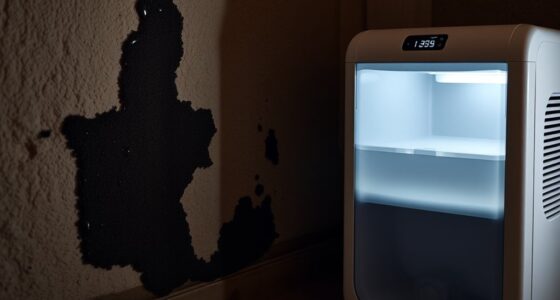
During seasonal absences, it’s smart to keep the interior well-ventilated. Leave interior doors slightly open or install vent fans to promote airflow and help prevent stagnant, humid air from lingering inside. If you’re away during humid months, consider using a dehumidifier, especially in basements or other prone areas. This device can notably reduce moisture levels, protecting your home’s structure and interior finishes. Also, ensure gutters and downspouts are clear of debris, directing water away from the foundation to prevent dampness from seeping inside.
Another tip is to check your home’s seals and insulation. Properly sealed windows and doors keep outside moisture at bay, while good insulation prevents temperature fluctuations that can cause condensation. If you notice any leaks or signs of water intrusion, address them promptly. Addressing these issues before leaving guarantees your home remains dry and secure during your absence.
Finally, consider installing moisture sensors in key areas like the basement, attic, or crawl spaces. These sensors can alert you immediately if humidity levels rise unexpectedly, giving you peace of mind. Research indicates that AI in home maintenance technologies are increasingly being used to monitor conditions and automate moisture control measures. Regularly inspecting these sensors and maintaining the HVAC system along with pest prevention measures ensures your vacation home stays dry, healthy, and damage-free, even when you’re miles away. With proactive planning and seasonal upkeep, you can enjoy your getaway knowing your property is protected from moisture-related problems.
Frequently Asked Questions
How Can I Prevent Mold Growth During Long-Term Absences?
To prevent mold growth during long-term absences, you should regularly monitor humidity levels with a humidity monitor and keep it below 60%. Guarantee proper ventilation, use dehumidifiers if needed, and fix any leaks promptly. Before leaving, perform mold remediation if necessary, and consider leaving windows slightly open to promote airflow. These steps reduce moisture buildup, helping you avoid mold and protect your vacation home.
What Are the Best Moisture Barriers for Vacation Homes?
Your vacation home deserves the best moisture barriers—think of them as the fortress protecting your space from water intrusion. You should consider vapor barrier types like polyethylene sheets or foil-faced materials, which are highly effective. Combine this with smart ventilation strategies, like exhaust fans and air circulation, to keep humidity levels low. These barriers and strategies work together to prevent mold and damage, ensuring your home stays dry and safe during your absence.
How Do Temperature Fluctuations Affect Moisture Levels?
Temperature fluctuations cause humidity swings, which directly impact moisture levels in your vacation home. When it gets warmer, air holds more moisture, increasing the risk of condensation issues on windows and walls. Conversely, cooler temperatures lower humidity, but sudden changes can still lead to moisture buildup. To minimize these effects, maintain consistent indoor temperatures and use dehumidifiers or ventilation to control humidity levels effectively, preventing damage and mold growth.
Are There Eco-Friendly Moisture Control Options Available?
Yes, you can choose eco-friendly moisture control options like eco-friendly dehumidifiers and natural moisture absorbers. Eco-friendly dehumidifiers use energy-efficient technology, reducing your carbon footprint, while natural moisture absorbers such as silica gel, charcoal, or bentonite clay safely absorb excess humidity without chemicals. These options help maintain a healthy environment in your vacation home without harming the planet, making your seasonal stay more sustainable and comfortable.
How Often Should I Inspect My Vacation Home’s Moisture Levels?
You should inspect your vacation home’s moisture levels at least once a month. Use humidity sensors to monitor indoor humidity and identify any issues early. Check your ventilation systems regularly to guarantee they’re functioning correctly, especially before and after seasonal changes. Proper ventilation helps control moisture buildup, preventing mold and damage. Regular inspections keep your vacation home dry, comfortable, and protected year-round.
Conclusion
By keeping moisture levels in check, you protect your vacation home from mold, rot, and structural damage. Some believe that maintaining consistent humidity prevents these issues altogether, but research shows that seasonal fluctuations can actually help manage moisture naturally. Embracing the idea that a balanced approach—using dehumidifiers, ventilation, and insulation—works best, you’ll ensure your home stays safe and comfortable year-round. Remember, understanding moisture dynamics assists you in making smarter, more effective decisions.