
TL;DR

Get home appliances delivered free with Prime
- Fast, free delivery on millions of items
- Prime Video, Amazon Music and more included
- Member-only deals all year
A Hunker report describes a homemade curtain refresher made with ¼ cup rubbing alcohol and 1 cup distilled water. The mixture is intended as a light, occasional finishing spray, not a substitute for washing or a solution that removes the source of an odor. Alcohol is flammable, so the report advises using it in a ventilated area away from heat and flames.
Hunker has published a do-it-yourself method for lightly misting curtains with diluted rubbing alcohol as an occasional fabric refresher, while stressing that the spray does not replace proper cleaning or remove the underlying cause of a stale smell. The advice matters to people seeking a quick way to freshen room textiles, but the mixture is flammable and may not suit every fabric.
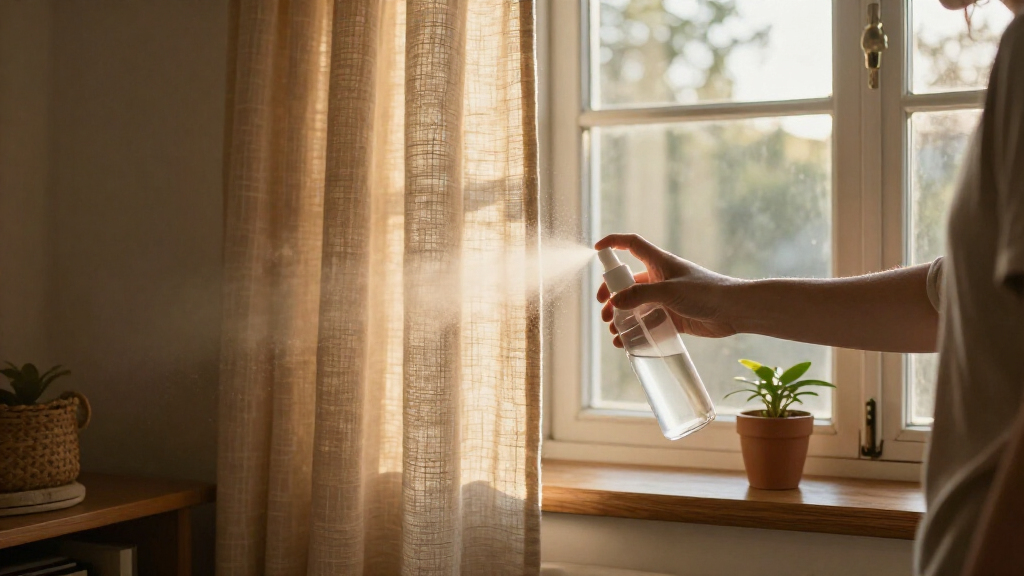
The recipe in the Hunker report combines ¼ cup rubbing alcohol with 1 cup distilled water in a clean spray bottle. Before applying it, the article recommends vacuuming the curtains with an upholstery attachment to remove loose dust. It then advises misting the fabric lightly rather than soaking it, and allowing it to air-dry fully.
The report says an optional fragrance can be added with about 10 drops of essential oil. Because oils may leave stains or residue, it recommends testing the mixture on an inconspicuous area of the fabric first. If oil is added, the bottle should be shaken before use so the fragrance is dispersed through the mixture.
Hunker describes rubbing alcohol as a fast-evaporating solvent and says its smell should not linger once the solution dries. However, it cautions that the spray is not a “miracle odor remover”: without fragrance it does not leave a lasting fresh-linen scent, while added fragrance may mask an odor rather than eliminate its source. The article frames the spray as an occasional finishing step after deeper cleaning.
A Refresher, Not a Cleaning Substitute
The distinction matters because a room’s lingering odor may come from dirt or another source that a surface mist will not address. The spray may offer a quick way to make fabric smell more pleasant, but masking an odor is not the same as removing it. Readers should continue cleaning curtains and drapes according to their care labels rather than relying on the mixture in place of laundering or other recommended care.
There is also a practical safety issue: rubbing alcohol is flammable. Hunker advises using the spray in a well-ventilated area, away from candles, heaters and other heat sources. It also recommends labeling the bottle and storing it upright in a cool place away from heat.
Products Worth Considering

Dyson Ball Animal Total Clean Upright Vacuum

Shark Rocket Pet Plus Corded Stick Vacuum, Bordeaux, HV322

Roborock Robot Vacuum and Mop with LiDAR Navigation and 10,000 Pa Suction
As an affiliate, we earn on qualifying purchases.
How the DIY Spray Is Intended to Work
The suggested use is a light mist on curtains after loose dust has been removed, followed by complete air-drying. Hunker presents diluted alcohol as an alternative to a commercial linen spray, not as a treatment for every fabric or every kind of odor. Its quick evaporation is the reason offered for using it as a refresher, but the report does not provide test results comparing the homemade mixture with commercial products or other cleaning methods.
Fabric care remains a limit on the advice. The source says to follow the curtains’ care labels and to check with a dry cleaner before applying a homemade spray to dry-clean-only drapes. It also advises testing any essential-oil mixture on the material before wider use. These precautions are particularly relevant because the report does not establish that the recipe is safe for all fabrics, dyes or finishes.
“Think of this solution as an alternative to a linen spray.”
— Hunker
Fabric Safety and Results Vary
The source provides a DIY recipe and precautions, but it does not report controlled testing, identify which curtain materials tolerate the mixture, or quantify how much odor it can reduce. Results may vary by fabric and by the cause of the smell; the article does not establish the spray as a proven deodorizing treatment. It also does not give a specific dilution instruction for different strengths of rubbing alcohol.
Hunker advises extra caution with dry-clean-only drapes and testing essential oils, but its instructions do not settle whether the alcohol-and-water mixture is suitable for every material or finish. Anyone unsure about a fabric should follow its care label or ask a professional cleaner before spraying it.
Check Care Labels Before Spraying
Readers considering the method should first check the curtain’s care instructions, vacuum away loose dust and test a small, hidden area before treating more fabric. If the drapes are labeled dry-clean-only, Hunker recommends checking with a dry cleaner before using a homemade spray. Any application should be light, followed by full air-drying, in a well-ventilated area away from flames and heat.
The source gives no follow-up testing or product comparison. Its practical recommendation is to treat the mixture as an occasional finishing touch and address persistent odors through appropriate cleaning rather than adding more fragrance. Store any prepared solution in a labeled, upright bottle in a cool place away from heat.
Key Questions
What is the suggested rubbing-alcohol and water ratio?
Hunker’s recipe uses ¼ cup rubbing alcohol and 1 cup distilled water in a clean spray bottle.
Does the spray remove the cause of a stale odor?
Not necessarily. Hunker says the mixture is not a miracle odor remover; added essential oil may mask a smell rather than remove its source.
Can the spray be used on dry-clean-only curtains?
The report recommends checking with a dry cleaner before applying a homemade spray to dry-clean-only drapes.
What safety precautions does the method require?
Use the spray in a well-ventilated area away from candles, heaters and other heat sources because rubbing alcohol is flammable. Label the bottle and store it upright in a cool place away from heat.
Source: rss