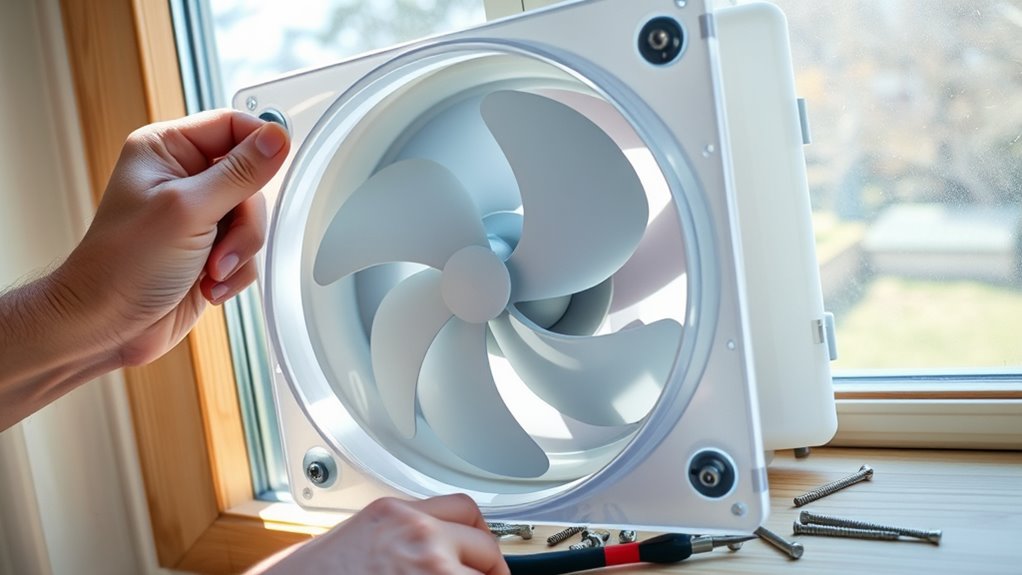

Building a DIY window ventilation fan is simple and cost-effective. Choose a small, efficient fan and lightweight materials like plywood or plastic for the frame. Secure the fan in the window, sealing edges to prevent leaks and guarantee airtight installation. Use simple controls and keep filters clean to improve air quality. Proper setup promotes natural airflow, reduces pollutants, and saves energy. Stay tuned to find out step-by-step tips to create your own effective ventilation system.

Get home appliances delivered free with Prime
- Fast, free delivery on millions of items
- Prime Video, Amazon Music and more included
- Member-only deals all year
Key Takeaways
- Select a quiet, energy-efficient fan suitable for air exchange and install it securely within a custom-fitted window frame.
- Use lightweight, durable materials like plywood or plastic for constructing the frame, ensuring an airtight seal.
- Incorporate filters or mesh screens to block pests, debris, and outdoor noise while maintaining airflow.
- Seal all edges around the frame to prevent air leaks and optimize ventilation efficiency.
- Install simple controls or timers to operate the fan only when needed, conserving energy and maintaining indoor air quality.
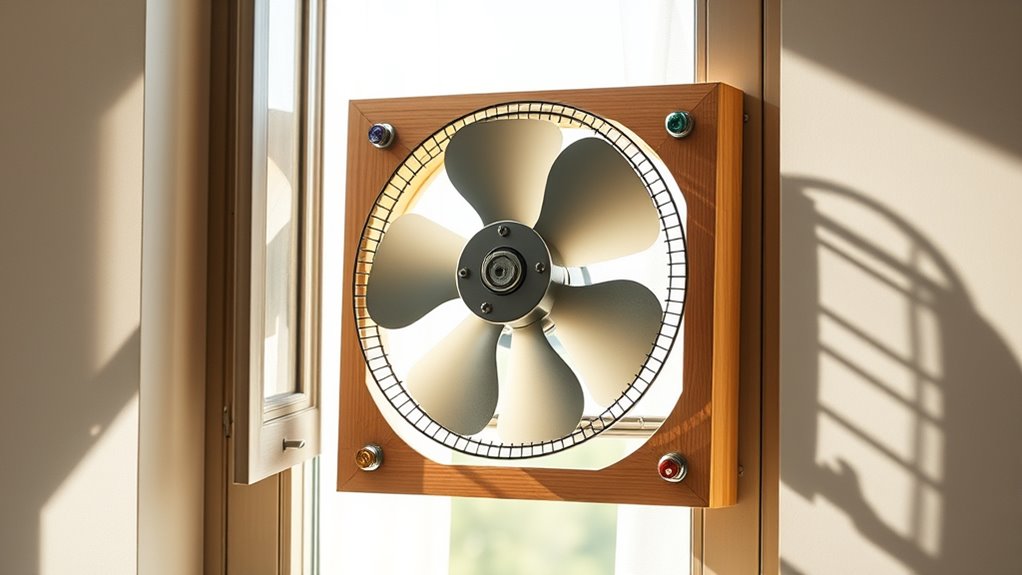
If you’re looking to improve your home’s air quality without spending a lot, building a DIY window ventilation fan is a practical solution. This project allows you to bring fresh air in and push stale, indoor air out, considerably enhancing the overall air quality in your space. Better air quality means fewer pollutants, less dust buildup, and a healthier environment for you and your family. Plus, by designing your own ventilation system, you can tailor it to fit your specific needs, avoiding the high costs of commercial units.
One major advantage of creating your own window ventilation fan is the potential for increased energy efficiency. Unlike running an air purifier or constantly using HVAC systems, a well-designed ventilation fan uses minimal electricity while promoting continuous airflow. It helps to regulate indoor temperature naturally, reducing the load on your heating and cooling systems. As a result, you can save money on energy bills while maintaining a healthier indoor environment. When building your fan, choose energy-efficient components like low-power fans and adjustable vents to optimize airflow without wasting electricity.
Creating your own ventilation fan boosts energy efficiency and reduces utility bills naturally.
Start by selecting the right fan for your project. Look for a small, quiet, energy-efficient model that can move a sufficient volume of air. The fan should be powerful enough to exchange indoor air with fresh outdoor air but not so strong that it causes drafts or energy loss. Next, you’ll need a sturdy frame to fit your window opening. Use lightweight but durable materials like plywood or plastic, and make sure the frame can be securely installed to prevent air leaks. Proper sealing around the edges is essential to maximize efficiency and prevent unwanted air infiltration, which can impact your energy use.
Once the frame is ready, install the fan securely in the opening, ensuring it’s airtight around the edges. You might want to add a simple control switch or a timer so you can operate it only when needed, further conserving energy. If you’re concerned about outdoor noise or pests, consider adding a filter or a mesh screen. This setup not only improves air quality but also maintains energy efficiency by preventing unwanted elements from entering your home. Additionally, incorporating ventilation principles can help optimize airflow and ensure your system works effectively.
Finally, test your DIY ventilation system regularly to ensure it’s functioning properly. Adjust the settings or seal any leaks as needed. A well-maintained, homemade window ventilation fan is an effective and budget-friendly way to keep your indoor air fresh and your energy costs low. By focusing on air quality and energy efficiency, you’ll create a healthier, more comfortable living space without breaking the bank.
energy-efficient window ventilation fan
As an affiliate, we earn on qualifying purchases.
As an affiliate, we earn on qualifying purchases.
Frequently Asked Questions
What Are the Best Locations for Installing the Fan?
You should install the fan near a window with good airflow potential, ideally opposite or adjacent to another open window for optimal cross-ventilation. Position the fan at window placement that allows fresh air to enter and stale air to escape, enhancing airflow enhancement. Ensure the fan is securely mounted and unobstructed, so it can efficiently circulate air throughout your space, improving indoor air quality effectively.
How Much Noise Does the Ventilation Fan Produce?
The fan noise might be loud enough to wake the neighbors, but usually, its sound levels stay pretty manageable. You’ll notice a gentle hum that’s comparable to a quiet conversation, so it shouldn’t bother you much. If you want to keep things even quieter, consider installing a fan with a low decibel rating or adding soundproofing around it. Overall, it’s designed to balance airflow with minimal noise output.
Can I Control the Fan Remotely?
Yes, you can control your DIY window ventilation fan remotely by adding a remote control or smart automation system. You’ll need to integrate a compatible smart switch or Wi-Fi-enabled relay, which allows you to turn the fan on or off from your smartphone or voice commands. This setup offers convenience and improved control, making it easy to automate your ventilation for cleaner air without needing to physically access the fan.
What Safety Precautions Should I Take During Installation?
Imagine your home as a ship sailing smoothly; safety is your anchor. During installation, prioritize electrical safety by disconnecting power, wearing insulated gloves, and double-checking wiring. Guarantee the fan is securely mounted to prevent accidents, like a sturdy mast holding the ship steady. Take your time, follow instructions carefully, and avoid rushing. These precautions protect you and keep your ventilation system working safely and effectively.
How Energy-Efficient Is the DIY Ventilation Fan?
Your DIY ventilation fan can be quite energy-efficient if you choose the right motor and design it to operate only when needed. It helps save energy by reducing unnecessary power consumption and improving airflow, which can lower your overall energy bills. To maximize energy savings, consider adding a timer or humidity sensor. Properly maintained, your fan will use minimal power while effectively enhancing air quality.
As an affiliate, we earn on qualifying purchases.
Conclusion
By building your own window ventilation fan, you’re opening a gateway to fresher air and a healthier home. It’s more than just a device; it’s a symbol of your commitment to well-being and control over your environment. As you breathe in the cleaner air, remember you’re creating a sanctuary—an oasis of freshness amid life’s chaos. Your effort transforms your space into a haven, where clarity and comfort flourish, symbolizing hope and empowerment in every breath.
air filter mesh screen for ventilation
As an affiliate, we earn on qualifying purchases.
As an affiliate, we earn on qualifying purchases.
As an affiliate, we earn on qualifying purchases.
Halloween Picks
halloween
As an affiliate, we earn on qualifying purchases.