
TL;DR

Get home appliances delivered free with Prime
- Fast, free delivery on millions of items
- Prime Video, Amazon Music and more included
- Member-only deals all year
An Ideal Home report says closing curtains shortly before sunset can add an insulating layer over windows and help rooms stay warmer. Its writer recorded temperature differences of up to 2°C behind thermal curtains, but the report does not establish a household energy or bill saving; results depend on the home and window coverings.
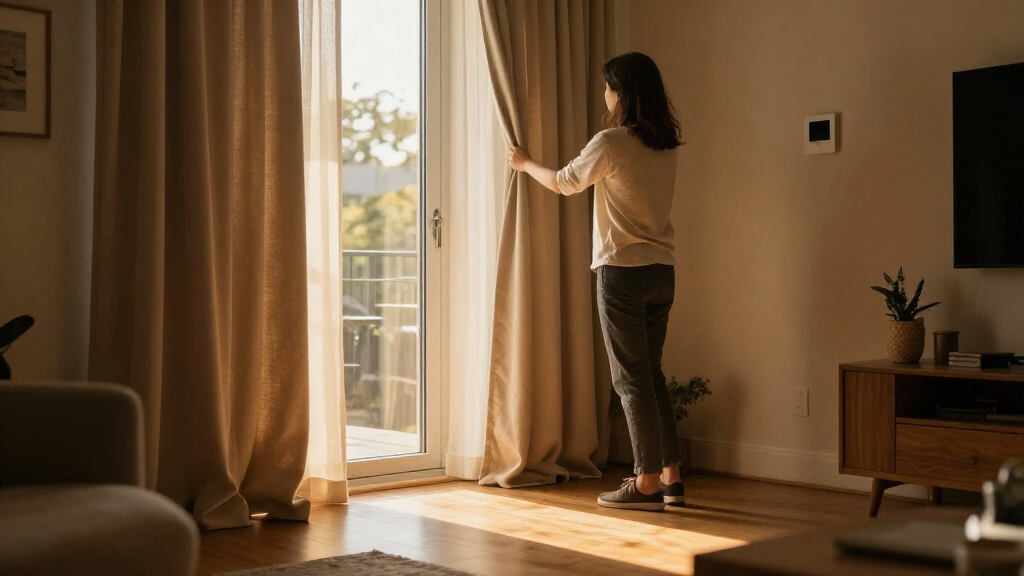
Closing curtains shortly before sunset may help limit heat loss through windows and keep rooms warmer in the evening, according to an Ideal Home report. The article’s writer measured temperatures on either side of window coverings and recorded a difference of up to 2°C behind thermal curtains, but the test did not measure energy consumption or establish how much households might save on bills.
The report says drawing curtains adds a layer between a room and its windows, which can be a source of heat loss. A warmer-feeling room may reduce the need to extend central heating or use a supplementary electric heater, though that outcome is not guaranteed and depends on how a household uses its heating.
Stuart Middleton, identified in the report as So Energy’s consumer energy expert, said that thick, well-fitting or thermally lined curtains can be particularly effective. He described closing curtains at dusk as a simple way to help slow heat escaping through windows. The article gives no quantified estimate of energy or money saved.
In the writer’s home, temperatures differed by 2°C in front of and behind thermal curtains and blinds, by just under 1°C around wooden blinds, and by about half a degree around standard curtains. Those readings are observations from one home, not results from a controlled study, and the article does not specify the measuring equipment or repeat-test conditions.
A Small Habit With Home-Specific Results
For households trying to reduce heating use, closing curtains is a no-cost step that may help rooms retain warmth after daylight fades. It does not require changing a thermostat or buying equipment, although people who are away from home at sunset may need a reminder or automated curtain controls to follow the routine.
The possible benefit is not the same in every room. The report’s observations suggest that thermal curtains performed better than the other coverings tested in the writer’s home, but window type, curtain fit, insulation and existing draughts can all affect the result. The account does not show that the practice alone lowers energy bills by a particular amount.
That distinction matters as readers weigh energy-saving advice: a warmer area behind a curtain is not, by itself, proof of a measured reduction in heating demand. The report presents the habit as a practical way to limit heat loss, not as a substitute for adequate insulation or a guaranteed bill-saving measure.
Products Worth Considering

Philips Hue Large Smart Light Tube, Black – White and Color Ambiance LED Color-Changing Light – 1 Pack

Samsung 85 M80H Series Mini LED 4K Smart TV (2026)

Hisense 85 U6 Pro Series Mini-LED ULED 4K UHD HDR Gaming AI Smart Fire TV (85U6SF Pro)
As an affiliate, we earn on qualifying purchases.
Why Closing Curtains Before Sunset
The Ideal Home article frames the advice around colder weather and shorter days. It reports that energy prices rose by 4% in October and says forecasts at the time suggested increases of between 16% and 25% in January. The article does not identify the precise tariff or forecast source behind those figures, so they should be read as the report’s stated context rather than a current price update.
The recommended timing is just before sunset, rather than after a room has already cooled. The article says this allows daylight to contribute warmth during the day before curtains are drawn to help slow heat loss. Sunset times vary by location and date; its example of a 4:52 p.m. sunset and a 4:30 p.m. reminder applies to the writer’s location on that day, not to every household.
The report also describes automated curtain devices that can operate on a schedule, including products from SwitchBot and Aqara. These are optional examples from the article, not necessary parts of the method, and the report does not provide independent testing of their performance or energy savings.
““Closing your curtains at dusk is a simple way to help keep your home warm as temperatures drop.””
— Stuart Middleton, So Energy’s consumer energy expert, as quoted by Ideal Home
Savings Have Not Been Quantified
The report does not establish how much energy, money or heating time a household can save by closing curtains early. Its temperature readings come from one home, and no controlled comparison, energy-use data or bill analysis is provided. The reported differences therefore cannot be treated as a typical result or a guaranteed saving.
It is also unclear how the test controlled for room conditions, window construction, outdoor temperature or differences in the coverings. The article says savings depend on windows, curtains and insulation, but provides no formula or estimate for households with particular combinations of those features. Its cited October price rise and January forecasts are not enough to determine current costs for an individual reader.
Check Sunset and Test Your Rooms
The practical next step suggested by the report is to close curtains shortly before local sunset and see whether the room remains comfortable. Households can check sunset times for their location and use a phone reminder if they are usually home then. The article does not describe a formal measurement method, so any comparison should be treated as a personal observation rather than a reliable estimate of bill savings.
For readers considering automated controls, the report describes scheduled curtain devices as an option for closing coverings while nobody is home. It does not say that a product purchase is required or that automation will pay for itself. Whether the routine affects heating use will depend on the home’s windows, insulation, coverings and heating settings; no further test results or quantified savings are provided in the source.
Key Questions
Does closing curtains before sunset save energy?
The Ideal Home report says it may help slow heat loss through windows and keep rooms warmer. It does not quantify the resulting energy saving, which will vary between homes.
When should I close my curtains?
The report recommends closing them shortly before sunset, after daylight has had a chance to warm the room. The relevant time changes by location and date.
Which curtains performed best in the report?
In the writer’s home, thermal curtains and blinds were associated with the largest reported temperature difference: 2°C on either side. The observation is specific to that home and is not a general test result.
Can the report show how much money I will save?
No. It provides no measured energy-use or bill comparison. The writer recorded temperature differences, while the report says any savings depend on windows, coverings and insulation.
Source: rss