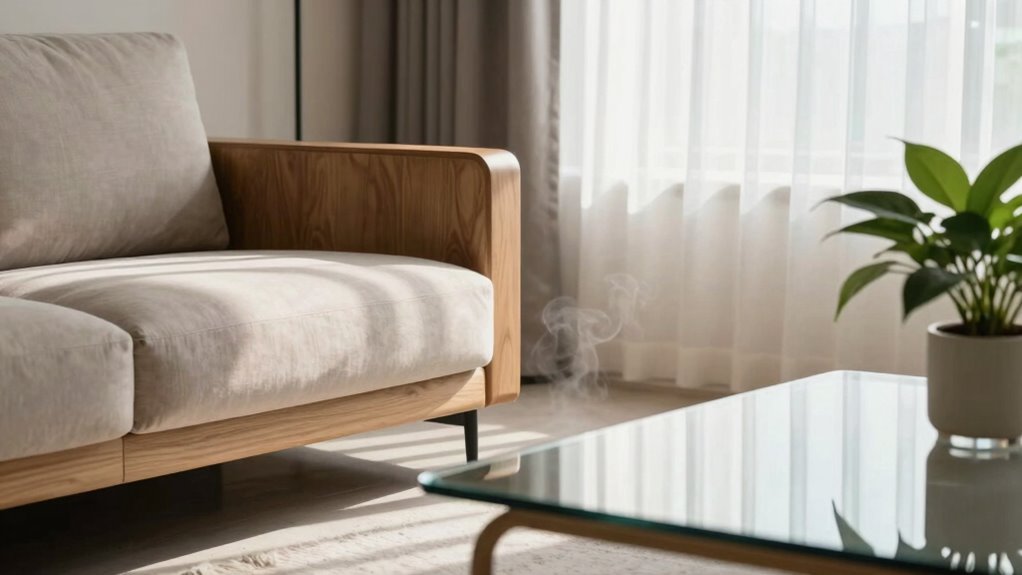

When you change furniture, formaldehyde levels often spike because new pieces release chemicals through a process called off-gassing, especially in the first days or weeks. This is common with pressed wood, particleboard, or laminated surfaces, which emit more formaldehyde initially. Factors like material composition and ventilation influence how long the spike lasts. To better understand how to manage this and keep your indoor air healthier, keep exploring.

Get home appliances delivered free with Prime
- Fast, free delivery on millions of items
- Prime Video, Amazon Music and more included
- Member-only deals all year
Key Takeaways
- New furniture releases formaldehyde through off-gassing, especially from pressed wood and laminated surfaces.
- Off-gassing peaks in the first days or weeks after furniture is introduced.
- Higher initial emissions temporarily worsen indoor air quality.
- Emission levels depend on the material composition of the furniture.
- Proper ventilation can help reduce formaldehyde spikes after furniture changes.
When you bring new furniture into your home, you might notice a sudden increase in formaldehyde levels, which can pose health risks. This spike often catches people off guard, especially since the furniture may look perfectly harmless. The truth is, many household items, like particleboard, pressed wood, and certain upholstery, emit formaldehyde—a colorless, strong-smelling gas used in manufacturing. This gas can considerably impact your indoor air quality, especially after furniture changes. As a consumer, awareness about these emissions becomes essential to protect your health and maintain a safe living environment.
The reason formaldehyde spikes occur after introducing new furniture is primarily due to off-gassing. Off-gassing is the release of chemicals from materials over time, and new furniture, especially those made from pressed wood or laminated surfaces, tend to emit higher levels initially. These emissions are most intense in the first few days or weeks but can persist for months. During this period, the concentration of formaldehyde in your indoor air can rise sharply, making it more challenging to breathe comfortably or avoid potential health issues such as eye irritation, respiratory problems, or allergic reactions. Understanding off-gassing helps you better manage and reduce exposure. Additionally, material composition plays a significant role in how much formaldehyde is emitted and for how long. Recognizing the emission timeline can help you plan and reduce exposure effectively. Being aware of indoor air quality and its fluctuations allows you to take proactive steps in protecting your health. Properly managing ventilation and understanding emission sources can significantly decrease the duration and severity of formaldehyde exposure.
Products Worth Considering

Levoit Vital 100S-P Air Purifier with Washable Pre-Filter

Coway Mighty AP-1512HH(W) Air Purifier, White

LEVOIT Vital 200S-P Smart Air Purifier for Large Rooms
As an affiliate, we earn on qualifying purchases.
Frequently Asked Questions
How Long Do Formaldehyde Spikes Usually Last?
Formalhyde spikes typically last from a few days to a few weeks, depending on indoor air quality and emission sources. When you introduce new furniture, the formaldehyde emissions can be high initially but tend to decrease over time. To minimize exposure, increase ventilation and air out the space regularly. Keep monitoring indoor air quality, as continued emissions from sources like pressed wood products can cause prolonged spikes.
Can Air Purifiers Eliminate Formaldehyde Completely?
Did you know that air purifiers can remove up to 80% of formaldehyde? While they help, they can’t eliminate formaldehyde completely because of their limitations, especially in chemical absorption. Air purifiers work best when combined with proper ventilation and reduced sources of emissions. Relying solely on them won’t fully clear formaldehyde, so it’s crucial to control indoor sources and increase fresh air exchange for safer indoor air quality.
Are Certain Furniture Materials More Likely to Emit Formaldehyde?
Yes, certain furniture materials are more likely to emit formaldehyde. Wood composites, like particleboard and MDF, often contain adhesives that release formaldehyde over time. Synthetic fabrics used in upholstery can also emit formaldehyde, especially if treated with chemicals for stain resistance or durability. To reduce exposure, choose furniture made from solid wood and natural fabrics, and guarantee proper ventilation during and after furniture installation.
What Are the Health Risks of Formaldehyde Exposure?
You face health risks from formaldehyde exposure, as it can irritate your eyes, nose, and throat, and cause respiratory issues. Long-term exposure may increase your risk of asthma and certain cancers. Formaldehyde’s chemical emissions can substantially lower indoor air quality, making your environment unsafe. It’s essential to improve ventilation, use low-emission furniture, and monitor indoor air to reduce these health hazards and maintain a healthier living space.
How Can I Prevent Formaldehyde Spikes During Furniture Updates?
Think of your home as a sponge soaking up VOCs; to prevent formaldehyde spikes, start by sealing new furniture tightly, like wrapping a gift. Use VOC reduction strategies, such as increasing ventilation and air purifiers, especially during and after furniture updates. Regularly air out the space, and consider applying sealants designed to block formaldehyde emissions. These steps act as a shield, keeping indoor air safer and healthier.
Conclusion
Even if you think your new furniture is safe, formaldehyde spikes can still occur, catching you off guard. It’s understandable to want your home to feel fresh and new, but don’t ignore the hidden risks. Taking steps to improve ventilation and choose low-emission products can protect your loved ones from sudden health issues. Remember, your home’s safety matters—don’t let a fleeting moment of comfort lead to long-term harm.