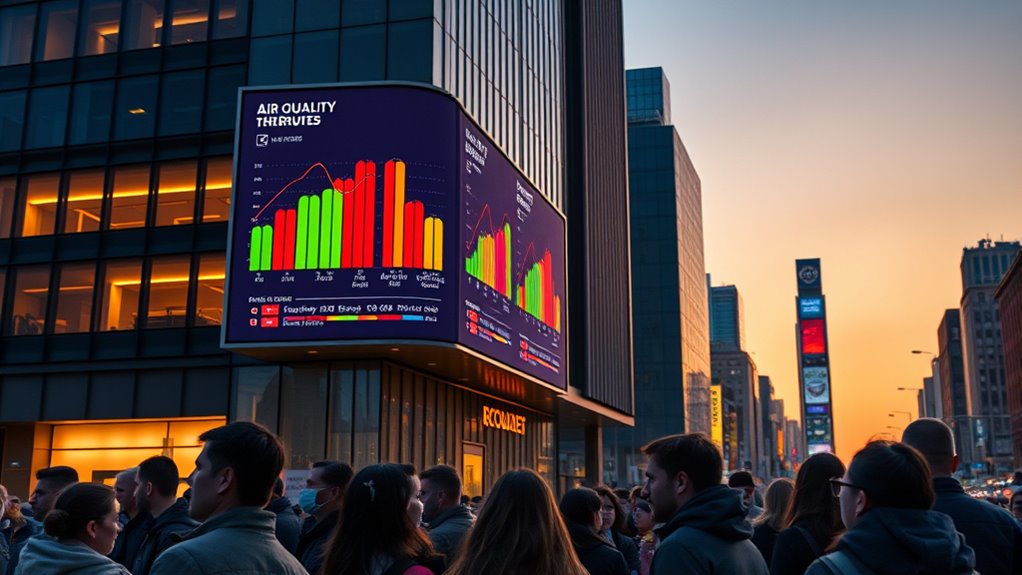

To set air quality alert thresholds that matter, you need to balance early warnings with avoiding unnecessary notifications. Too high a threshold risks missing health risks, while too low can cause alert fatigue. Customize alerts based on your local pollution sources and personal sensitivities, choosing notification methods that suit you. Real-time data and predictive trends help refine these thresholds for better health protection. Keep exploring to discover how to optimize your air quality alerts further.
Key Takeaways
- Setting appropriate thresholds balances early warning risks with alert fatigue to ensure timely, actionable notifications.
- Customizing thresholds based on local pollution sources and population sensitivities enhances alert relevance.
- Incorporating real-time data and predictive models improves threshold accuracy for dynamic air quality conditions.
- Adjusting thresholds during specific events, like wildfires or industrial activity, ensures alerts reflect current health risks.
- Clear communication of threshold criteria helps the public understand and respond effectively to air quality alerts.
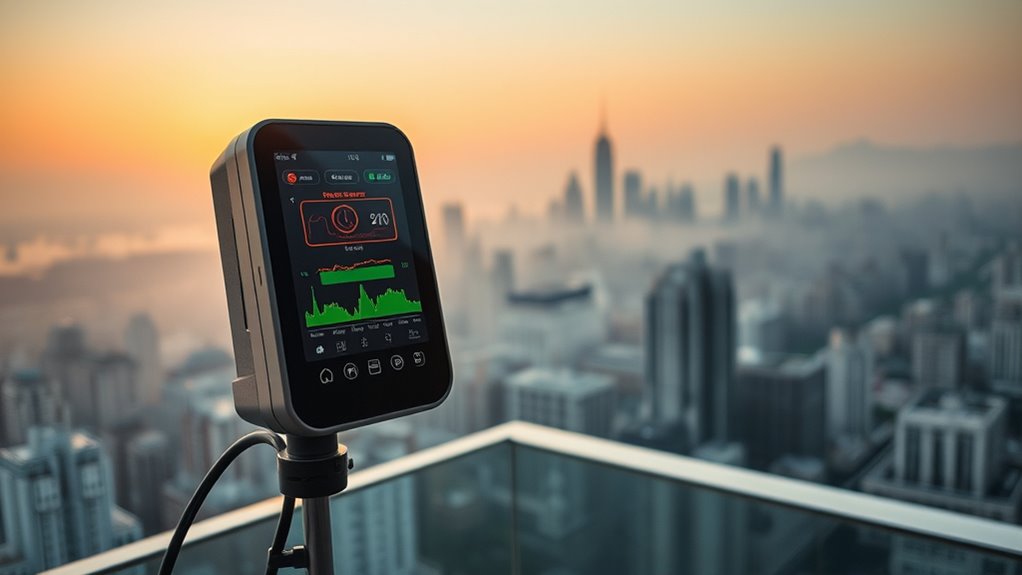
When air quality dips to unhealthy levels, authorities issue alerts to warn residents about potential health risks. These alerts are vital tools for keeping you informed and safe, especially when pollution sources suddenly spike or linger. Setting the right thresholds for these alerts is essential because it determines when you’ll be notified about dangerous air conditions. If thresholds are too high, you might miss early warnings that could prevent health issues. If they’re too low, you could be overwhelmed with unnecessary alerts, leading to alert fatigue and complacency. That’s why many agencies focus on alert customization, tailoring notifications based on local pollution sources, population sensitivities, and environmental factors. Customizing alerts allows you to receive timely warnings that are relevant to your specific environment and health needs, helping you decide whether to stay indoors, limit outdoor activities, or take other precautions.
Understanding pollution sources plays a big role in how these thresholds are set. Different areas have unique pollution profiles—urban centers often face vehicle emissions, industrial activities, and construction dust, while rural regions might deal with agricultural pollutants or natural events like wildfires. By analyzing these pollution sources, authorities can fine-tune alert thresholds to reflect real health risks. For example, during wildfire season, alert levels might be lowered to account for smoke and particulate matter, whereas in industrial zones, thresholds could be adjusted to monitor specific pollutants like sulfur dioxide or nitrogen oxides. This targeted approach ensures that alerts are meaningful and prompt appropriate actions, reducing unnecessary concern while still protecting public health. Additionally, incorporating public health guidelines helps ensure that threshold levels are aligned with current research and health standards.
You can also benefit from alert customization by choosing how and when you receive notifications. Some systems offer options to get alerts via SMS, email, or app notifications, and you can often set your preferred pollution parameters. For instance, if you have respiratory issues, you might want to be notified at lower pollution levels. If you’re healthy and only need to be cautious during extreme events, you could set higher thresholds. This flexibility helps you stay prepared without feeling overwhelmed by constant updates. Additionally, some alert systems incorporate real-time data and predictive models, allowing you to understand potential pollution trends and make informed decisions ahead of time.
Ultimately, setting thresholds that matter is about balancing safety and practicality. By understanding pollution sources and leveraging alert customization, you can receive smarter, more relevant alerts that truly serve your health and well-being. These tailored notifications ensure you’re not just reacting to pollution but proactively managing your exposure based on accurate, timely information. When done right, real-time air quality alerts become a powerful tool in protecting yourself from the health impacts of pollution, helping you breathe easier and stay healthier in the long run.

16 in 1 Air Quality Monitor Indoor 7" Wildfire CO2 Monitor, 9 AQI+7 Alerts
- 16-in-1 Air Quality Monitoring: Detects 9 key air parameters and 7 AQI alerts
- Large 7-inch LED Display: Clear, high-resolution air quality readings
- Multiple Brightness Settings: Adjust display brightness for any lighting
As an affiliate, we earn on qualifying purchases.
As an affiliate, we earn on qualifying purchases.
Frequently Asked Questions
How Do Different Pollutants Impact Health at Various Thresholds?
Different pollutants impact your health at various thresholds by affecting your respiratory and cardiovascular systems. When pollutant toxicity reaches higher levels, your health risk increases markedly, causing issues like asthma, heart attacks, or lung damage. Lower thresholds might still pose health risks for sensitive groups. Monitoring these thresholds helps you reduce exposure, protecting your well-being from the adverse effects of air pollution and minimizing long-term health risks.
Can Thresholds Be Customized for Vulnerable Populations?
Think of thresholds as fences around a garden—some plants need a higher or lower fence to stay safe. You can customize alerts for vulnerable demographics, creating personalized alerts that account for specific health risks. This way, at-risk populations get timely warnings tailored to their needs, much like adjusting a fence height to protect delicate flowers. Personalized thresholds guarantee everyone’s safety, especially those most susceptible to air quality changes.
How Often Are Air Quality Data and Thresholds Updated?
You’re likely to see air quality data and thresholds updated frequently, often in real-time or every few minutes, depending on your sensor calibration and data source. Updates can be influenced by data latency, which may cause slight delays. Regular sensor calibration guarantees accuracy, so the thresholds reflect current conditions. Keeping an eye on these updates helps you stay informed and respond promptly to air quality changes in your area.
What Technology Is Used to Monitor Air Quality in Real-Time?
Think of real-time air quality monitoring like a vigilant sentinel. You use advanced sensors, calibrated regularly to guarantee accuracy, to detect pollutants instantly. These sensors feed data into integrated systems that analyze and display current air conditions. This seamless data integration allows you to respond swiftly to pollution spikes, much like a watchful guardian alerting you to danger. Continuous calibration and data integration keep your air quality insights reliable and up-to-date.
How Do Weather Conditions Influence Alert Thresholds?
Weather conditions considerably influence your alert thresholds by affecting meteorological effects and pollution dispersion. For instance, high winds can disperse pollutants, lowering concentrations and allowing for higher thresholds. Conversely, temperature inversions trap pollutants near the surface, necessitating lower thresholds to protect health. Understanding these meteorological effects helps you set dynamic alert thresholds that accurately reflect current air quality conditions, ensuring timely alerts during adverse weather that impacts pollution dispersion.

Amazon Smart Air Quality Monitor – Know your air, Works with Alexa
- Real-time air quality insights: Understand indoor air conditions easily
- Monitors five key factors: Tracks PM 2.5, VOCs, CO, humidity, and temperature
- Color-coded LED indicator: Displays current air quality status
As an affiliate, we earn on qualifying purchases.
As an affiliate, we earn on qualifying purchases.
Conclusion
By setting meaningful air quality thresholds, you can stay ahead of pollution risks and protect your health. Did you know that during high pollution days, respiratory issues can increase by up to 30%? Real-time alerts empower you to make quick decisions, like avoiding outdoor activities or using air purifiers. Stay informed and proactive—your lungs will thank you, and better thresholds mean safer, healthier days for everyone.

LifeBasis Air Quality Monitor Indoor, 11-in-1 Air Quality Detector
- Real-time 11-in-1 Air Quality Monitoring: Tracks AQI, gases, particles, temperature, humidity
- High-Precision Sensors: Includes NDIR CO2, laser, semiconductor sensors
- Color and Sound Alerts: Visual icons and audible alarms for unsafe levels
As an affiliate, we earn on qualifying purchases.
As an affiliate, we earn on qualifying purchases.

BREATHE Airmonitor Plus Indoor Air Quality Monitor with CO₂, PM & App
- Professional Indoor Air Monitoring: Tracks CO2, PM, VOC, Formaldehyde, Temp, Humidity
- Multi-Sensor Accuracy: Combines particle and gas detection for detailed insights
- Identify Air Quality Impacts: Detects effects of cooking, cleaning, HVAC, and occupancy
As an affiliate, we earn on qualifying purchases.
As an affiliate, we earn on qualifying purchases.