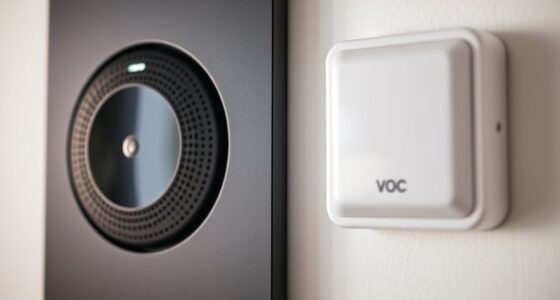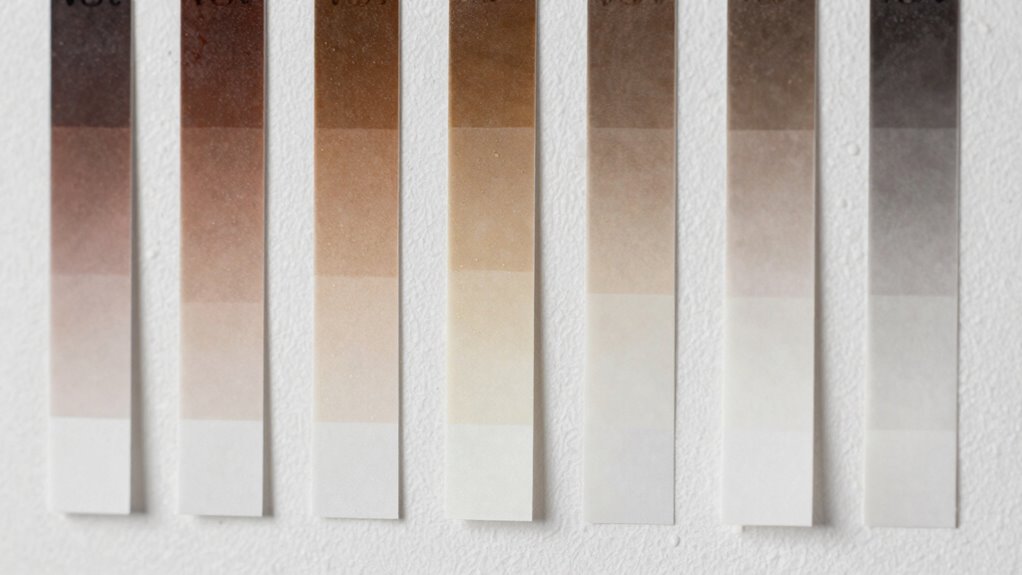
After painting, VOC levels often fluctuate instead of steadily decreasing, due to factors like environmental changes, airflow, humidity, and temperature shifts. Proper ventilation helps push out VOCs, but stagnation or stops in airflow can cause spikes. High humidity traps VOCs, while warmer temperatures increase vaporization. These combined factors make it hard to tell exactly when your space is safe. Keep reading to learn how to better manage these conditions for clearer results.

Get home appliances delivered free with Prime
- Fast, free delivery on millions of items
- Prime Video, Amazon Music and more included
- Member-only deals all year
Key Takeaways
- VOC levels can fluctuate due to environmental changes, causing readings to rise again after initial decline.
- Inconsistent or stagnant airflow can create bouncing effects, leading to unpredictable VOC measurement patterns.
- Variations in humidity and temperature influence VOC volatilization, resulting in non-linear reduction trends.
- Proper, continuous ventilation helps maintain steady VOC decline and prevents spikes caused by environmental stagnation.
- Patience and environmental control are essential, as VOC levels decrease gradually with stable conditions.

After painting, you might expect VOC (volatile organic compound) levels to decrease steadily over time, but in reality, they often don’t drop in a straight line. Instead, the readings can fluctuate unexpectedly, making it hard to determine when your space is truly safe. Several factors influence this pattern, and understanding them helps you better manage the situation.
One key factor is paint ventilation. When you first finish a painting project, the room’s air quality depends heavily on how well you ventilate the space. Proper ventilation, like opening windows or using exhaust fans, helps push out the VOCs trapped in the air. But even with good ventilation, VOC levels may spike again if you leave windows closed for a while or if new air becomes stagnant. This bouncing effect causes the readings to vary, sometimes rising before they fall again. It’s a reminder that continuous airflow is essential in reducing VOC concentrations over time.
Proper ventilation is essential, but fluctuations can occur if airflow stops or becomes stagnant, causing VOC levels to bounce.
Humidity control also plays a significant role. High humidity can trap VOCs in the air, slowing their dissipation. Conversely, overly dry conditions might cause VOCs to volatilize more rapidly initially, leading to a quick spike in readings. Maintaining balanced humidity levels—ideally between 40-60%—helps create an environment where VOCs can escape more predictably. When humidity fluctuates, you’ll notice corresponding changes in VOC readings, even days after painting. This inconsistency can make it seem like the VOCs are lingering longer than expected, but it’s often just the result of moisture levels influencing how VOCs disperse. Additionally, humidity fluctuations can cause the VOCs to behave unpredictably, emphasizing the importance of monitoring environmental conditions. Properly managing these environmental factors can significantly impact how quickly VOCs diminish, and being aware of air circulation patterns can further improve ventilation efficiency.
Temperature also impacts VOC behavior. Warmer air encourages VOCs to vaporize faster, potentially causing short-term increases in readings. Cooler conditions tend to slow down this process, but if the temperature shifts, you’ll see those fluctuations reflected in your measurements. Hence, keeping a stable temperature can aid in predictable VOC reduction. Moreover, temperature stability can prevent sudden changes in VOC levels, contributing to a more consistent decline.
Additionally, environmental factors such as air circulation patterns can influence how VOCs disperse and are measured over time. In the end, the pattern of VOC decline isn’t just a matter of time passing. It’s a complex interplay of ventilation, humidity, and temperature. To ensure safer air quality, keep your space well-ventilated, monitor and control humidity, and avoid abrupt temperature changes. By doing so, you help the VOCs escape more steadily, making the readings gradually decline in a more predictable manner. Remember, patience is key—your air quality will improve, but it takes consistent effort and environmental awareness to see those levels drop reliably.
Products Worth Considering

Levoit Core 600S-P Smart Air Purifier for Large Rooms

Sonos One (Gen 2) Two-Room Set Smart Speakers with Amazon Alexa, 2-Pack, Black

Levoit Vital 100S-P Air Purifier with Washable Pre-Filter
As an affiliate, we earn on qualifying purchases.
Frequently Asked Questions
How Long Should I Wait Before Measuring VOC Levels After Painting?
You should wait at least 24 to 48 hours after painting before measuring VOC levels. During paint drying, emission peaks often occur within the first 24 hours, so measuring too soon might give false high readings. After this period, VOC levels typically start to decline, but it’s wise to wait longer if you want accurate, stable measurements, especially since emissions don’t drop in a straight line.
Do Different Types of Paint Affect VOC Emission Patterns?
Different types of paint considerably influence VOC emission patterns. Your paint formulation determines how volatile compounds are released over time, leading to emission variability. Some paints, like low-VOC or zero-VOC options, emit fewer emissions and stabilize quickly. But others, especially oil-based or older formulations, may surprise you with prolonged, unpredictable VOC releases. Stay vigilant, as understanding these differences helps you better manage indoor air quality and safety.
Can Ventilation Speed Influence VOC Reading Fluctuations?
Yes, ventilation speed can influence VOC reading fluctuations. When you increase air circulation, it helps disperse VOCs more quickly, leading to more consistent readings. Conversely, slower ventilation can cause VOC levels to fluctuate as emissions build up or settle. Maintaining proper temperature control alongside steady ventilation guarantees accurate measurements, as temperature impacts VOC volatility. By managing both airflow and temperature, you can achieve more reliable and stable VOC readings after painting.
Are There Specific Environmental Conditions That Impact VOC Decay?
Yes, environmental conditions like indoor humidity and surface absorption considerably impact VOC decay. Higher humidity levels can slow VOC off-gassing, prolonging elevated readings, while low humidity speeds up decay. Surfaces that absorb VOCs, such as porous materials, can trap these compounds, causing fluctuations in readings over time. Maintaining consistent humidity and choosing non-porous surfaces help regulate VOC levels, ensuring accurate and stable measurements during the decay process.
What Tools Are Best for Accurately Measuring VOC Levels?
You should use specialized VOC measurement techniques, like photoionization detectors (PIDs) or gas chromatography, for accurate readings. Calibration tools are essential to make certain your devices provide reliable data, so regularly calibrate your instruments with standard VOC calibration gases. This combination helps you monitor VOC levels precisely, especially after painting, even when readings don’t drop in a straight line. Proper tools and calibration guarantee accurate environmental assessments.
Conclusion
As you step back from your freshly painted walls, remember that VOC readings are like a stubborn tide, ebbing and flowing in unpredictable waves. Don’t expect them to fall in a straight line; instead, imagine them as a gentle breeze guiding you through a landscape of lingering aromas. Stay vigilant, keep the space ventilated, and trust that over time, these invisible currents will calm, leaving your home safe and serene, like a peaceful lake at dawn.