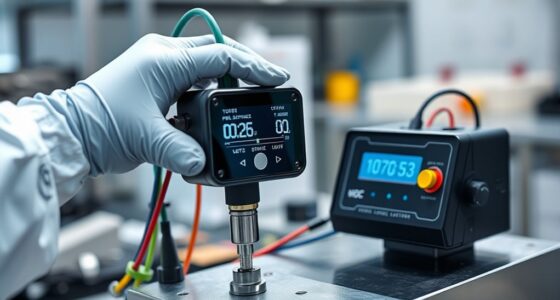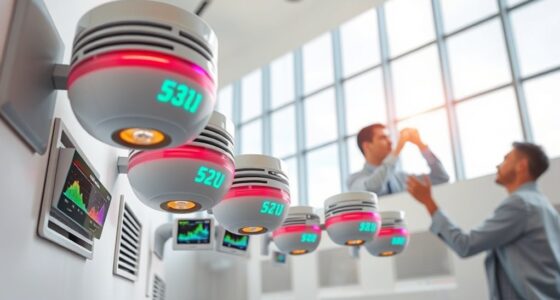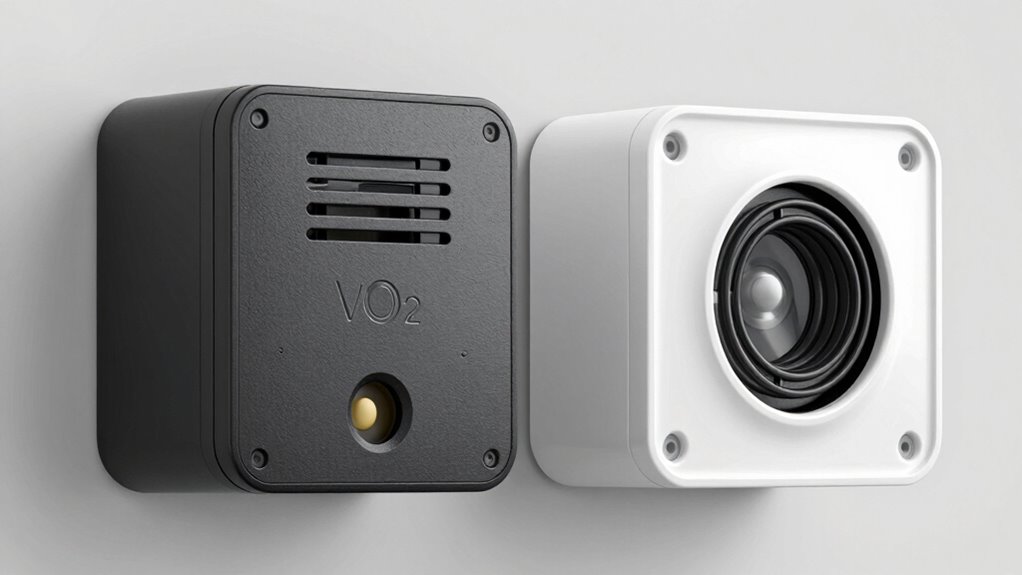
VOC sensors and CO₂ sensors serve different purposes: VOC sensors detect a broad range of airborne organic compounds, while CO₂ sensors specifically measure carbon dioxide levels. Using them interchangeably can lead to inaccurate air quality assessments and poor environmental control. It’s essential to understand their distinct functions, limitations, and maintenance needs. Proper sensor selection and usage improve monitoring accuracy—if you want to know how they differ and avoid common mistakes, keep exploring.
Key Takeaways
- VOC sensors detect a broad range of organic compounds, while CO2 sensors specifically measure carbon dioxide levels.
- CO2 sensors use infrared technology, whereas VOC sensors rely on chemical reactions or sensor materials.
- Proper calibration for each sensor type ensures accurate readings; they cannot be calibrated interchangeably.
- VOC sensors are sensitive to environmental factors like humidity, unlike the more stable IR-based CO2 sensors.
- Misclassifying these sensors can lead to ineffective air quality monitoring and poor environmental control.
What Are VOC Sensors? How Do They Work?

VOC sensors detect volatile organic compounds in the air, which are gases emitted by various solids and liquids. When VOC detection occurs, the sensor responds to these chemicals, often using a chemical or sensor material that reacts to specific compounds. To guarantee accurate readings, sensor calibration is essential; it aligns the sensor’s output with known concentrations, reducing errors caused by sensor drift or environmental changes. Proper calibration involves exposing the sensor to a standard concentration of VOCs and adjusting the device accordingly. This process helps maintain reliable detection over time, ensuring you get precise measurements of indoor air quality. Additionally, understanding the sensor calibration process is crucial for maintaining consistent sensor accuracy. Effective calibration practices are crucial for ensuring consistent and reliable sensor performance over time. Regularly checking calibration status and following manufacturer guidelines can also prevent inaccuracies caused by sensor aging.
How Do CO2 Sensors Measure Indoor Air Quality?
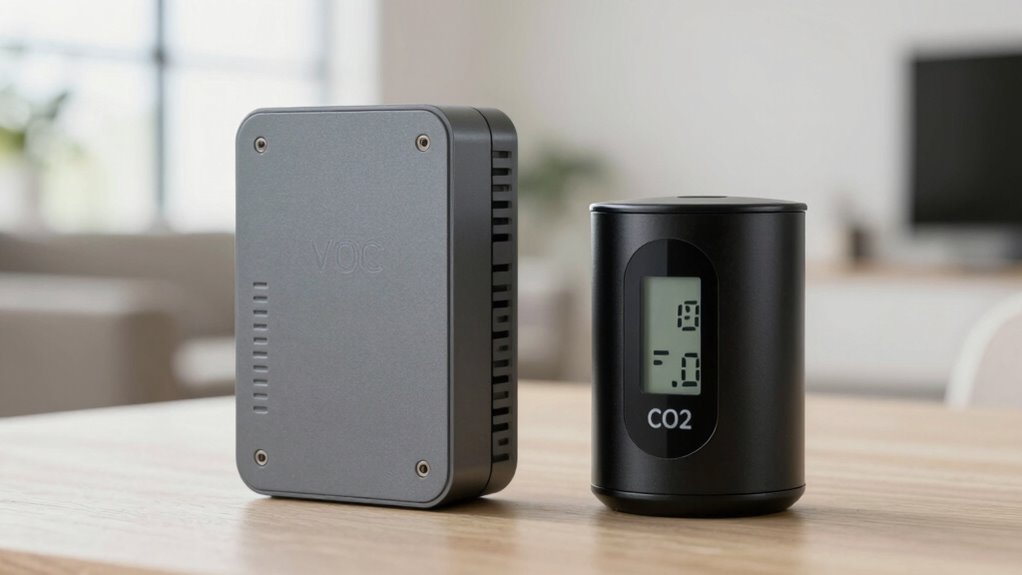
To measure indoor air quality, CO2 sensors use infrared (IR) technology to detect the concentration of carbon dioxide in the air. These sensors emit IR light through the air sample; CO2 molecules absorb specific wavelengths, reducing the light reaching the detector. Proper sensor calibration guarantees accurate readings over time, accounting for potential drift. Data interpretation involves analyzing IR absorption levels to determine CO2 concentration, which reflects ventilation effectiveness. Key factors include:
Infrared CO2 sensors detect air quality by measuring IR absorption, ensuring accurate readings through proper calibration and analysis.
- Regular calibration to maintain accuracy
- Differentiating CO2 levels from other gases
- Monitoring sensor response for potential faults
- Using baseline data for comparison
- Understanding how environmental changes affect readings
- Recognizing the importance of sensor maintenance to ensure consistent performance
Additionally, environmental factors such as humidity and temperature can influence sensor accuracy, emphasizing the need for proper sensor calibration and regular maintenance to ensure reliable data. Regularly checking sensor response stability helps identify when recalibration might be necessary to maintain data integrity. Being aware of sensor drift is essential for maintaining long-term accuracy and dependable readings.
How Do VOC and CO2 Sensors Differ? Key Features and Limitations
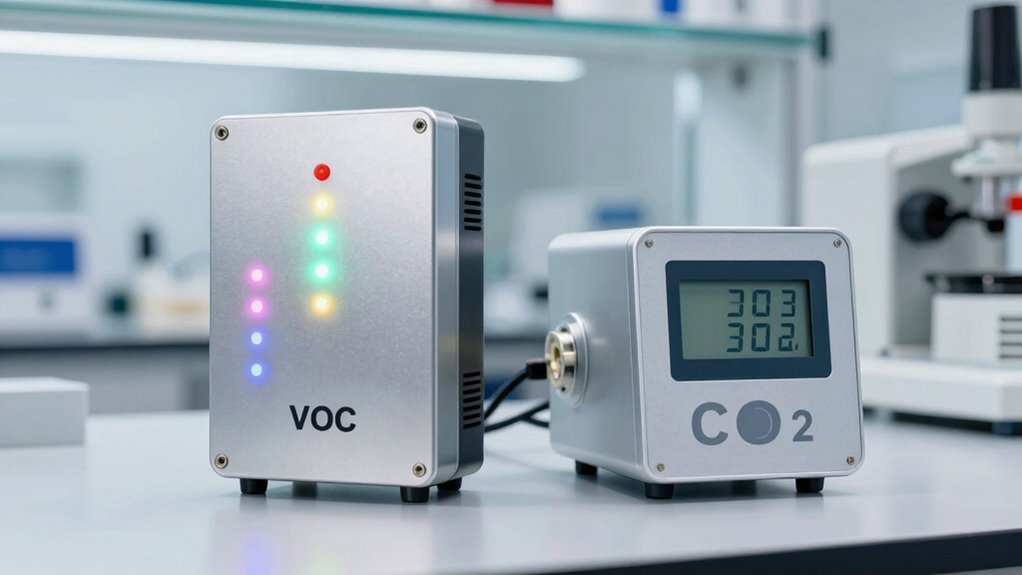
While both VOC sensors and CO2 sensors monitor indoor air quality, they do so by detecting different pollutants with distinct technologies. VOC sensors measure a broad range of airborne organic compounds, often requiring regular sensor calibration for accuracy. CO2 sensors, on the other hand, primarily track carbon dioxide levels, which are easier to interpret but less extensive. Limitations include VOC sensors’ sensitivity to environmental factors and complex data interpretation. CO2 sensors are generally more stable but don’t detect other harmful gases. Here’s a quick comparison:
| Feature | VOC Sensors | CO2 Sensors | Limitations |
|---|---|---|---|
| Detection Type | Organic compounds | Carbon dioxide | Calibration needs |
| Data Interpretation | Complex, variable readings | Straightforward | Limited pollutant detection |
| Response Time | Moderate | Fast | Not comprehensive for all pollutants |
Additionally, the sensor technology used in VOC sensors can be affected by humidity and temperature variations, impacting their reliability. It is important to understand that air quality monitoring requires selecting the appropriate sensor type based on specific needs. Moreover, understanding the sensor limitations can help users make better decisions about indoor air quality management. Furthermore, selecting the right sensor can improve measurement accuracy and ensure reliable data for health and safety decisions. Recognizing the influence of environmental factors on sensor performance is crucial for maintaining sensor reliability over time.
Which Sensor Is Best for Monitoring Indoor Air Quality?

Choosing the right sensor depends on your specific indoor air quality concerns. If you’re mainly monitoring VOCs, a sensor with proper calibration guarantees accurate readings and reliable data interpretation. For tracking CO2 levels, opt for sensors designed for that purpose, which are often easier to calibrate and maintain. Consider these factors:
- The type of pollutants you need to detect
- Sensor calibration requirements for accuracy
- Ease of data interpretation
- Response time and sensitivity
- Maintenance and long-term reliability
- Indoor air quality sensors that address specific pollutants can provide more targeted insights. Additionally, understanding the sensor calibration process is essential to ensure ongoing reliability and accuracy of your measurements. Proper calibration procedures help maintain sensor accuracy over time, preventing drift and ensuring consistent performance. Being aware of sensor drift and how to correct it is crucial for maintaining data integrity. Ultimately, selecting the best sensor involves understanding what you’re measuring and ensuring it’s calibrated correctly to provide meaningful data. This way, you can make informed decisions about your indoor environment and improve air quality effectively.
How to Properly Use VOC and CO2 Sensors to Avoid Mistakes?
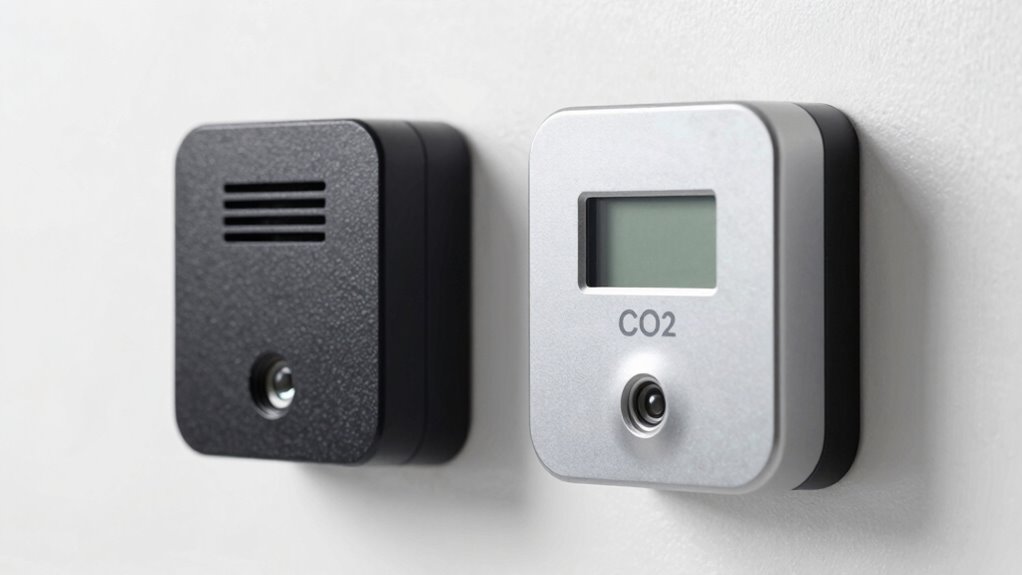
Using VOC and CO2 sensors correctly is essential to get accurate and reliable data. Regular sensor calibration guarantees your devices provide precise readings, preventing drift that can lead to misinterpretation. Follow the manufacturer’s calibration instructions and schedule routine checks. When collecting data, interpret results carefully; remember that VOC sensors detect a range of volatile compounds, while CO2 sensors measure carbon dioxide levels specifically. Avoid assuming they’re interchangeable or that high readings mean the same thing. Proper data interpretation involves understanding each sensor’s limitations and environmental influences. Place sensors in representative locations, away from direct sources or ventilation that could skew readings. Additionally, being aware of sensor placement best practices can significantly improve data accuracy. Proper sensor calibration methods ensure ongoing accuracy over time. By calibrating sensors properly and analyzing data thoughtfully, you’ll avoid mistakes and make informed decisions about indoor air quality. Furthermore, understanding the environmental context can help you better interpret sensor data and improve your indoor air quality management. Incorporating sensor maintenance routines can also extend the lifespan and reliability of your devices. Regularly reviewing sensor performance metrics can help identify when recalibration or replacement is necessary, ensuring consistent data quality.
Frequently Asked Questions
Can VOC and CO2 Sensors Be Calibrated Together?
You can’t calibrate VOC and CO2 sensors together because they require different calibration procedures. During sensor maintenance, follow specific calibration procedures for each type to guarantee accuracy. Mixing calibration steps can lead to incorrect readings and reduce sensor lifespan. Always treat each sensor independently, and use proper calibration gases or reference standards suited for VOCs or CO2. This approach guarantees reliable data and extends your sensors’ effectiveness.
Are VOC Sensors Affected by Outdoor Air Pollution?
Did you know outdoor air pollution can influence VOC sensor readings by up to 20%? Yes, VOC sensors are affected by outdoor air quality, which impacts indoor air quality. When calibrating your sensors, consider outdoor pollution levels to make sure accurate readings. This helps you better monitor indoor air quality and address potential VOC sources, making your environment safer and healthier. Proper calibration accounts for external influences, ensuring reliable sensor performance.
How Often Should VOC and CO2 Sensors Be Replaced?
You should replace VOC and CO2 sensors based on their sensor lifespan and replacement frequency, typically every 3 to 5 years. Regular calibration helps maintain accuracy, but environmental factors and usage can shorten their effective lifespan. Check manufacturer recommendations and monitor sensor performance over time. If readings become inconsistent or drift markedly, it’s time for replacement to guarantee reliable air quality monitoring and safety.
What Are the Cost Differences Between VOC and CO2 Sensors?
You’ll find CO2 sensors generally cost less upfront than VOC sensors, but the difference isn’t just about initial price. The cost comparison also depends on sensor lifespan and maintenance needs. CO2 sensors tend to last longer and require less frequent calibration, making them more economical over time. VOC sensors, however, often have a higher initial cost and shorter lifespan, which can add up in the long run.
Do Environmental Factors Influence Sensor Accuracy?
Yes, environmental factors do influence sensor accuracy. You might notice changes in sensor sensitivity due to temperature, humidity, or airflow, which can lead to calibration challenges. For instance, high humidity can cause false readings or drift, making it harder to maintain precise measurements. To guarantee reliable data, you need to regularly calibrate your sensors and consider environmental conditions during installation and operation.
Conclusion
Now that you know the key differences between VOC and CO2 sensors, you might think they’re interchangeable. But the truth is, using the wrong sensor could mislead you about your indoor air quality. Are you truly protecting your space, or just guessing? Stay informed and choose wisely—because the right sensor could be your best defense against unseen health risks. Don’t settle for less—your air quality depends on it.