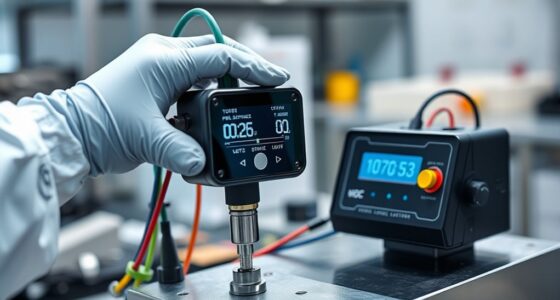
To test indoor air quality for radon, you can use short-term detectors like charcoal canisters or long-term alpha track detectors, which provide a more accurate picture of year-round exposure. Digital monitors and electronic radon detectors are great for continuous, real-time measurements. Proper device placement and testing duration are key to getting reliable results. Keep exploring to discover more effective strategies and tools for safeguarding your indoor air quality from radon risks.
Key Takeaways
- Short-term tests with charcoal canisters or digital monitors provide quick radon level assessments indoors.
- Long-term testing using alpha track detectors offers a more accurate estimate of annual radon exposure.
- Electronic radon detectors enable continuous monitoring and real-time indoor air quality data.
- Proper placement and timing of testing devices are essential for accurate radon level measurements.
- Combining different testing methods and devices ensures comprehensive evaluation and effective radon mitigation.
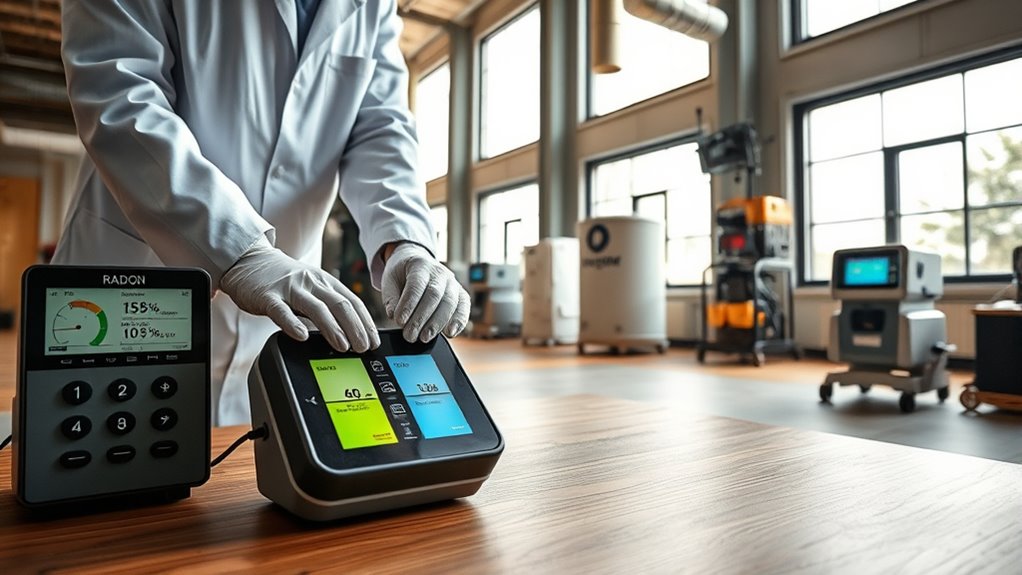
Indoor air quality testing is crucial for ensuring a safe and healthy environment inside your home or workplace. One of the most critical concerns you might face is radon, a naturally occurring radioactive gas that can seep into buildings from the ground. High radon levels pose serious health risks, including lung cancer, making it essential to detect and address this gas promptly. When testing for radon, you’re fundamentally assessing the effectiveness of your current radon mitigation strategies and determining if additional measures are needed. Proper testing helps you decide whether you should install radon mitigation systems or improve existing ones. Additionally, air filtration plays a significant role in maintaining good indoor air quality by removing airborne pollutants, including radon decay products and other contaminants. Combining radon testing with effective air filtration ensures a healthier indoor environment.
There are several methods available for testing indoor radon levels, each suited for different situations. Short-term testing involves placing a radon test device in your home for a few days to weeks. These devices, such as charcoal canisters or activated charcoal detectors, absorb radon particles during the test period. After the testing window, you send the device to a lab for analysis or use a digital monitor to read the results directly. Short-term tests are useful for quick assessments, especially if you’re considering buying or selling a property or want immediate insights into your radon levels. However, for more accurate readings, long-term testing is preferable. Long-term devices, like alpha track detectors or electret ion chambers, stay in place for several months, providing a more representative picture of your annual radon exposure. This type of testing helps you determine whether your home’s radon levels are consistently high and if you need to implement radon mitigation measures. Using multiple testing methods can also provide a more comprehensive understanding of indoor air quality.
When it comes to devices, electronic radon detectors offer continuous monitoring and real-time data, making them ideal for ongoing evaluation. These devices can alert you immediately if radon levels spike, allowing you to take swift action. If testing reveals high radon levels, radon mitigation becomes necessary. You might consider installing a vent pipe system or sub-slab depressurization to reduce radon infiltration. Air filtration systems also support mitigation efforts by capturing radon decay particles and other airborne pollutants, further lowering indoor air contamination. Regular testing and maintenance of these systems ensure they operate efficiently. Ultimately, combining proper testing techniques with effective radon mitigation and air filtration strategies helps you protect your indoor environment, giving you peace of mind and safeguarding your health. Maintaining awareness of indoor air quality is vital for overall health and well-being.
Frequently Asked Questions
How Often Should Radon Testing Be Performed in a Home?
You should perform radon testing at least every two years, as recommended by homeowners and industry experts. If you’ve had high radon levels or made significant home improvements, testing more frequently, such as annually, is advisable. Regular testing ensures your indoor air remains safe, and staying current with testing frequency helps you identify and mitigate radon risks promptly. Always follow the latest homeowner recommendations for ideal indoor air quality.
Are There Seasonal Variations in Indoor Radon Levels?
Think of radon levels like the tide, with seasonal fluctuations influencing their rise and fall. In winter, you might notice higher indoor radon levels because colder air causes the gas to seep in more. Geological influences also play a role, as soil composition and foundation type affect radon entry. So, yes, seasonal variations are common, making it smart to test your home regularly throughout the year.
Can Air Purifiers Reduce Radon Concentrations Effectively?
Air purifiers are generally not effective for radon mitigation because their efficiency in removing radon gas is limited. Radon is a radioactive gas that requires specialized mitigation methods, like venting systems or sub-slab depressurization. While air purifiers can improve overall indoor air quality by reducing particles and allergens, they do little to lower radon concentrations. For effective radon reduction, you should consult a professional for proper radon mitigation solutions.
What Are the Health Risks of Long-Term Radon Exposure?
Long-term radon exposure increases your risk of developing lung cancer considerably, especially if you smoke. It can also cause respiratory issues, such as coughing, wheezing, and shortness of breath. Over time, these health problems can worsen, affecting your quality of life. To protect yourself, it’s essential to test your indoor air and take action if radon levels are high, reducing your exposure and health risks.
Is Professional Testing More Accurate Than DIY Kits?
You might think DIY kits are enough, but professional testing generally offers better accuracy because of advanced equipment and expert interpretation. While DIY reliability is decent for a quick check, it can miss subtle radon levels or fluctuations. Investing in professional testing guarantees precise results, giving you peace of mind and a reliable assessment of your indoor air quality. It’s worth the extra effort for accurate, trustworthy data.
Conclusion
By testing your indoor air for radon, you’re planting a seed of awareness and protection. Think of your home as a sanctuary, where each device acts as a guardian, silently watching over your loved ones. When you take action, you’re opening a window to safer air, allowing peace of mind to flourish. Remember, tending to these hidden dangers is like watering a garden—nurturing health and harmony within your personal haven.