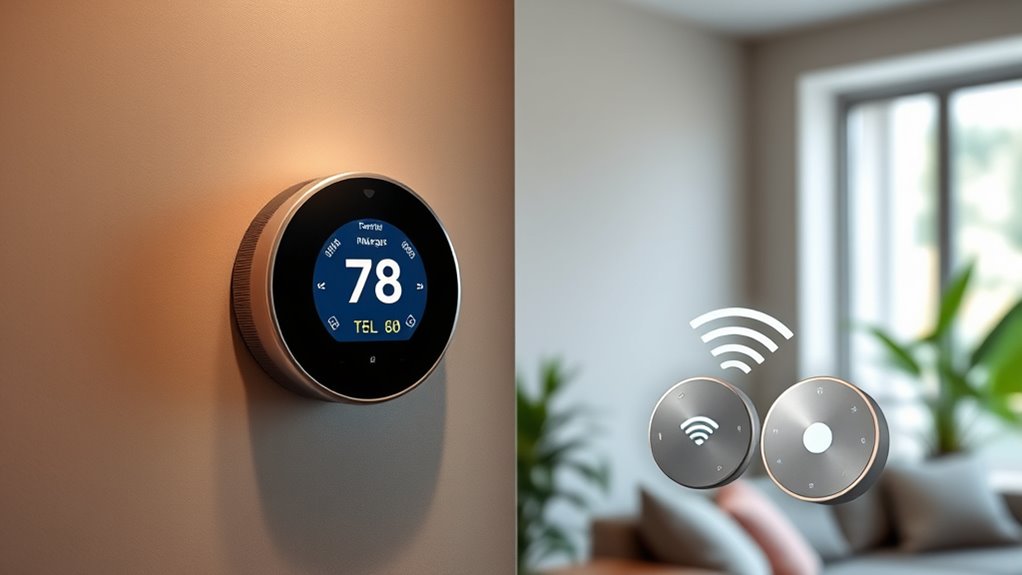

Smart thermostats connect seamlessly with air quality devices by using sensor data to automatically adjust ventilation and airflow. When pollutants, humidity, or CO2 levels rise, your thermostat can increase fresh air circulation to improve indoor air quality. This synchronized system responds dynamically to environmental changes, creating a healthier and more comfortable home. If you’d like to discover how these smart integrations work together to optimize your indoor environment, there’s more to explore beyond this overview.
Key Takeaways
- Smart thermostats synchronize with air quality sensors to monitor pollutants, humidity, temperature, and CO2 levels for comprehensive environmental data.
- They automatically adjust ventilation and airflow settings based on real-time sensor readings to optimize indoor air quality.
- Integration enables dynamic responses, such as increasing airflow during high pollutant levels or reducing it in poor outdoor air conditions.
- Smart thermostats connect with broader home systems, allowing user customization via apps or voice commands for tailored indoor environments.
- This integration creates energy-efficient, healthy indoor spaces by proactively managing ventilation based on sensor data and user preferences.
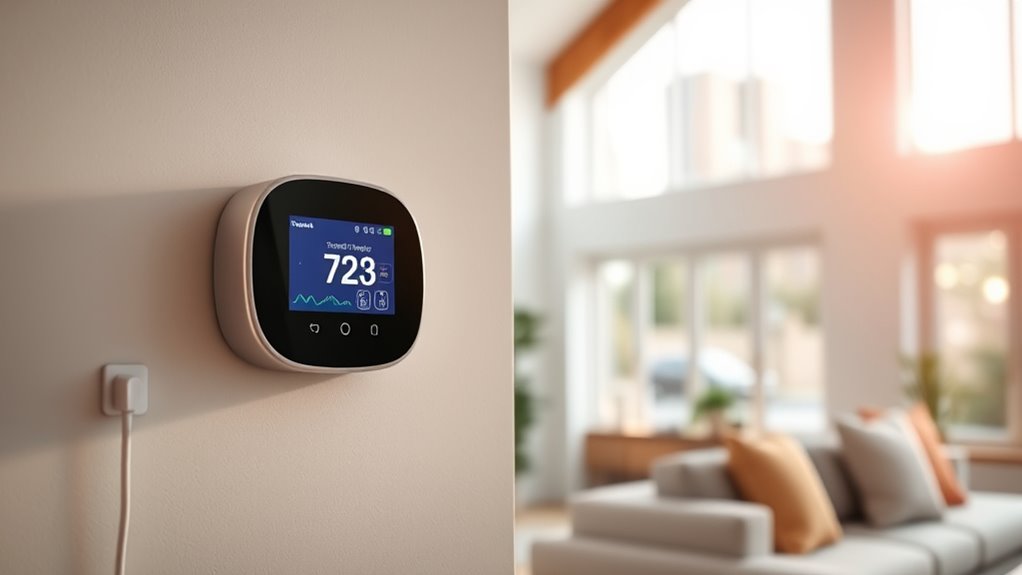
Smart thermostats and air quality devices are revolutionizing how you manage your home’s environment, making it easier to stay comfortable and healthy. When these systems work together seamlessly, they create a smarter, healthier living space. One key way they do this is through advanced ventilation control, allowing your home to maintain ideal airflow and air quality without sacrificing energy efficiency. Instead of manually opening windows or adjusting vents, your smart system automatically modulates ventilation based on real-time data, ensuring fresh air circulates when needed. This not only improves indoor air quality but also reduces the risk of indoor pollutants lingering, helping you breathe easier.
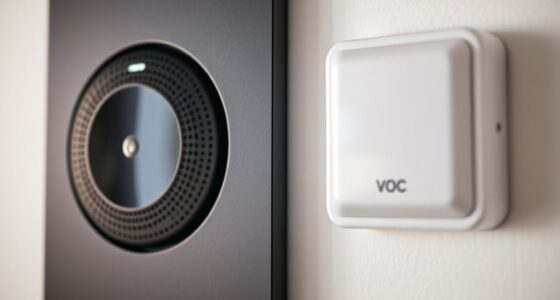
Sensor synchronization plays an essential role in this integration. Modern air quality devices come equipped with multiple sensors that detect pollutants, humidity, temperature, and CO2 levels. When these sensors are synchronized with your smart thermostat, they provide a thorough picture of your home’s environment. This data fusion enables your system to respond dynamically: if the sensors detect elevated CO2 or VOC levels, the thermostat can increase ventilation or adjust airflow settings to improve air quality. Conversely, when air quality is good, the system can reduce ventilation to conserve energy. This synchronization ensures that all devices operate in harmony, making your home’s environment both comfortable and healthy without constant manual intervention.
Sensor synchronization ensures harmonious operation of air quality devices and thermostats, maintaining a healthy, efficient indoor environment automatically.
You benefit from this integration by experiencing a more responsive and efficient climate control system. Instead of reactive adjustments, your smart setup anticipates needs based on sensor data. For example, if a room is crowded and humidity rises, your system can automatically increase ventilation, preventing mold or discomfort. When outdoor air quality drops due to pollution or weather conditions, your system can adapt by reducing ventilation, preventing pollutants from entering your home. This intelligent coordination between ventilation control and sensor synchronization ensures your indoor environment remains stable, safe, and energy-efficient. Additionally, these integrations often tie into your home’s broader smart ecosystem, allowing you to customize settings through apps or voice commands. You can set preferences for air quality thresholds, automate ventilation schedules, or receive alerts if indoor air quality deteriorates. This level of control puts you in charge of your home’s environment, making it easier to maintain a healthy, comfortable space without constant manual adjustments. As technology advances, expect even more sophisticated sensor synchronization and ventilation control features that proactively enhance your indoor air quality and energy use, creating a truly intelligent home environment tailored to your needs. Moreover, understanding the importance of health in indoor environments underscores the value of these smart systems in promoting well-being.
Frequently Asked Questions
Can Smart Thermostats Detect Specific Air Pollutants?
Smart thermostats generally can’t detect specific air pollutants directly. Instead, they rely on air quality monitoring data from compatible air quality devices to assess overall air quality and pollutant levels. When integrated, these devices provide real-time information, allowing your thermostat to adjust temperature or ventilation accordingly. While they improve air quality management, for precise pollutant detection, dedicated air quality sensors are still necessary.
How Quickly Do Air Quality Devices Respond to Changes?
Air quality devices typically have fast sensor response times, often detecting changes within seconds to a few minutes. This pollutant detection speed allows them to alert you quickly if air quality drops, so you can take action promptly. The speed varies based on the device’s sensor quality and technology, but generally, you can expect rapid responses that help maintain a healthy indoor environment.
Are Integration Features Compatible With All Smart Home Systems?
Think of smart home compatibility like a well-choreographed dance—every device needs to move in sync. Not all integration features are compatible with every system, so you might find some devices don’t quite speak the same language. To guarantee smooth device interoperability, check if your smart thermostat and air quality monitors support common platforms like Zigbee or Z-Wave. This way, your devices work together seamlessly, creating a harmonious home environment.
Do Air Quality Sensors Require Regular Calibration?
You should regularly calibrate your air quality sensors to guarantee ideal device accuracy. Sensor calibration involves adjusting the device to match a known standard, which helps maintain reliable readings over time. Without proper calibration, your sensor’s accuracy can decline, leading to inaccurate air quality assessments. Regular calibration is essential for consistent performance, especially when integrating with smart thermostats, as it ensures your system responds correctly to changing air conditions.
Can I Control Air Quality Devices Remotely Through the Thermostat?
Did you know 85% of smart thermostat users enjoy remote access? You can control air quality devices through your thermostat if they’re compatible, making it super convenient. Many modern thermostats support device compatibility, allowing you to adjust air purifiers or sensors from anywhere via smartphone. Just verify your air quality device is compatible with your thermostat’s system, so you can monitor and manage your indoor environment effortlessly, anytime, anywhere.
Conclusion
By integrating smart thermostats with air quality devices, you create a healthier, more comfortable home environment. Imagine your system automatically adjusting to keep indoor pollution levels at bay—reducing allergens by up to 50%. With 85% of homeowners noticing improved air quality after these integrations, you can trust this technology to breathe new life into your space. Embrace these innovations and enjoy a smarter, cleaner, and more invigorating home every day.