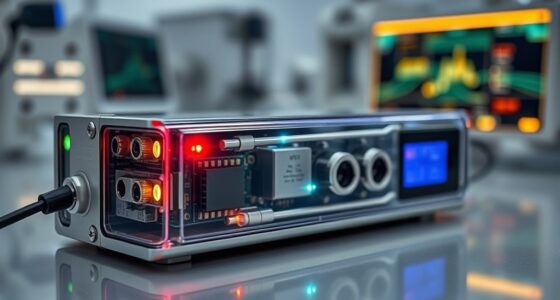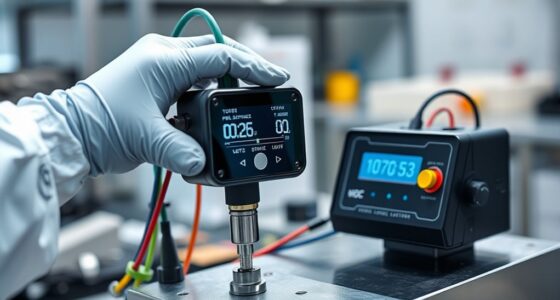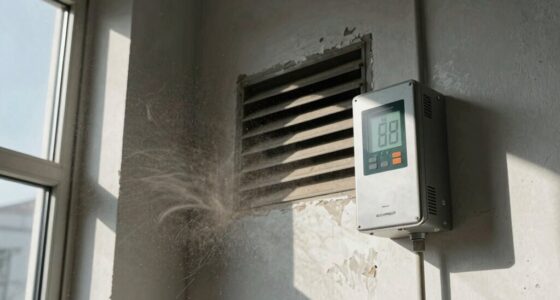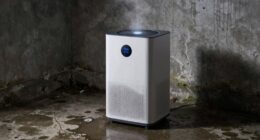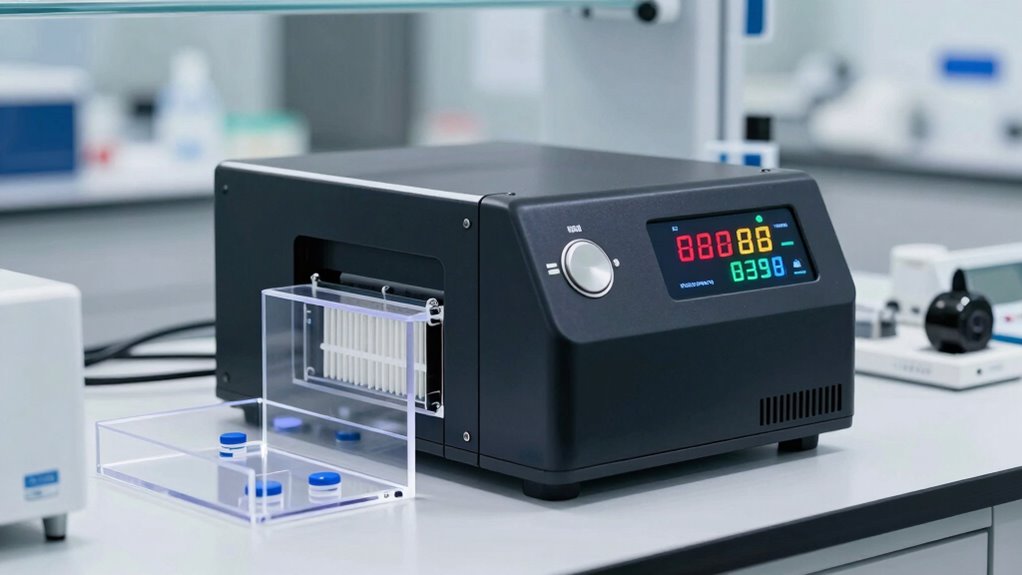

Particle counters are crucial tools for detecting airborne or liquid contaminants, helping you maintain safety, meet industry standards, and guarantee cleanliness. You need one when there’s a risk of contamination, regulatory requirements demand precise measurement, or you want real-time monitoring of air quality. They’re indispensable in environments like pharmaceutical labs, cleanrooms, hospitals, and manufacturing plants. To learn about choosing the right device and optimizing its use, keep exploring how particle counters fit your specific needs.
Key Takeaways
- Particle counters measure airborne or liquid particles to assess air quality and contamination levels accurately.
- They provide real-time data essential for maintaining clean environments and regulatory compliance.
- Use particle counters in industries like pharmaceuticals, healthcare, and semiconductor manufacturing for contamination control.
- Regular calibration and proper setup ensure measurement accuracy and device reliability over time.
- They help detect early signs of filter failure or contamination risks, preventing potential safety and quality issues.
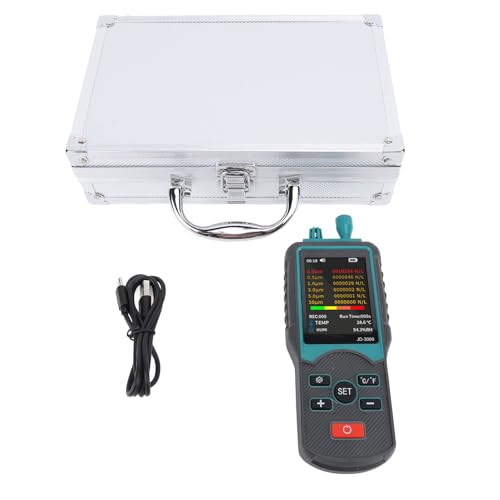
Dust Particle Counter Handheld Aerosol Dust Monitor Air Quality Detection for Cleanroom 0.3 0.5 1.0 3.0 5.0 10μm PM2.5 PM10
- Dust Particle Size Detection: Detects six dust sizes from 0.3μm to 10μm
- Air Quality Monitoring: Measures PM2.5 and PM10 concentrations
- Dual Measurement Modes: Particle counting and concentration modes
As an affiliate, we earn on qualifying purchases.
As an affiliate, we earn on qualifying purchases.
What Are Particle Counters and How Do They Work?
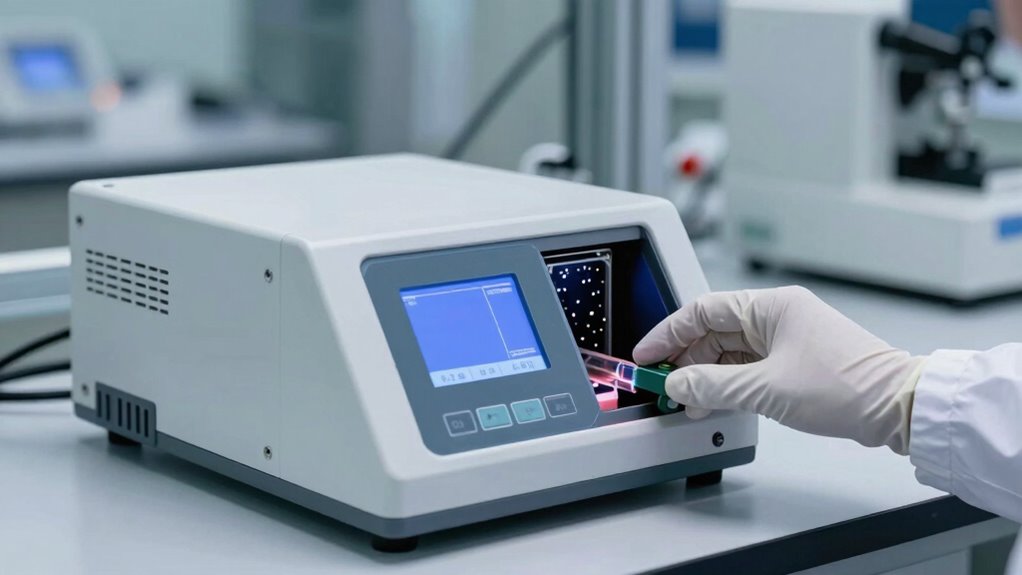
Particle counters are devices that measure and count airborne or liquid particles to assess cleanliness, contamination levels, or air quality. They work by drawing in air or liquid samples through a sensor that detects particles based on size and number. The device then calculates particle concentration, giving you a clear picture of air quality or contamination risks. These counters are essential in environments where particle filtration is critical, like cleanrooms, labs, or manufacturing areas. By monitoring particle levels, you can determine if your filtration systems are effective or if contamination is present. Particle counters provide real-time data, enabling you to take immediate action to improve air quality or address contamination issues. Their precise measurements help maintain high standards of cleanliness and safety, especially when testing accuracy is vital for compliance and safety standards. Additionally, understanding the appropriate usage of these devices ensures reliable results and effective contamination management. Proper calibration and maintenance of particle counters also play a crucial role in obtaining reliable measurements and consistent performance. Regular calibration helps ensure the accuracy of data, which is vital for making informed safety decisions.

Particle Counter, Dust Particle Counter,Melt Spraying Cloth Detector,Airborne,Air Quality Monitor Dust Particle Counter(with Printer)
- Airborne Dust Detection: Detects dust particles in the air
- Suitable for Testing: Ideal for melt-blown fabric and lab use
- Particle Counting: Counts and detects airborne particles
As an affiliate, we earn on qualifying purchases.
As an affiliate, we earn on qualifying purchases.
Do You Need a Particle Counter? Signs and Indicators
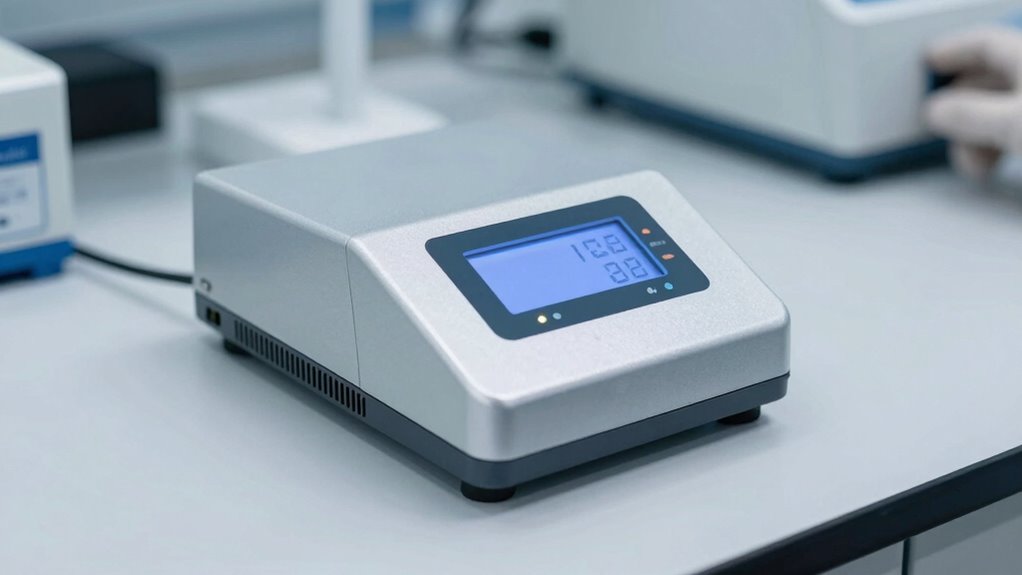
If you’re responsible for maintaining a clean and safe environment, knowing when to use a particle counter can save you time and prevent problems. Signs you need one include concerns about air quality, deviations from cleanroom standards, or unexpected particle spikes. Here are some indicators:
- Air quality reports show increased particle counts.
- Cleanroom standards are not consistently met.
- You notice dust or debris settling in critical areas.
- Environmental monitoring shows irregular particle fluctuations that could impact safety. Regular monitoring can help identify airborne contaminants before they cause issues, making it an essential part of air quality management. Understanding particle size distribution is also vital for assessing contamination levels effectively. Regular monitoring can catch issues early, preventing contamination or health risks. If any of these signs sound familiar, investing in a particle counter is a smart move to maintain optimal air quality and adhere to cleanroom standards.

FPC-P2 Portable Oil Particle Counter 0.8-600μm – On-Site Purity Testing of Hydraulic Fluids, Lubricants, Turbine Oils
- Testing Principle: Photoresistance (shading) method
- Sensor Type: High-precision laser sensor
- Test Range: 0.8-600μm
As an affiliate, we earn on qualifying purchases.
As an affiliate, we earn on qualifying purchases.
Which Type of Particle Counter Is Right for Your Industry?
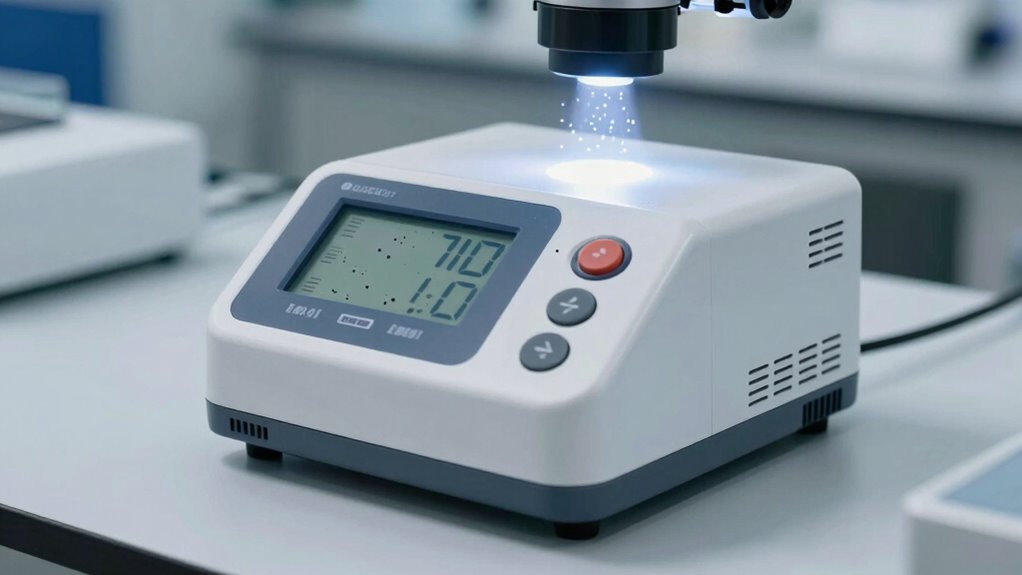
Choosing the right particle counter depends on your industry’s standards and regulations, which dictate the accuracy and features needed. You also need to take into account the measurement sensitivity required to detect relevant particle sizes. Additionally, ensure the device is compatible with your environmental conditions to get reliable results. Being aware of early detection signs relevant to your industry can help in selecting the most effective monitoring equipment. Incorporating child development principles can also guide the selection of user-friendly and adaptable devices suitable for various settings. Understanding free floating particles can further enhance the effectiveness of your monitoring strategy. Moreover, considering the latest advanced filtration systems can improve overall air quality and measurement accuracy. Recognizing the importance of measurement sensitivity can lead to more precise detection of critical particles, ensuring compliance and safety.
Industry Standards and Regulations
Determining the right type of particle counter depends heavily on your industry’s specific standards and regulatory requirements. You must guarantee your device complies with calibration schedules to maintain accuracy and reliability. Additionally, data reporting capabilities are essential for audit trails and regulatory submissions. Consider these factors:
- Regulatory standards, such as ISO or GMP, dictate particle size detection limits and reporting formats.
- Calibration schedules ensure your measurements stay accurate over time and meet industry compliance.
- Data reporting features help you document results clearly for audits and quality control.
- Understanding essential oil applications can provide insights into how environmental cleanliness impacts health and safety protocols.
- Familiarity with particle size detection limits is crucial for selecting a device that meets the precise requirements of your industry.
Choosing a particle counter that aligns with these standards guarantees your processes remain compliant and trustworthy. Always verify that your device’s specifications meet the regulatory body’s requirements for your industry.
Measurement Sensitivity Needed
Understanding your industry’s required measurement sensitivity is essential because it directly impacts the type of particle counter you need. To determine this, consider your measurement thresholds—how small or large particles you must detect accurately. Some industries demand high sensitivity to catch even microscopic particles, while others focus on larger contaminants. Proper sensitivity calibration ensures your counter consistently meets these thresholds, avoiding false readings or missed particles. If precision is critical, opt for counters with adjustable sensitivity settings, allowing you to tailor detection capabilities to specific standards. Additionally, selecting a suitable calibration method can help maintain consistent accuracy over time. Regular calibration is vital for maintaining measurement accuracy and compliance with industry standards. Employing appropriate calibration procedures can further ensure your device remains reliable and compliant. Conversely, less sensitive models may suffice for rough assessments. Knowing your industry’s exact measurement sensitivity needs helps you select the right particle counter, ensuring reliable results and compliance with regulatory standards. Additionally, understanding measurement sensitivity benefits your overall quality control and product safety initiatives. Recognizing industry-specific requirements can further refine your selection process, ensuring optimal performance tailored to your operational environment.
Environmental Conditions Compatibility
Environmental conditions play a crucial role in selecting the right particle counter for your industry, as they can affect both device performance and measurement accuracy. Understanding how factors like airflow dynamics influence particle movement helps determine which counter suits your environment. For example:
- If airflow is turbulent, opt for a device with advanced airflow management to ensure accurate readings.
- In environments with fluctuating temperatures or humidity, choose a particle counter that can handle these variations without compromising device calibration.
- For cleanrooms or controlled spaces, ensure your device can adapt to minimal airflow disturbance and maintain precise calibration.
- Additionally, considering the environmental conditions compatibility helps ensure compliance with industry standards and enhances measurement reliability.
Matching your environment’s conditions with the right particle counter ensures reliable data collection, reduces calibration errors, and enhances overall measurement integrity.

Temtop Professional Handheld Particle Counter, Pump Suction Air Meter
- Precise Particulate Measurement: Measures particles 0.3µm to 1.0µm
- Air Quality Indices: Monitors PM2.5, PM10, TSP
- Environmental Sensors: Includes temperature and humidity sensors
As an affiliate, we earn on qualifying purchases.
As an affiliate, we earn on qualifying purchases.
What Features Matter Most When Choosing a Particle Counter?
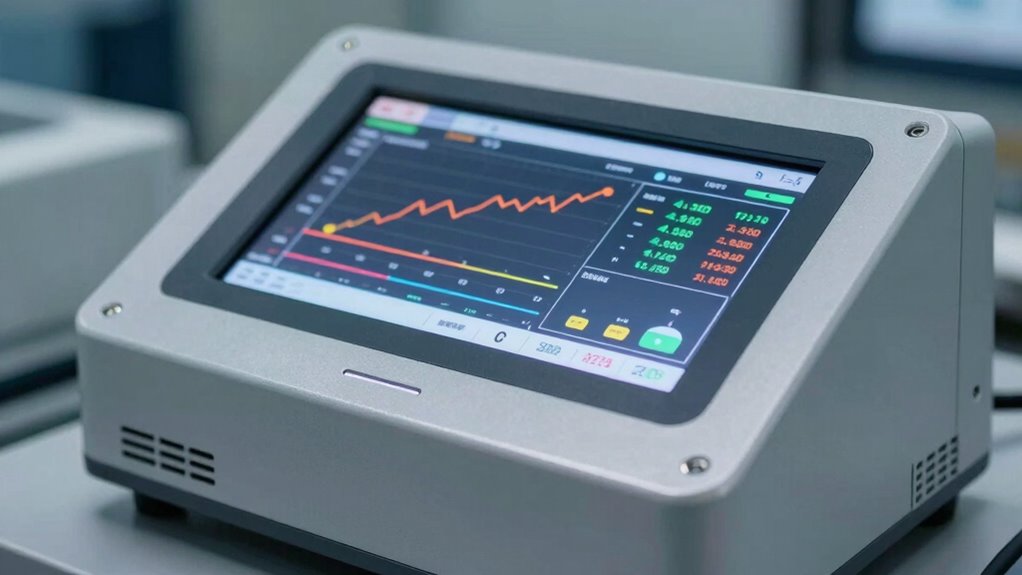
When choosing a particle counter, the most important features to assess are its sensitivity, measurement range, and ease of use. High sensitivity ensures accurate detection of small particles, which directly impacts your understanding of air quality. A broad measurement range allows you to monitor various particle sizes, essential for evaluating filtration efficiency and overall air cleanliness. Ease of use is critical for quick, reliable readings, especially if you operate in a busy environment. Look for intuitive interfaces and straightforward calibration processes. Additionally, consider features like data logging and connectivity, which help track changes over time and integrate with other systems. Ultimately, prioritizing these features guarantees you select a device that provides precise, actionable data to maintain excellent air quality.
How Does Particle Counting Help You Meet Industry Regulations?
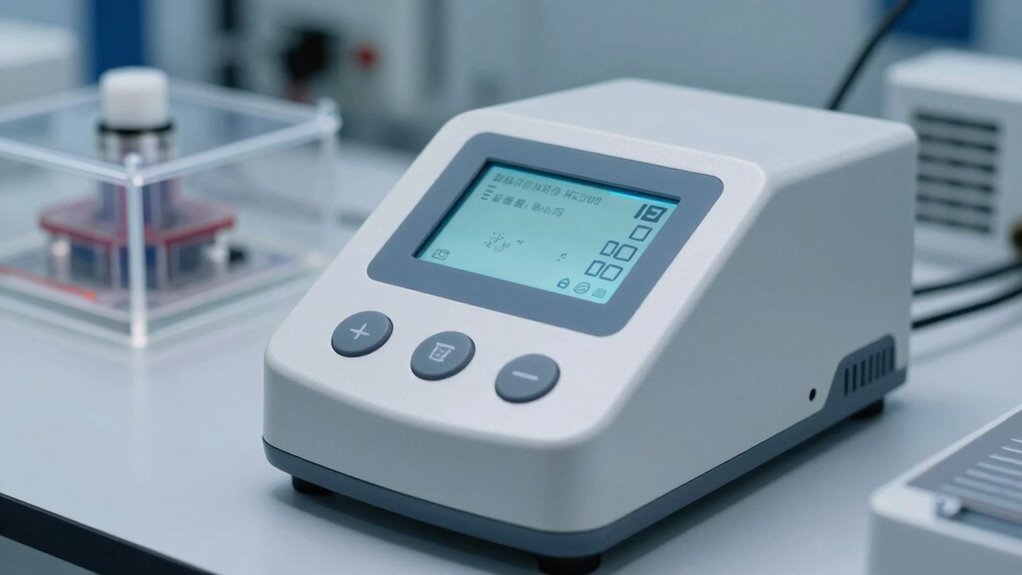
Particle counting helps you meet industry regulations by ensuring your processes comply with strict standards. It allows you to monitor contamination levels accurately, so you can address issues before they become violations. Additionally, using particle counters supports your quality assurance efforts, keeping your products and operations within regulatory limits.
Ensuring Compliance Standards
Particle counting plays a essential role in helping you meet industry regulations because it provides precise, real-time data on airborne contaminants. This data ensures your air filtration systems are effective and compliant with safety standards. By monitoring particle size and concentration, you can:
- Verify that filters remove particles of specific sizes, especially those critical for your industry.
- Detect early signs of filter degradation or failure, maintaining air quality.
- Adjust filtration processes promptly to stay within regulatory limits and prevent contamination.
Accurate particle counts help you demonstrate compliance during audits, avoid penalties, and guarantee a safe environment. With reliable data, you stay proactive in maintaining air purity and adhering to strict industry standards, ensuring your operations remain compliant and safe.
Monitoring Contamination Levels
Monitoring contamination levels with particle counters provides real-time insights into air quality, enabling you to quickly identify deviations from accepted standards. By tracking airborne particles, you guarantee your environment stays within cleanroom standards, preventing contamination risks. These devices help you verify compliance during audits and routine checks, making regulatory adherence straightforward. To illustrate, consider the table below, which highlights key particle sizes and their relevance:
| Particle Size | Industry Standard | Contamination Risk |
|---|---|---|
| 0.1 microns | 100 particles/m³ | High |
| 0.3 microns | 35 particles/m³ | Moderate |
| 0.5 microns | 10 particles/m³ | Low |
| 1.0 microns | 2 particles/m³ | Very Low |
| 5.0 microns | 0.5 particles/m³ | Minimal |
Using particle counters, you maintain control and compliance effortlessly.
Supporting Quality Assurance
Ensuring compliance with industry regulations requires accurate and consistent contamination monitoring, and particle counting plays a vital role in this process. It helps you verify filtration efficiency and maintain high air quality standards. By regularly counting particles, you can:
- Detect deviations in filtration performance before they cause regulatory issues.
- Confirm your environment meets industry-specific air quality standards.
- Identify sources of contamination quickly, reducing risk of non-compliance penalties.
Particle counters provide reliable data, guaranteeing your processes stay within permissible limits. This proactive approach not only supports regulatory adherence but also enhances overall product quality and safety. Ultimately, integrating particle counting into your quality assurance program helps you maintain confidence in your filtration systems and ensures continuous compliance.
Which Environments Benefit Most From Particle Monitoring?
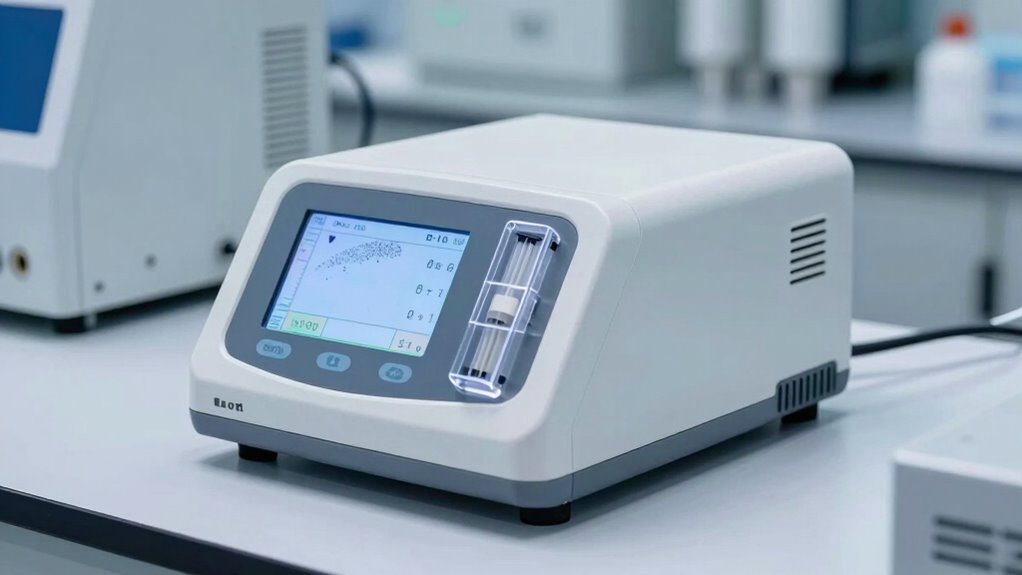
Certain environments face higher risks from airborne particles, making particle monitoring essential for maintaining safety and cleanliness. These settings require strict control of air quality and cleanroom cleanliness to prevent contamination. Facilities like pharmaceutical labs, hospitals, and manufacturing plants benefit most from continuous particle monitoring. They ensure compliance with safety standards and protect sensitive processes. Consider the following environments:
| Environment | Key Focus | Monitoring Need |
|---|---|---|
| Pharmaceutical Labs | Prevent contamination | Continuous monitoring |
| Hospitals | Protect patient safety | Regular particle checks |
| Semiconductor Cleanrooms | Maintain ultra-clean conditions | Real-time particle counts |
Using particle counters in these environments helps you identify airborne threats early, ensuring safety and product integrity.
When Should You Perform Routine Testing Versus Continuous Monitoring?
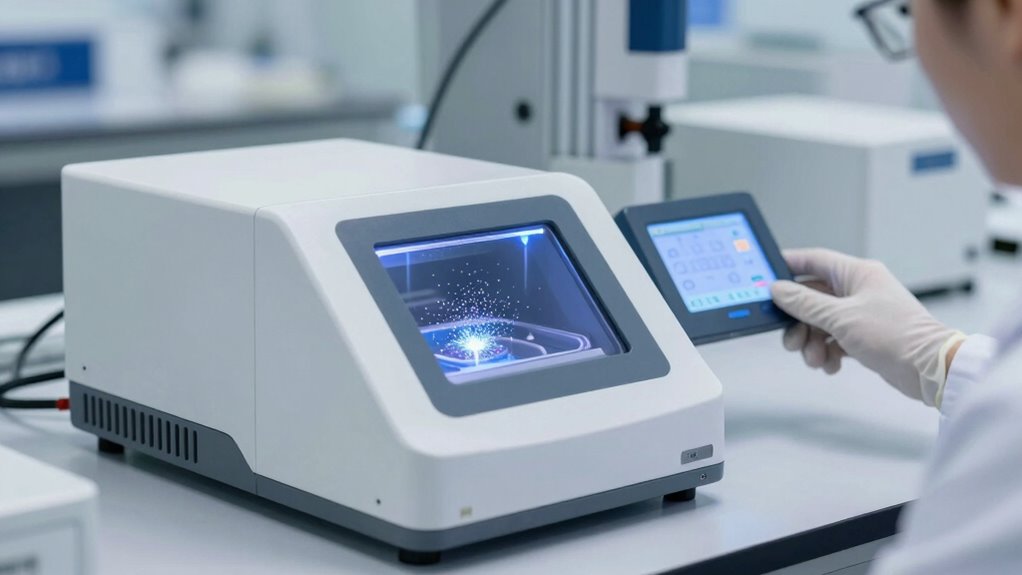
Deciding when to perform routine testing versus continuous monitoring depends on the specific environment and its risk level. If maintaining ideal air quality and contamination control is critical, continuous monitoring provides real-time insights to catch issues immediately. For environments with lower risk or less sensitive processes, routine testing suffices. Consider these guidelines:
Choose between routine testing and continuous monitoring based on your environment’s risk level and sensitivity.
- Use routine testing for scheduled assessments, verifying air quality periodically.
- Opt for continuous monitoring in high-risk areas like cleanrooms or pharmaceutical labs where contamination control is essential.
- Combine both methods when you need ongoing oversight with periodic validation, ensuring consistent air quality.
Choosing the right approach helps prevent contamination, enhance air quality, and ensure compliance with safety standards. Tailor your testing strategy to match your environment’s risk and sensitivity levels.
Common Problems and Troubleshooting Tips for Particle Counters
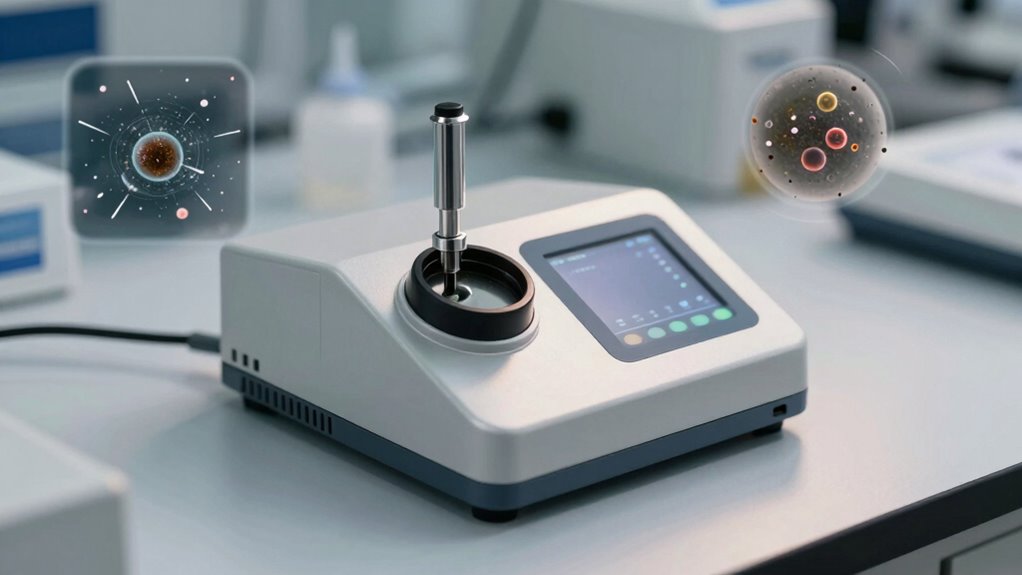
Particle counters are essential tools for monitoring air quality, but they can sometimes encounter common issues that disrupt accurate readings. One frequent problem is inconsistent sensor accuracy, which can result from infrequent calibration. To maintain precision, you should follow recommended calibration frequency, ensuring the sensor remains reliable. If readings suddenly fluctuate or seem off, check for dirt or debris on the sensor, as contamination affects performance. Also, verify the power supply and connections, since faulty wiring can cause errors. Regularly cleaning the sensor and updating firmware can prevent many issues. If calibration results are inconsistent or readings are unreliable, recalibrate the device or consult the manufacturer. Addressing these common problems helps ensure your particle counter delivers accurate, dependable data for air quality assessments.
How to Maximize Your Particle Counter for a Safer Environment
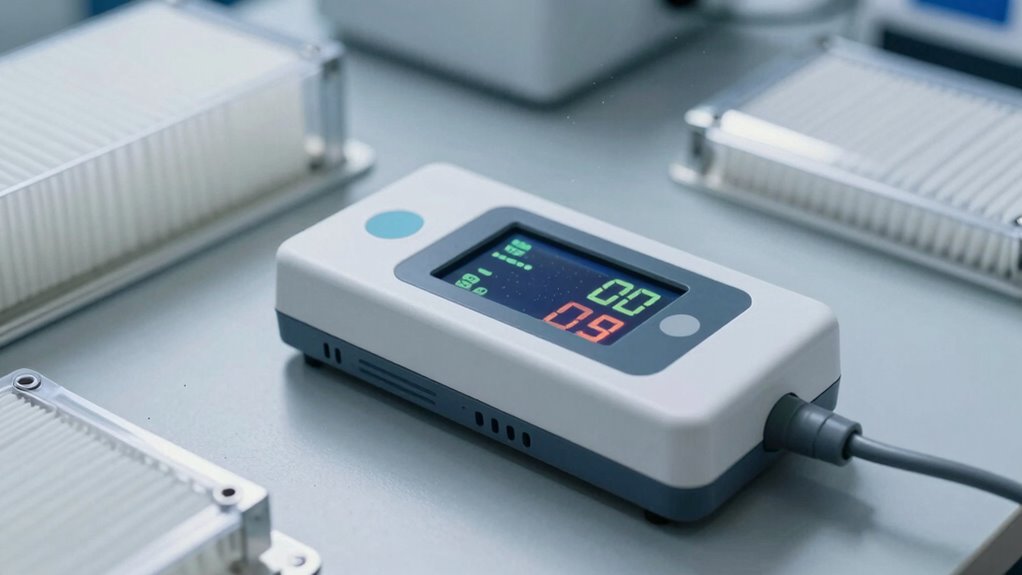
To get the most accurate and reliable air quality data, it’s important to optimize how you use your particle counter. First, guarantee you regularly perform calibration procedures to maintain measurement accuracy. Second, pay close attention to particle size settings—adjust them based on your environment’s specific needs. Third, keep your device clean and free from dust or debris, which can affect readings. Additionally, verify that your particle counter is correctly configured to detect the relevant particle sizes. Consistently following calibration procedures guarantees your device remains precise over time. By focusing on these steps, you’ll maximize your particle counter’s performance, leading to safer environments and more reliable data for decision-making.
Frequently Asked Questions
How Often Should I Calibrate My Particle Counter?
You should calibrate your particle counter at least once a year, but more frequent calibration might be necessary depending on your maintenance schedule and usage. Regular calibration guarantees accurate readings, so check your manufacturer’s recommendations for calibration frequency. If your device undergoes heavy use or operates in a critical environment, consider calibrating every 6 months or as part of your routine maintenance schedule to maintain peak performance.
Can Particle Counters Detect Specific Particle Types?
Yes, particle counters can detect specific particle types through advanced particle identification features. These functions analyze size, shape, and other properties, helping you pinpoint contamination sources. By identifying particular particles, you can better understand contamination sources and take targeted action. Keep in mind, however, that some counters may require additional sensors or software upgrades for precise particle identification, so verify your device’s capabilities to guarantee it meets your needs.
What Maintenance Is Required for Long-Term Accuracy?
To guarantee long-term accuracy, you should regularly perform sensor calibration according to the manufacturer’s maintenance schedule. Keep the particle counter clean by gently wiping sensors and filters, and check for any signs of wear or damage. Replace consumables as needed. Following a consistent maintenance schedule helps maintain precise readings and extends the device’s lifespan, ensuring reliable particle detection over time.
Are Portable Particle Counters Suitable for All Environments?
Did you know that over 60% of industries find portable particle counters highly useful? They’re generally suitable for many environments, thanks to their device portability. However, environmental considerations matter—extreme temperatures, humidity, or dust can affect accuracy. So, while portable counters are versatile, make certain they’re appropriate for your specific setting to get reliable readings. Always match your device’s capabilities with your environment for ideal results.
How Do I Interpret Particle Count Data Effectively?
You interpret particle count data effectively by focusing on air quality standards and contamination control goals. Look for trends over time to identify spikes or patterns indicating poor air quality. Compare your data to industry benchmarks or regulatory limits to assess if contamination levels are acceptable. Use the data to pinpoint sources of pollution and evaluate cleaning or filtration effectiveness, ensuring your environment remains safe and compliant.
Conclusion
Think of your particle counter as a guardian lantern, guiding you safely through the dark fog of unseen particles. When you listen to its signals and trust its insights, you illuminate the path to cleaner, safer environments. Regularly checking and understanding its readings is like tending a steady flame—keeping risks at bay. Embrace this tool as your beacon of clarity, ensuring every step you take shines with confidence and precision.