
TL;DR
Designer Lauren Lerner says marble can last longer in physical terms, while quartz is more likely to retain a like-new appearance in a busy household. Quartz resists stains but can be damaged by heat and sunlight; marble handles heat but is porous, softer and prone to etching. The better fit depends partly on whether a homeowner accepts the patina marble develops over time.
Marble may last longer as a material than quartz, but quartz is more likely to keep a like-new appearance through years of everyday use, interior designer Lauren Lerner told Hunker. The comparison matters to homeowners choosing counters because the surfaces age differently: marble can develop scratches and etching, while quartz is stain-resistant but vulnerable to heat and prolonged sunlight.

Get home appliances delivered free with Prime
- Fast, free delivery on millions of items
- Prime Video, Amazon Music and more included
- Member-only deals all year
Lerner, founder and principal designer of Living with Lolo, told Hunker that marble is natural stone and that some marble counters in Europe are centuries old. She said quartz may be the more practical choice for many families because it is nonporous and does not stain or etch in the same way, helping it look close to new after 15 or 20 years. That time span is her assessment, not a guaranteed lifespan for every installation.
Quartz is made with resin and is generally consistent in color and pattern. Lerner said it resists everyday chips and scratches, does not need sealing and can resist spills such as wine, coffee and oil. But she warned that a hot pan can scorch or discolor the resin-bound surface, with marks that are usually permanent; the report says quartz can develop permanent marks above 300 degrees Fahrenheit. It can also yellow or fade with prolonged UV exposure.
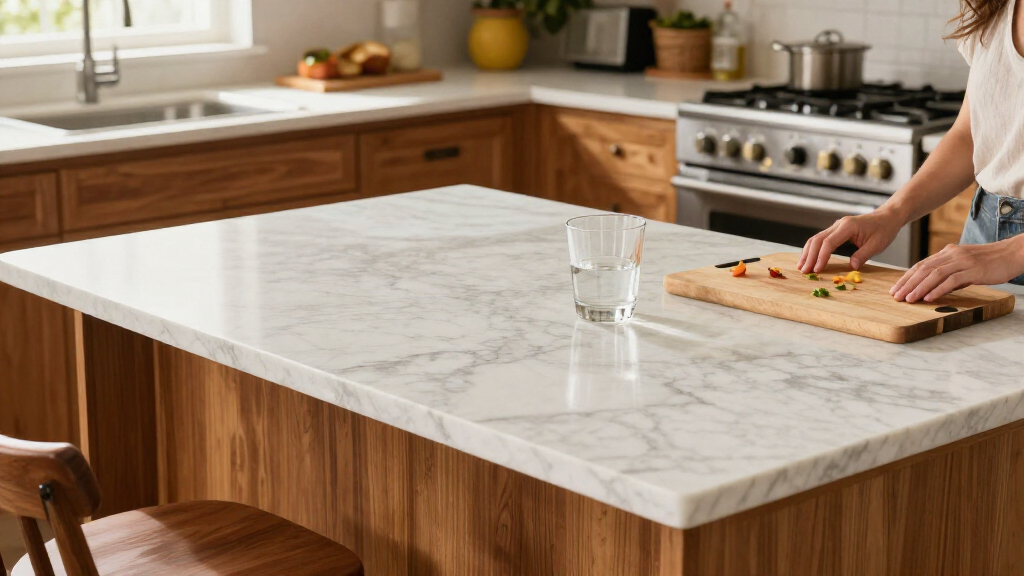
Marble is valued for its natural veining, variation between slabs and ability to withstand heat. The report places marble at 3 to 4 on the Mohs hardness scale, compared with a rating of 7 for quartz, and says marble is porous and needs regular sealing. Acids such as lemon juice, vinegar and tomato sauce can etch it. Lerner described that change as patina rather than failure, but the appearance may not suit every homeowner.
Durability Depends on the Desired Finish
The comparison shows why “lasts longer” has no single answer: a countertop can remain serviceable while changing in appearance. Quartz favors stain resistance and a consistent look, while marble offers natural variation and heat tolerance but calls for more maintenance and acceptance of visible wear.
That distinction can shape long-term costs and satisfaction. Marble needs periodic sealing and prompt cleanup of spills; quartz needs protection from hot cookware and harsh cleaners. Lerner also noted that quartz’s resin content can limit where it is suitable, particularly in areas exposed to direct sunlight. Buyers should weigh those maintenance patterns alongside appearance and price rather than treating either material as maintenance-free.
Products Worth Considering

Dyson Ball Animal 2 Upright Corded Vacuum Cleaner, Fuchsia

Dyson Purifier Hot+Cool HP2 De-NOx

Hisense 43-Inch E6 Cinema Series Hi-QLED 4K UHD Smart Fire TV (43E6QF)
As an affiliate, we earn on qualifying purchases.
How the Surfaces Age Differently
The Hunker report frames the choice as a trade-off between a natural stone that changes with use and an engineered surface designed for consistency. Lerner said the question she puts to clients is not simply which surface lasts longer, but which version of aging they can live with. Marble’s veining and gradual patina can be part of its appeal; quartz is intended to preserve a more uniform appearance.
The report says the materials are mostly comparable in cost, while bespoke finishes and especially luxurious marble, such as Calacatta gold variants, can affect the price. It also notes that California regulators are moving toward restricting engineered stone with high silica content because of silicosis cases among fabricators who cut it. Lerner said she is showing clients alternatives, including quartzite, large-format porcelain and newer low-silica engineered surfaces. The supplied report does not specify a regulatory timeline or the status of any final rule.
“Marble technically lasts longer. It’s natural stone, and some marble counters in Europe are centuries old. But quartz comes out ahead for how most families actually live, because it’s nonporous and doesn’t stain or etch, so it looks close to new after 15 or 20 years.”
— Lauren Lerner, founder and principal designer of Living with Lolo, speaking to Hunker
Lifespan Varies by Use and Care
The report does not give controlled, comparable lifespan data for quartz and marble, or a warranty-based estimate for either material. Lerner’s 15-to-20-year observation about quartz appearance and examples of centuries-old marble counters do not establish how long a typical countertop will last in a particular home. Installation quality, product composition, exposure and maintenance can all affect results, but the source does not quantify those effects.
The article also does not identify specific quartz products or clarify how much their resin content and heat tolerance vary. Its note on California regulatory action is not accompanied by a rule, effective date or scope. Buyers should check the specifications and current regulatory information for the exact product under consideration.
Care Choices Shape Long-Term Wear
For existing quartz, Lerner recommends using a trivet, cleaning with mild soap and water, and avoiding bleach, abrasive pads and harsh degreasers. For marble, she advises resealing every six months to a year, using a pH-neutral stone cleaner and wiping up acidic liquids, oil and wine promptly. She says a water-drop test can help: if the stone darkens rather than allowing water to bead, it may be time to reseal.
Lerner also recommends a honed finish for marble, which can make etching less conspicuous, though it does not prevent etching. The report mentions protective films for natural stone but provides no performance details. Homeowners comparing products can ask suppliers about care instructions, heat and sunlight limits, sealing needs, and any relevant silica content or local rules before choosing.
Key Questions
Which countertop lasts longer, quartz or marble?
According to designer Lauren Lerner, marble can last longer as a material, while quartz may keep a like-new appearance longer in ordinary household use. The source does not provide a standardized lifespan comparison.
Does quartz need to be sealed?
Lerner says quartz is nonporous and does not need sealing. It still needs care: use a trivet for hot pans and clean with mild soap and water rather than abrasive or harsh products.
What can damage marble countertops?
Marble is porous and can be etched by acidic substances, including lemon juice, vinegar and tomato sauce. The report recommends prompt cleanup, a pH-neutral cleaner and periodic sealing.
Can quartz be damaged by heat or sunlight?
Yes. The report says hot cookware can scorch or discolor quartz’s resin-bound surface, and prolonged UV exposure can cause yellowing or fading. Lerner recommends using a trivet and accounting for sunlight exposure.
How often should marble be resealed?
Lerner recommends sealing marble every six months to a year, then checking its condition with water: darkening instead of beading may indicate that it is time to reseal.
Source: hunker.com