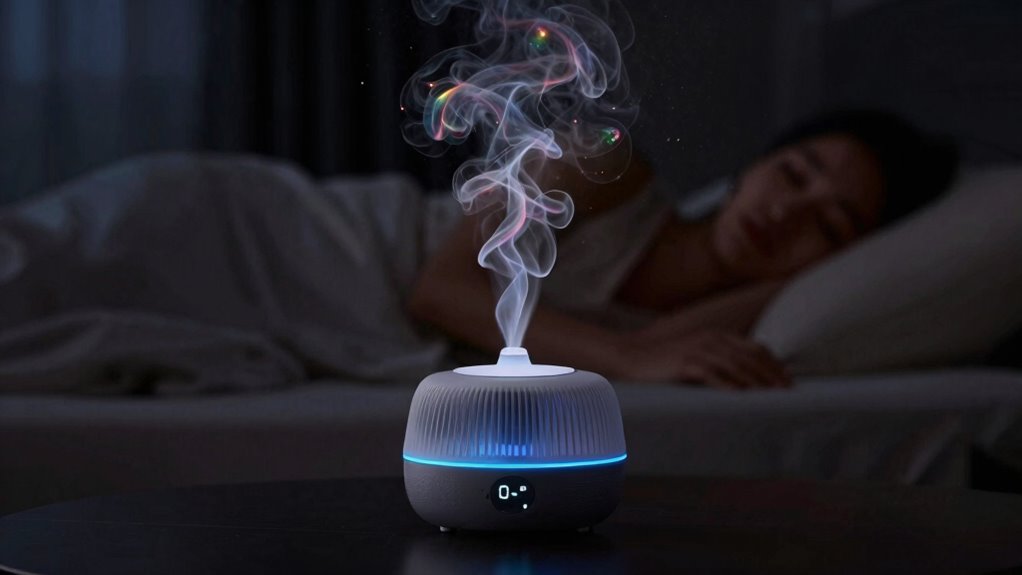

You can track overnight odor events more effectively by paying attention to environmental factors like humidity, temperature, and your ventilation habits. Using air quality monitors helps you spot patterns tied to weather or air circulation issues. Notice if odors worsen during humid days or when windows are closed. By observing these signs, you’ll better understand what influences odors. Keep exploring to discover how managing these factors can help you prevent or reduce unpleasant overnight scents.

Get home appliances delivered free with Prime
- Fast, free delivery on millions of items
- Prime Video, Amazon Music and more included
- Member-only deals all year
Key Takeaways
- Monitoring indoor air quality with sensors reveals patterns linked to environmental changes and odor buildup overnight.
- Tracking humidity and temperature fluctuations helps identify conditions that exacerbate odor events.
- Noticing odor variations with ventilation habits and outdoor pollution provides insights into odor sources.
- Using odor-specific detectors or air quality monitors can pinpoint triggers like mold or pet dander.
- Recognizing environmental cues and maintaining logs enhances proactive odor management during sleep.

Many people wake up to unexpected and unpleasant odors in the morning, often wondering what caused such overnight scent events. The truth is, these smells are often linked to changes in air quality and environmental factors that happen while you’re asleep. Your body’s natural processes, combined with the environment around you, create conditions that can lead to noticeable odors by morning. Understanding this connection allows you to track and even predict these scent events more effectively than most realize.
Air quality plays a significant role in overnight odor events. During the night, ventilation often slows down, meaning stale air can become trapped inside your home. If your indoor air isn’t circulated properly, odors from cooking, pets, or even cleaning products can accumulate. Additionally, outdoor air pollution, like vehicle emissions or nearby industrial activity, can seep inside through open windows or small gaps. These environmental factors influence the freshness or staleness of your indoor air, making it easier to identify what might cause a particular smell.
Poor ventilation traps stale indoor air, causing odors from cooking, pets, and outside pollution to build overnight.
Environmental factors extend beyond just air quality. Temperature and humidity fluctuations overnight can intensify odors. For example, higher humidity often amplifies smells because moisture helps release scent molecules into the air more readily. Conversely, dry air might diminish odors but could also lead to a different set of scent-related issues, like mustiness or mold. Temperature changes can cause certain substances, such as dust mites or mold spores, to become more active or release odors, especially in poorly ventilated spaces. Additionally, understanding the air circulation process can help you better control these scent events. Proper ventilation strategies can significantly reduce the buildup of unwanted odors during the night. Using air quality monitors can further assist in identifying changes in indoor conditions that contribute to odor buildup, allowing for more targeted improvements. Recognizing that air pollution from outside can influence indoor odors highlights the importance of sealing gaps and maintaining good outdoor air quality. Incorporating humidity control can also be effective in managing odor-related issues, especially in environments prone to excess moisture.
You can track these overnight scent events by paying close attention to your environment and habits. Noticing patterns in the odors you wake up to can reveal whether they’re linked to specific environmental factors. For instance, if odors are worse on days when the weather is humid or when you’ve kept windows closed, that points to humidity and ventilation as key contributors. Using air quality monitors can provide real-time data, helping you pinpoint sources of indoor pollution or environmental influences. If you notice persistent odors, it might be time to improve ventilation, use air purifiers, or address sources like mold or pet dander that contribute to poor air quality.
In essence, overnight odor events aren’t random or mysterious. They’re often the result of a complex interplay between indoor air quality and environmental factors. By understanding and monitoring these elements, you can better track, manage, and even prevent unpleasant scent occurrences. Recognizing how your environment influences odors allows you to take proactive steps—like improving ventilation or controlling humidity—making your mornings fresher and more pleasant.
As an affiliate, we earn on qualifying purchases.
Frequently Asked Questions
What Equipment Is Best for Tracking Overnight Odors?
You should use a high-quality air quality sensor with proper calibration to track overnight odors effectively. Look for sensors that detect volatile organic compounds (VOCs) and other odor-causing particles. Regular sensor calibration guarantees accurate readings, helping you identify patterns in odor events. This equipment allows you to monitor changes in air quality overnight, providing valuable insights into odor sources and helping you address issues proactively.
How Quickly Can Odor Events Be Detected and Recorded?
Odor events happen faster than a blink, but with proper sensor calibration, you can detect and record them almost instantly. Modern sensors provide real-time data, which means your system can alert you within seconds. Effective data analysis then helps interpret these quick detections, ensuring you understand the event’s details promptly. With the right setup, tracking overnight odors becomes a swift, almost seamless process.
Are There Specific Odors That Are Harder to Track Overnight?
Certain odors, like faint or quickly dispersing scents, are harder to track overnight because their odor source isn’t always obvious, and scent dispersion can dilute or hide the smell. You might struggle to detect these odors, especially if the scent disperses rapidly or blends with ambient smells. Using sensitive sensors can help you identify even subtle scent changes, making it easier to pinpoint the odor source despite challenging scent dispersion conditions.
Can Residents Be Alerted Instantly to Odor Events?
A bird in the hand is worth two in the bush—so, yes, you can be instantly alerted to odor events. With community engagement and smart sensors, you can receive real-time notifications, helping you address odor perception swiftly. This proactive approach guarantees residents stay informed and involved, reducing the impact of odors. Implementing such technology fosters transparency and trust, making your community more responsive and resilient against odor issues.
How Do Environmental Factors Affect Odor Detection Accuracy?
Environmental factors like wind, humidity, and temperature can profoundly impact odor detection accuracy. You need to monitor air quality regularly, as poor conditions can mask or amplify odors, making sensors less reliable. Proper sensor calibration is essential to account for these factors, ensuring consistent and accurate odor tracking. By adjusting for environmental influences, you improve the system’s ability to detect odors promptly and precisely, reducing false alarms or missed events.
As an affiliate, we earn on qualifying purchases.
Conclusion
By paying closer attention to overnight odor events, you uncover a hidden map of your environment, revealing more than just fleeting smells. These events are like silent messengers, whispering secrets about your surroundings that often go unnoticed. When you track them, you’re not just catching odors—you’re tuning into a silent symphony that can guide you to better awareness and control. Embrace this hidden world; it’s the compass that points you toward a fresher, more aware tomorrow.
As an affiliate, we earn on qualifying purchases.
As an affiliate, we earn on qualifying purchases.
NFL season / tailgating Picks
team gear
As an affiliate, we earn on qualifying purchases.