To effectively control litter box odors, you need to go beyond just masking smells with sprays or relying solely on filters. Instead, focus on odor absorption by using natural remedies like baking soda or activated charcoal, which trap odor molecules at the source. Regular scooping, maintaining clean litter, and ensuring good ventilation also make a big difference. If you want to discover more ways to keep your home fresh, there’s plenty of helpful advice ahead.

Get home appliances delivered free with Prime
- Fast, free delivery on millions of items
- Prime Video, Amazon Music and more included
- Member-only deals all year
Key Takeaways
- Address odor sources through proper litter management, including regular scooping and using high-quality, natural litters.
- Incorporate natural odor absorbers like baking soda and activated charcoal to trap smells at the microscopic level.
- Ensure good ventilation and airflow around the litter box to disperse odors effectively.
- Avoid relying solely on masking sprays; focus on long-term, holistic odor control strategies.
- Understand the science of odor absorption to select effective, eco-friendly solutions that eliminate odors at their source.
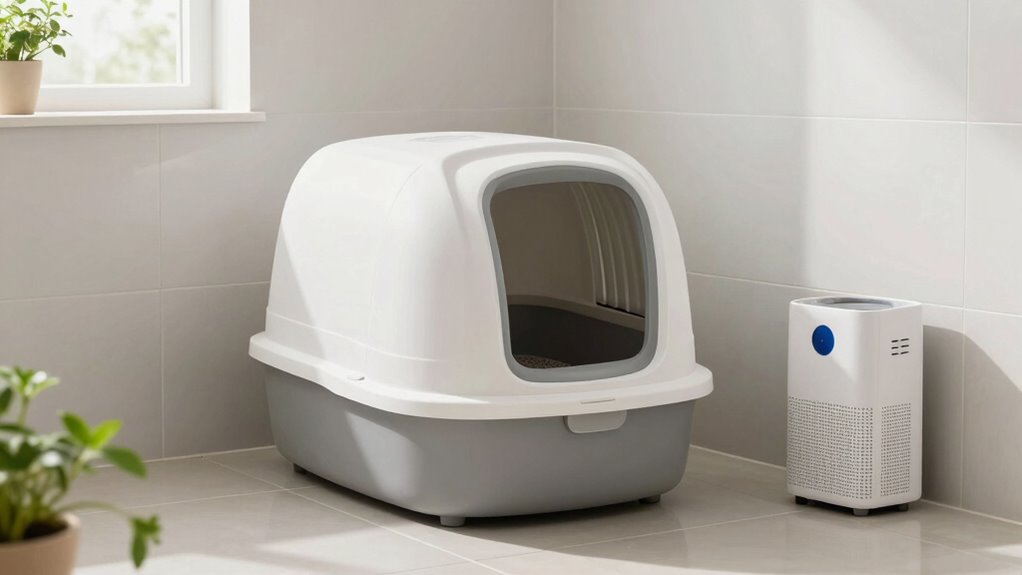
Dealing with litter box odors can be a persistent challenge, but with the right strategies, you can keep your home smelling fresh. Many people mistakenly treat odor control solely as a filter problem—adding sprays or deodorizers, hoping to mask the smell. While these quick fixes might offer temporary relief, they don’t address the root causes of odor. Instead, you need to approach litter box management holistically, focusing on natural remedies and odor absorption techniques that genuinely neutralize smells.
First, remember that odor absorption is key. Think of your litter box as a source of ongoing emissions that need more than just masking. Natural remedies, such as baking soda or activated charcoal, can be highly effective at absorbing odors rather than just covering them up. Sprinkling a layer of baking soda at the bottom of the litter box before adding new litter can considerably reduce smell. Activated charcoal, available in loose form or as part of commercial odor absorbers, works by trapping odor molecules on a microscopic level, preventing them from dispersing into your home. These natural odor absorbers are safer and more eco-friendly than chemical deodorizers, making them ideal for long-term odor management. Additionally, understanding the science behind odor absorption can help you choose the most effective solutions for your needs. Incorporating proper ventilation and airflow can further enhance odor dispersal, helping to keep the environment fresh. Improving ventilation systems around the litter box area can significantly reduce lingering odors and improve overall air quality.
Natural odor absorbers like baking soda and activated charcoal effectively neutralize litter box smells.
It’s also vital to understand that controlling odor isn’t only about what you put in or around the litter box but how you manage the litter itself. Regular scooping, at least once a day, prevents the buildup of waste that causes most odors. Changing the litter frequently—every week or as recommended—keeps the environment inside the box fresh. Using high-quality, clumping litter makes scooping easier and more effective, reducing the chances of lingering smells. Additionally, placing the litter box in a well-ventilated area enhances odor dispersal and reduces smell accumulation. Selecting a natural litter made from recycled paper, wood, or corn can significantly improve odor control compared to traditional clay-based options. Combining these with natural odor absorbers like baking soda or charcoal creates a powerful system that tackles odors at their source. Remember, treating the problem as just a filter issue won’t work in the long run. Instead, you’re better off focusing on natural remedies and odor absorption strategies that keep your home smelling clean without relying on artificial fragrances or harsh chemicals. When you approach litter box odor control this way, you’re not just masking smells—you’re eliminating them effectively.
unscented clumping cat litter odor control
As an affiliate, we earn on qualifying purchases.
As an affiliate, we earn on qualifying purchases.
Frequently Asked Questions
How Often Should I Clean the Litter Box for Optimal Odor Control?
You should scoop your litter box daily to keep odors at bay. Regular cleaning prevents buildup and keeps the environment fresh. Place the box in a well-ventilated area, away from food, to improve litter box placement. Use odor absorption techniques like baking soda or activated charcoal inside the box or its surroundings. Deep clean the box weekly with soap and water, replacing the litter completely for the best odor control.
Are There Specific Types of Litter That Better Trap Odors?
You’ll find that clay litter with scented additives often traps odors more effectively, masks smells better, and keeps your space fresher. Opt for clumping clay litter, which locks in moisture and odors, and consider scented additives that help neutralize bad smells. Both options work together to improve odor control, but remember, frequent cleaning and good ventilation are key to maintaining a fresh-smelling litter box.
Can Diet Changes Reduce Litter Box Odors?
Yes, diet impact can considerably reduce litter box odors. By adjusting your cat’s diet to include high-quality, easily digestible foods, you help minimize metabolic factors that produce strong-smelling waste. Incorporate fiber-rich or specialized low-odor formulas, which can improve digestion and reduce foul smells. Consistent feeding schedules and avoiding overly rich or processed foods also help control odor, making cleanup easier and your home fresher.
Do Air Purifiers Help With Litter Box Smell?
Ever wondered if air purifiers really help with litter box smell? They can be effective, especially those with activated carbon filters designed for odor absorption. Air purifier effectiveness varies, but when combined with proper cleaning and ventilation, they considerably reduce lingering odors. Remember, addressing odor isn’t just about filtering the air—using multiple odor absorption methods, like baking soda or special litters, makes a big difference.
What Are Natural Remedies for Controlling Litter Box Odors?
You can try natural remedies like herbal infusions and essential oils to control litter box odors. Sprinkle a small amount of dried herbs like lavender or chamomile near the box, or add a few drops of essential oils such as tea tree or eucalyptus to the litter. These natural options can help neutralize smells without harsh chemicals, keeping your space fresher and more pleasant for both you and your cat.
activated charcoal odor absorber for cat litter box
As an affiliate, we earn on qualifying purchases.
As an affiliate, we earn on qualifying purchases.
Conclusion
Remember, your litter box is like a garden—smell is the first sign of health. When you see it just as a filter, you miss the deeper roots of odor. Treat it like tending to a garden, nurturing the soil and understanding its true needs. By shifting your perspective, you can transform that stinky problem into a manageable part of your home. Let your care be the seed that grows a fresher, healthier space for everyone.
baking soda litter box deodorizer pet safe
As an affiliate, we earn on qualifying purchases.
As an affiliate, we earn on qualifying purchases.
cat litter scoop with waste bags
As an affiliate, we earn on qualifying purchases.
As an affiliate, we earn on qualifying purchases.
Fall yard work Picks
leaf blowers
As an affiliate, we earn on qualifying purchases.