Humidity can distort your VOC measurements because moisture interacts with sensor components, causing false signals or drift in accuracy. High humidity often leads to overestimations due to condensation, while low humidity may underestimate VOC levels. To fix this, you can use sensors with built-in humidity compensation, regularly calibrate your device, and control environmental conditions. Keep reading to discover more tips on ensuring reliable measurements despite humidity fluctuations.
Key Takeaways
- Humidity causes moisture condensation on sensors, leading to falsely elevated VOC readings.
- High moisture levels interfere with sensor chemistry, reducing detection accuracy.
- Fluctuating humidity can drift sensor responses, causing inconsistent VOC measurements.
- Using sensors without humidity compensation amplifies humidity’s impact on readings.
- Regular calibration with humidity control or compensation techniques helps correct humidity-related errors.
Why Humidity Skews Your VOC Readings

Humidity levels can considerably impact your VOC readings because moisture in the air interacts with the sensors, causing inaccuracies. These humidity effects can make your sensor readings unreliable if not properly managed. When humidity is high, moisture can interfere with the sensor’s ability to detect VOCs accurately, often leading to falsely elevated or lowered readings. To prevent this, regular sensor calibration is essential. Calibration adjusts the sensor’s baseline, accounting for environmental factors like humidity. Without proper calibration, your VOC measurements won’t reflect true indoor air quality. Understanding how humidity influences sensor performance helps you interpret readings more accurately and maintain reliable monitoring. Additionally, using humidity control devices can help stabilize environmental conditions and improve measurement accuracy. Monitoring sensor stability over time can also help identify when calibration is needed to maintain accuracy.
The Science of Humidity and Indoor Air Quality Measurements

Understanding the science behind humidity and indoor air quality measurements is vital for accurate environmental monitoring. Humidity effects can influence how sensors detect VOC levels, often leading to incorrect readings if not properly accounted for. When humidity levels fluctuate, sensors may respond differently, making calibration indispensable. Proper sensor calibration ensures that measurements remain accurate despite changes in moisture content in the air. It helps distinguish between actual VOC concentrations and humidity-related variations, preventing false positives or negatives. Recognizing how humidity impacts sensor performance allows you to adjust calibration settings accordingly. This knowledge is essential for accurate environmental assessment and maintaining a healthy indoor environment. Recognizing how humidity impacts sensor performance allows you to adjust calibration settings accordingly. This understanding guarantees your indoor air quality assessments are reliable, providing true insights into pollutant levels and helping you make informed decisions about your environment’s health and safety. Additionally, understanding the importance of using the right oil for airless sprayers can help maintain equipment accuracy and performance, further supporting precise environmental measurements. Being aware of sensor sensitivity to environmental conditions is crucial for optimizing measurement accuracy across varying humidity levels. Incorporating humidity compensation techniques into your calibration process can further enhance the reliability of VOC readings under fluctuating moisture conditions.
How High and Low Humidity Affect VOC Sensor Accuracy

High humidity levels can cause VOC sensors to overestimate pollutant concentrations by adding moisture that interferes with detection, while low humidity can lead to underreporting due to insufficient moisture to trigger the sensor’s response. Humidity effects directly impact sensor sensitivity, making it unreliable without proper calibration. When humidity is high, moisture can condense on sensor components, falsely elevating readings. Conversely, low humidity reduces the moisture available to interact with sensor elements, causing underreporting of VOC levels. You need to understand that humidity influences how well your sensor responds to actual VOC concentrations. Accurate readings depend on recognizing these humidity effects and adjusting for them. Without accounting for humidity variations, your VOC data may be misleading, affecting your indoor air quality assessments. Sensor calibration can help mitigate these humidity-related inaccuracies and improve measurement reliability. Additionally, understanding humidity’s role in sensor performance can guide you in maintaining accurate VOC monitoring. Recognizing how environmental conditions affect sensor readings is crucial for reliable air quality assessments. Proper sensor maintenance and calibration are essential to ensure consistent and accurate measurements under varying humidity levels.
Simple Ways to Minimize Humidity Interference in VOC Measurements
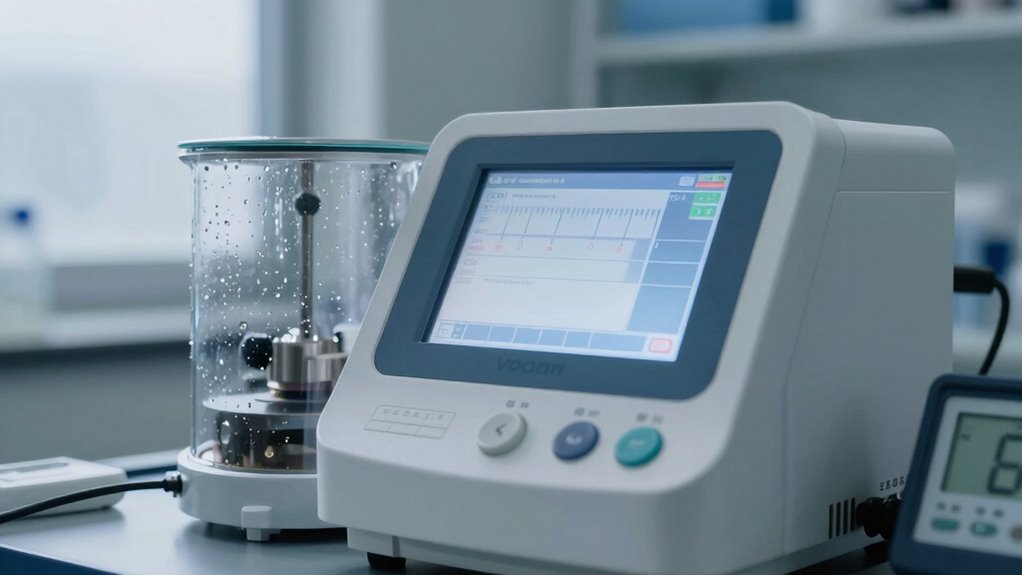
To diminish humidity interference in VOC measurements, you can use desiccants or dry air to keep the environment stable. Regular calibration and maintenance of your sensors also help guarantee accurate readings over time. Implementing these simple steps makes a noticeable difference in measurement reliability. Incorporating Free Floating techniques can further improve sensor accuracy by reducing environmental influences. Additionally, controlling environmental factors such as dust and microplastics can help maintain consistent sensor performance. Applying smart strategies for effective personal finance planning can also optimize resource use for equipment maintenance and calibration. Ensuring proper air purifier maintenance dos and don’ts, such as regularly checking filters and avoiding harsh chemicals, can prevent additional humidity-related issues that affect VOC readings. Properly selecting body jewelry measurements and materials, especially for sensitive environments, can also contribute to more stable measurement conditions.
Use Desiccants and Dry Air
Humidity can considerably interfere with VOC measurements, but using desiccants and dry air can help mitigate this issue. Desiccants effectively absorb moisture, reducing humidity levels around your sampling area. Employing dry air techniques, like using compressed dry air or dry nitrogen, ensures your samples stay free of moisture that skews results. To maximize desiccant effectiveness, replace or regenerate them regularly. Additionally, understanding digital content formats can help in documenting and analyzing your measurements more effectively. Ensuring proper measurement accuracy is essential for reliable results. Here’s a quick overview:
| Method | Benefit | Best Use |
|---|---|---|
| Desiccants | Absorb moisture efficiently | Sample storage and transport |
| Dry Air Techniques | Maintain low humidity environment | Sampling in humid conditions |
| Regular Replacement | Keeps desiccant effectiveness high | Ensures consistent results |
Using these methods, you can substantially reduce humidity interference in your VOC readings.
Regular Calibration and Maintenance
Regular calibration and maintenance of your VOC measurement equipment play a vital role in minimizing humidity interference. Over time, sensor drift can cause inaccurate readings, especially when humidity fluctuates. To guarantee reliable results, you should establish a consistent calibration schedule based on your device’s specifications and usage conditions. Regularly calibrate your sensors with known standards to correct drift and maintain accuracy. Additionally, perform routine maintenance—such as cleaning sensor surfaces and checking connections—to prevent humidity-related issues. Proper calibration frequency helps your equipment adapt to environmental changes and reduces the impact of humidity on VOC readings. Understanding sensor specifications can help you optimize calibration intervals effectively. By staying proactive with calibration and maintenance, you enhance measurement precision and assure your VOC data remains trustworthy, even in challenging humid conditions. Environmental factors, like humidity, can significantly influence sensor performance if not properly managed. Monitoring humidity levels regularly allows you to anticipate and mitigate potential measurement errors caused by moisture fluctuations. Incorporating humidity compensation techniques into your maintenance routine can further improve measurement accuracy under varying conditions.
Best VOC Sensors With Built-In Humidity Compensation
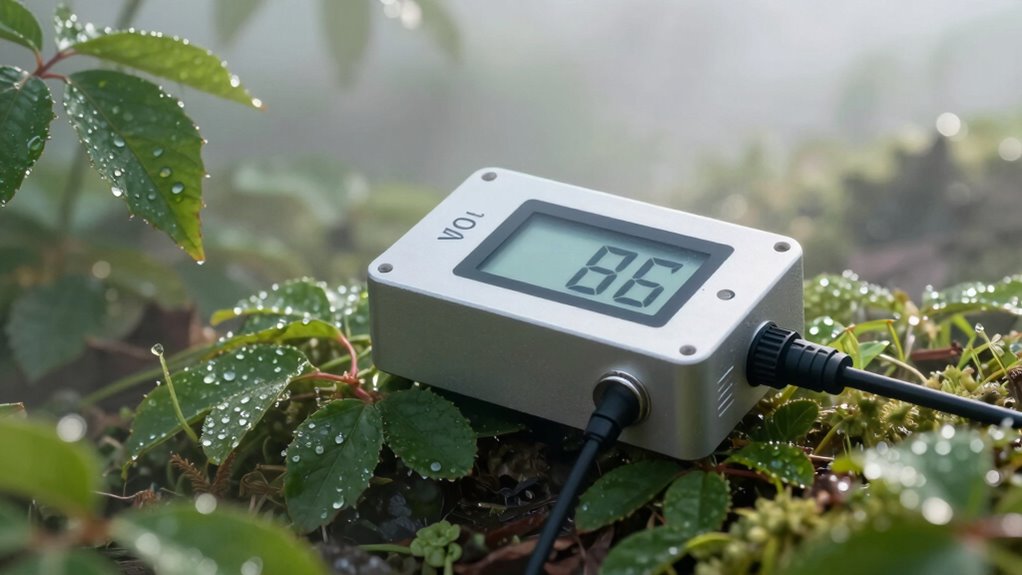
When choosing VOC sensors, built-in humidity compensation helps guarantee your readings stay accurate even in humid conditions. These sensors often include integrated humidity calibration, reducing interference from moisture. This makes them ideal for environments where humidity levels fluctuate frequently.
Accurate Readings in Humid Environments
Accurate VOC readings in humid environments require sensors with built-in humidity compensation, as high moisture levels can skew results. To achieve this, you should carefully consider sensor placement; avoid locations with direct exposure to humidity sources like windows or vents. Proper sensor positioning helps minimize interference from external moisture. Additionally, guarantee your device is properly calibrated; regular calibration accounts for environmental changes and maintains measurement accuracy. Sensors with humidity compensation automatically adjust their readings based on ambient moisture levels, reducing the impact of humidity fluctuations. By focusing on ideal placement and consistent calibration, you can improve the reliability of VOC measurements even in challenging humid conditions. This approach ensures your device provides trustworthy data, essential for accurate air quality assessment.
Integrated Humidity Calibration
Integrated humidity calibration is vital for guaranteeing your VOC sensors deliver reliable readings across varying environmental conditions. With built-in humidity compensation, these sensors automatically adjust for changes in humidity, maintaining accuracy without manual calibration. Proper humidity control within your space minimizes fluctuations that can skew measurements. Additionally, sensor placement plays a pivotal role; position sensors away from sources of moisture or direct airflow to avoid misleading readings. When your device supports integrated humidity calibration, it reduces the need for external calibration tools and simplifies maintenance. This feature ensures consistent VOC detection regardless of humidity shifts, giving you confidence in your indoor air quality data. Investing in sensors with this capability helps you better monitor and manage ventilation, humidity control, and overall air quality effectively.
How to Calibrate Your VOC Monitor for Humidity Changes

Humidity fluctuations can markedly affect VOC readings, making it vital to calibrate your monitor accordingly. To guarantee accurate measurements, perform regular sensor calibration that accounts for humidity changes. Start by stabilizing your environment’s humidity level, then follow your device’s calibration procedure, which often involves exposing the sensor to a known VOC standard under those conditions. Use humidity adjustment features if available, as they help your monitor compensate for moisture variations. Keep in mind that calibration should be done periodically, especially if humidity fluctuates considerably. Proper sensor calibration and humidity adjustment help maintain the reliability of your VOC readings, ensuring that you get precise data regardless of environmental moisture levels. This process is essential for accurate monitoring in changing humidity conditions.
Tips for Reliable VOC Readings in Humid or Dry Environments
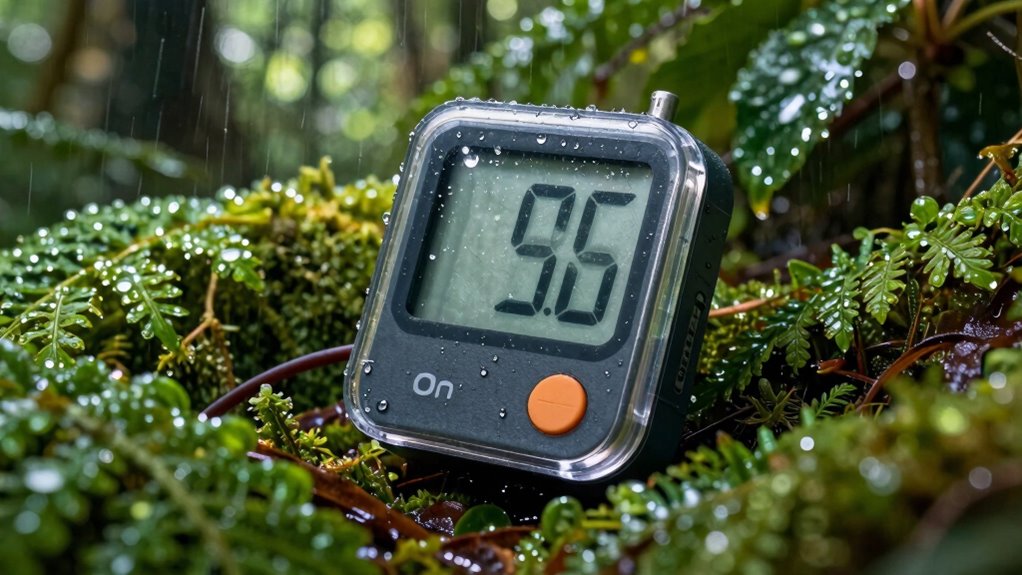
To guarantee your VOC readings remain reliable in both humid and dry environments, you should pay close attention to your monitor’s settings and maintenance. Proper sensor placement is essential; position sensors away from sources of moisture, direct sunlight, or drafts that can skew results. Ensuring consistent placement helps maintain accuracy regardless of humidity fluctuations. Additionally, investing in user training is critical—learn how to calibrate your device correctly, interpret readings accurately, and recognize environmental factors affecting performance. Regularly check and clean your sensors according to manufacturer instructions to prevent contamination or buildup that could distort data. By focusing on proper sensor placement and training yourself on device operation, you’ll improve the reliability of your VOC readings across varying humidity levels.
Frequently Asked Questions
How Does Humidity Specifically Chemically Interact With VOC Sensors?
You might notice humidity causes VOC sensor interference because water molecules undergo chemical interactions with sensor components, such as adsorption on sensing elements. This interaction can mimic or block VOC molecules, leading to inaccurate readings. Fundamentally, moisture competes with VOCs for active sites, disrupting the sensor’s ability to detect true VOC levels. To fix this, you can use desiccants or humidity control methods to minimize moisture and improve sensor accuracy.
Can Humidity Fluctuations Cause Permanent Damage to VOC Sensors?
Humidity fluctuations can cause permanent damage to VOC sensors through moisture interference and sensor corrosion. When moisture seeps into the sensor, it can lead to corrosion of sensitive components, degrading performance over time. Repeated exposure to high humidity accelerates this damage, reducing sensor lifespan. To prevent this, guarantee proper sealing and control humidity levels, protecting your sensors from moisture interference and prolonging their accuracy and durability.
Are There Particular Environments Where Humidity Effects Are More Pronounced?
Yes, humidity effects are more pronounced in humidity-sensitive environments and high moisture settings. You’ll notice that VOC sensors often give inaccurate readings when exposed to elevated humidity levels, especially in areas like kitchens, humidifiers, or industrial zones with high moisture. To maintain accuracy, you should consider using sensors designed for high humidity, calibrate regularly, and employ dehumidifiers or moisture barriers to reduce environmental impact.
Do All VOC Sensors Require Calibration for Humidity Changes?
Most VOC sensors require calibration to counteract humidity’s harmful havoc. You should schedule sensor maintenance regularly and adjust calibration frequency based on environmental conditions. Humidity can hinder sensor accuracy, so keeping sensors properly calibrated ensures reliable readings. Don’t forget, ignoring calibration can lead to misleading measurements. By maintaining and calibrating your sensors consistently, you’ll keep your VOC readings accurate, even in humid, hazardous environments.
How Often Should Humidity Be Monitored Alongside VOC Levels?
You should monitor humidity alongside VOC levels regularly, ideally daily or weekly, depending on your environment. Consistent sensor maintenance and humidity control are vital for accurate readings. Fluctuations in humidity can affect sensor performance, so keeping humidity stable helps guarantee reliable VOC measurements. Use calibrated sensors, keep them clean, and control ambient moisture to prevent false readings and maintain sensor longevity.
Conclusion
Understanding how humidity influences VOC readings helps you navigate the tricky waters of indoor air quality. By implementing proper calibration, choosing sensors with humidity compensation, and maintaining stable conditions, you can guarantee your measurements stay accurate—like a lighthouse guiding you through foggy conditions. Don’t let moisture be the fog that clouds your judgment; with these tips, you’ll keep your VOC readings clear and reliable, anchoring your efforts in clean, healthy indoor air.