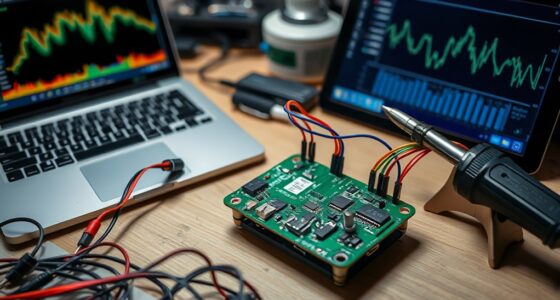
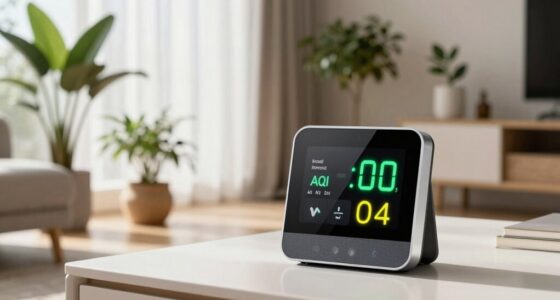
When prioritizing indoor air quality, formaldehyde should come first because it poses both immediate irritant effects and long-term cancer risks, especially in poorly ventilated spaces. TVOCs are also important, as they can cause short-term discomfort and may have long-term health impacts. Particulate matter is vital during pollution spikes or activities like cooking. To protect your health effectively, understanding which pollutant levels peak in your environment is key—keep exploring to learn more about managing these risks.
Key Takeaways
- Formaldehyde poses immediate irritant and long-term cancer risks, making its level critical in indoor air quality prioritization.
- PM levels can cause acute health issues during pollution spikes or activities like cooking, requiring urgent attention.
- TVOC fluctuations depend on activity; significant short-term peaks can impact comfort and health, especially in poorly ventilated spaces.
- Long-term exposure to formaldehyde and certain TVOCs can lead to serious health conditions, emphasizing the importance of initial measurement.
- Prioritization depends on pollutant concentrations and health impacts, but formaldehyde often warrants immediate focus due to its toxicity.

Have you ever wondered how indoor air quality affects your health? It’s a valid concern because the air inside your home or office can contain pollutants like formaldehyde, TVOCs (Total Volatile Organic Compounds), and particulate matter (PM). Understanding which of these risks should come first in your mind depends on their health impact and the levels present in your environment. Each of these pollutants contributes differently to indoor air quality issues, and their presence can lead to varying health problems.
Formaldehyde is a common indoor air pollutant found in building materials, furniture, and household products. It’s known for its strong smell and its potential to cause respiratory irritation, allergies, and even longer-term health risks like certain cancers. Because formaldehyde tends to be released slowly over time, it can accumulate indoors, especially in poorly ventilated spaces. Its health impact is significant, particularly if exposure is prolonged or levels are high. It’s often considered a priority pollutant to monitor because of its immediate irritant effects and potential long-term risks. Indoor air pollutants can linger and build up without proper ventilation, increasing the importance of air quality management.
TVOCs comprise a broad range of organic chemicals emitted from paints, cleaning products, air fresheners, and building materials. Their health impact varies depending on the specific compounds and concentrations involved. Short-term exposure can lead to headaches, dizziness, and eye or throat irritation, while long-term exposure may result in more serious health concerns, including liver or kidney damage. Because TVOCs are a mixture of chemicals, their levels can fluctuate with activities and product use, making them a tricky but essential factor to track in indoor air quality. Additionally, chemical emissions from household products can significantly influence TVOC levels, especially during periods of heavy use or renovation. Fluctuations in product use can cause sudden spikes in TVOC concentrations, further emphasizing the need for consistent monitoring.
Particulate matter (PM), especially fine particles like PM2.5, can penetrate deep into your lungs and even enter your bloodstream. These particles often come from combustion sources, smoking, or outdoor air pollution that infiltrates indoors. PM’s health impact is well-documented, with exposure linked to respiratory issues, cardiovascular problems, and even premature death in vulnerable populations. Since these particles can be present in high concentrations during cooking, smoking, or pollution episodes, they often pose the most immediate health threat, especially if you have existing respiratory or heart conditions. Additionally, the infiltration of outdoor pollution can drastically affect indoor PM levels, making outdoor pollution an important factor to monitor for comprehensive air quality assessment. Monitoring indoor PM levels can help you assess how outdoor sources may be impacting your air quality, especially during pollution events or seasons with high outdoor emissions.

Temtop Air Quality Monitor PM2.5 PM10 Particle Counter, Formaldehyde, Temperature, Humidity, TVOC AQI Tester for Indoor/Outdoor Air Pollution Detection w/Data Export
- All-in-One Air Quality Monitoring: Measures PM2.5, PM10, formaldehyde, VOCs, humidity, temperature, AQI
- Data Export & Historical Data: Exports data to Excel, displays 12-hour PM2.5 histogram, supports 3 months recording
- Durable & Precise Sensor: Laser sensor lasts 20,000 hours with high accuracy
As an affiliate, we earn on qualifying purchases.
As an affiliate, we earn on qualifying purchases.
Frequently Asked Questions
How Do Formaldehyde, TVOC, and PM Levels Vary by Season?
You’ll notice formaldehyde, TVOC, and PM levels fluctuate with the seasons due to seasonal fluctuations in pollutant sources. In colder months, indoor heating increases, raising formaldehyde and TVOC levels from building materials and appliances. During warmer months, outdoor pollution and pollen can boost PM levels. These seasonal changes affect indoor air quality, so monitoring these pollutants regularly helps you manage exposure year-round.
Are There Specific Indoor Activities That Increase These Pollutants?
Indoor activities like cleaning and cooking can notably boost formaldehyde, TVOC, and PM levels. When you clean with chemical cleaners, you release VOCs into the air, while cooking, especially frying or grilling, produces emissions that increase particulate matter. To minimize exposure, ventilate your space during these activities and opt for low-emission products. This helps keep indoor air quality safer for you and your family.
What Are the Long-Term Health Effects of Low-Level Exposure?
Long-term low-level exposure to indoor pollutants is like slowly filling a bucket — over time, the water (pollutants) accumulates and can lead to chronic health risks. You might not notice immediate effects, but sustained exposure can cause respiratory issues, allergies, or even increase cancer risk. It’s essential to reduce pollutant accumulation now, so your health doesn’t become a silent victim of these invisible dangers.
How Accurate Are Home Air Quality Testing Devices?
Home air quality testing devices vary in calibration accuracy and device reliability. Many consumer models provide useful insights, but their precision can differ, especially over time. You should regularly calibrate your device or choose one with self-calibration features to guarantee accuracy. Keep in mind that while these devices help identify potential issues, they might not be as reliable as professional-grade equipment, so consider professional testing for critical concerns.
Can Plants Effectively Reduce These Airborne Pollutants Indoors?
Plants can help with indoor detox by supporting plant filtration, but they won’t eliminate airborne pollutants completely. While some plants absorb certain toxins, their overall impact on reducing formaldehyde, TVOC, and PM is limited. Use plants as a complementary measure alongside proper ventilation and air purifiers. Relying solely on plants isn’t enough for thorough indoor detox; they’re best as part of a broader air quality strategy.

16 in 1 Air Quality Monitor Indoor 7" Wildfire CO2 Monitor, 9 AQI+7 Alerts
- 16-in-1 Air Quality Monitoring: Detects 9 key air parameters and 7 AQI alerts
- Large 7-inch LED Display: Clear, high-resolution air quality readings
- Multiple Brightness Settings: Adjust display brightness for any lighting
As an affiliate, we earn on qualifying purchases.
As an affiliate, we earn on qualifying purchases.
Conclusion
Think of these pollutants as quiet whispers in your home’s story. While formaldehyde, TVOC, and PM each hold their own weight, it’s the balance you strike that writes the true narrative. Prioritize what threatens your peace first, like tending to a garden’s most fragile bloom. In the end, your awareness acts as the sun, nurturing clarity and health. Remember, you hold the pen—you decide which chapter to turn next.

Temtop PM2.5 Monitor P600, Essential Air Particle Meter PM2.5 PM10 Air Quality Tester for Indoor/Outdoor Air Pollution Detection, Particle-Centric Detector w/Data Histogram Display
- Upgraded Laser Sensor: Accurate PM2.5 and PM10 detection
- Industrial-Grade Sensor: Over 20,000 hours lifespan
- Data Histogram Display: View air quality trends over 12 hours
As an affiliate, we earn on qualifying purchases.
As an affiliate, we earn on qualifying purchases.

Wyze Smart Air Purifier With Formaldehyde Filter (Premium)
- Large Coverage Area: Cleans 500 ft² room quickly
- Multiple Filter Options: Standard, Special, Premium filters available
- Quiet Operation: Only 21dB on low setting
As an affiliate, we earn on qualifying purchases.
As an affiliate, we earn on qualifying purchases.