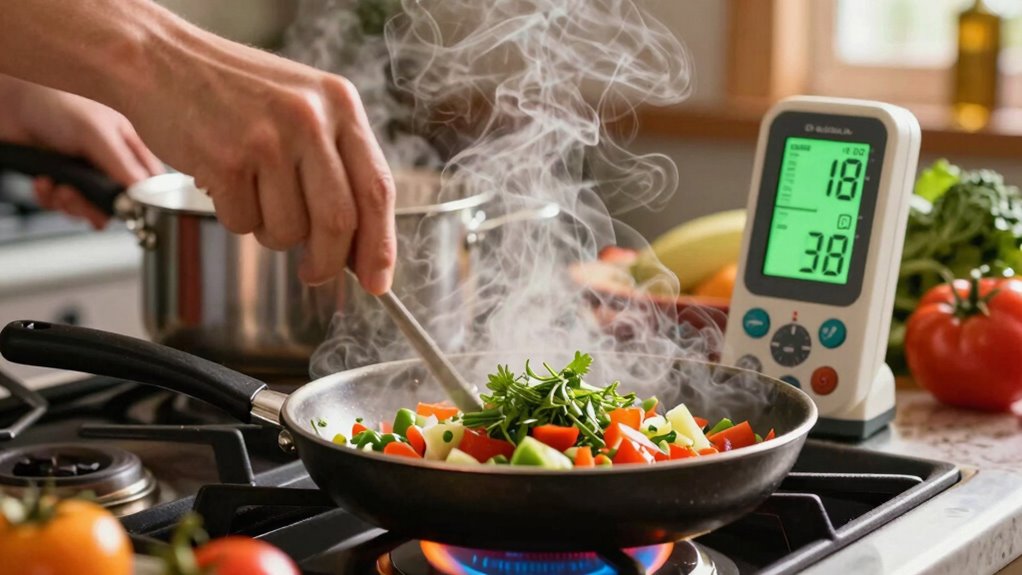

When you cook, especially with high heat or frying, you release volatile organic compounds (VOCs) that rapidly spike in your kitchen air. These hidden fumes come from oils, spices, and food, and can cause health issues over time. Proper ventilation, like using range hoods and opening windows, helps reduce these surges. To better understand how to keep your air clean and safe, let’s explore effective strategies you can implement right now.
Key Takeaways
- Cooking, especially high-heat methods like frying, releases VOCs that quickly spike indoor air pollution.
- VOC levels surge during activities such as grilling, sautéing, and boiling aromatic ingredients.
- Proper ventilation with range hoods and open windows helps reduce these hidden VOC surges.
- Using air purifiers with activated carbon filters can absorb and minimize VOC buildup during cooking.
- Regularly maintaining ventilation systems and avoiding overcooking can prevent prolonged VOC spikes in kitchens.
What Are VOCs and Why Do They Spike When Cooking?

Have you ever noticed a sudden increase in fumes or odors when you start cooking? That’s because of VOC sources—volatiles organic compounds—that get released into the air. These VOCs are chemicals found in many cooking fumes, especially when frying, grilling, or sautéing. When you heat food, ingredients like oils, spices, and even the food itself emit these compounds. They evaporate quickly at high temperatures, creating the spikes in indoor air pollution. These VOCs can include substances like formaldehyde, benzene, or acrolein, which contribute to poor air quality and may cause health issues over time. Understanding that cooking fumes are a primary source of VOCs helps you realize why ventilation is essential during and after cooking to keep indoor air safe. Additionally, high-temperature cooking methods can significantly increase VOC emissions, emphasizing the importance of proper kitchen ventilation. Proper ventilation strategies can help reduce indoor air pollution, but using ventilation fans or open windows during cooking can be particularly effective in minimizing VOC buildup and protecting your health during high-heat techniques.
Which Kitchen Activities Cause VOC Surges?

Certain kitchen activities are more likely to cause VOC surges than others. When you cook without proper Kitchen Ventilation, VOC levels can spike quickly. Activities that release strong odors or fumes include:
- Frying or sautéing foods at high heat, which releases volatile compounds into the air.
- Grilling or broiling, especially with charred meats or vegetables, producing smoke and VOCs.
- Boiling or simmering aromatic ingredients like onions, garlic, or spices, which emit noticeable fumes.
- Using home safety products such as range hoods and air purifiers can greatly help in maintaining better indoor air quality during cooking.
- Indoor air quality management is crucial to prevent the buildup of harmful VOCs and ensure a healthier kitchen environment.
- Proper ventilation techniques can significantly reduce VOC concentrations and improve overall air safety during cooking activities.
Proper ventilation techniques are essential for controlling VOC levels and ensuring a healthier kitchen environment.
To reduce VOC surges, you should follow Cooking Precautions such as opening windows, turning on range hoods, and using air purifiers. These steps help keep indoor air safer and fresher during your cooking sessions.
Are VOCS From Cooking Harmful to Your Health?
While cooking VOCs are common in many kitchens, understanding their potential health effects is essential. Elevated VOC levels can negatively impact indoor air quality, leading to symptoms like headaches, dizziness, or respiratory irritation. Long-term exposure may increase risks of more serious health issues, including asthma or other respiratory conditions. The degree of harm depends on the specific VOCs released and how often you cook. Proper ventilation strategies, such as using range hoods or exhaust fans, can considerably reduce VOC buildup and improve indoor air quality. Ensuring good airflow helps disperse these volatile compounds quickly, minimizing health risks. Additionally, ventilation effectiveness plays a crucial role in reducing VOC concentrations during and after cooking. Staying informed about VOC emissions from cooking allows you to take proactive steps to protect your health and maintain a safer kitchen environment. Adequate air exchange rates are essential to dilute indoor pollutants and maintain healthy indoor air quality. Regularly checking air quality monitors can help you track VOC levels and adjust ventilation practices accordingly. Proper kitchen design and placement of appliances can also influence how well VOCs are dispersed and minimized. Implementing air filtration systems can further assist in capturing airborne pollutants, providing an extra layer of protection for your indoor environment.
How Can You Reduce VOCs While Cooking?
To minimize VOC emissions during cooking, implementing practical strategies can make a significant difference. First, use a high-quality air purifier equipped with activated carbon filters to absorb VOCs effectively. Second, ensure your ventilation system is working properly by turning on range hoods or exhaust fans whenever you cook. Third, open windows or create cross-ventilation to help disperse VOCs quickly. These steps reduce indoor pollutant levels and improve air quality. Additionally, avoid overfilling pots and cooking at high temperatures, which can increase VOC release. Incorporating air purifier maintenance practices such as regular filter checks ensures the unit functions optimally. Regularly replacing or cleaning filters enhances the efficiency of air purification systems and helps maintain healthy indoor air. Moreover, choosing low-emission cookware can also contribute to reducing VOCs during cooking. Being mindful of indoor air quality and actively managing airflow and filtration can further improve your cooking environment. Proper ventilation techniques are essential in minimizing VOC buildup, especially in small or poorly ventilated spaces. By actively managing airflow and filtration, you can enjoy cooking without compromising your indoor air quality.
How to Keep Your Kitchen’s Air Clean and Safe

Keeping your kitchen’s air clean and safe requires consistent effort and smart practices. Use ventilation techniques like exhaust fans or open windows during and after cooking to remove VOCs and airborne pollutants. An air purifier with a HEPA filter can also markedly improve air quality by trapping VOCs and other particles. To maximize effectiveness, position the air purifier near your cooking area but away from vents that could circulate pollutants. Additionally, consider cooking with lids on pots and using range hoods to minimize VOC release. Proper ventilation is essential to prevent the buildup of indoor pollutants and maintain healthy air quality. Understanding VOC sources in your kitchen can help you target specific pollutants more effectively. Being aware of indoor air pollution causes helps in adopting comprehensive strategies for cleaner air. Here’s a quick comparison:
| Ventilation Technique | Benefits |
|---|---|
| Exhaust Fans | Remove pollutants directly |
| Opening Windows | Fresh air exchange |
| Range Hoods | Capture VOCs at source |
Implementing these practices keeps your kitchen healthier and safer.
Frequently Asked Questions
How Quickly Do VOC Levels Return to Normal After Cooking?
After cooking, VOC levels typically decline within 30 minutes to a few hours, depending on ventilation and the type of cooking. You can speed up VOC decay by opening windows, turning on exhaust fans, and doing thorough cooking cleanup. Good airflow clears out VOCs faster, making your kitchen safer and fresher. Keep monitoring the air quality if you’re sensitive, and always ventilate thoroughly after cooking.
Are Certain Cooking Appliances More Likely to Produce VOC Spikes?
Certain cooking appliances are more likely to produce VOC spikes, especially those made from plastic or synthetic materials, which can off-gas during use. You’ll notice frequent cooking with appliances like microwave ovens or electric stoves increases VOC levels due to repeated heating. To reduce spikes, consider appliances with better material quality and limit their use, especially if you cook often. Proper ventilation also helps keep VOC levels in check.
Can Indoor Plants Help Reduce VOC Concentrations During Cooking?
Indoor plants can help reduce VOC concentrations during cooking by providing plant benefits like VOC absorption. As you place plants in your kitchen, they actively absorb pollutants from the air, including volatile organic compounds released during cooking. While they won’t eliminate all VOCs, having healthy, well-maintained plants can improve air quality and create a more comfortable environment, making your cooking space safer and more pleasant.
Do Ventilation Systems Completely Eliminate VOC Exposure?
Ventilation systems don’t completely eliminate VOC exposure; they substantially reduce it but can’t absorb all pollutants. Studies show that proper ventilation efficiency can cut VOC levels by up to 70%, yet some VOCs linger due to poor airflow or system limitations. You should combine good ventilation with other measures, like using range hoods and air purifiers, to better manage VOC absorption and keep indoor air healthier during cooking.
Are There Specific Recipes That Generate Higher VOC Emissions?
Yes, some recipes generate higher VOC emissions due to their ingredient impacts. For example, frying foods or cooking with oils releases more VOCs, especially if there are strong spices or aromatic herbs involved. Additionally, grilling or roasting at high temperatures can increase VOC release. Be mindful of these recipe emissions, and guarantee your ventilation system is working effectively to reduce your exposure during these cooking methods.
Conclusion
While cooking fills your home with delicious aromas, it can also silently introduce harmful VOCs into your air. The contrast is striking—your favorite meals boost comfort and joy, yet they may pose health risks you can’t see. By staying mindful and taking simple steps to reduce VOCs, you protect your family’s health without sacrificing the warmth and flavor of your kitchen. Enjoy cooking confidently, knowing you’re creating a safe, inviting space to share moments and meals.