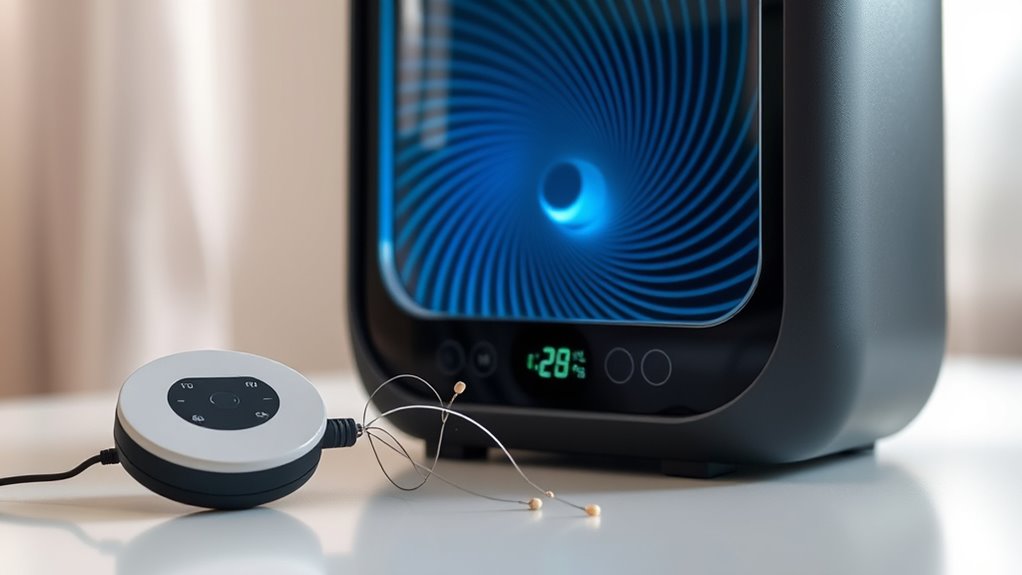

By combining air quality sensors with air purifiers, you create an automated feedback system that actively monitors pollutants and adjusts purifier settings as needed. This integration guarantees your indoor air stays clean with minimal manual effort. Proper calibration, maintenance, and a well-designed feedback loop help the system respond quickly and efficiently. Keep going to discover how to set up, calibrate, and troubleshoot this smart air quality solution effectively.
Key Takeaways
- Integrating sensors with purifiers enables real-time monitoring and automatic response to indoor air quality changes.
- Proper calibration of sensors ensures accurate pollutant detection, vital for effective feedback control.
- Regular maintenance of air purifiers maintains optimal performance and responsiveness within the feedback system.
- The feedback loop adjusts purifier operation based on sensor data, continuously reducing indoor pollutants.
- System monitoring and troubleshooting ensure sensor accuracy and purifier functionality, sustaining effective air quality management.
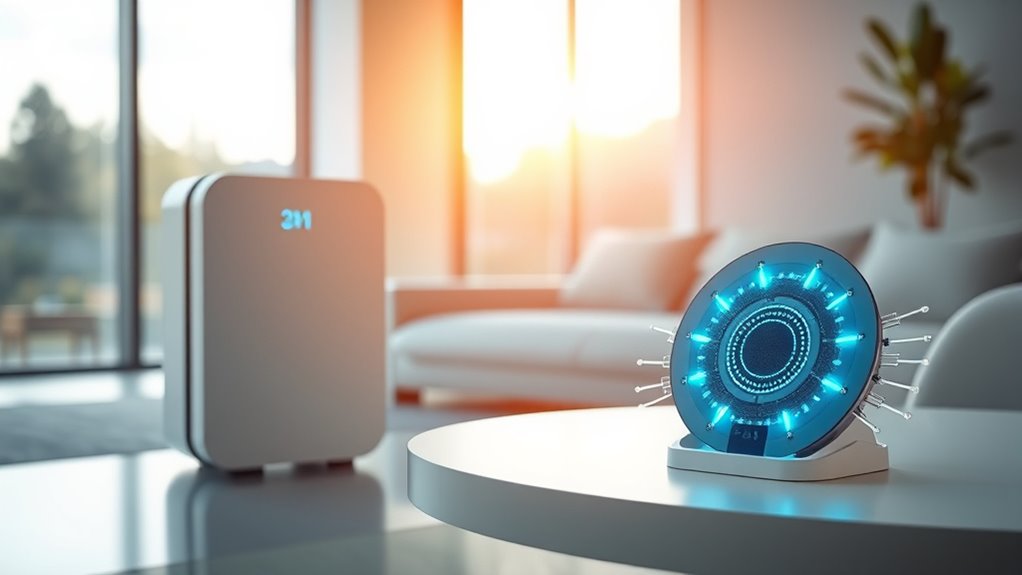
Air quality sensors and air purifiers work together to create healthier indoor environments by monitoring and removing pollutants. When integrated properly, they form a feedback control system that automatically adjusts to maintain ideal air quality. As you set up this system, you need to guarantee your sensors are accurate; this starts with proper sensor calibration. Regular calibration is essential because sensors can drift over time, leading to inaccurate readings that might cause the purifier to underperform or overuse energy. By calibrating sensors periodically, you guarantee that the data they provide truly reflects your indoor air conditions, allowing the purifier to respond appropriately.
Once your sensors are calibrated, the next step involves maintaining your air purifier. Regular purifier maintenance is key to ensure it functions as intended. This includes replacing filters as recommended by the manufacturer, cleaning intake and exhaust vents, and checking for any mechanical issues. When your purifier is well-maintained, it can effectively respond to the sensor data, increasing the system’s overall efficiency and lifespan. Without proper maintenance, even the most advanced sensors can’t compensate for a faulty purifier, which might lead to poor air quality despite the system’s efforts.
The feedback loop between your sensors and purifier works best when both are functioning at their highest capacity. For example, if your sensors detect elevated levels of airborne particulates or volatile organic compounds (VOCs), the system responds by increasing the purifier’s operation. As the purifier runs more efficiently, it reduces pollutants, which the sensors then detect as a decline in harmful particles. This ongoing cycle helps keep your indoor air consistently clean without manual intervention. Over time, this automation saves you energy and guarantees your environment remains safe and comfortable.
However, you need to stay vigilant about the system’s performance. Besides sensor calibration and purifier maintenance, it’s wise to occasionally verify sensor accuracy by cross-checking with professional testing methods or alternative sensors. If you notice discrepancies or persistent alerts, it might be time to recalibrate or replace your sensors. Similarly, if your purifier isn’t responding as expected or shows signs of reduced airflow or filter clogging, it’s time for maintenance or replacement. Taking these steps keeps the feedback control system functioning smoothly, guaranteeing you always breathe cleaner air. Additionally, understanding the importance of sensor calibration can significantly improve your system’s reliability and efficiency.
Frequently Asked Questions
How Accurate Are Current Air Quality Sensors in Detecting Pollutants?
You’ll find that current air quality sensors are quite accurate in pollutant detection, especially when properly calibrated. Regular sensor calibration helps maintain precision, allowing you to trust readings for pollutants like VOCs and particulate matter. While no sensor is perfect, advances in technology have considerably improved their reliability. Just remember to calibrate your sensors periodically to guarantee they provide the most accurate data for effective feedback control.
Can Integrating Sensors With Purifiers Reduce Energy Consumption Effectively?
Yes, integrating sensors with air purifiers can considerably reduce energy consumption through smarter operation. Sensor integration allows your system to activate only when air quality drops, avoiding unnecessary energy use. This targeted approach maximizes energy savings by adjusting purifier activity based on real-time pollutant levels. You’ll enjoy cleaner air more efficiently, reducing power waste and lowering energy bills while maintaining ideal indoor air quality.
What Are the Maintenance Requirements for Sensor-Purifier Systems?
Think of your sensor-purifier system like a finely tuned orchestra. You need to regularly calibrate sensors to keep the music harmonious and guarantee accurate readings. Filter replacements are your percussion section, essential for maintaining performance. Expect to calibrate sensors every few months and replace filters every 3 to 6 months, depending on usage. Consistent maintenance keeps the system singing smoothly and extends its lifespan.
Are There Privacy Concerns With Continuous Air Quality Monitoring?
You might have privacy concerns with continuous air quality monitoring, especially regarding data security. While these sensors collect environmental data, they typically don’t capture personal information, reducing privacy risks. However, if connected to smart home systems, there’s potential for data breaches or unauthorized access. To protect your privacy, make sure your devices have strong security features, regular updates, and clear data management policies, giving you peace of mind while maintaining air quality.
How Quickly Can Feedback Control Systems Respond to Changing Air Quality?
Your feedback control system can respond within seconds to changes in air quality, thanks to low response latency. This quick reaction helps maintain control stability, ensuring cleaner air continuously. High-quality sensors detect fluctuations immediately, allowing your purifier to adjust promptly. As a result, you get real-time air quality management that keeps indoor environments healthier and more comfortable without delays or instability.
Conclusion
By blending brilliant sensors with powerful purifiers, you create a clever control system that continuously checks and cleans the air. This dynamic duo delivers decisive data and diligent purification, ensuring your space stays fresh and safe. With quick, quality responses, you’ll enjoy a healthier, happier habitat. Embrace this synergistic setup to streamline air quality management, simplifying your space, and securing your serenity. Stay smart, stay safe—sensor and purifier synergy sustains superb air quality.


