If you’re searching for a heat recovery ventilator (HRV) for your home, you’re likely balancing performance, energy savings, and ease of installation. The Fantech HERO 200H stands out as the best overall choice, thanks to its high airflow and durable design. For those on a budget, the VENTS-US Micra 60 Ductless HRV offers effective ventilation in a compact, affordable package. Meanwhile, the Aprilaire V22BEC provides excellent energy recovery features for larger homes. The main tradeoffs involve balancing upfront costs against long-term efficiency and ease of use. Continue reading for a detailed breakdown of these options and what to consider before buying.
Complete the kit


Key Takeaways
- High airflow capacity tends to come with increased energy consumption and higher price points.
- Ductless models are ideal for small or retrofit projects but may lack the capacity of whole-house systems.
- Energy recovery efficiency varies significantly, affecting long-term savings and indoor air quality.
- Ease of installation and maintenance can differ greatly, influencing overall user experience.
- Premium models often include smart features like WiFi control, but these add to the cost.
| Fantech HERO 200H Heat Recovery Ventilator (HRV), 218 CFM, Top Ports, 6″ Duct, Recirculation Defrost |  | Best Overall for Larger Homes with High Ventilation Needs | CFM: 218 | Duct Size: 6 inches | Features: Heat Recovery, MERV8 Filter, Top Ports, Recirculation Defrost, Multiple Speed Operation | VIEW ON AMAZON | See Our Full Breakdown |
| Fantech VHR 150 Heat Recovery Ventilator (HRV) Supply Fan | 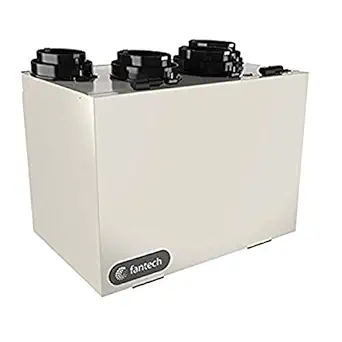 | Best for Medium Homes with Customizable Ventilation | Airflow: 159 cfm | Pressure: 0.4 inches of water | Application: 2-5 bedroom homes | VIEW ON AMAZON | See Our Full Breakdown |
| Aprilaire V22BEC Energy Recovery Ventilator (ERV), 120 CFM for Homes up to 6,000 Sq. Ft. |  | Best for Whole-House Balanced Ventilation with Climate Control | CFM: 120 | Suitable for: Homes up to 6,000 sq. ft. | VIEW ON AMAZON | See Our Full Breakdown | |
| Fantech HERO150H 6″ Top Duct Connection Fresh Air HRV, 160 CFM |  | Best Compact HRV for Moderate Ventilation in Smaller Spaces | Airflow: 160 CFM | Duct Connection Size: 6 inches | Features: Top-mounted duct connections, unobstructed front access, energy-efficient counter-flow core | VIEW ON AMAZON | See Our Full Breakdown |
| VENTS-US BRIG HRV 200 Heat Recovery Ventilator – Whole House Ventilation Fan with Electronic Defrost Protection, Dual MERV 6 Filtration – Up to 213 CFM |  | Best for Reliable Whole-House Ventilation with German Engineering | Airflow: Up to 213 CFM | Duct Size: 6 inches | Filtration: Dual MERV 6 filters | VIEW ON AMAZON | See Our Full Breakdown |
| Fantech HRV FLEX100H Heat Recovery Ventilator |  | Best for Commercial-Grade Versatility | Application: Residential and Commercial | Heat Recovery Efficiency: Not specified | Flow Rate: Not specified | VIEW ON AMAZON | See Our Full Breakdown |
| Honeywell VNT5150H1000 TrueBreeze Heat Recovery Ventilator 150 CFM |  | Best for Standard Residential Applications | Model: VNT5150H1000 | CFM: 150 | Type: Heat Recovery Ventilator | VIEW ON AMAZON | See Our Full Breakdown |
| Broan B230H75RT AI Series 230 CFM Heat Recovery Ventilator (HRV) |  | Best for Higher Capacity Residential Ventilation | CFM: 230 | Series: AI Series | Model: B230H75RT | VIEW ON AMAZON | See Our Full Breakdown |
| Heat Recovery Ventilator with Ceramic Heat Exchanger, Wall-Mounted, WiFi/Remote Control |  | Best for Tech-Savvy, Energy-Conscious Homeowners | Heat Exchanger Efficiency: 90% | Motor Power: 8.5W | Noise Level: Under 30dB | VIEW ON AMAZON | See Our Full Breakdown |
| VENTS-US Micra 60 Ductless HRV Ventilator Kit |  | Best for Small Spaces and Easy Retrofits | Airflow: up to 35 CFM | Sound Level: 0.38 to 1.0 sones | Filters: Dual MERV 8 | VIEW ON AMAZON | See Our Full Breakdown |
More Details on Our Top Picks
Fantech HERO 200H Heat Recovery Ventilator (HRV), 218 CFM, Top Ports, 6″ Duct, Recirculation Defrost
The Fantech HERO 200H stands out for its high airflow capacity of 218 CFM, making it ideal for larger homes or spaces demanding robust ventilation. Its easy front access simplifies maintenance, and multiple speed options enhance energy efficiency. Compared to the VENTS-US BRIG HRV 200, it offers comparable airflow but with the added benefit of recirculation defrost, which is valuable in colder climates. The main tradeoff is that it requires sufficient installation space for ducting and is more suited to properties with existing duct infrastructure. This model is best suited for homeowners needing substantial ventilation with straightforward maintenance, especially in larger or more air-permeable residences.
Pros:- Provides up to 218 CFM for efficient whole-house ventilation
- Front access simplifies installation and cleaning
- Multiple speed settings optimize energy use
Cons:- Requires significant space for duct connections
- Limited to 6-inch ducting, which may restrict compatibility
Best for: Homeowners with large or multi-room spaces seeking high airflow and easy access for maintenance.
Not ideal for: Small apartments or homes with limited attic or basement space for ducting, due to its size and duct connection requirements.
- CFM:218
- Duct Size:6 inches
- Features:Heat Recovery, MERV8 Filter, Top Ports, Recirculation Defrost, Multiple Speed Operation
Our verdict“This HRV is perfect for larger homes needing high-capacity ventilation with easy maintenance access.”
Fantech VHR 150 Heat Recovery Ventilator (HRV) Supply Fan
The Fantech VHR 150 provides a steady airflow of 159 CFM, making it suitable for small to medium-sized homes, typically 2 to 5 bedrooms. Its three-speed control allows tailored ventilation, and washable electrostatic filters help maintain air quality. Compared with the Aprilaire V22BEC ERV, it excels in providing adjustable airflow but offers less humidity control, which might be a concern in very humid or dry climates. A notable limitation is its need for external low-voltage controls and dry contacts, adding complexity to installation. This model suits homeowners who want adjustable airflow and simple maintenance in modest-sized residences.
Pros:- Three-speed ventilation control for customization
- Efficient airflow suitable for typical home sizes
- Washable electrostatic filters reduce ongoing costs
Cons:- Requires external control wiring, adding complexity
- Limited to 2-5 bedroom home sizes
Best for: Owners of small to medium homes wanting customizable airflow control and washable filters.
Not ideal for: Large homes or those requiring integrated humidity management, as it focuses mainly on airflow without moisture recovery.
- Airflow:159 cfm
- Pressure:0.4 inches of water
- Application:2-5 bedroom homes
- Control:3-speed ventilation
Our verdict“This HRV is ideal for owners seeking flexible, adjustable ventilation in small to medium homes with straightforward filter maintenance.”
Aprilaire V22BEC Energy Recovery Ventilator (ERV), 120 CFM for Homes up to 6,000 Sq. Ft.
The Aprilaire V22BEC ERV offers 120 CFM, designed to serve larger homes up to 6,000 square feet, making it a solid choice for balanced ventilation across extensive living spaces. Its energy-efficient heat and moisture recovery help maintain indoor comfort while reducing HVAC strain. Compared with the VENTS-US BRIG HRV 200, it emphasizes moisture control, which is beneficial in humid climates, though installation complexity can be higher. Its controls are user-friendly, but professional installation may be needed for optimal performance. This pick makes the most sense for homeowners wanting consistent, whole-house air quality improvement and climate-sensitive ventilation.
Pros:- Energy-efficient heat and moisture recovery
- Suitable for large spaces up to 6,000 sq. ft.
- Easy-to-use controls for whole-house comfort
Cons:- Installation may require professional expertise
- Designed mainly for larger homes, not smaller spaces
Best for: Large home owners prioritizing balanced, energy-efficient airflow and moisture management.
Not ideal for: Small or compact residences, as its capacity exceeds typical needs and installation may be more involved.
- CFM:120
- Suitable for:Homes up to 6,000 sq. ft.
Our verdict“This ERV suits large residences seeking balanced, energy-efficient ventilation with humidity control.”
Fantech HERO150H 6″ Top Duct Connection Fresh Air HRV, 160 CFM
The Fantech HERO150H provides a practical 160 CFM of fresh air, making it suitable for smaller or moderate-sized spaces where a balance of performance and size matters. Its top-mounted duct connections and unobstructed front access simplify installation and maintenance, echoing the design of the HERO 200H but at a slightly lower airflow rate. Compared to the Fantech HERO 200H, it’s more compact and easier to fit into limited spaces, but it sacrifices some capacity, which could be a limitation in very high-ventilation scenarios. This model is best for homeowners who want a straightforward, reliable HRV for moderate airflow without the bulk of larger units.
Pros:- Provides 160 CFM for effective moderate ventilation
- Easy front access simplifies maintenance
- Top-mounted duct connections ease installation
Cons:- Limited to 6-inch ducting, restricting compatibility
- No specific noise or energy efficiency data available
Best for: Homeowners with smaller or moderate spaces needing reliable ventilation with easy access.
Not ideal for: Large or multi-zone homes requiring high airflow, where 160 CFM might be insufficient.
- Airflow:160 CFM
- Duct Connection Size:6 inches
- Features:Top-mounted duct connections, unobstructed front access, energy-efficient counter-flow core
Our verdict“This HRV is well-suited for smaller homes or spaces needing moderate ventilation with straightforward installation and maintenance.”
VENTS-US BRIG HRV 200 Heat Recovery Ventilator – Whole House Ventilation Fan with Electronic Defrost Protection, Dual MERV 6 Filtration – Up to 213 CFM
The VENTS-US BRIG HRV 200 is designed for continuous, balanced ventilation of large homes, offering up to 213 CFM supported by a high-efficiency polymer core and German-made motors. Its electronic defrost protection enhances cold-weather performance, while dual MERV 6 filters keep indoor air cleaner. Compared to the Fantech HERO 200H, it emphasizes reliability and energy savings, but installation could be more complex and may require professional help. The side panel control is simple yet offers only basic operation. This model fits homeowners wanting dependable, whole-house ventilation with durable components and integrated defrost protection.
Pros:- Up to 213 CFM for large space coverage
- German-made, high-efficiency motors for long service life
- Electronic defrost protection enhances cold weather performance
Cons:- Installation may require professional expertise
- Filters need regular cleaning for optimal operation
Best for: Homeowners with large dwellings seeking reliable, continuous ventilation with durable German motors.
Not ideal for: Small or retrofit projects where capacity exceeds needs or installation complexity is a concern.
- Airflow:Up to 213 CFM
- Duct Size:6 inches
- Filtration:Dual MERV 6 filters
- Features:Electronic defrost, German motors
Our verdict“This HRV is suitable for large homes requiring reliable, continuous ventilation with durable components and defrost protection.”
Fantech HRV FLEX100H Heat Recovery Ventilator
The Fantech HRV FLEX100H stands out for its ability to serve both residential and commercial applications, providing efficient heat recovery and improved air quality. Unlike smaller units like the VENTS-US Micra 60, this model offers higher capacity and more robust build quality, making it suitable for larger spaces or multi-room setups. Its energy-efficient heat exchange helps reduce heating costs, but the lack of detailed specs and absence of user reviews can make it harder to gauge real-world performance. Installation requires professional help, which adds upfront complexity and cost. This pick makes the most sense for property owners needing a versatile, durable ventilator that can handle varied environments, despite less accessible detailed information and a higher installation threshold.
Pros:- Suitable for both residential and commercial environments
- Energy-efficient heat recovery improves overall HVAC performance
- Robust construction supports larger or multi-room applications
Cons:- Limited publicly available detailed specifications
- Requires professional installation, increasing initial costs
Best for: Building managers or homeowners installing a combined residential and light commercial ventilation system who prioritize durability and versatility.
Not ideal for: Homeowners seeking an easy, plug-and-play solution for a single room or small space, as this model demands professional installation and lacks detailed consumer feedback.
- Application:Residential and Commercial
- Heat Recovery Efficiency:Not specified
- Flow Rate:Not specified
- Installation:Professional required
- Size:Not specified
- Power:Not specified
Our verdict“Best suited for those needing a durable, multi-use HRV solution with professional setup requirements.”
Honeywell VNT5150H1000 TrueBreeze Heat Recovery Ventilator 150 CFM
The Honeywell VNT5150H1000 TrueBreeze offers a reliable 150 CFM output, making it an excellent choice for typical residential ventilation needs. Compared to the Broan B230H75RT, which provides a higher 230 CFM, the Honeywell unit emphasizes energy efficiency and quiet operation suitable for bedrooms or living areas. Its installation may require professional help, but it provides a straightforward solution for those seeking improved indoor air quality without excessive capacity. The lack of detailed user reviews makes assessing real-world performance more challenging, but its proven brand reliability offers peace of mind. This model makes sense for homeowners who want a balanced, efficient system for standard-sized homes, though it may fall short for larger or high-occupancy spaces.
Pros:- Reliable brand with proven performance
- Quiet operation suitable for living spaces
- Energy-efficient heat exchange conserves power
Cons:- Installation may require professional help
- Limited detailed user feedback available
Best for: Homeowners with average-sized homes seeking a dependable, modest-capacity HRV with quiet operation.
Not ideal for: Large households or spaces requiring over 150 CFM, where higher airflow capacity is necessary.
- Model:VNT5150H1000
- CFM:150
- Type:Heat Recovery Ventilator
- Brand:Honeywell
- Power:Not specified
- Installation:Professional recommended
Our verdict“Ideal for standard-sized homes needing a quiet, energy-efficient ventilation upgrade.”
Broan B230H75RT AI Series 230 CFM Heat Recovery Ventilator (HRV)
The Broan B230H75RT AI Series delivers 230 CFM, making it suitable for larger homes or spaces with higher airflow demands. Compared to the Honeywell VNT5150H1000, which offers a lower 150 CFM, this model emphasizes greater capacity, ideal for households with multiple occupants or open floor plans. Its energy-efficient operation helps reduce costs, but the limited detailed specifications and absence of customer reviews make it difficult to gauge long-term reliability. Installation is recommended to be handled by professionals, adding complexity. This pick appeals to those needing a higher volume of fresh air exchange while maintaining efficiency, though it may be overkill for smaller homes or less demanding spaces.
Pros:- Higher airflow capacity for larger spaces
- Energy-efficient operation reduces long-term costs
- Supports improved indoor air quality at scale
Cons:- Lack of detailed specifications and reviews
- Potentially higher installation complexity and cost
Best for: Homeowners with larger or high-occupancy residences requiring more airflow and energy-efficient ventilation.
Not ideal for: Small apartments or bedrooms where lower airflow and quieter operation are preferred to avoid unnecessary energy use and noise.
- CFM:230
- Series:AI Series
- Model:B230H75RT
- Type:Heat Recovery Ventilator
- Power:Not specified
- Installation:Professional recommended
Our verdict“Best suited for sizable homes needing substantial ventilation with energy savings in mind.”
Heat Recovery Ventilator with Ceramic Heat Exchanger, Wall-Mounted, WiFi/Remote Control
This wall-mounted HRV with a ceramic heat exchanger recovers up to 90% of heat, making it highly efficient for reducing heating costs. Its WiFi and remote controls offer convenient operation, and multiple airflow modes enhance flexibility for different needs. Compared to ductless options like the VENTS-US Micra 60, this model supports larger spaces and offers more sophisticated features. The quiet operation under 30dB makes it suitable for bedrooms and offices, while its flexible installation range allows for various wall thicknesses. However, wall space and potential professional setup might pose hurdles for DIY enthusiasts. This unit appeals most to tech-savvy homeowners who want high efficiency and smart controls, though wall installation could be a challenge for some.
Pros:- High heat recovery efficiency (90%) reduces energy costs
- WiFi and remote control for easy operation
- Quiet operation with noise levels under 30dB
Cons:- Requires wall space and possibly professional installation
- Installation complexity may be a barrier for some users
Best for: Homeowners prioritizing energy savings and smart control features for their living spaces or attics.
Not ideal for: Renters or those unwilling to undertake professional installation or wall modifications.
- Heat Exchanger Efficiency:90%
- Motor Power:8.5W
- Noise Level:Under 30dB
- Airflow Modes:Fresh Air, Exhaust, Recirculation
- Voltage:100–240V
- Installation Range:250mm to 500mm wall thickness
Our verdict“Ideal for energy-conscious, tech-savvy households seeking high efficiency and remote control capabilities.”
VENTS-US Micra 60 Ductless HRV Ventilator Kit
The VENTS-US Micra 60 is designed specifically for small rooms like bedrooms, offices, or apartments, offering up to 35 CFM of airflow. Its compact, ductless design makes it an easy retrofit for spaces without existing ductwork, setting it apart from larger units like the Broan B230H75RT, which require more extensive installation. Despite its limited airflow, it excels at quietly improving indoor air quality and recovering heat efficiently within its capacity. The inclusion of dual MERV 8 filters helps remove allergens and dust, making it ideal for sensitive environments. However, its small capacity limits its usefulness in larger or high-occupancy spaces. This model suits those seeking a straightforward, space-saving solution to enhance air quality without complex installation or ductwork.
Pros:- Compact, ductless design simplifies installation
- Quiet operation and effective heat recovery
- Includes dual MERV 8 filters for better air quality
Cons:- Limited airflow capacity suitable only for small spaces
- Requires wall mounting and electrical hookup
Best for: Residents of small apartments or bedrooms looking for an easy-to-install, ductless HRV.
Not ideal for: Large homes or spaces with significant ventilation needs, where airflow capacity is insufficient.
- Airflow:up to 35 CFM
- Sound Level:0.38 to 1.0 sones
- Filters:Dual MERV 8
- Efficiency:up to 79%
- Motor:Long-life EC motor
- Installation:Wall-mounted, includes mounting kit
Our verdict“Best choice for small rooms or retrofit projects where ductwork isn’t available or practical.”

How We Picked
To evaluate these heat recovery ventilators, I prioritized performance metrics such as airflow capacity and energy recovery efficiency, which directly impact home comfort and energy bills. Usability factors like installation complexity, maintenance needs, and control features were also key. Build quality and durability were assessed through product specifications and manufacturer reputation. Price point was considered alongside features to determine value for different budgets. The ranking reflects a balance between these factors, aiming to recommend options suitable for various home sizes, budgets, and user priorities.Factors to Consider When Choosing Heat Recovery Ventilator Hrv For Home
Choosing the right heat recovery ventilator involves understanding several key factors that influence performance, cost, and suitability for your home. By considering these elements, you can avoid common pitfalls like undersized units or systems with poor energy recovery. A thoughtful selection can lead to better air quality, energy savings, and long-term satisfaction.Airflow Capacity and Home Size Compatibility
Matching your HRV’s airflow capacity with your home’s size ensures effective ventilation without wasting energy. Smaller units may struggle in larger homes, leading to insufficient air exchange, while oversized systems can cause drafts and unnecessary energy use. Measure your home’s square footage and consider the number of rooms to find a model that strikes the right balance.
Energy Recovery Efficiency
Efficiency ratings determine how well an HRV recovers heat from exhausted air to precondition incoming air. Higher efficiency models reduce heating and cooling costs over time, especially in colder climates. However, these models often come at a higher upfront cost, so weigh the long-term savings against initial expenses.
Installation and Maintenance
Some HRVs require complex ductwork or professional installation, adding to the overall cost and effort. Ductless or compact models can be easier to install but might have limitations in capacity. Consider the maintenance requirements, such as filter replacements and system checks, to ensure your unit remains effective and reliable over its lifespan.
Control Features and Smart Integration
Advanced control options, including WiFi connectivity and programmable timers, enhance usability and allow for better energy management. These features are more common in premium models and can add convenience, but they also increase the price. Decide if smart controls align with your lifestyle and budget.
Cost and Long-Term Value
Balancing initial purchase price with expected energy savings is key. Cheaper units may save money upfront but could lead to higher operating costs or less durability. Conversely, investing in a higher-quality, efficient system can pay off over time through reduced energy bills and fewer maintenance issues. Consider your long-term goals and budget when making a choice.
Frequently Asked Questions
How do I know if my home needs an HRV or an ERV?
Deciding between an HRV and an ERV depends on your climate and indoor air quality needs. HRVs are typically better in cold climates where heat retention is vital, as they focus on recovering heat from exhausted air. ERVs, on the other hand, also transfer moisture and are suitable for more humid environments, helping to balance humidity levels while ventilating. Consider your local climate and indoor conditions to choose the most effective system for your home.
Can I install an HRV myself, or should I hire a professional?
While some small or ductless models are designed for DIY installation, most whole-house HRVs with complex ductwork benefit from professional setup. Proper installation affects system performance and longevity, so hiring an HVAC technician can ensure the unit is correctly configured and sealed. Skipping professional installation might save money initially but could lead to inefficiencies or air leaks that undermine the system’s effectiveness.
What maintenance does an HRV require over time?
Regular maintenance includes inspecting and replacing filters, cleaning the core, and checking for blockages or leaks in the ductwork. Advanced models with smart controls may offer alerts for maintenance needs, simplifying upkeep. Proper maintenance ensures optimal energy recovery, indoor air quality, and system lifespan, making it a worthwhile investment in your home’s comfort and efficiency.
How much should I expect to pay for a good HRV system?
Prices vary widely depending on capacity, features, and brand, generally ranging from $1,000 to $3,000 for quality units. Installation costs can add another $500 to $2,000, especially if ductwork needs modifications. While it might be tempting to choose the least expensive option, investing in a higher-efficiency model can reduce energy bills over time, offering better overall value.
Are ductless HRVs as effective as whole-house systems?
Ductless HRVs are well-suited for small spaces, retrofit projects, or individual rooms, providing targeted ventilation without complex ductwork. However, they lack the capacity to ventilate an entire home effectively, making them less suitable for larger residences. Whole-house systems deliver balanced ventilation for larger spaces but require more extensive installation and higher upfront costs. Choose based on your home’s size and your ventilation needs.
Conclusion
For most homeowners seeking a reliable, energy-efficient solution, the Fantech HERO 200H offers excellent balance of performance and durability, making it the best overall choice. Budget-conscious buyers will find the VENTS-US Micra 60 Ductless HRV ideal for smaller spaces or retrofit projects. Those with larger homes or higher energy demands should consider models like the Aprilaire V22BEC for superior energy recovery. Beginners or those prioritizing ease of installation might prefer smaller, ductless units, while homeowners wanting smart features should look at premium options with WiFi control. Ultimately, your selection should align with your home size, climate, and long-term maintenance preferences.