
Create a wildfire smoke response plan by monitoring local air quality reports regularly and using alerts to decide when to stay indoors. Stock up on protective gear like N95 masks, goggles, and gloves, and guarantee they fit properly for effective use. Seal windows and doors, and use HEPA filters to improve indoor air quality. Prepare an emergency kit with essentials, and develop a clear action plan for changing conditions. Stay proactive—if you keep exploring, you’ll find more tips to keep your household safe.
Key Takeaways
- Develop a comprehensive emergency plan including indoor sheltering, protective gear, and communication strategies for wildfire smoke events.
- Stockpile necessary protective equipment like N95 masks, goggles, and gloves, ensuring proper fit and accessibility.
- Establish indoor air quality management measures, such as sealing windows and using HEPA filters, to reduce smoke infiltration.
- Monitor local air quality reports regularly and set up alerts to prompt timely protective actions.
- Prepare an organized emergency kit with essentials for prolonged indoor stays and quick response during smoke alerts.

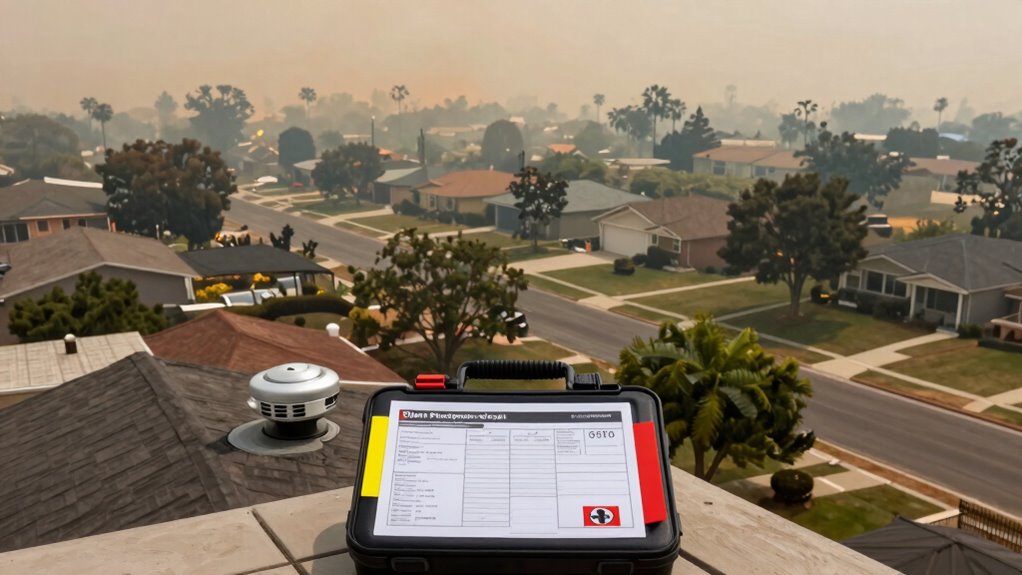
When wildfire smoke threatens your community, having a solid response plan can make all the difference. Wildfires can produce thick smoke that quickly worsens air quality, posing serious health risks, especially for vulnerable household members. Preparing in advance guarantees you’re ready to act swiftly, minimizing exposure and safeguarding your well-being. Your plan should include understanding local air quality levels, so you know when to take extra precautions or stay indoors. Monitoring air quality reports from reliable sources helps you decide whether to limit outdoor activities or set up a clean air space inside your home.
Prepare in advance by monitoring air quality and knowing when to stay indoors during wildfire smoke events.
In addition, having protective gear on hand is essential. N95 masks or respirators are highly effective at filtering out harmful particles, so stock up on enough for everyone in your household. Make sure the masks fit properly; a loose seal won’t provide adequate protection. Store them in an accessible location, clearly labeled, so you can quickly grab them when air quality begins to decline. Along with masks, consider having additional protective gear such as goggles and disposable gloves, especially if you need to do cleaning or ventilate your home after the smoke has cleared. Wearing the right gear helps reduce inhalation of toxic particles and prevents irritation to your eyes and skin.
Your wildfire smoke response plan should also include practical steps for creating a clean indoor environment. Seal windows and doors tightly to prevent smoke infiltration, and use high-efficiency particulate air (HEPA) filters if possible. These filters can greatly improve indoor air quality, making your home a safer refuge during smoky conditions. Keep a supply of bottled water and non-perishable food in case outdoor air quality deteriorates to the point where leaving the house isn’t advisable. Having a well-organized emergency kit with these essentials ensures you’re prepared to stay indoors comfortably and safely. Additionally, understanding indoor air quality and ways to improve it can significantly reduce health risks during smoke events. Incorporating indoor air quality management strategies into your plan can further enhance your safety. Regularly checking air filtration systems and replacing filters ensures they work effectively when needed most. Staying informed about the latest air quality monitoring tools can help you respond more efficiently to changing conditions. Being aware of local air quality alerts can further ensure you’re prepared for sudden changes in air quality levels.

GIKO N95 Face Mask – 20Pcs Cup Dust Safety Masks, N95 Protective Mask, Protection Against PM2.5 Dust, Fire Smoke, Filter Efficiency≥95%, White
【NIOSH Approved N95 Mask】NIOSH Approval Number: TC-84A-4653. Model: GIKO 1200H. Box of 20 disposable N95 respirator masks blocks…
As an affiliate, we earn on qualifying purchases.
As an affiliate, we earn on qualifying purchases.
Frequently Asked Questions
How Often Should I Review and Update My Wildfire Smoke Response Planner?
You should review and update your wildfire smoke response planner at least once a year, especially before peak fire season. Regularly checking it guarantees your fire safety measures stay current and effective. Additionally, update your plan whenever there are significant changes in your household, health needs, or local fire conditions. Staying proactive with emergency preparedness helps protect your family and minimizes risks during wildfire events.
What Should I Include in an Emergency Communication Plan?
Your emergency communication plan is like a lifeline, keeping everyone connected. Include clear communication strategies, so you know how to share updates quickly. List emergency contacts, including family, neighbors, and local authorities. Specify methods like phone, text, or social media, and designate a meeting place. Practice your plan regularly, so everyone knows what to do, ensuring you stay informed and safe during wildfire events.
How Can I Protect Pets From Wildfire Smoke Exposure?
To protect your pets from wildfire smoke exposure, prioritize pet safety by keeping them indoors during smoke events. Use air purifiers with HEPA filters to improve indoor air quality and reduce harmful particles. Limit outdoor activities, especially when air quality is poor. Provide plenty of fresh water, and create a comfortable, smoke-free environment. Regularly monitor local air quality reports to decide when it’s safest for your pets to go outside.
Are There Specific Products Recommended for Indoor Air Filtration?
When you notice the haze outside, it’s time to improve your indoor air quality with effective filtration systems. HEPA air purifiers are highly recommended, as they trap tiny particles and pollutants from wildfire smoke. Look for models with high Clean Air Delivery Rate (CADR) ratings for better performance. Maintaining and replacing filters regularly guarantees your indoor environment stays safe, helping you breathe easier during smoky days.
What Resources Are Available for Financial Assistance During Evacuations?
During evacuations, you can access resources like emergency funds and file insurance claims to help cover costs. Many local agencies or nonprofits offer financial assistance programs specifically for wildfire-related emergencies. Keep your insurance policy details handy, and document expenses for claims. Building an emergency fund before wildfire season can also ease financial stress, ensuring you have quick access to cash when needed most.

Air Purifier for Home Bedroom Large Room 2200 Ft², MOOKA H13 HEPA Air Cleaner with Washable Pre-filter, Air Quality Monitor, Air Purifiers for Pets Hair Smoke Pollen, Auto Mode, KJ190H White
𝐇𝐢𝐠𝐡𝐞𝐫 𝐀𝐢𝐫 𝐈𝐧𝐭𝐚𝐤𝐞 & 𝐋𝐚𝐫𝐠𝐞𝐫 𝐂𝐨𝐯𝐞𝐫𝐚𝐠𝐞 𝐟𝐨𝐫 𝐏𝐞𝐭 𝐋𝐨𝐯𝐞𝐫𝐬: This air purifier for home pets is designed with…
As an affiliate, we earn on qualifying purchases.
As an affiliate, we earn on qualifying purchases.
Conclusion
So, you’ve got your Wildfire Smoke Response Planner—congratulations, you’re now officially prepared for the apocalypse… or at least a smoky inconvenience. Remember, when the air’s so bad you can taste the ash, you’ll thank yourself for being a responsible adult with a plan. Stay safe, stay smug, and maybe invest in a gas mask—because nothing says “I’ve got this” like breathing easier while everyone else coughs their way through the chaos.
window sealing kit for wildfire smoke
As an affiliate, we earn on qualifying purchases.
As an affiliate, we earn on qualifying purchases.

Ready America 70280 72 Hour Emergency Kit, 2-Person, 3-Day Backpack, Includes First Aid Kit, Survival Blanket, Portable Preparedness Go-Bag for Camping, Car, Earthquake, Travel, Hiking, and Hunting, Red
Emergency Kit For Disaster Preparedness: Stay Prepared For Emergency Situations Everywhere You Go. Ready America Emergency Survival Kits…
As an affiliate, we earn on qualifying purchases.
As an affiliate, we earn on qualifying purchases.