
To quickly rank your home’s weak spots against wildfire smoke, start by inspecting your filters—upgrading to HEPA and replacing them regularly during wildfire season makes a big difference. Check windows, doors, vents, and exterior seals for gaps, sealing leaks with weather stripping or caulk. Don’t forget to examine your attic and exterior siding. After addressing these areas, you’ll be prepared to reduce smoke infiltration effectively—continue for detailed steps to strengthen your home’s defenses even further.
Key Takeaways
- Conduct exterior inspections to identify cracks, gaps, or unsealed entry points around siding, vents, and rooflines.
- Check and replace HVAC filters regularly, and consider adding HEPA purifiers in main living areas.
- Seal windows, doors, and vents with weather stripping or caulking to prevent smoke infiltration.
- Evaluate the home’s overall airtightness by testing for leaks and sealing weak spots accordingly.
- After a wildfire event, inspect for smoke residue and prioritize cleaning and air filtration to address lingering damage.

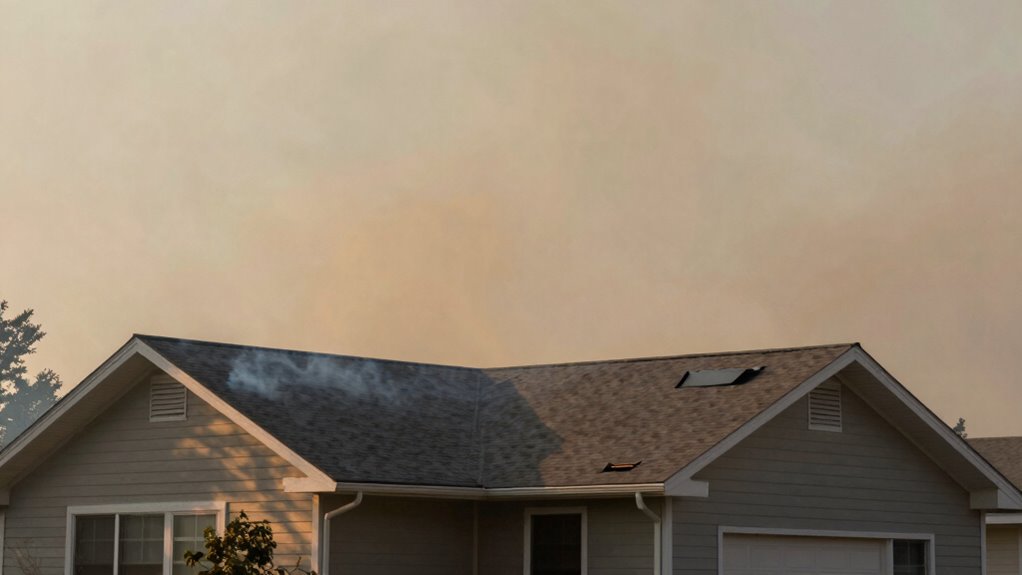
Have you prepared yourself for wildfire smoke? When fires rage nearby, the quality of your indoor air becomes more critical than ever. Wildfire smoke contains tiny particles that can penetrate your home’s defenses, making air filtration essential to protect your health. Without proper measures, smoke damage can settle into your home’s surfaces and ventilation systems, worsening over time. Recognizing your home’s weak spots quickly is key to minimizing exposure and safeguarding your space.
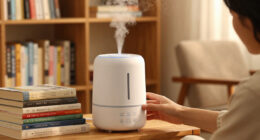
Start by inspecting your home’s ventilation and air filtration systems. Are your filters outdated or clogged? Upgrading to high-efficiency particulate air (HEPA) filters can considerably reduce indoor smoke particles. Check your HVAC system’s filter regularly—every month during wildfire season—and replace it as needed. This simple step helps prevent smoke damage from lingering in your ducts and spreading throughout your home. If you don’t have a dedicated air purifier, consider investing in one with a HEPA filter for added protection. Place it in the main living area to maximize its effectiveness against airborne particles.
Next, assess your home’s exterior and entry points. Are your windows and doors properly sealed? Gaps around these openings allow smoke to infiltrate, defeating your air filtration efforts. Use weather stripping or caulking to seal any leaks. During smoke events, keep windows and doors closed to prevent the infiltration of smoky air. If you live in an area prone to wildfires, installing airtight seals on vents and adding temporary barriers can help create a more secure barrier against smoke intrusion. Ensuring your home’s air tightness is crucial for maintaining a healthy indoor environment during wildfire events. Also, regularly inspecting these seals ensures they remain effective over time.
Pay attention to your home’s exterior and attic spaces. Gaps or cracks in siding, vents, or rooflines can serve as entry points for smoke. Seal these areas to reduce infiltration. Additionally, properly sealing your home with effective materials can significantly enhance your defense against smoke infiltration. Regularly inspecting these potential entry points ensures your home remains as resilient as possible against wildfire smoke. Implementing home sealing techniques can provide an additional layer of protection during wildfire events. Creating a well-sealed home can dramatically reduce the amount of smoke that enters during a fire.
Finally, don’t forget to prepare for post-smoke cleanup. Smoke damage isn’t just about air quality; it can settle on surfaces, fabrics, and furniture, leading to lingering odors and potential health hazards. Regular cleaning, washing curtains, and using air filtration devices can help remove residual particles. By systematically evaluating and reinforcing your home’s weak spots—especially those affecting air filtration—you’ll be better equipped to face wildfire smoke events with confidence.

GermGuardian Air Purifier for Home with HEPA Pure Filter, for Wildfire Smoke, Pet Dander, Pollen, Odors, Large Rooms Up To 870 Sq. Ft., Removes 99.97% Pollutants, UV-C Light, 28", AC5350B, Black
HIGH PERFORMANCE AIR PURIFIER: Circulates the air 1x per hour in 870 square foot rooms and 4.8x per…
As an affiliate, we earn on qualifying purchases.
As an affiliate, we earn on qualifying purchases.
Frequently Asked Questions
How Often Should I Reassess My Wildfire Smoke Preparedness?
You should reassess your wildfire smoke preparedness at least once a year, especially before fire season peaks. Check your home ventilation systems for proper filtering, guaranteeing clean air circulation. Review and update your emergency kits regularly, replacing expired supplies. Consider any recent changes to your home or neighborhood that might affect safety. Regular reassessments keep your wildfire defense strong and make certain you’re ready to act quickly when smoke threatens your health.
Can Indoor Plants Help Filter Wildfire Smoke?
Indoor plants can help improve indoor air quality by supporting plant filtering, which may reduce some wildfire smoke particles. While they aren’t a complete solution, certain plants like spider plants and snake plants are known for their air-purifying qualities. Keep in mind, though, that indoor air during wildfire season can still contain harmful particles, so supplement plant filtering with high-quality air purifiers for the best protection.
What Is the Best Way to Prevent Smoke From Entering Through Vents?
Think of your vents like open windows inviting smoke inside. To prevent this, you should seal your vents tightly with vent sealing materials. Additionally, use air filtration systems equipped with HEPA filters to catch smoke particles before they enter your living space. Regularly inspect and maintain these filters, and consider installing vent covers during wildfire season for extra protection. These steps keep smoky air from sneaking in through your vents.
Are There Specific Materials That Resist Smoke Infiltration Better?
Yes, fire-resistant materials like metal, concrete, and specially treated drywall resist smoke infiltration better. You should consider installing smoke-proof barriers such as airtight seals around vents and windows, made from durable, smoke-resistant materials. These barriers help block smoke from seeping inside during a wildfire. Using fire-resistant materials in your home’s construction also strengthens its overall resistance, keeping smoke out and protecting your indoor air quality during smoke events.
How Does Wildfire Smoke Affect Indoor Air Quality Over Time?
Wildfire smoke gradually worsens indoor air quality over time, making it harder to breathe and potentially causing health issues. Smoke infiltration can linger, especially if your home lacks proper seals, reducing effective smoke filtration. As smoke particles settle indoors, they can accumulate, increasing exposure. To combat this, you need good ventilation, air purifiers, and sealed entry points. Regularly monitoring indoor air quality helps you stay aware and address smoke infiltration promptly.

Filtrete 14x24x1 Air Filter, MERV 11, MPR 1000, Allergens & Pet Dander, 3-Month AC and Furnace Filters, Cleaner Air, Reliable Airflow, 2 HVAC Filters (Actual Size 13.68 x 23.68 x 0.81 in)
MAKE YOUR HOME YOUR SANCTUARY: 2-pack of 3-month pleated Filtrete 14x24x1 MERV 11 MPR 1000 AC Furnace Air…
As an affiliate, we earn on qualifying purchases.
As an affiliate, we earn on qualifying purchases.
Conclusion
By using this wildfire smoke checklist, you can quickly identify your home’s weak spots and take action to protect your living space. Remember, “A stitch in time saves nine,” so addressing issues now can save you from costly damage later. Stay vigilant, stay prepared, and don’t wait for a wildfire to strike before securing your home. Being proactive keeps you and your loved ones safe—because prevention is always better than cure.

33 Ft Gray Self-Adhesive Soundproofing Weather Stripping for Doors and Windows, 0.35" Wide x 0.2" Thick
【Strong Adhesive, Saves Money】Weather stripping door seal prevent heat and cold from escaping, save your heating and cooling…
As an affiliate, we earn on qualifying purchases.
As an affiliate, we earn on qualifying purchases.

Gorilla 100% Silicone Waterproof Caulk, All‑Purpose Sealant, Mold & Mildew Resistant, Flexible Seal, White, 10 oz Cartridge (Pack of 1)
Indoor/Outdoor 100% Waterproof Caulk – Durable, long-lasting white silicone sealant for indoor and outdoor use; ideal for showers,…
As an affiliate, we earn on qualifying purchases.
As an affiliate, we earn on qualifying purchases.