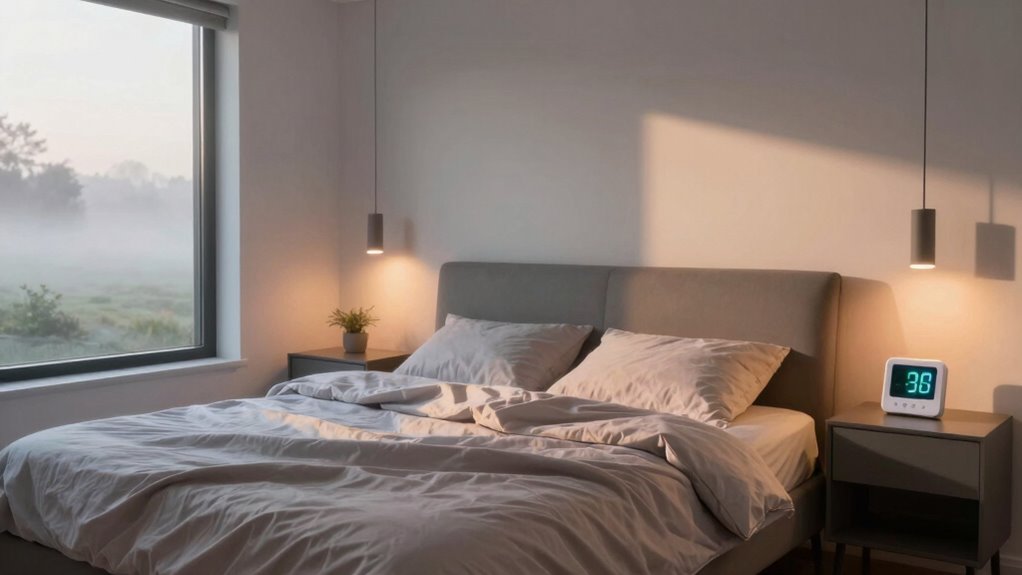

If you wake up feeling groggy, high CO2 levels in your bedroom might be the cause. As you breathe, CO2 builds up in enclosed spaces, especially if ventilation is poor. Using a CO2 estimator helps you monitor air quality and identify if your room has too much CO2 overnight. Improving airflow through vents or open windows can make a big difference. Keep going to discover how you can create a healthier sleep environment.
Open a free Amazon Business account
Business pricing, bulk buying and tax-exempt orders.
As an affiliate, we earn on qualifying purchases.
Key Takeaways
- Elevated CO2 levels in bedrooms hinder oxygen intake, leading to disrupted sleep and grogginess upon waking.
- Using a CO2 estimator provides real-time data to identify poor ventilation contributing to morning tiredness.
- Rapid CO2 buildup overnight indicates insufficient airflow, which can impair sleep quality and cause morning fatigue.
- Improving ventilation through opening windows or using air purifiers can lower CO2 and enhance sleep freshness.
- Monitoring CO2 levels helps maintain optimal indoor air quality, reducing headaches and dizziness in the morning.
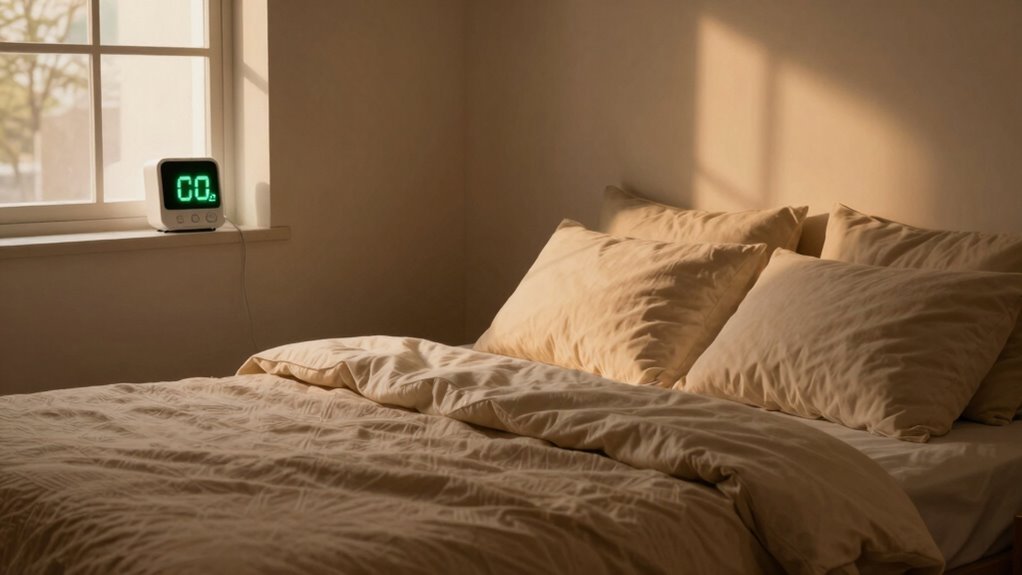
If you’re concerned about the air quality in your bedroom, understanding how quickly CO2 levels can rise is vital. You might wake up feeling groggy or tired, and it’s easy to overlook that the air you breathe during sleep could be part of the problem. Elevated CO2 levels in your bedroom can profoundly impact sleep quality, making you feel less rested and more sluggish in the mornings. The good news is that using a bedroom CO2 buildup estimator can help you pinpoint whether poor air quality is affecting your sleep.
CO2, or carbon dioxide, naturally accumulates in enclosed spaces like bedrooms, especially when ventilation is limited. As you breathe out, CO2 levels increase, and if fresh air doesn’t circulate regularly, these levels can rise rapidly overnight. This buildup doesn’t just make the air stuffy; it can interfere with your body’s ability to get enough oxygen, which is vital for restorative sleep. When your brain and body aren’t getting enough oxygen, you may experience disrupted sleep cycles, leading to that groggy feeling when you wake up.
Elevated CO2 in your bedroom can disrupt sleep and leave you feeling tired in the morning.
By using a CO2 estimator, you get a clearer picture of how your bedroom environment influences your sleep quality. These tools measure CO2 concentration in real-time, alerting you if levels become too high. If your estimator indicates that CO2 levels are rising quickly, it’s a sign that you need better ventilation. Improving airflow—by opening windows, adding an air purifier, or using a ventilation system—can greatly reduce CO2 buildup and create a healthier sleeping environment. Additionally, understanding the air quality factors involved can help you make more comprehensive improvements to your sleep space.
It’s worth noting that sleep quality isn’t solely affected by CO2; other factors like temperature, humidity, and noise also play roles. However, CO2 levels are often overlooked despite their direct link to how rested you feel. Elevated CO2 can cause headaches, dizziness, and even difficulty concentrating, which all contribute to that groggy, unrefreshed feeling in the morning. Using a bedroom CO2 buildup estimator empowers you to identify and address these issues before they impact your sleep cycle. Regularly monitoring ventilation effectiveness can help maintain optimal indoor air quality and prevent CO2 from reaching disruptive levels.
In the end, maintaining good air quality isn’t just about avoiding stuffiness; it’s about supporting your overall sleep health. Regularly checking CO2 levels with an estimator allows you to make informed decisions for improving ventilation and ensuring that your bedroom remains a space where you can truly rest. After all, waking up refreshed depends on the air you breathe while you sleep.
As an affiliate, we earn on qualifying purchases.
Frequently Asked Questions
How Does CO2 Buildup Affect Sleep Quality?
High CO2 buildup in your bedroom can cause sleep interruption and breathing difficulty, leading to restless nights. When CO2 levels rise, your body struggles to get enough oxygen, which can make you wake up feeling groggy or fatigued. Poor air quality disrupts your sleep cycle, decreasing REM sleep and overall restfulness. To improve sleep quality, guarantee proper ventilation and fresh air to keep CO2 levels low and support easier breathing.
Can Plants Significantly Reduce Bedroom CO2 Levels?
Indoor plants can notably reduce bedroom CO2 levels through their natural CO2 absorption process. When you place a variety of indoor plants in your room, they actively absorb CO2 during photosynthesis, helping to improve air quality. While they alone may not eliminate high CO2 buildup, adding plants creates a healthier environment, reducing grogginess and promoting better sleep. For maximum effect, combine plants with good ventilation practices.
What Are Safe CO2 Concentration Thresholds for Bedrooms?
For safe sleep, aim for bedroom CO2 levels below 1,000 ppm to maintain good air quality. When CO2 climbs higher, you might feel groggy or drowsy. To keep it safe and breathable, adopt ventilation strategies like opening windows or using fans to flush out excess CO2. Regularly monitoring CO2 levels helps you stay aware and adjust ventilation strategies, ensuring your bedroom remains a healthy, happy haven for sleep.
How Often Should I Ventilate to Prevent CO2 Buildup?
You should ventilate your bedroom at least once every 2-3 hours to prevent CO2 buildup. Increasing air exchange regularly guarantees fresh air circulates, reducing CO2 levels and improving sleep quality. If your room is small or poorly ventilated, consider more frequent ventilation, like every hour. Proper ventilation frequency helps maintain healthy CO2 concentrations, so you wake up feeling refreshed instead of groggy.
Does Bedroom Size Influence CO2 Concentration Levels?
Your bedroom size definitely influences CO2 levels—bigger rooms can seem like tiny lungs, filling with stale air if you don’t ventilate properly. Larger spaces require better air circulation to keep CO2 from building up, especially with poor room insulation trapping heat and CO2. So, if your room’s spacious, open windows more often, or use fans to keep fresh air flowing. That way, you’ll breathe easy and wake up refreshed.
air quality sensor for indoor air
As an affiliate, we earn on qualifying purchases.
As an affiliate, we earn on qualifying purchases.
Conclusion
By keeping an eye on your bedroom’s CO2 levels, you’re gently guiding yourself toward mornings that feel a bit brighter and more refreshed. Think of the estimator as your friendly nudge to open a window or adjust your ventilation — small steps that can quietly transform your sleep space into a more inviting retreat. With a little attention, each morning can start with a lighter, more energized touch, making every day a little easier to embrace.
As an affiliate, we earn on qualifying purchases.
air purifier for sleep improvement
As an affiliate, we earn on qualifying purchases.
As an affiliate, we earn on qualifying purchases.
Flea & tick season Picks
flea and tick prevention
As an affiliate, we earn on qualifying purchases.