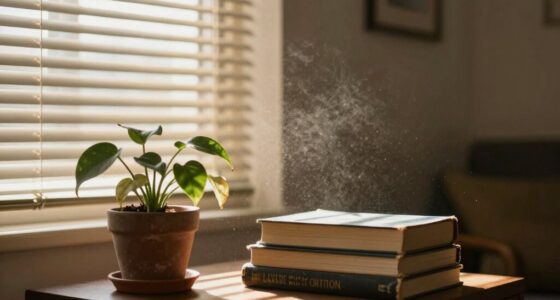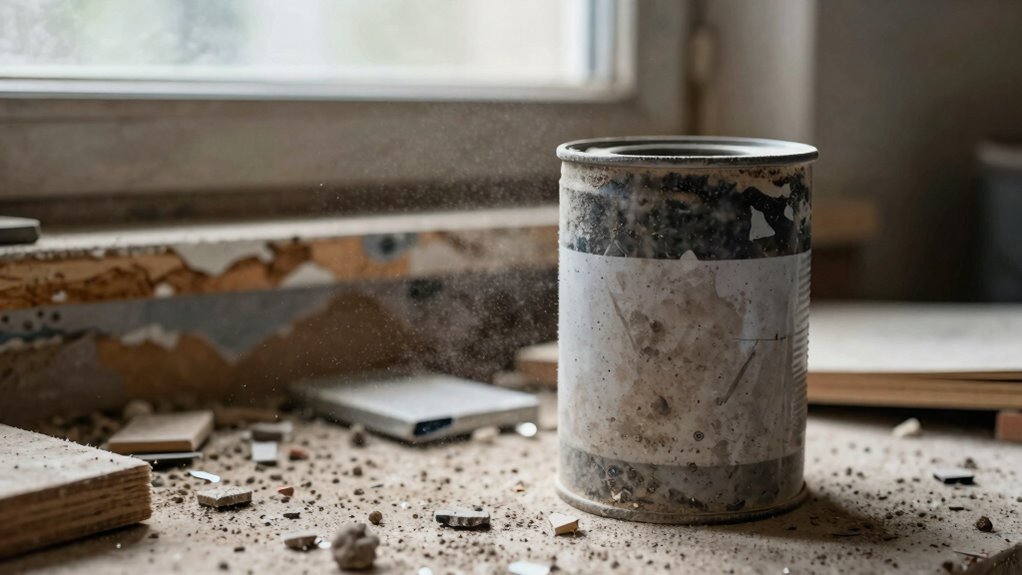
Renovation dust can stick around long after your project ends, often lingering for weeks or even months. Fine debris settles into corners, surfaces, and HVAC systems, making it tough to clean and impacting your indoor air quality. Simply opening windows isn’t enough; active air filtration with HEPA filters and thorough cleaning are essential. To keep dust at bay and breathe easier, it’s important to follow proven strategies—stick with us to find out how to master dust management.
Key Takeaways
- Renovation dust can persist for weeks or months, outlasting the completion of your project.
- Fine debris easily becomes airborne again, making ongoing filtration essential.
- Inadequate cleanup allows residual dust to settle and re-contaminate indoor environments.
- Continuous use of HEPA air purifiers helps reduce lingering microscopic particles.
- Proper sealing, containment, and regular maintenance prevent dust re-accumulation over time.

Even after the construction crews have packed up and the last coat of paint has dried, renovation dust can stubbornly linger in your home for weeks or even months. This fine, gritty debris isn’t just unsightly; it can settle into every corner, infiltrate your HVAC system, and settle on surfaces you thought were clean. To combat this persistent problem, you need to focus on effective air filtration and dust containment strategies during and after your renovation project.
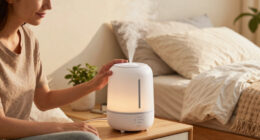
Air filtration plays a essential role in reducing airborne dust particles that can circulate throughout your home. High-efficiency particulate air (HEPA) filters are your best defense, capturing tiny particles that standard filters often miss. Installing portable air purifiers equipped with HEPA filters in main living areas can considerably improve air quality. These devices continuously draw in air, trapping dust and allergens before they settle on furniture or get inhaled. Remember, simply opening windows isn’t enough; you need active air filtration to truly clear the air of microscopic debris. Additionally, understanding renovation dust can help you better prepare for its long-lasting effects. Proper planning and knowledge of dust management techniques will make a significant difference in your cleanup process.
Once the project concludes, don’t skip the cleanup process. Use a vacuum equipped with a HEPA filter to thoroughly clean floors, carpets, and upholstery. Wiping down surfaces with damp cloths helps trap residual dust that vacuuming might miss. It’s crucial to be meticulous because even tiny remnants can become airborne again when disturbed later. Incorporating preventative measures such as sealing off vents and doorways can further reduce the risk of dust spreading during the cleanup process. Furthermore, regularly inspecting and replacing filters in your air purifiers ensures they continue to effectively capture dust particles. Additionally, scheduling ongoing maintenance can prevent dust accumulation from re-entering your living environment.
Post-renovation air filtration should continue for several days to weeks, depending on the extent of the dust. Keep air purifiers running, especially in frequently used rooms, to help catch any residual particles. Regular maintenance of filters and continued dust containment measures are key to protecting your home remains healthy and dust-free long after the work is done. Ensuring proper ventilation throughout this period can also aid in dispersing lingering dust particles more efficiently. Staying vigilant about air quality control will help maintain a healthier environment for you and your family.
Ultimately, managing renovation dust requires a proactive approach. Combining strong dust containment practices with reliable air filtration helps you breathe easier and keeps your home cleaner for longer. Don’t underestimate how persistent this dust can be; tackling it head-on ensures your renovation doesn’t turn into a never-ending cleanup. Regularly updating your dust mitigation strategies can further enhance your efforts and prevent future issues.

MOOKA Air Purifiers for Home Large Room up to 1076ft², H13 True HEPA Air Filter Cleaner, Odor Eliminator, Remove Smoke Dust Pollen Pet Dander, Night Light, B-D02L White
MOOKA B-D02L AIR PURIFIER FOR LARGE ROOM: With the high-efficiency filtration system, the air purifier covers an area…
As an affiliate, we earn on qualifying purchases.
As an affiliate, we earn on qualifying purchases.
Frequently Asked Questions
How Can I Effectively Test for Lingering Renovation Dust?
To effectively test for lingering renovation dust, start by using air filtration systems with HEPA filters to capture fine particles. Then, perform a visual inspection and use a dust mask or white cloth to wipe surfaces, checking for residual dust. You can also use a particle counter to measure airborne dust levels. If levels remain high, run your HEPA vacuum and air filtration longer until tests show clean air.
Are There Specific Cleaning Products Recommended for Dust Removal?
Think of cleaning as a battle against stubborn dust monsters. You should use eco-friendly cleaners that tackle dust without harm and a HEPA vacuum to swoop up fine particles like a dust-busting superhero. These tools work together to clear the air and surfaces effectively. By combining gentle, sustainable products with powerful filtration, you’ll banish the lingering dust and restore your space to fresh, breathable condition.
Can Renovation Dust Cause Long-Term Health Issues?
Yes, renovation dust can cause long-term health issues, especially affecting your indoor air quality and respiratory health. Breathing in fine dust particles over time may lead to respiratory problems, allergies, or even more serious conditions. To protect yourself, guarantee proper ventilation, wear masks during cleanup, and regularly clean surfaces. Taking these precautions minimizes health risks and helps maintain a healthier indoor environment after your renovation project.
How Soon After Renovation Should I Conduct a Thorough Cleaning?
Think of your home as a sponge soaking up dust—immediately after renovation, you should conduct a thorough cleaning. Prioritize air quality by using effective ventilation strategies like exhaust fans and HEPA filters. Clean surfaces, vacuum carpets, and change filters promptly to prevent dust from settling in. Wait at least 24 to 48 hours before reoccupying, giving your home time to breathe and ensuring the air is safe and clean.
What Are the Best Methods to Prevent Dust Spread During Renovation?
To prevent dust spread during renovation, you should set up dust barriers around the work area and use air filtration systems with HEPA filters. Seal off vents and doorways, and cover furniture and floors with plastic sheeting. Regularly clean air filters and maintain proper ventilation. These steps help contain airborne dust, protect your space, and make cleanup easier once the project wraps up.

Shark Upright Vacuum Cleaner | Navigator Lift-Away Deluxe | Pet Hair, Carpet & Hard Floor Cleaning | Upholstery & Crevice Tool | HEPA Filter | Swivel Steering | Large Dust Cup Capacity | Blue | NV360
POWERFUL SUCTION FOR CARPET & HARD FLOORS: Clean carpets and hardwood floors with strong multi-surface suction. This lightweight…
As an affiliate, we earn on qualifying purchases.
As an affiliate, we earn on qualifying purchases.
Conclusion
Just like a stubborn shadow that clings long after the sun’s gone down, renovation dust can linger beyond your project’s end. It quietly settles in corners, whispering reminders of the work done. But with proper cleanup and patience, you can banish it, reclaiming your space and peace. Think of it as clearing away fog—once you wipe it clean, clarity and freshness return, making your home feel new again and ready for the next chapter.

ZipWall PY50 Dust Barrier Plastic Sheeting, White 10ft x 50ft, 3 mil
Dust Barrier: This plastic sheeting is the perfect size and thickness for setting up a temporary dust protection…
As an affiliate, we earn on qualifying purchases.
As an affiliate, we earn on qualifying purchases.

LEVOIT Air Purifier for Home Allergies Pet Hair in Bedroom, Covers Up to 1073 ft² by 56W High Torque Motor, AHAM VERIFIDE, 3-in-1 Filter with HEPA Sleep Mode, Remove Dust Smoke Odor, Core300-P, White
WHY CHOOSE AHAM VERIFIDE AIR PURIFIERS: AHAM (Association of Home Appliance Manufacturers) is an ANSI-accredited organization that sets…
As an affiliate, we earn on qualifying purchases.
As an affiliate, we earn on qualifying purchases.