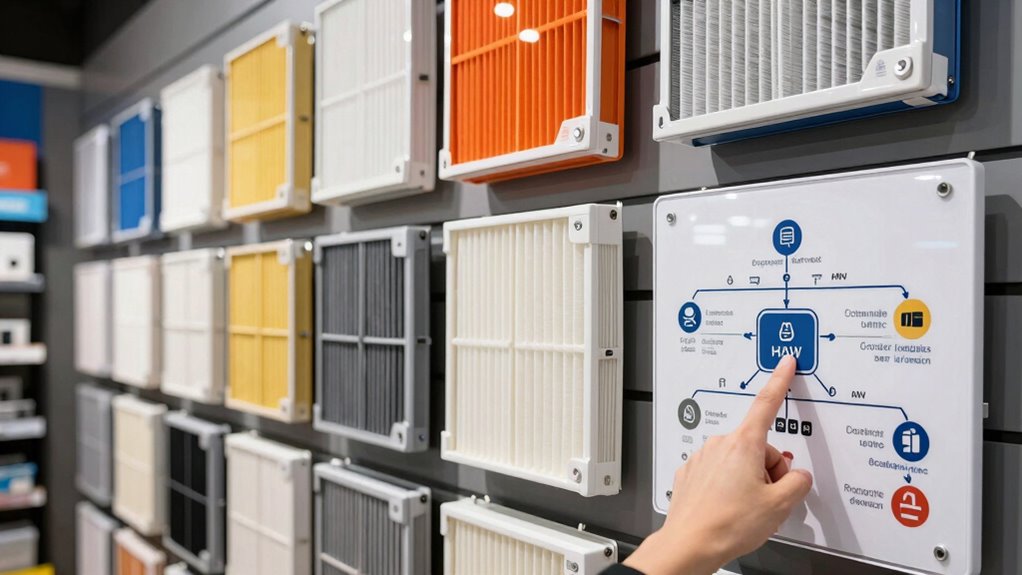

To upgrade your HVAC filters wisely, follow a clear decision tree that considers your indoor air quality needs, system compatibility, and environmental conditions. Start by choosing a filter with a suitable MERV rating—13 or higher for better filtration—while ensuring your system can handle it. Balance air quality improvements with energy efficiency, and always check manufacturer recommendations. Regularly inspect and replace filters to prevent damage and maintain performance. Keeping these steps in mind helps avoid costly mistakes—more tips await to guide you further.

Get home appliances delivered free — and shop member deals
- Fast, free delivery on millions of items
- Access to Prime Big Deal Days deals on October 6–7
- Prime Video, Amazon Music and more included
Key Takeaways
- Guides selecting the optimal filter MERV rating based on your HVAC system and environmental needs.
- Prevents airflow restrictions and system damage by recommending compatible filter options.
- Balances indoor air quality improvements with energy efficiency considerations.
- Incorporates environmental factors and climate conditions to recommend suitable filters.
- Emphasizes proper installation, maintenance, and regular inspection to avoid costly system repairs.

Choosing the right HVAC filter can seem overwhelming, but a clear decision tree can simplify the process. When you’re aiming to improve your home’s air quality and boost energy efficiency, the choices can feel endless. The key is understanding how different filters impact these two priorities. High-efficiency filters, like MERV 13 or higher, can trap more airborne particles, notably improving air quality. If you or your family members suffer from allergies or respiratory issues, opting for a filter with a higher MERV rating makes sense. These filters capture pollen, dust mites, pet dander, and even some bacteria, creating a cleaner, healthier indoor environment.
However, it’s important to remember that higher MERV ratings can sometimes restrict airflow, which might reduce your system’s energy efficiency. When airflow is restricted, your HVAC system has to work harder, consuming more energy and increasing your utility bills. That’s why your decision tree should consider the balance between air quality and energy efficiency. If your system isn’t designed for high-MERV filters, it could lead to increased wear and tear or even system failure over time. To avoid this, check your manufacturer’s recommendations. Most systems are optimized for filters rated between MERV 8 and 13, which strike a good balance between filtering capability and maintaining airflow.
Next, consider your climate and the environment inside your home. If you live in an area with high pollution levels or have pets, you’ll want a filter that can handle more particulates without overly restricting airflow. Additionally, selecting filters with appropriate filtration materials can further enhance your system’s performance. Using proper installation techniques is also vital to ensure the filter functions as intended and maintains consistent airflow. Regularly inspecting and replacing filters based on environmental conditions can help maintain optimal airflow and filtration efficiency. Incorporating proper maintenance routines is also crucial to ensure your system functions efficiently over time. Conversely, if your system is older or you’re concerned about energy efficiency, sticking to a lower MERV rating might be better.
As an affiliate, we earn on qualifying purchases.
Frequently Asked Questions
How Often Should I Replace My HVAC Filter?
You should replace your HVAC filter every 1 to 3 months, depending on your filter’s lifespan and your home’s specific needs. Consider factors like allergies, pets, and air quality, which can shorten the replacement schedule. Regularly checking the filter’s condition guarantees peak airflow and efficiency. A good rule of thumb is to monitor it monthly and change it when it looks dirty or clogged, maintaining a healthy indoor environment.
Can a Better Filter Improve Indoor Air Quality?
Imagine breathing in fresh, clean air that lifts your spirits and eases allergy symptoms. Upgrading to a better filter markedly improves air purification, capturing tiny particles and allergens your old filter missed. This means allergy relief and healthier indoor air for you and your loved ones. A high-quality filter creates a cleaner environment, reducing dust, pollen, and pollutants, making every breath a revitalizing, soothing experience.
Are There Eco-Friendly Filter Options Available?
Yes, eco-friendly filters are available. You can choose options made from eco-friendly materials like recycled fibers or plant-based substances. Renewable options such as biodegradable filters or those with minimal environmental impact help reduce waste. These filters perform well while supporting sustainability. When selecting a filter, look for certifications or labels indicating eco-friendliness to guarantee you’re making an environmentally conscious choice that benefits indoor air quality and the planet.
How Do I Know if My Filter Is Compatible With My System?
To know if your filter is compatible with your system, check your HVAC manual for supported filter sizes and MERV ratings. Look at your current filter’s material—like pleated or electrostatic—to match or upgrade appropriately. Consider installation tips such as guaranteeing a snug fit without gaps, and always verify the filter’s dimensions before buying. This way, you guarantee peak performance and avoid system strain.
What Are the Signs of a Clogged or Dirty Filter?
You’ll notice airflow reduction when your HVAC system struggles to circulate air effectively, making rooms feel stuffy or less comfortable. A dirty filter also shortens its lifespan, leading to more frequent replacements. If you hear unusual noises or see dust buildup around vents, it’s a clear sign your filter needs cleaning or changing. Regularly checking your filter helps maintain peak airflow and prevents unnecessary strain on your system.
As an affiliate, we earn on qualifying purchases.
Conclusion
By following this HVAC filter upgrade decision tree, you’ll confidently avoid the nightmare of endless guesswork and sky-high costs. No more sweating over whether to upgrade or stick with the old. With each decision, you’ll feel like a hero, saving your wallet from disaster and your air quality from chaos. Embrace this guide, and watch your home transform into a fortress of clean, fresh air—your ultimate victory against costly mistakes!
As an affiliate, we earn on qualifying purchases.
As an affiliate, we earn on qualifying purchases.
Fall Picks
fall essentials
As an affiliate, we earn on qualifying purchases.