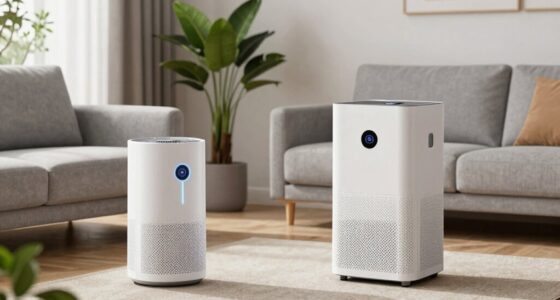
To build a whole-house humidity map without fancy equipment, start by placing affordable hygrometers in central spots and key rooms like bedrooms, bathrooms, and kitchens. Record humidity levels regularly and watch for signs like condensation or dry spots. Track the readings over time and note patterns to identify areas needing attention. By systematically monitoring and adjusting, you’ll better understand your home’s moisture levels—keep going to discover more tips for effective humidity management.
Key Takeaways
- Use affordable hygrometers or DIY moisture indicators placed in key rooms to record humidity levels regularly.
- Measure humidity in central areas, bedrooms, bathrooms, and kitchens for comprehensive coverage.
- Keep a simple log or chart of readings to visualize humidity patterns throughout the house.
- Observe signs like condensation or dry spots alongside measurements to identify problem zones.
- Update your humidity map periodically to track changes and adjust moisture control strategies accordingly.
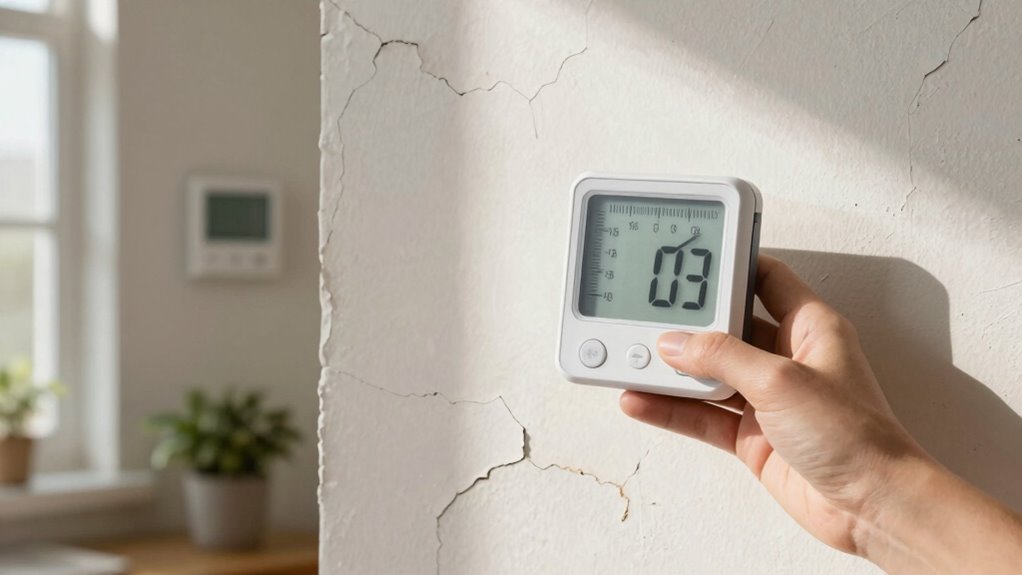
Creating a whole-house humidity map may seem intimidating, but it’s an essential step in guaranteeing your home stays comfortable and healthy. You don’t need fancy equipment—just some simple tools, a keen eye, and a bit of patience. The goal is to identify areas with too much moisture or dryness, so you can take targeted actions to balance humidity levels throughout your home. Start by understanding that different rooms can have varying humidity levels, especially if you have indoor plants, which tend to increase moisture indoors, or if your HVAC system isn’t maintaining proper airflow and moisture control. Regular HVAC maintenance can help keep your entire system functioning efficiently, but mapping out humidity levels gives you a clearer picture of where issues may lie.
To begin, grab a reliable hygrometer, which is an affordable device that measures humidity. Place one in a central area of your home, like the living room, and record the reading. Then, move this hygrometer to other key spots—bedrooms, bathrooms, kitchens, and near indoor plants—taking note of the readings at each location. If certain zones show humidity below 30%, your home is likely too dry, which can cause discomfort and damage to wood furniture or indoor plants. Conversely, readings above 60% indicate excessive moisture, risking mold growth and poor indoor air quality.
As you survey your home, pay attention to areas where moisture seems excessive or where you notice condensation on windows or walls. These spots often correspond with high humidity levels. Use this information to adjust your approach. For example, if a room with indoor plants shows higher-than-desirable humidity, consider relocating some plants or increasing ventilation. Proper HVAC maintenance, including changing filters and inspecting ducts, ensures your system helps regulate humidity effectively, preventing hot spots of moisture or overly dry zones. Additionally, understanding the science of humidity can help you make more informed decisions about managing moisture levels. Incorporating humidity control methods into your routine can further enhance your home’s comfort. Knowing how to interpret your humidity readings can also assist you in choosing the right moisture management tools for your specific needs. Regularly updating your humidity map can help you identify patterns and make proactive adjustments over time.
Take notes of your findings to create a rough map of humidity levels across your home. If certain rooms are consistently too dry, adding a humidifier might help, especially in winter. If some spaces are too damp, using exhaust fans or dehumidifiers can make a difference. Remember, a whole-house humidity map isn’t static—it’s a tool to guide your ongoing adjustments. Regularly checking humidity levels and maintaining your HVAC system will keep your home comfortable, protect your indoor plants, and reduce the risk of mold or damage caused by improper moisture levels. By taking these simple steps, you create a healthier living environment without the need for expensive tools or complex procedures.

TempPro TP50 Digital Hygrometer Indoor Thermometer Room Thermometer and Humidity Gauge with Temperature Humidity Monitor(Previously ThermoPro)
Wellness Indicator: This humidity meter with humidity level icon indicates air conditions – DRY/COMFORT/WET, allowing this humidity sensor…
As an affiliate, we earn on qualifying purchases.
As an affiliate, we earn on qualifying purchases.
Frequently Asked Questions
Can I Use Household Items to Measure Humidity Levels Accurately?
You can use household items for DIY humidity sensors, but their accuracy is limited. Common household items like wet/dry bulbs or simple hygrometers can give you a rough idea of humidity levels, but they aren’t precise. For better accuracy, consider using multiple sensors and comparing results over time. Keep in mind, household item accuracy varies, so don’t rely solely on them for critical measurements—use them as a general guide.
How Often Should I Update My Humidity Map?
You should update your humidity map regularly, about once every month, to guarantee accuracy. During this process, perform DIY calibration on your sensors to account for any drift and verify consistent readings. Pay attention to sensor placement, making sure it’s in a central, stable location away from direct sources of humidity or dryness. Consistent updates help you track changes and maintain a comfortable, balanced indoor environment.
Is There a Specific Location to Place Humidity Sensors?
For sensor placement, focus on ideal locations where humidity levels vary, like the living room, bedrooms, and basement. Avoid placing sensors near windows, doors, or vents, as drafts can skew readings. Keep sensors at eye level for accuracy, and space them evenly throughout your home. Proper sensor placement guarantees you get an extensive humidity map, helping you maintain a comfortable and healthy environment.
What Signs Indicate Uneven Humidity Throughout My House?
Uneven humidity is like a storm brewing inside your home, signaling trouble ahead. You might notice condensation on windows, musty odors, or paint peeling, all signs of imbalance. Humidity sensors help identify these issues early, aiding mold prevention. If certain rooms feel damp while others are dry, it’s time to check your humidity levels. Addressing these signs keeps your home comfortable and reduces mold risks, protecting your health and property.
How Do Temperature Fluctuations Affect Humidity Readings?
Temperature fluctuations can skew your humidity readings because warm air holds more moisture, while cooler air holds less. To get accurate measurements, you need temperature stabilization and humidity calibration. When your home’s temperature varies, your readings may seem inconsistent. Use a consistent temperature environment or calibrate your humidity sensor regularly, especially after temperature changes. This way, you’ll guarantee your humidity map accurately reflects your home’s true moisture levels.
TempPro TP50 Digital Hygrometer Indoor Thermometer Room Thermometer and Humidity Gauge with Temperature Humidity Monitor(Previously ThermoPro)
Wellness Indicator: This humidity meter with humidity level icon indicates air conditions – DRY/COMFORT/WET, allowing this humidity sensor…
As an affiliate, we earn on qualifying purchases.
As an affiliate, we earn on qualifying purchases.
Conclusion
By mapping your home’s humidity levels, you wield the power to transform your living space into a perfectly balanced oasis—more precise than a top-secret government lab! With just some simple tools and sharp eyes, you can uncover secrets hidden in every corner, preventing mold invasions and energy waste. Soon, you’ll command your environment with the finesse of a maestro, turning chaos into harmony—making your home the ultimate fortress of comfort and health, all without fancy gadgets!
TempPro TP50 Digital Hygrometer Indoor Thermometer Room Thermometer and Humidity Gauge with Temperature Humidity Monitor(Previously ThermoPro)
Wellness Indicator: This humidity meter with humidity level icon indicates air conditions – DRY/COMFORT/WET, allowing this humidity sensor…
As an affiliate, we earn on qualifying purchases.
As an affiliate, we earn on qualifying purchases.
TempPro TP50 Digital Hygrometer Indoor Thermometer Room Thermometer and Humidity Gauge with Temperature Humidity Monitor(Previously ThermoPro)
Wellness Indicator: This humidity meter with humidity level icon indicates air conditions – DRY/COMFORT/WET, allowing this humidity sensor…
As an affiliate, we earn on qualifying purchases.
As an affiliate, we earn on qualifying purchases.