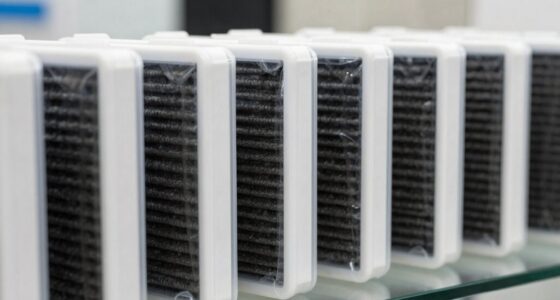
You might not realize that changing your carbon canister size can subtly impact your vehicle’s performance and emissions. Larger canisters store more fuel vapors, reducing emissions, while smaller ones save space and weight but may compromise vapor containment. Improper sizing can increase fuel consumption, trigger warning lights, or cause engine issues. These changes often happen without notice but can influence your vehicle’s efficiency and environmental compliance. Keep exploring to discover how these adjustments could affect your driving experience.
Key Takeaways
- Changes in canister size can significantly impact vapor containment and vehicle emissions.
- Manufacturers adjust canister sizes to meet evolving environmental regulations.
- Improper sizing may lead to increased fuel consumption and emissions issues.
- Visual inspection often doesn’t reveal size changes, requiring diagnostic testing.
- Size modifications can influence overall vehicle performance and fuel economy over time.
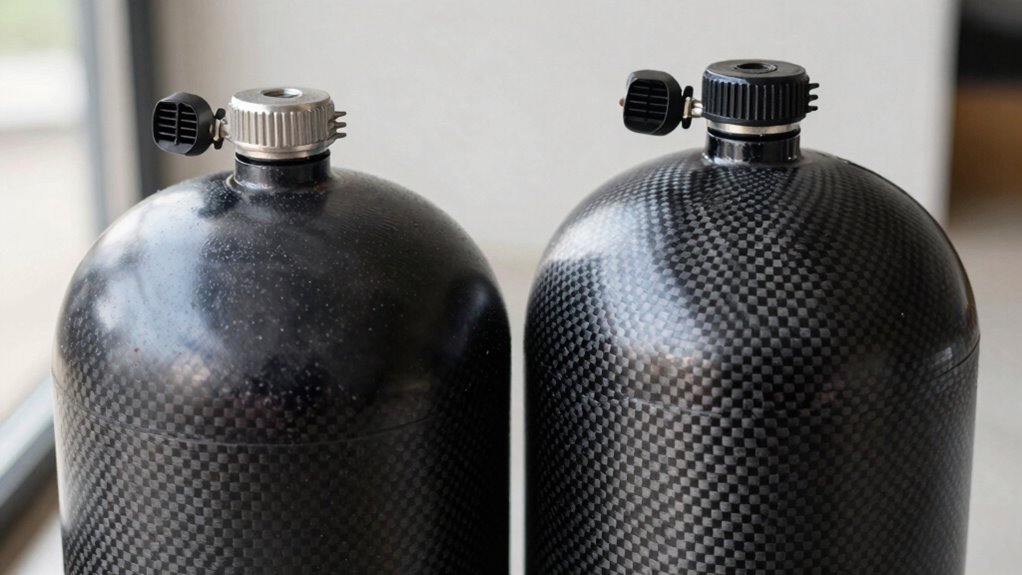
Have you noticed changes in your vehicle’s carbon canister size recently? It might seem like a minor detail, but these adjustments can considerably impact your car’s overall performance. The carbon canister is an essential part of your vehicle’s emission control system, designed to trap fuel vapors from the tank and prevent them from escaping into the atmosphere. When the size of this component changes—whether it’s larger or smaller than the original—it can influence how efficiently your vehicle manages these vapors, which in turn affects both fuel efficiency and emission control.
Changes in your vehicle’s carbon canister size can impact fuel efficiency and emissions management.
You might not realize it, but manufacturers are increasingly adjusting the size of the carbon canister to meet evolving environmental standards and regulations. Sometimes, a larger canister is used to increase vapor storage capacity, which helps in reducing emissions during idle or low-demand conditions. Conversely, a smaller canister might be employed to save space or reduce weight, though this can sometimes compromise the system’s ability to hold vapors effectively. These changes, often subtle and not immediately obvious to the average buyer, can lead to noticeable differences in how your vehicle performs over time.
When the canister size shifts, it can influence your fuel efficiency. If the canister isn’t able to trap and release vapors properly, your engine may need to work harder to manage fuel vapor emissions, leading to increased fuel consumption. This inefficiency can go unnoticed at first but adds up over the lifespan of your vehicle. Additionally, a mismatched or improperly sized canister can cause increased emissions, which isn’t just bad for the environment but can also trigger warning lights or diagnostic trouble codes. An improper size can also affect the evaporative emissions system, potentially causing compliance issues with emission standards. Understanding the size variations and their impact on your vehicle’s emission system can help you better diagnose potential problems early.
It’s important to recognize that these size changes aren’t always immediately visible or obvious during routine maintenance. Many car owners overlook the importance of the carbon canister, assuming it’s just a small, insignificant part. However, because it plays such a critical role in emission control and fuel efficiency, any alteration to its size or function warrants attention. If you notice your vehicle’s emissions system acting up or a sudden decrease in fuel economy, it might be worth having a mechanic check whether your canister’s size or condition is contributing to the problem.
Ultimately, understanding that carbon canister size changes are more common than most buyers realize helps you stay alert to potential performance issues. Being proactive about maintenance and diagnostics can save you money in the long run while ensuring your vehicle remains compliant with emission standards.

1K0201801E Carbon Canister, ABS Plastic Activated Carbon Canister Charcoal Can & Hose Replacement Car Carbon Canister 1K0201797AE, 1K0201797AF, 1K0201797AB, 1K0201801E, 1K0201160BG, 1K0201797R
- Interchange Part Numbers: Multiple compatible part numbers
- Compatibility Note: Verify part number before purchase
- Easy Installation: Direct replacement for original
As an affiliate, we earn on qualifying purchases.
As an affiliate, we earn on qualifying purchases.
Frequently Asked Questions
How Does Canister Size Affect Vehicle Emissions?
A larger canister size helps reduce evaporative emissions by storing more fuel vapors, preventing them from escaping into the atmosphere. It also improves the efficiency of the charcoal or other canister materials used to trap these vapors. When the canister size increases, your vehicle effectively contains and manages evaporative emissions, lowering pollution. This means you’ll experience better emissions control, and your vehicle stays environmentally friendly with ideal canister material performance.
Are Larger Canisters More Durable?
Larger canisters are often more durable, acting like a sturdy fortress for your vehicle’s emissions system. Their durability depends on canister material and manufacturing variations, which influence how well they withstand wear and tear. When built with high-quality materials and precise manufacturing, these canisters resist cracking and deterioration longer. So, yes, bigger canisters generally last longer, giving you peace of mind and better protection against emissions-related issues.
Do Size Changes Impact Fuel Efficiency?
Yes, canister capacity changes can impact your fuel economy. A larger carbon canister often stores more fuel vapors, reducing emissions and helping your vehicle run efficiently. Conversely, a smaller canister might struggle to contain vapors properly, possibly leading to fuel wastage and decreased fuel economy. Keep in mind, these size adjustments are usually designed to optimize emissions control, which can ultimately benefit your vehicle’s overall performance and fuel efficiency.
Can Canister Size Vary by Vehicle Model?
Is the size of a carbon canister a one-size-fits-all? Absolutely not. Canister size varies by vehicle model, influenced by manufacturing variations and specific vehicle compatibility needs. You’ll find that different cars require different canister dimensions to optimize emissions control and space. So, when replacing or upgrading, always check your vehicle’s specifications to verify compatibility. Ignoring these differences could lead to poor performance or even damage.
How Often Should a Carbon Canister Be Replaced?
You should replace your carbon canister every 50,000 to 100,000 miles, depending on your vehicle and driving conditions. Regular air filtration checks can help identify when it’s time for a replacement. Proper vehicle maintenance guarantees your canister functions efficiently, preventing emissions issues. Keep an eye out for symptoms like fuel smell or poor engine performance, and consult your mechanic for advice on maintaining ideal emissions control.
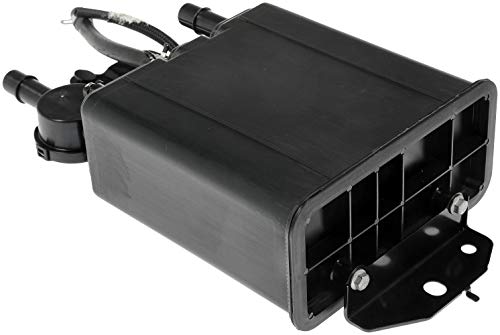
Dorman 911-447 Evaporative Emissions Charcoal Canister
- Direct Replacement: Matches original canister performance
- Restores Emissions Control: Clears check engine light and passes inspection
- Application Specific: Engineered for specific vehicle models
As an affiliate, we earn on qualifying purchases.
As an affiliate, we earn on qualifying purchases.
Conclusion
You might not notice the quiet shift in a carbon canister’s size, but it’s like a hidden tide shaping the vehicle’s breath. When these canisters swell or shrink, they’re silently adjusting their sails, guiding your car’s emissions and performance. So, next time you see a seemingly small change, remember it’s part of a bigger ocean of engineering, working beneath the surface to keep your ride smooth and eco-friendly. Sometimes, the smallest ripples make the biggest waves.

Standard Motor Products Fuel Vapor Canister – CP3072
- Product Type: Auto Part
- Fit Type: Vehicle Specific
- Package Weight: 1.979 kg
As an affiliate, we earn on qualifying purchases.
As an affiliate, we earn on qualifying purchases.

Psrorkeu Purge Control Canister Replaces 911-478
- Vehicle Compatibility: Fits various Chevrolet and GMC models (1987-1996)
- OEM Replacement: Replaces OEM part numbers 911-478 and 17087115
- Emission Performance: Restores emissions, reduces fuel odors, clears CEL
As an affiliate, we earn on qualifying purchases.
As an affiliate, we earn on qualifying purchases.