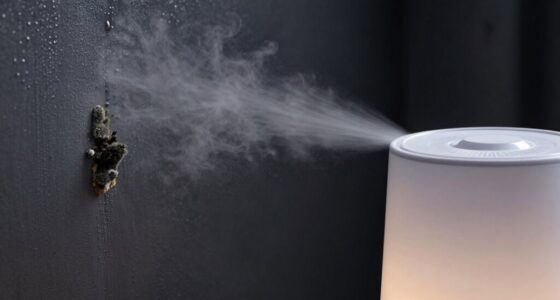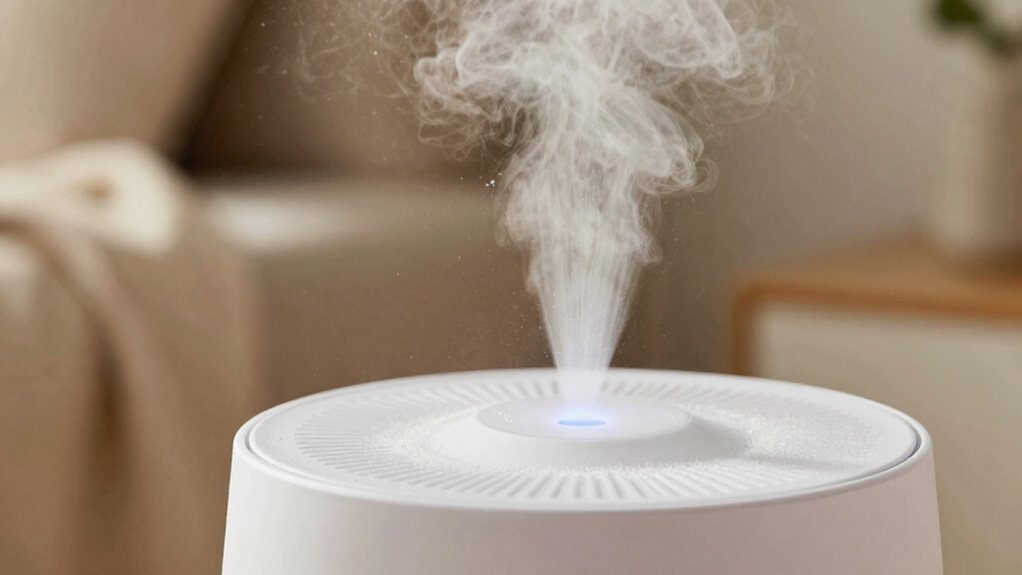

Ultrasonic humidifiers produce white dust because they aerosolize minerals like calcium and magnesium from tap water along with the mist, leaving tiny mineral particles behind as residue. This dust isn’t harmful but can cause surface buildup and cleaning issues. Using distilled or filtered water helps reduce this residue. Proper maintenance also prevents mineral buildup and keeps your device working well. Keep exploring to learn how to minimize white dust and improve your indoor air quality.

Get home appliances delivered free with Prime
- Fast, free delivery on millions of items
- Prime Video, Amazon Music and more included
- Member-only deals all year
Key Takeaways
- White dust forms when minerals in tap water, like calcium and magnesium, are aerosolized during ultrasonic humidifier operation.
- Hard water increases mineral buildup and the amount of white dust released into the air.
- Regular use of distilled or filtered water reduces mineral content and minimizes white dust formation.
- Proper cleaning and maintenance prevent mineral deposits and reduce dust buildup inside and outside the device.
- White dust is non-harmful but can cause surface residue and impact indoor air quality over time.
distilled water for ultrasonic humidifier
As an affiliate, we earn on qualifying purchases.
As an affiliate, we earn on qualifying purchases.
Why Does My Ultrasonic Humidifier Leave White Dust?
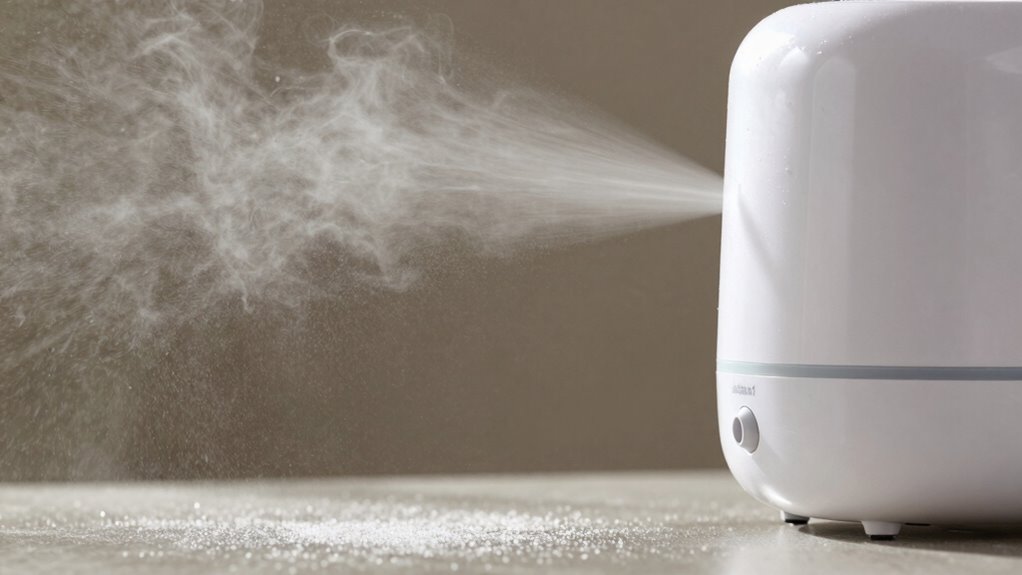
If you notice white dust settling around your ultrasonic humidifier, it’s often due to mineral particles from your water supply. These tiny minerals, like calcium and magnesium, become aerosolized during humidifier operation. Poor humidifier maintenance can worsen the buildup of white dust, as neglected units may not filter or clean minerals effectively. The white dust causes are primarily linked to hard water, which contains high mineral content. When the ultrasonic vibrations turn water into mist, these minerals are released into the air along with water vapor, settling as white residue. Regular cleaning and using distilled or filtered water can help reduce mineral buildup. Additionally, understanding the role of water quality can guide you in choosing the best filters or water purifiers. Recognizing mineral content in water is essential to prevent excess white dust and maintain healthy indoor air quality. Being aware of mineral levels in water can help you make informed decisions about water treatment options. Proper humidifier maintenance also plays a crucial role in minimizing white dust buildup and ensuring optimal operation. Understanding these white dust causes is essential to keeping your humidifier functioning properly and maintaining clean indoor air.
humidifier mineral filter replacement
As an affiliate, we earn on qualifying purchases.
As an affiliate, we earn on qualifying purchases.
How Can I Prevent White Dust From Ultrasonic Humidifiers?

To prevent white dust from your ultrasonic humidifier, start by using distilled water instead of tap water. Make sure you clean the unit regularly to remove mineral buildup. These simple steps can substantially reduce white dust and keep your air cleaner. Additionally, choosing free floating water sources can help minimize mineral deposits that contribute to white dust formation. Using ultrasonic technology can also reduce the amount of mineral dust released into the air, as it produces finer mist particles. Implementing performance parts like specialized filters can further improve indoor air quality by capturing any residual particles. Regularly inspecting and maintaining your humidifier according to manufacturer guidelines can also ensure optimal performance and reduce mineral residue.
Use Distilled Water
Using distilled water in your ultrasonic humidifier is one of the most effective ways to prevent white dust from forming. Because distilled water has fewer minerals, it reduces mineral buildup and residue. This not only makes humidifier maintenance easier but also improves the overall water quality you’re relying on. To see the difference, consider how mineral content impacts dust levels:
| Water Type | Mineral Content | Dust Formation |
|---|---|---|
| Tap Water | High | More dust |
| Filtered Water | Moderate | Less dust |
| Distilled Water | Very Low | Minimal dust |
| Spring Water | Variable | Unpredictable |
| Boiled Water | Slightly Reduced | Slight dust |
Switching to distilled water keeps your unit cleaner and prolongs its lifespan, making your humidifier safer and more efficient. Proper indoor air quality practices also help maintain a healthy environment by reducing airborne particles. Additionally, understanding large number conversions can be helpful when assessing water usage or maintenance costs.
Regularly Clean Unit
Regularly cleaning your ultrasonic humidifier is essential for preventing white dust buildup. Proper humidifier maintenance helps minimize mineral deposits that cause residue. You should clean the unit at least once a week, including emptying, rinsing, and scrubbing the tank to remove any mineral buildup. Use gentle, non-abrasive cleaners to avoid damaging components. Regular cleaning prevents mineral deposits from accumulating and dispersing into the air as white dust. Additionally, ensure the water reservoir is dry when not in use to inhibit bacterial growth. Incorporating routine maintenance reduces the likelihood of white dust and keeps your humidifier functioning efficiently. mineral deposits can be reduced by using distilled or demineralized water instead of tap water. Using appropriate water quality can further prevent buildup, and consider using water treatment options such as filter cartridges or water additives designed for ultrasonic humidifiers.
ultrasonic humidifier cleaning kit
As an affiliate, we earn on qualifying purchases.
As an affiliate, we earn on qualifying purchases.
What Is White Dust Made Of in Ultrasonic Humidifiers?

White dust in ultrasonic humidifiers mainly consists of mineral particles from your tap water that are turned into fine mist. These particles originate from the water’s mineral content, which varies depending on your local supply. Ultrasonic technology vibrates at high frequency to create mist, but it doesn’t filter out minerals. As a result, tiny mineral particles become suspended in the mist and settle as white dust on nearby surfaces. The more mineral-rich your water is, the more white dust you’ll notice. This dust isn’t harmful but can be annoying and may cause buildup in your humidifier. To reduce white dust, using distilled or demineralized water is recommended, as it has fewer minerals and won’t produce as much residue.
As an affiliate, we earn on qualifying purchases.
Does Water Hardness Cause More White Dust?
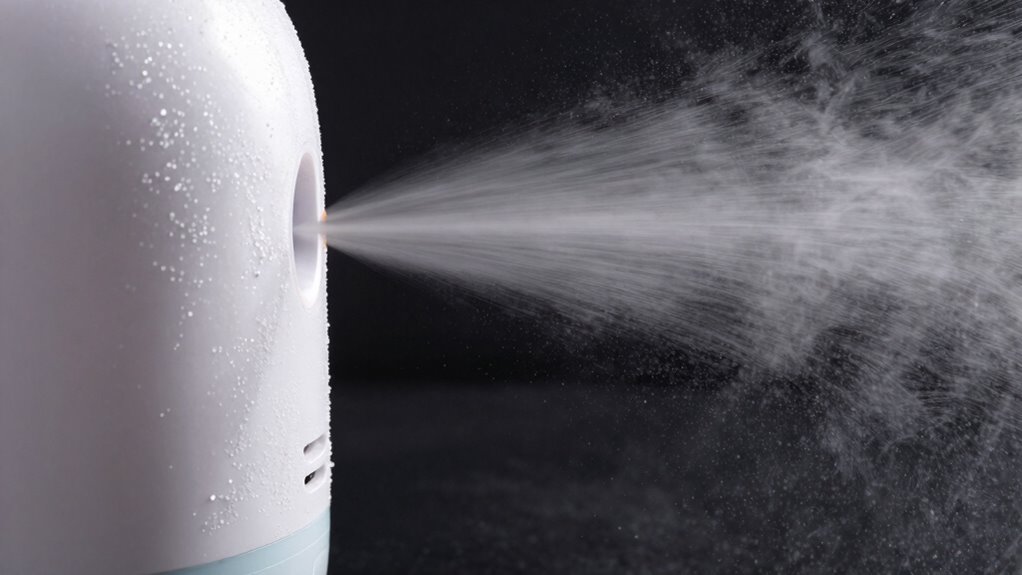
If your water has high mineral levels, you might notice more white dust from your humidifier. Hard water contains minerals that can increase the amount of residue left behind. As mineral concentration rises, so does the likelihood of seeing more white dust settling around your device. Properly sizing and maintaining filters can help reduce mineral buildup and improve humidifier performance filter sizing/flow. Using distilled or demineralized water can significantly decrease white dust and support healthier indoor air quality air quality benefits. Additionally, understanding regional water quality can help you make informed choices about water treatment options to minimize white dust formation regional water quality. Recognizing the role of water hardness in mineral buildup can also help you manage residue and maintain optimal humidifier function.
Hard Water Content
Hard water contains higher levels of minerals like calcium and magnesium, which can substantially influence the formation of white dust. During the evaporation process in your humidifier, mineral-rich water mineralization occurs, leaving behind particles that become white dust. The more minerals in your water, the more residue you’ll notice. To understand this better, consider the following:
| Mineral Level | Impact on White Dust |
|---|---|
| Low | Minimal residue |
| High | Increased residue |
| Boiling | Concentrates minerals |
| Evaporation | Leaves mineral deposits |
These minerals don’t evaporate with water, so they settle as white dust. Using hard water accelerates residue formation because of the higher mineral content affecting the evaporation process. Mineral content plays a crucial role in how much white dust your humidifier produces.
Mineral Concentration Effects
Higher mineral concentrations in water substantially increase the amount of white dust produced by your humidifier. When minerals like calcium and magnesium are present in higher amounts, they don’t fully evaporate; instead, they settle as mineral buildup inside the device. This buildup contributes directly to dust formation, as tiny mineral particles are released into the air with the mist. The denser the mineral content, the more dust your humidifier will generate. This dust isn’t just a nuisance—it can settle on furniture and irritate your respiratory system. To reduce dust formation caused by high mineral levels, consider using distilled or demineralized water, which contains fewer minerals and minimizes mineral buildup in your humidifier.
Are Mineral Particles From Humidifiers Harmful to Your Health?

Mineral particles from humidifiers can pose health concerns, especially when they become airborne and are inhaled. Breathing in these airborne particles may affect your respiratory health over time. While many believe these minerals are harmless, they can contribute to irritation or inflammation in sensitive individuals. Consider these points:
Mineral particles from humidifiers can irritate your respiratory system over time.
- Inhaled mineral dust can aggravate asthma or allergies.
- Fine particles may reach deep into your lungs, affecting respiratory function.
- Long-term exposure might increase the risk of respiratory issues.
- Children and those with pre-existing conditions are more vulnerable to these effects.
Although mineral particles aren’t inherently toxic, their presence in your indoor air can compromise respiratory health, especially with prolonged exposure. Staying informed helps you minimize potential risks associated with mineral dust from humidifiers.
Should I Use Distilled or Filtered Water in My Humidifier?

Using distilled or filtered water in your humidifier can considerably reduce mineral dust and airborne particles, helping to protect your respiratory health. The quality of water you choose directly impacts mineral buildup inside the device and the amount of white dust released into the air. Tap water often contains minerals that settle and cause residue over time, leading to more frequent cleaning and potential damage. Switching to distilled or filtered water minimizes mineral content, lessening residue and prolonging your humidifier’s lifespan. It also improves indoor air quality by reducing airborne particles that can trigger allergies or respiratory issues. While filtered water may be more convenient and affordable, distilled water provides the purest option, ensuring minimal mineral presence and cleaner operation overall.
Which Ultrasonic Humidifiers Minimize White Dust?

If minimizing white dust is a priority, look for ultrasonic humidifiers designed with features that reduce mineral dispersion. Some models utilize advanced ultrasonic technology that minimizes mineral buildup and disperses fewer mineral particles into the air. To help you choose, consider these options:
Choose ultrasonic humidifiers with mineral-reducing features to minimize white dust effectively.
- High-frequency ultrasonic transducers – produce finer mist with less mineral dispersion.
- Mineral filter or ionizer attachments – capture minerals before dispersal.
- Use of demineralization cartridges – reduce mineral content in water.
- Adjustable output settings – control mist intensity to limit mineral spread.
These features can markedly decrease white dust by controlling how minerals are released into the air, making your humidifier more efficient and cleaner. Always check product specifications for these mineral-reducing technologies.
How Often Should I Clean My Humidifier to Prevent Dust Buildup?
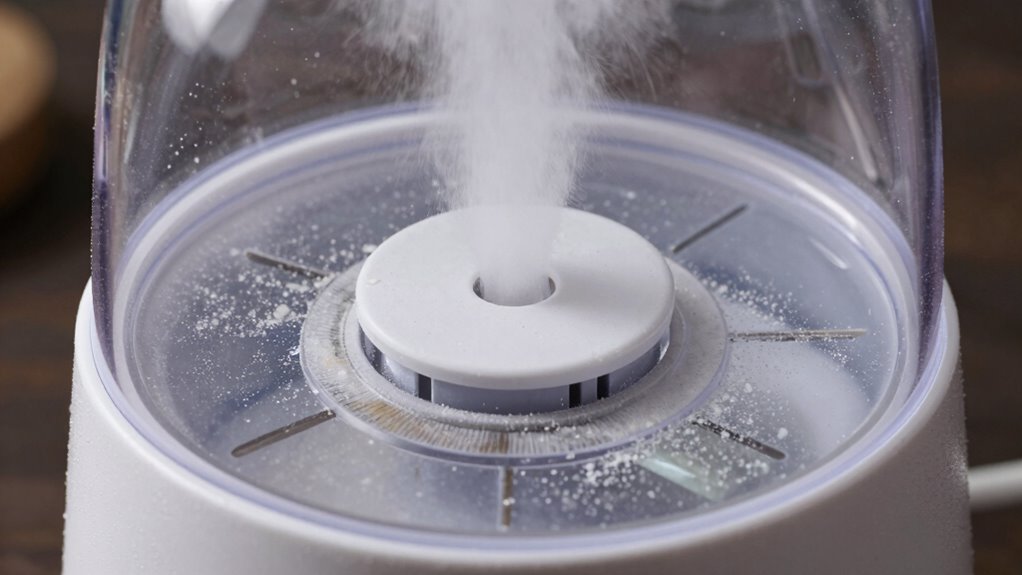
Regularly cleaning your humidifier is essential to prevent dust buildup and guarantee healthy air quality. The frequency of cleaning depends on your water quality and usage, but a good rule is to clean it at least once a week. If you use hard water, you might need to clean it more often to remove mineral deposits that contribute to white dust. Establishing a consistent cleaning schedule helps prevent bacteria, mold, and mineral buildup that can lead to dust residue. Empty and dry your humidifier daily, and thoroughly disinfect it during each cleaning session. This routine minimizes residue, maintains ideal performance, and ensures you breathe clean, dust-free air. Adjust your cleaning frequency based on water quality and how often you use the device.
Frequently Asked Questions
Can White Dust Damage My Humidifier’s Components?
White dust can damage your humidifier’s components if you neglect proper humidifier maintenance. Mineral buildup from high water mineral content can clog or corrode parts over time. To prevent this, use distilled or filtered water and clean your humidifier regularly. These steps help minimize residue, protect your device, and guarantee it functions efficiently, extending its lifespan and maintaining good air quality in your space.
Does Using Bottled Water Reduce White Dust Formation?
Using bottled water can ensure white dust formation in your ultrasonic humidifier. Bottled water benefits include lower mineral content, which helps prevent mineral deposits and dust buildup. To minimize dust, you should also consider dust reduction methods like regular cleaning and using distilled water. These steps keep your humidifier running efficiently, protect its components, and guarantee the air you breathe stays cleaner and healthier.
How Does White Dust Affect Indoor Air Quality Long-Term?
Imagine someone develops frequent coughing and allergies after using an ultrasonic humidifier with tap water. White dust can settle in your home, degrading indoor air quality over time. This residue may contain minerals that compromise air purification and irritate your respiratory health. Long-term, it can cause persistent respiratory issues, especially for allergy sufferers. To protect your health, consider using distilled water and maintaining proper ventilation, reducing the risk of dust buildup.
Are There Specific Filters That Can Eliminate White Dust?
Yes, there are filters designed to eliminate white dust by improving water filtration and mineral removal. You should look for ultrasonic humidifiers with built-in mineral filters or use external demineralization cartridges. These filters trap minerals before they vaporize, reducing white dust. Regularly replacing or cleaning these filters guarantees they work effectively, helping you maintain cleaner indoor air and prevent residue buildup in your humidifier and surroundings.
Is White Dust Visible on Furniture or Clothing?
Have you ever noticed white dust on your furniture or clothing? It’s common to see furniture stains or clothing discoloration caused by ultrasonic humidifier residue. This white dust can settle on surfaces, making them look dull or dirty. Do you want to keep your belongings looking fresh? Regular cleaning and using filtered water can reduce visible dust, helping your furniture and clothes stay cleaner longer.
Conclusion
To keep your air clean, your home safe, and your comfort high, choose the right water, clean your humidifier regularly, and stay informed. Prevent white dust from settling, protect your health from mineral particles, and enjoy the benefits of a well-maintained environment. By taking these simple steps, you guarantee freshness, safety, and peace of mind. Stay proactive, stay vigilant, and breathe easier every day.
Halloween Picks
halloween
As an affiliate, we earn on qualifying purchases.