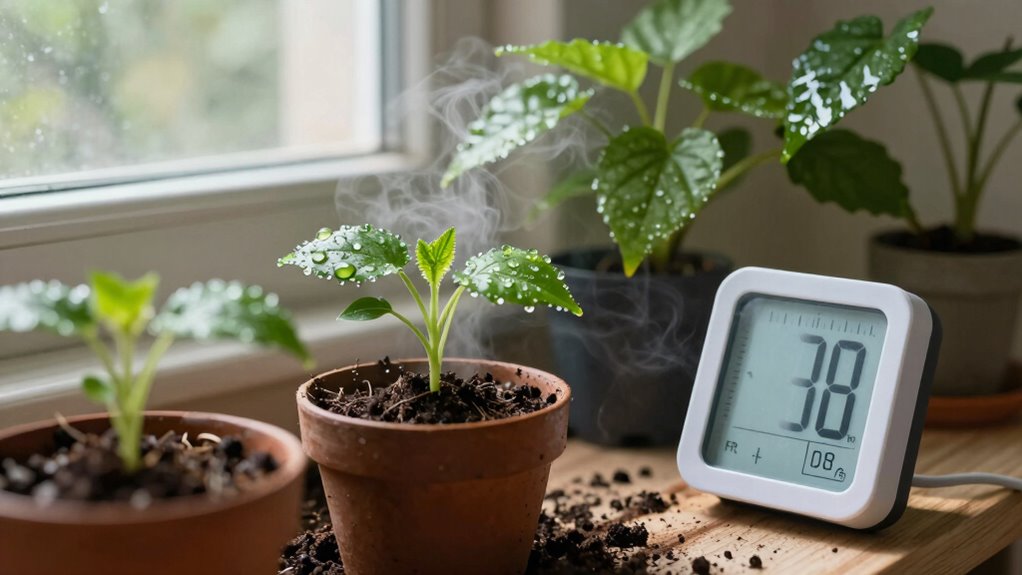

Maintaining stable humidity in spring and fall is trickier because temperatures and weather patterns fluctuate more than in winter. You need to actively monitor and adjust humidifiers, dehumidifiers, and fans to respond to sudden changes—like hot afternoons or cool mornings. Seasonal swings can cause dry or overly moist environments, increasing risks of plant stress or disease. If you stay vigilant and adapt quickly, you’ll better manage these unpredictable conditions and keep your plants healthy. To discover how, keep exploring further.

Get home appliances delivered free with Prime
- Fast, free delivery on millions of items
- Prime Video, Amazon Music and more included
- Member-only deals all year
Key Takeaways
- Spring and fall have fluctuating temperatures and weather, causing unpredictable humidity levels that are harder to control than winter’s stable conditions.
- Seasonal shifts require continuous adjustment of humidifiers, dehumidifiers, and fans to maintain optimal plant environments.
- Greater temperature swings during spring and fall impact relative humidity more than the steady cold of winter.
- Variable outdoor conditions increase the risk of mold, disease, or plant stress if humidity isn’t carefully managed.
- Maintaining consistent humidity in transitional seasons demands active monitoring and rapid intervention compared to winter.

In spring and fall, the air tends to be more variable—sometimes damp, sometimes dry—making it harder to maintain consistent humidity. If you don’t manage this carefully, you risk either letting the environment become too dry, which can lead to dehydration and weakened plant health, or too moist, which invites fungal issues and root rot. To keep plant health *at its best*, you must actively monitor and adjust climate control systems, such as humidifiers, dehumidifiers, or fans, to match the changing conditions. Using a reliable hygrometer helps you track moisture levels precisely, so you can intervene before problems develop. Humidity regulation is an essential aspect of seasonal nursery management that requires ongoing attention. Understanding the impact of weather patterns on humidity levels can help you anticipate changes more effectively.
Temperature fluctuations during these seasons also affect humidity. Warmer days tend to lower relative humidity, especially if the sun shines strongly, while cooler nights can increase it. These swings mean you need a dynamic approach—perhaps increasing humidity during hot afternoons or venting excess moisture during cooler mornings. Automated climate control systems can help maintain a stable environment, but manual adjustments are often necessary to fine-tune conditions based on real-time data. Recognizing how seasonal variations influence your nursery environment allows for more precise control and healthier plants.
Plant health in spring and fall depends heavily on your ability to manage humidity effectively. Too much moisture can encourage mold, mildew, and other pathogens, while too little can cause plants to become stressed, stunt growth, or drop leaves prematurely. Balancing these factors requires a keen understanding of your specific nursery environment and the needs of your plants. Regularly inspecting plants for signs of stress or disease will alert you to adjust your climate control measures promptly. Additionally, keeping detailed records of humidity fluctuations can help you identify trends and improve your management strategies over time.
In essence, maintaining nursery humidity during spring and fall isn’t a set-it-and-forget-it task. It demands continuous attention, quick adjustments, and a good grasp of weather patterns. By staying proactive with your climate control efforts, you help *guarantee* your plants stay healthy, vigorous, and ready to thrive through seasonal *changes*. Proper humidity management is key to supporting plant health during these tricky months, preventing issues before they can take root.
Products Worth Considering

Levoit Core 600S-P Smart Air Purifier for Large Rooms

Shark HydroVac MessMaster Cordless Wet Dry Vacuum and Mop Combo, AW261

Levoit Core 300S-P Smart Wi-Fi Air Purifier
As an affiliate, we earn on qualifying purchases.
Frequently Asked Questions
How Does Outdoor Humidity Affect Indoor Nursery Conditions in Spring and Fall?
Outdoor humidity considerably impacts your nursery during spring and fall because of seasonal humidity variability. High outdoor humidity can raise indoor moisture levels, making it harder to maintain a consistent nursery environment. You’ll want to improve indoor air circulation to prevent excess humidity buildup. Using fans or dehumidifiers helps regulate moisture levels, ensuring your nursery stays comfortable and healthy for your plants and any little ones nearby.
What Are the Best Tools to Measure Nursery Humidity Accurately During These Seasons?
You should use reliable humidity sensors to measure nursery humidity accurately during spring and fall. Look for digital sensors that provide real-time readings and are easy to calibrate. Additionally, monitoring the dew point helps you understand moisture levels better, preventing mold or dryness. Combining these tools guarantees you maintain ideal conditions for your plants and baby’s comfort, especially when outdoor humidity fluctuates unpredictably during these changing seasons.
How Can I Adjust Humidity Levels Without Disrupting the Nursery Environment?
To adjust humidity levels without disrupting your nursery environment, focus on humidity control methods like using a humidifier or dehumidifier, depending on your needs. Guarantee proper nursery ventilation to maintain consistent airflow, which helps stabilize humidity. Keep an eye on your measurements with reliable tools, and make gradual adjustments. This approach minimizes stress to plants and creates a stable environment, especially during the tricky spring and fall seasons.
Are There Specific Plants More Sensitive to Humidity Fluctuations in Spring and Fall?
Certain plants, like ferns and orchids, are more sensitive to humidity fluctuations during spring and fall. You need to monitor plant hydration closely and use humidity sensors to maintain stable conditions. When humidity levels change, these plants can quickly suffer from stress or dehydration. Adjust your environment gradually and keep a close eye on your plants’ responses, ensuring they stay healthy despite the seasonal shifts.
How Do Temperature Changes in These Seasons Impact Humidity Management Strategies?
Temperature changes during spring and fall considerably impact your humidity management strategies in nursery climate control. As temperatures fluctuate, seasonal humidity fluctuations become more pronounced, making it harder to maintain ideal conditions. You need to adjust your humidifiers and dehumidifiers more frequently, monitor moisture levels closely, and consider venting or heating options to stabilize humidity. Staying vigilant and adaptable ensures your plants stay healthy despite the seasonal challenges.
Conclusion
Managing nursery humidity in spring and fall might seem tricky, but it’s absolutely doable with a little attention. Don’t let fluctuating weather discourage you—adjustments like using humidifiers or vents can keep your plants healthy. Remember, you don’t need perfection—just consistent care. So, stay proactive, monitor your humidity levels regularly, and enjoy a vibrant nursery year-round. With a bit of effort, you’ll master seasonal changes and see your plants thrive, no matter the time of year.