
If you don’t control humidity, it can cause your wooden musical instruments to warp, crack, or swell, especially with fluctuations between too much or too little moisture. Excess humidity makes wood expand and warp, while low humidity causes drying and splitting. To avoid damage, keep your environment stable at 40-60% humidity using humidifiers or dehumidifiers. Understanding these risks helps you protect your instruments—keep going to discover effective ways to prevent costly damage.
Key Takeaways
- Excess humidity causes wood to absorb moisture, leading to swelling, warping, and structural damage in musical instruments.
- Fluctuating humidity levels accelerate wood expansion and contraction, increasing the risk of cracks and splits over time.
- Proper humidity control within 40-60% prevents wood deformation and preserves instrument sound quality.
- Early signs of humidity damage include cracks, gaps, and changes in sound resonance.
- Using humidifiers or dehumidifiers and monitoring with a hygrometer maintains stable conditions, preventing warping.
Why Humidity Is Critical for Wooden Musical Instruments
Maintaining proper humidity levels is essential for wooden musical instruments because fluctuations can cause the wood to expand, contract, or crack. When humidity effects shift suddenly, the wood responds by expanding or shrinking, which can alter the instrument’s shape and sound quality. Proper humidity control is crucial to prevent these issues and preserve the instrument’s longevity. Excessive humidity causes wood to swell, leading to warping or swelling that affects playability. Conversely, low humidity causes wood to dry out, increasing the risk of cracks and splits. Wood expansion due to high humidity can loosen joints or cause the instrument to warp, compromising its structure. These changes not only damage the instrument’s appearance but also impair its sound. Understanding wood expansion and contraction is vital to maintaining your instrument’s integrity over time, especially considering the effects of environmental conditions on wooden surfaces. Additionally, moisture levels play a significant role in maintaining the instrument’s sound quality and structural stability. Proper humidity management is an essential aspect of instrument maintenance to ensure optimal performance and durability.
What’s the Ideal Humidity Level for Your Instruments?

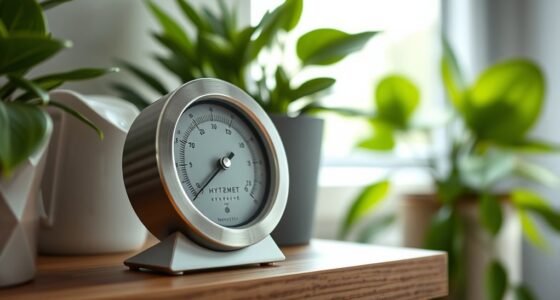
To keep your musical instruments sounding and looking their best, aim for a humidity level between 40% and 60%. Regular humidity measurement helps you maintain this range, preventing wood from expanding or contracting. Use a reliable hygrometer to monitor levels accurately. Proper wood treatment starts with controlling humidity, as too much moisture can cause warping, while too little leads to cracks. If your environment falls outside this ideal range, consider using humidifiers or dehumidifiers to adjust the moisture in the air. Consistent humidity management ensures your instrument’s wood remains stable, preserving sound quality and structural integrity. Additionally, understanding the capacity of your humidification system can help you choose the right device for your space. Remember, small fluctuations can have big effects on wooden instruments, so stay vigilant with humidity measurement and wood treatment practices. Environmental conditions play a crucial role in maintaining wooden instrument health. Maintaining proper humidity levels helps prevent damage and prolongs the lifespan of your instrument. Regularly inspecting and adjusting your instrument storage environment further enhances protection against humidity-related issues. Monitoring climate stability can help you avoid sudden changes that may harm your instrument’s wood.
How Excess Humidity Warps, Cracks, and Damages Wooden Instruments

Excess humidity causes your wooden instruments to expand and contract, weakening their structure. This constant movement can lead to cracks and warping over time. If you don’t control the moisture levels, your instrument’s sound and longevity will suffer. Additionally, fluctuating humidity levels can increase the presence of microplastics in dust, which may settle on your instrument and contribute to deterioration. Fluctuations in humidity can also promote the growth of mold and mildew, further damaging the wood and affecting sound quality. Maintaining optimal humidity levels is essential, especially in regions with diverse climates, such as Washington D.C., where environmental fluctuations are common, and maintaining consistent humidity is especially crucial to preserve the integrity of your musical tools. Proper climate control measures can help prevent these issues and extend the life of your instruments.
Wood Expansion and Contraction
When humidity levels rise, wood in musical instruments absorbs moisture and swells, causing it to expand. This natural response, known as wood swelling, can distort your instrument’s shape and affect sound quality. To understand this better:
- Moisture absorption causes the wood fibers to expand unevenly, leading to warps.
- Repeated expansion and contraction weaken the wood’s structure over time.
- Uneven humidity fluctuations create stress points, which may lead to cracks or splits. Proper humidity management is essential to prevent these issues.
- Using a humidifier or dehumidifier helps maintain a stable indoor environment, reducing the risk of damage caused by moisture extremes. Additionally, understanding the importance of wood stability can guide effective care practices. Proper climate control plays a crucial role in preserving the integrity of wooden instruments.
As your instrument repeatedly absorbs moisture, it changes dimensions, making tuning difficult and risking long-term damage. Managing indoor humidity helps minimize these effects, preventing excessive expansion and contraction. Proper care ensures your wooden instruments stay stable, sound great, and last for years to come.
Cracks and Structural Damage
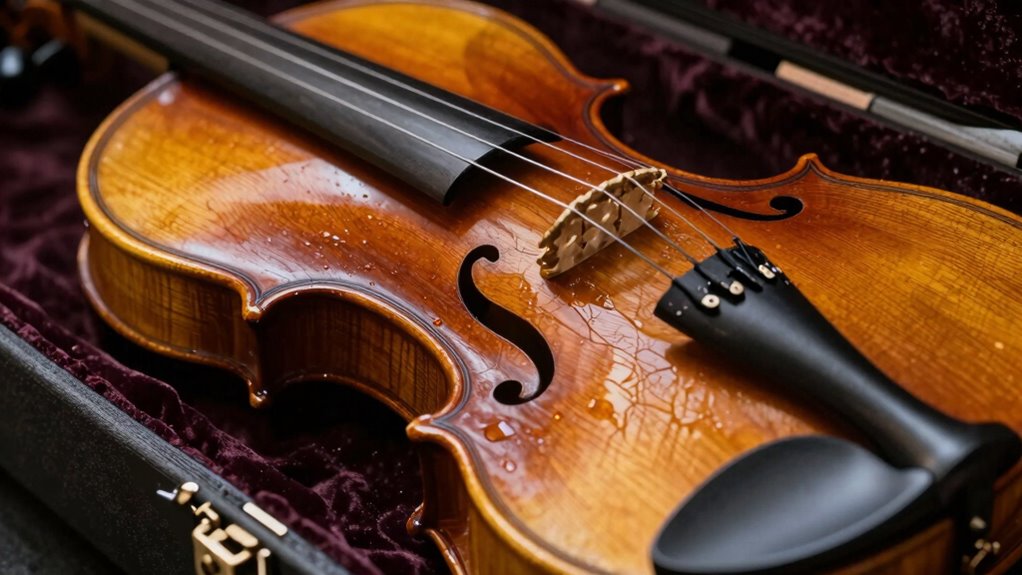
High humidity levels can cause wooden instruments to warp and develop cracks as the moisture content in the wood increases beyond safe limits. These cracks can appear along the finish line or across critical structural points, weakening the instrument’s integrity. As the wood absorbs excess moisture, it expands unevenly, leading to stress points that crack under pressure. This process can be exacerbated by environmental factors, which influence moisture levels and accelerate damage. Understanding wood expansion is crucial for proper instrument care. Fluctuations in humidity can also lead to material deterioration, further compromising the instrument’s durability. This damage disrupts the instrument’s ability to produce clear sounds and affects tuning across musical scales. Over time, the structural damage worsens, making repairs more difficult and costly. To preserve your instrument’s sound quality and longevity, maintaining proper humidity levels is essential. Avoid exposing your instrument to excessive moisture, and regularly check for signs of cracks or warping to prevent reaching the finish line of irreversible damage.
How to Recognize Signs of Humidity-Related Damage

You should watch for cracks and gaps in your instrument, as these often indicate humidity damage. Notice any changes in sound quality, like a dull or uneven tone, which can also signal moisture issues. Recognizing these signs early helps you prevent further harm and maintain your instrument’s best performance.
Cracks and Gaps
Cracks and gaps in musical instruments are clear signs that humidity has taken a toll. When wood swells from high humidity or contracts during dry cycles, stress builds up, causing visible damage. You might notice:
- Fine cracks running along the wood’s surface, especially around joints or edges.
- Gaps between glued parts or in the seams, indicating the wood has shrunk.
- Warped or bent sections, resulting from repeated swelling and shrinking during humidity cycles.
These signs show your instrument’s wood has been repeatedly stressed by fluctuating moisture levels. Recognizing these cracks and gaps early can help you prevent further damage and consider proper humidity control to maintain your instrument’s integrity.
Changes in Sound Quality
When humidity levels fluctuate, the sound quality of your instrument can change noticeably, often indicating underlying damage. Humidity effects can cause your instrument’s tone to become dull, muted, or uneven. You might notice a loss of resonance or that notes sound less vibrant than usual. Changes in sound quality can also include increased sustain or unwanted buzzing, which signal warping or loose joints caused by moisture. If your instrument’s response feels different or the notes don’t project as clearly, humidity-related damage could be the culprit. Recognizing these signs early helps prevent further deterioration. Regularly monitor how your instrument sounds, especially during seasonal changes, to catch humidity effects on sound quality before they become more severe.
Easy Ways to Control Humidity in Your Music Space

Maintaining proper humidity levels is essential for preserving the sound and longevity of your musical instruments. Effective humidity control ensures your instruments stay in ideal condition, preventing warping and cracking. Here are three simple ways to manage climate:
- Use a hygrometer to monitor humidity levels regularly—aim for 40-60%.
- Employ a humidifier or dehumidifier as needed to maintain consistent moisture.
- Keep your instruments away from heat sources or direct sunlight that can cause fluctuations.
Storage Tips to Protect Your Instruments From Humidity Fluctuations
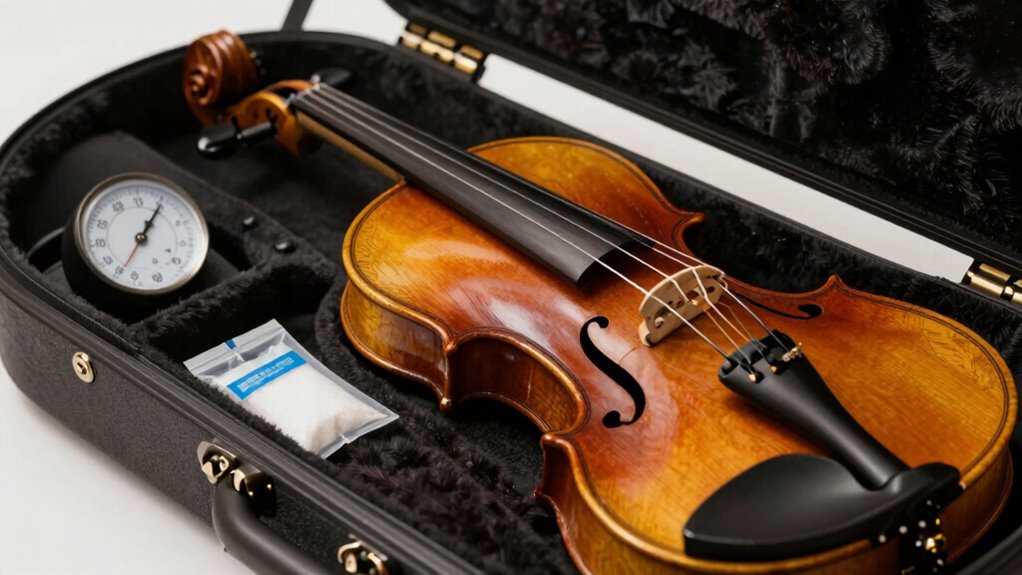
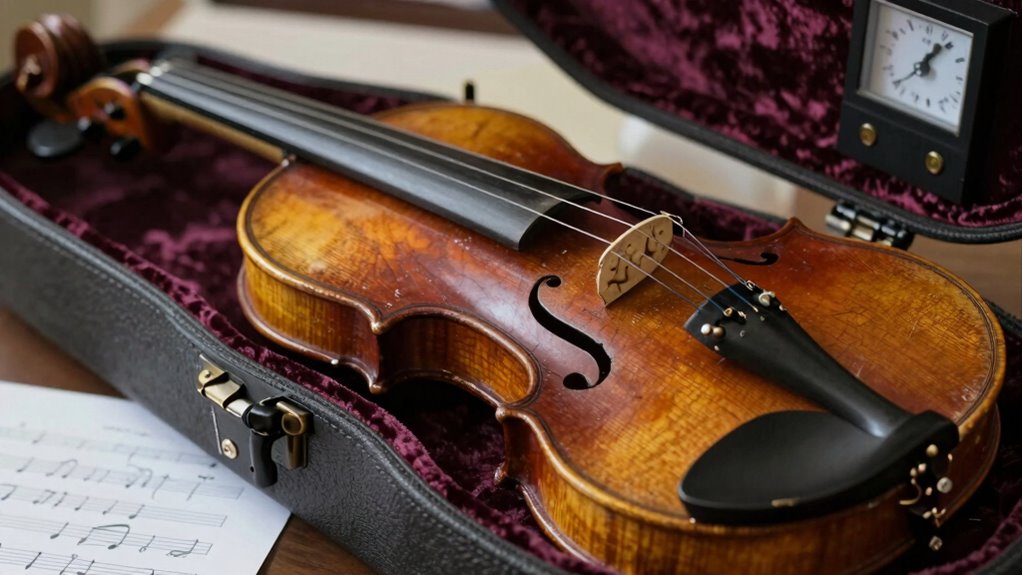
To protect your instruments from damaging humidity fluctuations, proper storage is essential. Case studies reveal that musicians who store their instruments in stable environments experience fewer warps and cracks over time. Historical examples, like vintage violins stored in climate-controlled cases, demonstrate the importance of consistent conditions. Use sturdy, well-sealed cases with humidification inserts or silica gel packs to maintain steady humidity levels. Avoid storing instruments near windows, heating vents, or exterior walls where temperature swings are common. Keep your case in a cool, dry place away from direct sunlight. Proper storage minimizes the effects of humidity changes, helping preserve your instrument’s wood and sound quality. By following these tips, you can prevent warping and extend your instrument’s lifespan considerably.
Using Humidifiers and Dehumidifiers to Keep Conditions Stable

Using humidifiers and dehumidifiers is one of the most effective ways to keep your instrument’s environment stable. Proper humidifier maintenance guarantees it functions correctly, preventing excess moisture or dryness. When choosing a dehumidifier, placement matters; position it in a central spot away from direct sunlight or drafts for ideal performance. To get the most from these devices:
Maintaining proper humidity levels is key to protecting your instrument’s sound and appearance.
- Regularly check and refill your humidifier to maintain consistent humidity levels.
- Place your dehumidifier in areas prone to excess moisture, like basements or near windows.
- Monitor humidity with a hygrometer to avoid over- or under-humidifying, ensuring your instrument stays in the safe zone. Using these tools effectively minimizes warping and cracking, preserving your instrument’s sound and appearance.
What to Do if Your Instruments Have Warped or Cracked From Humidity?

If your instrument has warped or cracked due to humidity, acting quickly can help prevent further damage. First, gently remove the instrument from extreme conditions and store it in a stable environment with controlled humidity. To address wood swelling or cracking, you can try humidifying or drying the instrument gradually using appropriate methods, like placing it in a room with consistent humidity levels. Avoid forcing the wood back into shape, as this can cause more damage. Instead, focus on humidity control to stabilize the wood’s condition. If the damage is severe, consult a professional luthier or repair specialist who can carefully assess and restore your instrument. Prompt action and proper humidity management are essential to prevent ongoing warping or cracking.
Long-Term Strategies to Keep Your Wooden Instruments Sound and Safe
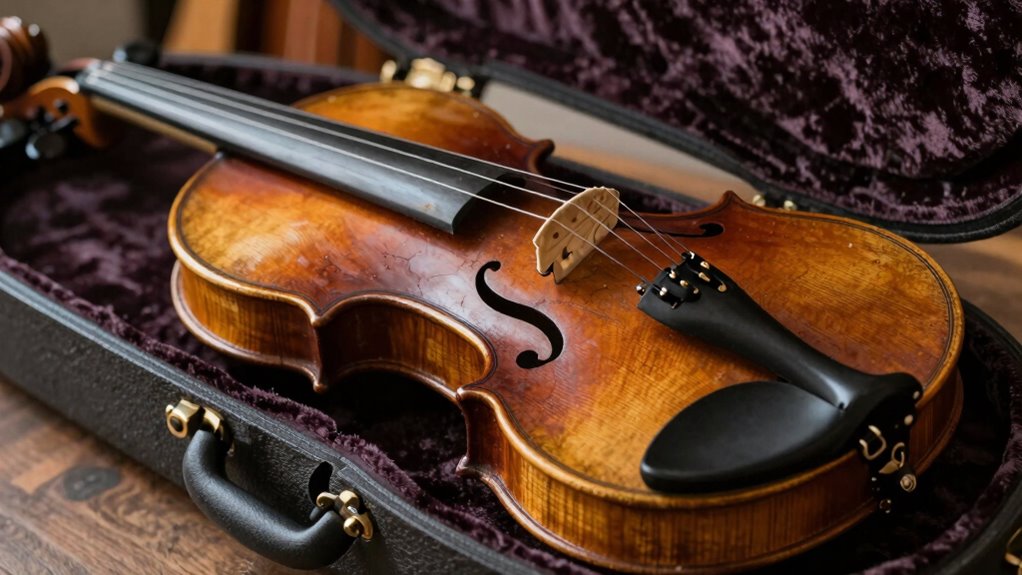
Maintaining your wooden instruments over the long term requires consistent care and proactive measures. Regular instrument maintenance and environmental monitoring are key to preventing damage. To guarantee your instrument stays sound and safe:
Long-term care of wooden instruments hinges on consistent maintenance and environmental vigilance.
- Keep your instrument in a stable environment with controlled humidity and temperature.
- Use a hygrometer to monitor humidity levels, adjusting with humidifiers or dehumidifiers as needed.
- Schedule routine check-ups for cracks, warping, or other issues, and address problems early.
Frequently Asked Questions
How Often Should I Check Humidity Levels in My Music Room?
You should check humidity levels in your music room at least once a week using humidity sensors. Regularly monitoring moisture levels helps you prevent wood warping and damage. If you notice fluctuations, adjust your humidifier or dehumidifier accordingly. Keeping an eye on humidity guarantees your instruments stay in the best condition, preserving their sound quality and longevity. Consistent checks are key to maintaining a stable environment for your musical gear.
Can Climate Change Affect My Instrument’s Condition?
Climate change is like a storm on the horizon, stirring up unpredictable weather. It can definitely affect your instrument’s condition through climate variability and humidity fluctuations. As temperatures and moisture levels shift, wood can expand or contract, leading to warping, cracking, or tuning issues. Staying vigilant with consistent humidity control and monitoring helps protect your instrument from these environmental upheavals, ensuring it stays in ideal condition despite the changing climate.
Are There Specific Types of Wood More Resistant to Humidity Damage?
Certain wood types offer better humidity resistance, making them ideal for musical instruments. For example, ebony, mahogany, and maple are more stable and less prone to warping in fluctuating moisture levels. You should choose instruments crafted from these woods if you’re concerned about humidity damage. Regular climate control and proper storage also help maintain your instrument’s condition, ensuring its sound quality and longevity despite environmental changes.
What Are the Best Materials for Humidifiers Used With Musical Instruments?
You should choose humidifiers with synthetic fibers and mineral-based filters for your musical instruments. Synthetic fibers help prevent mold and bacteria buildup, maintaining a clean environment. Mineral-based filters effectively regulate moisture levels without introducing impurities that could harm your instrument’s wood. These materials guarantee you’re providing consistent, safe humidity, reducing warping risks and preserving your instrument’s tone and longevity.
How Does Temperature Interact With Humidity to Impact Wood?
Temperature interacts with humidity by causing wood expansion and contraction, which can lead to warping or cracking. When temperatures fluctuate, the wood expands in warmer conditions and contracts when it cools, amplifying the effects of humidity changes. If you don’t control both temperature and humidity, you risk damaging your instrument’s wood. Keep the environment stable to prevent these issues and preserve your instrument’s sound and integrity.
Conclusion
To keep your wooden instruments singing true, treat humidity like a delicate dance partner—always keep it balanced. Ignoring it is like sailing stormy seas without a compass; damage will follow. Regularly monitor and control your environment, and your instruments will stay in perfect harmony for years to come. Remember, a little humidity management is the key to preserving the soul of your music. Keep it steady, and let your sound flourish.