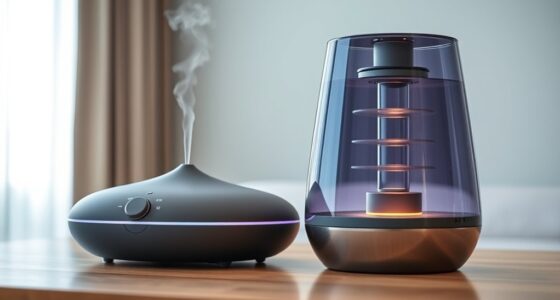
Balancing humidity in a home with both plants and people requires careful airflow and moisture control. Too much humidity can promote mold and plant diseases, while too little can harm your skin and respiratory health. Use ventilation, fans, and keep humidity levels between 40-60% to support both. Monitoring moisture with hygrometers helps you adjust with dehumidifiers or humidifiers. Stay tuned to learn how seasonal changes and proper strategies can keep your space comfortable and healthy.

Get home appliances delivered free with Prime
- Fast, free delivery on millions of items
- Prime Video, Amazon Music and more included
- Member-only deals all year
Key Takeaways
- Maintaining a humidity level of 40-60% supports both healthy plant growth and human comfort.
- Proper air circulation prevents excess moisture buildup, reducing mold risk for plants and occupants.
- Using hygrometers helps monitor humidity to balance plant needs and indoor air quality.
- Seasonal adjustments are essential to prevent condensation and maintain consistent humidity levels.
- Ventilation and dehumidifiers or humidifiers work together to optimize environment conditions for both plants and people.
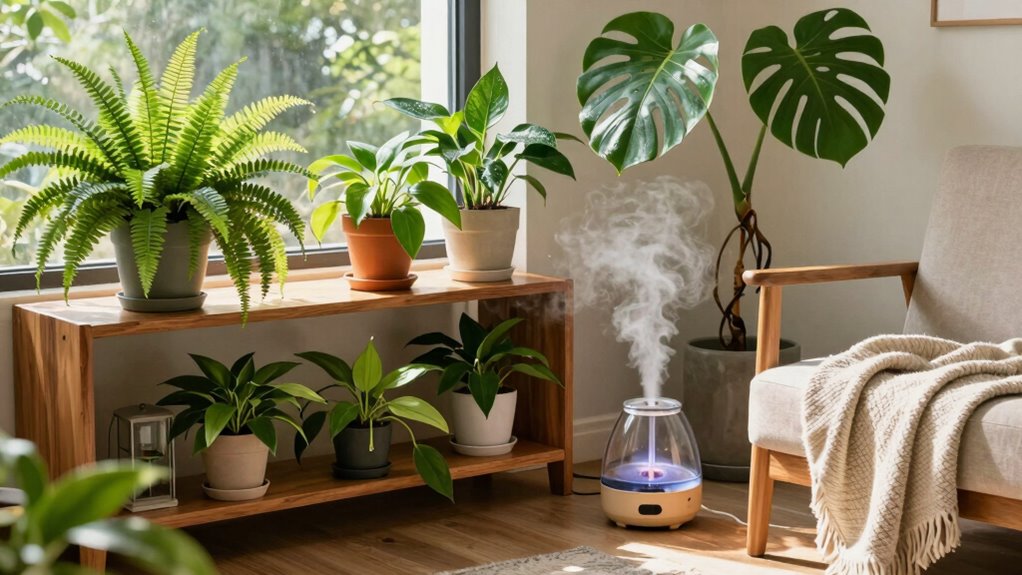
Maintaining the right humidity level in your home can considerably enhance comfort and health, especially when you have both plants and people sharing the space. When humidity fluctuates, it influences not only how comfortable you feel but also the health of your plants and the integrity of your home environment. One key aspect to managing humidity effectively is ensuring proper air circulation. Good airflow helps distribute humidity evenly, preventing pockets of excessive moisture that can lead to issues like mold growth. If your home feels stuffy or damp, increasing ventilation—whether through open windows, fans, or air purifiers—can help balance moisture levels and keep air moving.
Proper air circulation balances humidity, prevents mold, and creates a healthier, more comfortable home environment.
Air circulation isn’t just about temperature; it plays an essential role in mold prevention as well. Mold thrives in damp, stagnant areas where humidity stays high for extended periods. By encouraging consistent airflow, you reduce the chances of mold spores settling and multiplying on surfaces like walls, ceilings, and even on your beloved plants. Proper ventilation also helps remove excess moisture from the air, which is especially important if you keep tropical plants that naturally increase humidity levels indoors. If you notice lingering dampness or a musty smell, it’s a sign you need to boost air circulation and lower the humidity to prevent mold from taking hold. Additionally, understanding how indoor humidity levels affect both health and plant growth can help you make more informed adjustments. Regular monitoring with hygrometers ensures you maintain optimal conditions. Proper humidity management involves not just monitoring but also making adjustments based on your specific environment and seasonal changes.
Balancing humidity isn’t a one-time fix—it requires ongoing attention. Use a hygrometer to keep an eye on moisture levels, aiming for around 40-60%. When humidity rises above this range, it can cause condensation on windows and walls, creating ideal conditions for mold. Conversely, if it drops too low, your skin and respiratory system can suffer, and plants may struggle to thrive. To prevent these issues, consider using a dehumidifier or humidifier depending on your needs, but always couple these devices with good air circulation. This combination ensures that moisture is evenly distributed and that no area becomes a breeding ground for mold or other fungi. Additionally, maintaining proper ventilation can help sustain a healthy balance over time. Recognizing seasonal changes and adjusting your environment accordingly is also crucial for long-term humidity management. It’s important to adjust your strategies as seasons change and indoor conditions evolve to keep the environment balanced.
Products Worth Considering

Blueair Blue Pure 511i Max Air Purifier for Home and Bedroom

Blueair Blue Pure 211i Max Smart Air Purifier for Large Rooms

Philips Hue Large Smart Light Tube, Black – White and Color Ambiance LED Color-Changing Light – 1 Pack
As an affiliate, we earn on qualifying purchases.
Frequently Asked Questions
How Does Humidity Affect Different Types of Houseplants?
Humidity affects your houseplants differently; some thrive in high humidity zones, while others prefer drier conditions. You should adjust plant watering based on their humidity needs—watering more for tropical plants, less for succulents. Keep in mind, maintaining proper humidity levels helps prevent issues like leaf browning or mold growth. By monitoring humidity zones and watering accordingly, you guarantee each plant stays healthy and vibrant in your home.
Can Too Much Humidity Harm Household Electronics?
Did you know that excess humidity above 60% can cause electronics to malfunction? Too much humidity promotes mold growth and dust mites, which can damage devices over time. High moisture levels can corrode circuit boards and lead to short circuits. To protect your electronics, keep humidity levels balanced, ideally between 30-50%, and make certain good ventilation. This prevents mold, dust mites, and electrical issues, keeping your home safe and efficient.
What Are the Signs of Improper Humidity for Humans?
You might notice increased allergy symptoms, like sneezing, coughing, or itchy eyes, indicating improper humidity levels. Too high humidity can cause mold growth, which worsens allergies and respiratory issues, while low humidity leads to dry skin and irritated airways. Maintaining proper humidity helps prevent mold growth and reduces humidity-related allergies, creating a healthier environment. Keep humidity balanced to keep you comfortable and free from allergy triggers.
How Does Humidity Influence Indoor Air Quality?
Humidity levels directly influence indoor air quality by affecting mold growth and dust mites. When humidity is too high, mold spores thrive, leading to poor air quality and potential health issues. Excess moisture also promotes dust mite proliferation, worsening allergies and asthma. Keeping humidity between 30-50% helps reduce mold and dust mites, ensuring cleaner, healthier air for you and your plants. Proper ventilation and dehumidifiers can help maintain this balance effectively.
Are There Specific Humidity Levels for Different Seasons?
You might think humidity levels stay steady, but seasonal humidity varies more than you’d expect. In winter, aim for 30-40%, and in summer, 40-60% to prevent mold and dryness. Humidity fluctuations happen as temperatures change, so you’ll need to adjust your humidifier or dehumidifier accordingly. Embracing these seasonal shifts keeps your home comfortable and your plants happy—without turning into a humidity rollercoaster.
Conclusion
Balancing humidity in a home with plants and people is like tending to a delicate dance—each step influences the other. When you keep the moisture levels just right, your space transforms into a lush oasis where both your plants thrive and your comfort is restored. Think of it as a symphony, where harmony between humidity and your environment creates a vibrant, lively atmosphere. Embrace the balance, and your home will bloom with health and happiness.