One common nighttime air mistake that causes dry morning throats is sleeping with mouth open, which dries out your airway and saliva. This often happens when your room has low humidity or poor airflow, making breathing uncomfortable. Using a humidifier, adjusting your sleep position, or managing room humidity can reduce dryness. If you keep experiencing this, there’s more behind why it happens and how to stop it, so keep going to learn more.

Get home appliances delivered free with Prime
- Fast, free delivery on millions of items
- Prime Video, Amazon Music and more included
- Member-only deals all year
Key Takeaways
- Sleeping in a dry room with low humidity causes throat dryness upon waking.
- Mouth breathing during sleep, often due to poor airflow or sleeping position, leads to dry throat.
- Lack of proper air circulation and humidification worsens airway moisture loss overnight.
- Consuming caffeine or alcohol before bed dehydrates the body, contributing to morning dryness.
- Sleeping in a poorly ventilated environment with low humidity is a common nighttime air mistake.

Waking up with a dry throat is a common morning discomfort that can disrupt your start to the day. Often, it’s a sign that something went wrong during your sleep, especially related to your sleep environment or hydration habits. Your sleep environment plays a crucial role in maintaining proper moisture levels in your airways. If your room is too dry, perhaps due to heating or air conditioning, it can cause your throat to feel parched when you wake up. Running a humidifier in your bedroom can help balance the moisture in the air, preventing your throat from drying out overnight. Additionally, the position you sleep in might influence your breathing and moisture retention. Sleeping with your head slightly elevated can reduce mouth breathing, which often leads to a dry throat in the morning.
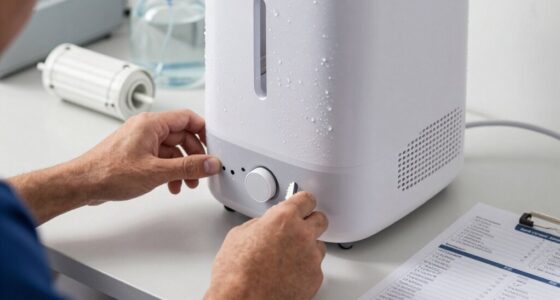
A dry room from heating or AC can cause morning throat dryness—use a humidifier to add moisture overnight.
Hydration habits are equally important in preventing that uncomfortable dryness. If you don’t drink enough water throughout the day or before bed, your body can become dehydrated, making your mucous membranes less effective at keeping your throat moist. Drinking a glass of water before you go to sleep can make a difference, but avoid consuming large quantities right before bed, as that might lead to frequent bathroom trips that disrupt your sleep. Proper hydration isn’t just about quantity; it’s about consistency. Throughout the day, aim to drink water regularly, especially if you notice your throat feels dry when you wake up. Staying well-hydrated helps your body produce enough saliva and mucus, which serve as natural protectors for your throat and airways. Hydration habits are a key factor in maintaining overall comfort during sleep.
Another aspect to consider is your nighttime intake of caffeine and alcohol, both of which can dehydrate your body and worsen morning dryness. Cutting back on these substances in the evening can improve your hydration status and reduce throat discomfort. Also, paying attention to your overall sleep hygiene—such as sticking to a consistent sleep schedule and avoiding screens before bed—can help create a more restful environment that supports better breathing and moisture levels during sleep.
Being aware of indoor air quality is essential because poor air circulation or low humidity can significantly impact your sleep environment and hydration levels. In essence, that dry morning throat often points to one night-time air mistake or a hydration slip-up. A good understanding of air circulation can help you identify ways to improve airflow and humidity in your sleeping area. Whether it’s your sleep environment not providing enough humidity or your hydration habits falling short, addressing these factors can significantly improve your morning comfort. Making small adjustments, like adding a humidifier or drinking a glass of water before bed, could be the simple change that makes waking up easier and more comfortable every day.
bedroom humidifier for dry throat
As an affiliate, we earn on qualifying purchases.
As an affiliate, we earn on qualifying purchases.
Frequently Asked Questions
Can Dehydration Cause Morning Throat Dryness?
Yes, dehydration can cause morning throat dryness. When your hydration habits are poor, your body lacks enough moisture, leading to a dry throat upon waking. Environmental factors, like dry air in your bedroom, can worsen this condition. To prevent it, stay well-hydrated throughout the day and consider using a humidifier at night. These steps help maintain moisture in your throat and reduce morning dryness.
Do Allergies Contribute to Dry Morning Throats?
Think of your allergies as hidden sparks that ignite respiratory irritation, causing your dry morning throat. Yes, allergies contribute profoundly. Allergy triggers like dust, pollen, or pet dander irritate your airways while you sleep. This ongoing irritation results in dryness and discomfort upon waking. To soothe this, reduce allergy exposure, keep your sleeping environment clean, and consider allergy medications. Addressing these triggers can help extinguish the morning dryness caused by allergic reactions.
Is Snoring Linked to Dry Throat Upon Waking?
Yes, snoring can be linked to a dry throat upon waking. When you sleep in a poor posture, especially on your back, it can cause nasal congestion and airway obstruction, leading to snoring. This breathing disruption dries out your throat overnight. To reduce dryness, try changing your sleep posture, elevate your head, or address nasal congestion. These steps help maintain better airflow and keep your throat moist.
Can Certain Medications Cause Morning Throat Dryness?
Like a knight’s armor in a medieval tale, certain medications can cause morning throat dryness through side effects. You might notice this if your sleep environment isn’t humidified enough. Some medications, especially antihistamines or decongestants, dry out your mucous membranes, leading to discomfort upon waking. Adjusting your sleep environment by adding moisture can help, but if dryness persists, consult your healthcare provider for alternative options.
How Long Does It Take to Recover From a Dry Throat?
You can usually recover from a dry throat within a day or two by improving your hydration habits and adjusting your sleep environment. Drinking plenty of water helps soothe your throat, while using a humidifier or avoiding dry air at night keeps moisture in your airways. If your throat remains dry longer, consider consulting a healthcare professional to rule out other causes. Proper care and environment tweaks speed up recovery.
As an affiliate, we earn on qualifying purchases.
Conclusion
So, next time you wake up with a dry throat, consider it a gentle nudge from the night’s quiet whispers. It’s a subtle reminder to pay a little more attention to your nighttime habits—maybe adjust your sleeping environment or hydration routine. Sometimes, it’s the small, unseen shifts that bring about the most meaningful change. Listen closely, and you might find that these gentle signals guide you toward a more comfortable, restful morning.
As an affiliate, we earn on qualifying purchases.
As an affiliate, we earn on qualifying purchases.
NFL season / tailgating Picks
team gear
As an affiliate, we earn on qualifying purchases.