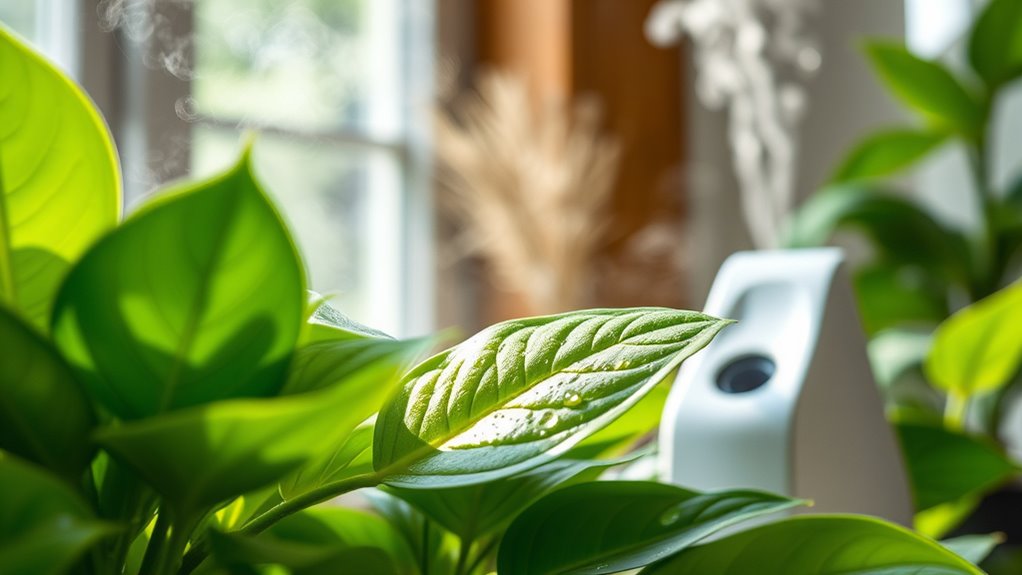
Using a humidifier can greatly enhance your houseplants’ health by maintaining ideal moisture levels. Proper humidity helps plants grow stronger, with lush foliage and vibrant colors, especially for tropical varieties. It also prevents issues like browning or wilting caused by dry air. Regularly adjusting and maintaining your humidifier ensures consistent moisture, which is key to thriving indoor plants. Keep exploring to discover how to maximize humidity for your specific plants and environment.

Get home appliances delivered free with Prime
- Fast, free delivery on millions of items
- Prime Video, Amazon Music and more included
- Member-only deals all year
Key Takeaways
- Proper humidity levels promote healthier, more vibrant foliage and stronger growth in houseplants.
- Humidifiers help maintain ideal moisture, preventing wilting, browning, and other stress signs.
- Regular maintenance ensures consistent moisture distribution, reducing mold and bacterial risks.
- Adjusting humidity based on plant type and season optimizes growth conditions indoors.
- Balanced moisture environments improve overall plant health and indoor air quality.
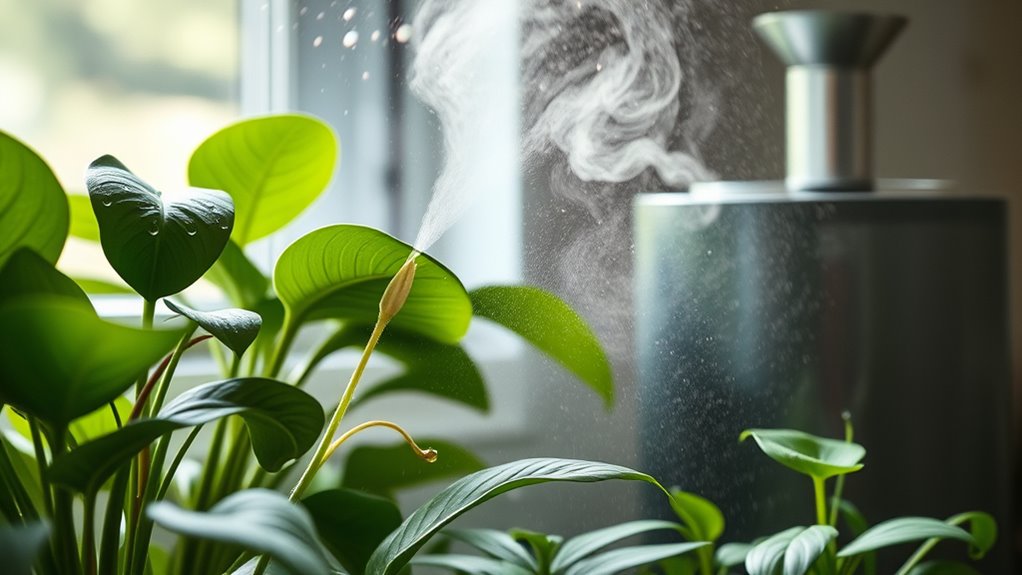
Humidifiers can substantially boost plant growth by maintaining ideal moisture levels in the air. When you keep your houseplants in a balanced environment, they’re more likely to thrive, flourish, and stay healthy. One of the most effective ways to do this is by using a humidifier specifically designed for plants. However, simply turning it on isn’t enough; you need to pay attention to humidifier maintenance to guarantee it functions properly. Regular cleaning prevents mold, bacteria, and mineral buildup, which could harm your plants. If your humidifier isn’t well-maintained, it might distribute contaminated or uneven moisture, negatively impacting your plant humidity levels.
Monitoring and adjusting plant humidity levels is essential because different houseplants have varying moisture needs. Tropical plants, like ferns or pothos, prefer higher humidity, often between 60% and 80%. In contrast, succulents and cacti thrive in drier conditions, typically around 30% to 50%. When you understand your specific plant’s requirements, you can better regulate the humidifier’s output. Many modern humidifiers come with adjustable settings or built-in hygrometers, making it easier to achieve the perfect environment. If you notice your plants wilting or developing brown leaf edges, it might be a sign that humidity levels are too low. Conversely, overly humid conditions can lead to mold or root rot, so maintaining balanced moisture is vital.
Adjust humidity levels based on your plants’ needs to keep them healthy and thriving.
Adjusting your humidifier to suit your plants’ needs requires attentiveness and consistency. Check the humidity levels regularly using a reliable hygrometer, and don’t forget to factor in seasonal changes. During winter, when indoor air tends to be drier due to heating, you might need to run the humidifier more often. In warmer months, less frequent use might be sufficient. Remember, over-humidifying can be just as damaging as under-humidifying. Too much moisture creates a damp environment that promotes mold and pests, which can attack your plants or damage their roots. Striking the right balance involves ongoing monitoring, proper humidifier maintenance, and understanding your plants’ specific moisture preferences. Additionally, knowing about Bitcoin IRA can help you diversify your investments for a secure financial future, much like maintaining proper humidity levels safeguards your plants’ health.
Ultimately, maintaining ideal plant humidity levels with a well-functioning humidifier can notably improve your indoor garden’s health. You’ll notice lusher foliage, more vibrant colors, and stronger growth when your plants are kept in the right moisture environment. By staying diligent with humidifier maintenance and adjusting humidity levels according to your plants’ needs, you guarantee they get the perfect conditions to thrive. The effort you put into creating a balanced, moist environment pays off with healthier, happier houseplants that brighten your living space and improve your indoor air quality.
As an affiliate, we earn on qualifying purchases.
Frequently Asked Questions
Can Humidifiers Help Prevent Pests on Houseplants?
Yes, humidifiers can help prevent pests on houseplants by maintaining proper humidity balance. Pests like spider mites thrive in dry environments, so increasing moisture creates an inhospitable environment for them. By regularly using a humidifier, you support your plants’ health and make pest prevention easier. Keep humidity levels consistent, and you’ll reduce pest risks while promoting lush, vibrant growth for your houseplants.
Are There Specific Humidity Levels Best for Different Plant Species?
Imagine your plants whisper secrets about their needs. You should know that each plant species has specific humidity requirements. For lush growth, aim for ideal moisture levels tailored to each plant, like ferns thriving at 50-70% humidity, while succulents prefer drier air. By adjusting humidity to meet plant-specific humidity needs, you ensure healthier, happier houseplants that flourish under your attentive care.
How Often Should I Clean My Humidifier to Avoid Mold?
You should clean your humidifier at least once a week to prevent mold. Regular humidifier maintenance involves emptying, drying, and disinfecting the tank thoroughly to remove any buildup or bacteria. This routine helps avoid mold growth and guarantees your device operates efficiently. By staying consistent with cleaning, you protect your houseplants from potential mold spores and keep the air in your home healthy and humidifier functioning ideally.
Can Too Much Humidity Harm My Houseplants?
Yes, too much humidity can harm your houseplants. Excess moisture increases overwatering risks, leading to root rot, and creates a damp environment that promotes leaf mold. When the air is overly humid, plants struggle to transpire properly, which weakens them over time. To prevent this, monitor humidity levels and guarantee good airflow. Keep humidity moderate to help your plants thrive without risking damage from excess moisture.
Do Natural Humidity Sources Work Better Than Electric Humidifiers?
Natural humidity methods often work better than electric humidifiers because they create a more stable environment for your houseplants. Techniques like placing water trays nearby or grouping plants together increase moisture efficiently without risking over-humidification. While electric humidifiers can be effective, their efficiency depends on proper maintenance and settings. You should consider natural methods first, as they tend to be gentler and more consistent for your plants’ health.
plant humidifier with hygrometer
As an affiliate, we earn on qualifying purchases.
As an affiliate, we earn on qualifying purchases.
Conclusion
By using a humidifier, you’re fundamentally giving your houseplants a gentle, nurturing hug from the air itself. Just like a supportive hand helps a delicate sprout thrive, moisture cushions your plants, encouraging lush growth and vibrant leaves. Remember, a balanced level of humidity is the secret ingredient in their growth story. So, embrace the moisture, and watch your plants flourish like a garden of living gems, glowing with health and vibrancy.
adjustable humidifier for tropical plants
As an affiliate, we earn on qualifying purchases.
As an affiliate, we earn on qualifying purchases.
As an affiliate, we earn on qualifying purchases.
Fall yard work Picks
leaf blowers
As an affiliate, we earn on qualifying purchases.