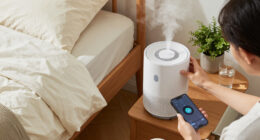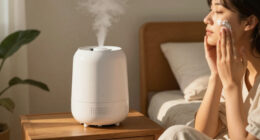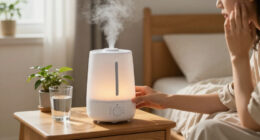
Placing a humidifier near your bed requires careful thought to guarantee comfort and safety. If it’s too close, it can cause stuffiness or respiratory issues, while too far away, it won’t add enough moisture. Keep it on a stable, elevated surface with good airflow, and avoid pointing the mist directly at you. Proper placement helps improve air quality without causing mold or noise disturbances. To discover how to optimize your setup, keep exploring these essential tips.

Get home appliances delivered free with Prime
- Fast, free delivery on millions of items
- Prime Video, Amazon Music and more included
- Member-only deals all year
Key Takeaways
- Proper placement ensures effective humidity distribution without causing respiratory irritation or mold growth.
- Keeping the humidifier at an optimal distance prevents excessive moisture buildup near bedding.
- Positioning away from direct airflow toward the face reduces discomfort and sleep disturbances.
- Ensuring good airflow around the device improves efficiency and prolongs its lifespan.
- Safe placement avoids electrical hazards and maintains a healthy, comfortable sleep environment.
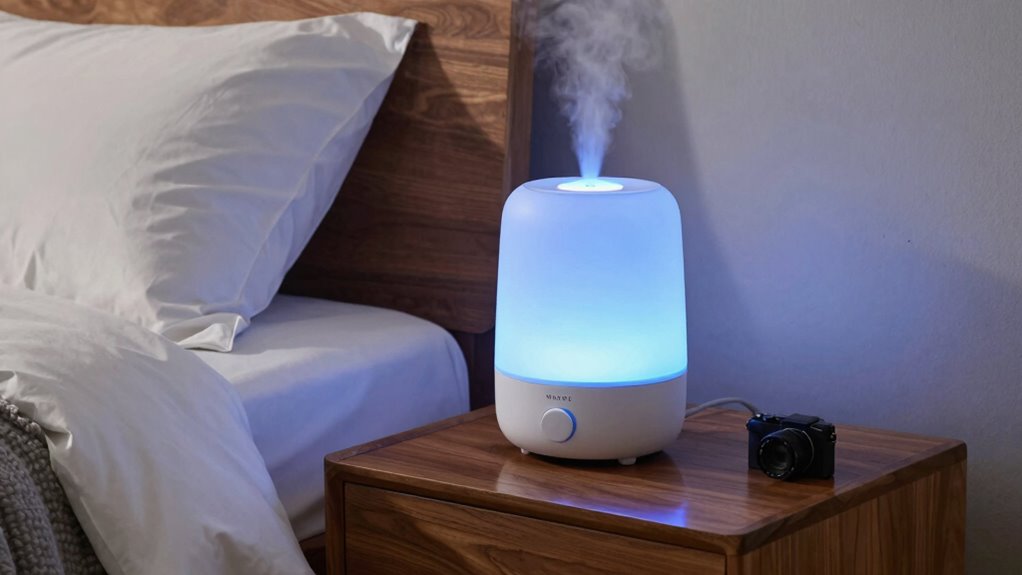
Have you ever wondered where to place your humidifier for the best sleep? It’s a simple question, but the answer can considerably impact your comfort and health. Proper placement isn’t just about convenience; it’s about maximizing air quality and minimizing noise levels. If you place your humidifier too close to your bed, you might wake up feeling stuffy or overly humid, which can lead to discomfort or even respiratory issues. Conversely, placing it too far away might mean the room doesn’t get enough moisture, defeating the purpose altogether. Finding that sweet spot is essential for creating a healthy, comfortable sleep environment.
When considering air quality, the placement of your humidifier makes a big difference. Ideally, you want it positioned where it can evenly distribute moisture without directly blowing humid air onto your face or bedding. If the humidifier is too close, it might cause excessive dampness, encouraging mold growth or dust mites, which can aggravate allergies or asthma. On the other hand, placing it too high or far from your sleeping area might result in uneven moisture distribution, leaving some parts of the room dry and others overly humid. The goal is to strike a balance that maintains ideal humidity levels—generally between 30% and 50%—without creating pockets of dampness or dryness. Maintaining proper humidity levels is crucial for overall comfort and health. Additionally, understanding how air circulation impacts humidity distribution can help optimize placement. Proper humidifier placement can also prevent unnecessary energy consumption and extend the device’s lifespan. Moreover, ensuring good airflow around the device can improve its efficiency and effectiveness. It’s also helpful to consider the size of the room to ensure your humidifier can adequately cover the space without overworking.
Noise levels are another critical factor often overlooked. Many humidifiers produce some noise—whether a gentle humming or a bubbling sound—that can disrupt sleep if placed improperly. To minimize disturbance, keep the humidifier at a moderate distance from your bed, ideally on a stable surface that’s not directly next to your pillow. This way, the noise diminishes enough to avoid waking you up, but the device remains effective. Remember, loud or vibrating units can be especially disruptive, so if noise is an issue, opt for quieter models and choose a spot where sound doesn’t travel directly toward your head.
Finally, avoid placing your humidifier near electrical outlets, curtains, or bedding that could get damp. Moisture can cause damage or create safety hazards. Instead, set it on a flat, elevated surface away from direct contact with fabrics, ensuring airflow around the device. By thoughtfully positioning your humidifier, you enhance air quality, reduce noise disturbances, and create an environment that promotes restful, healthy sleep. It’s a small adjustment that can make a noticeable difference in how well you rest and breathe through the night.
Products Worth Considering

Levoit Core 400S-P Smart Air Purifier for Large Rooms

eufy Security Floodlight Camera E340 with Dual Cameras, 360° Coverage and 8× Hybrid Zoom

Philips Hue Play Floor Lamp, RGBWWIC LED, 53 Inch, Black
As an affiliate, we earn on qualifying purchases.
Frequently Asked Questions
Can a Humidifier Cause Mold Growth if Placed Incorrectly?
Yes, if you place a humidifier incorrectly, it can cause mold growth. Poor air circulation and excess moisture create a perfect environment for mold. To prevent this, position your humidifier where it won’t stay constantly damp and guarantee good air circulation around it. Regular cleaning and monitoring humidity levels also help mold prevention, keeping your space safe and comfortable without risking mold issues.
How Close Is Too Close for a Humidifier Near a Bed?
You should keep your humidifier at least three feet away from your bed to guarantee ideal air quality and sleep comfort. Studies show that improper placement can increase mold and bacteria growth, risking health. If too close, it may cause excess moisture, leading to mold or mildew. Position it where airflow isn’t obstructed, and avoid direct spray toward your face, helping you breathe easier and sleep more soundly.
Does Room Size Affect Ideal Humidifier Placement?
Yes, room size affects ideal humidifier placement. In larger rooms, you should position the humidifier where airflow circulates well, avoiding direct contact with walls or furniture, to distribute moisture evenly. If the room is small, keep it a bit further from your bed to reduce noise and prevent excess humidity. Proper placement minimizes humidifier noise and guarantees consistent humidity levels, making your sleep more comfortable and healthy.
Can a Humidifier Impact Bedroom Furniture or Electronics?
A humidifier can affect your bedroom furniture and electronics, much like a gentle rain can soften the earth. It may cause moisture buildup, leading to damage or warping, especially on wooden surfaces. Be mindful of air quality and noise levels, as excess humidity can promote mold, and noisy units disturb your sleep. Place it wisely to protect your belongings while maintaining a comfortable, healthy environment.
How Often Should I Reposition My Humidifier for Optimal Humidity?
You should reposition your humidifier every few days to maintain ideal humidity levels and avoid common humidifier myths. Proper placement tips suggest keeping it slightly away from walls, furniture, and electronics to prevent moisture damage. Regularly changing its position ensures even moisture distribution and prevents mold or over-humidification. Staying proactive helps you avoid issues and keeps your room comfortable, safe, and healthier for sleep.
Conclusion
So, next time you set up your humidifier, will you prioritize safe placement near your bed? Remember, the right spot can improve your sleep and health, but the wrong one might cause more harm than good. Don’t let poor placement turn your comfort into a risk. Isn’t a peaceful, healthy night’s sleep worth a little extra thought? Take a moment to reconsider where you place it—you and your sleep deserve it.