
Over-humidifying one room can silently cause larger problems across your home. Excess moisture encourages mold growth, which releases spores into the air, worsening indoor air quality and risking health issues like allergies or asthma. It also damages your walls, ceilings, and floors over time. These issues can spread through ventilation and open pathways, making repairs costly and difficult. Keep these risks in mind, and you’ll discover more about how to protect your home and health.

Get home appliances delivered free with Prime
- Fast, free delivery on millions of items
- Prime Video, Amazon Music and more included
- Member-only deals all year
Key Takeaways
- Excess humidity in one room can increase overall indoor moisture, promoting hidden mold growth that spreads throughout the home.
- Mold spores released from over-humidified areas can circulate via ventilation and open pathways, affecting multiple rooms.
- Prolonged high humidity weakens structural elements, leading to hidden damage like warping, peeling paint, and drywall deterioration.
- Over-humidification can cause respiratory issues and allergies due to airborne mold spores and poor air quality.
- Regular humidity monitoring and control prevent silent spread of mold and structural damage, maintaining a healthy indoor environment.
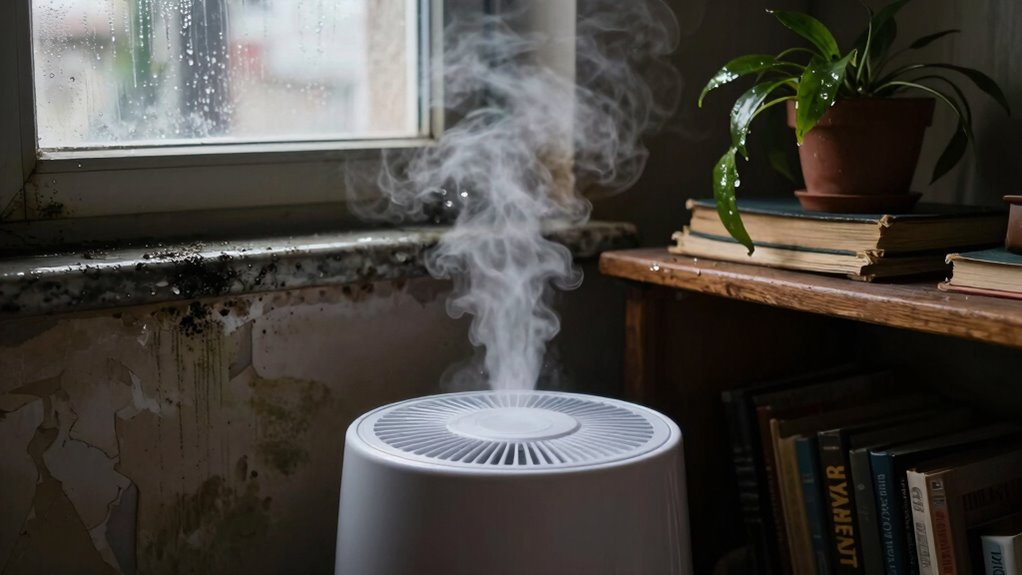
When you over-humidify a single room, the consequences may seem minor at first, but they can quietly escalate into larger problems that affect your entire home. Excess moisture in one area can substantially impact air quality, making the environment less healthy for everyone. Too much humidity creates a breeding ground for mold growth, which can spread beyond the initial room without you noticing. Mold releases spores into the air, worsening air quality and potentially causing respiratory issues, allergies, or asthma flare-ups. What starts as a localized problem can quickly become a widespread concern if left unchecked.
The problem begins when the air in the over-humidified room becomes saturated with moisture. This excess moisture doesn’t stay confined; it seeps into walls, ceilings, and floors, creating damp spots that are perfect for mold to thrive. Mold growth isn’t always obvious at first glance. It might appear as black, green, or white patches, but many times, it remains hidden behind walls or under flooring. As mold spreads, it releases spores into the air, which can circulate throughout your home via ventilation systems, open doors, and windows. This means that even if you only over-humidify one room, the mold spores and poor air quality can affect other areas, especially if your home has poor airflow or ventilation. Effective moisture control plays a critical role in preventing this spread and maintaining healthy indoor air.
This interconnected spread can lead to persistent musty odors and increased health risks. Mold spores are tiny and lightweight, making them easy to inhale, and exposure can trigger allergic reactions, respiratory problems, and other health issues. Over time, the mold colonies grow larger, and the air quality continues to decline. You might notice symptoms like coughing, congestion, or throat irritation, but not immediately realize that they stem from unchecked humidity and mold spores drifting through your home. The longer you ignore the problem, the more mold grows, and the worse the air quality becomes for everyone inside. Additionally, proper humidity levels can help prevent the initial conditions that allow mold to develop and spread. Regularly checking and adjusting humidity with humidity monitors can help catch issues early before they escalate. Moreover, neglecting to address humidity issues can contribute to structural damage, leading to costly repairs down the line.
In addition, over-humidifying one room can also damage your home’s structure. Excess moisture can weaken drywall, warp wood, and cause paint to peel, compounding the problem. Monitoring humidity levels is essential to prevent this cascade of issues, as improper humidity control can often go unnoticed until significant damage occurs. Maintaining balanced humidity levels helps avoid the silent spread of mold and structural deterioration. What starts as a simple issue of controlling humidity in one area can turn into a costly repair project. To prevent this cascade of problems, it’s essential to maintain proper humidity levels, use dehumidifiers, and address any signs of mold growth early. Keeping the air quality high and moisture levels balanced isn’t just about comfort; it’s about protecting your entire home and health.
Products Worth Considering

LEVOIT Vital 200S-P Smart Air Purifier for Large Rooms, White

Blueair Blue Pure 311i Max Smart Air Purifier

Levoit Core 300S-P Smart Wi-Fi Air Purifier
As an affiliate, we earn on qualifying purchases.
Frequently Asked Questions
How Can I Tell if My Room Is Over-Humidified?
You can tell if your room is over-humidified by checking humidity sensors or using a hygrometer. If the humidity level exceeds 60%, it’s too high. Adjust your dehumidifier settings accordingly, ensuring it maintains ideal humidity—around 30-50%. Signs like condensation on windows, musty odors, or mold growth also indicate over-humidification. Regularly monitoring these factors helps keep your room comfortable and prevents moisture problems from spreading.
What Are the Long-Term Health Effects of Excessive Humidity?
Excessive humidity can silently harm your health over time. You might develop mold growth, which worsens respiratory issues and causes allergy symptoms you can’t ignore. Persistent high humidity weakens your immune system, making you more vulnerable to infections. Long-term exposure can even lead to chronic asthma or other respiratory problems. So, if you notice any signs, address humidity levels promptly—your health depends on it before these hidden dangers take hold.
Can Over-Humidifying Damage My Furniture or Electronics?
Yes, over-humidifying can damage your furniture and electronics. Excess moisture promotes mold growth, which can stain or weaken wood and fabric surfaces. It also encourages dust accumulation, making your belongings look dirty and potentially causing allergies. Electronics are especially vulnerable because high humidity can cause corrosion and short circuits. To protect your belongings, maintain ideal humidity levels and avoid excessive moisture in any single room.
How Do I Prevent Humidity From Spreading to Other Rooms?
Think of your home like a sponge; if one corner gets soaked, moisture spreads. To prevent humidity from spreading, use proper ventilation strategies like exhaust fans and open windows. Place a dehumidifier in the humid room, ensuring it’s away from doorways and vents, to contain moisture. Regularly monitor humidity levels with a hygrometer. This way, you keep the moisture localized and protect your entire home.
What Humidity Level Is Considered Ideal for Indoor Comfort?
You should aim for indoor humidity levels between 30-50% for ideal comfort. Maintaining this range helps prevent indoor mold growth and improves air quality. If humidity gets too high, mold can develop silently, harming your health and damaging your home. Use a hygrometer to monitor levels and adjust your humidifier accordingly. Keeping humidity in this range guarantees a healthy, comfortable environment without risking the problems associated with over-humidification.
Conclusion
Remember, over-humidifying one room isn’t just a small mistake—it’s like opening a silent door to hidden trouble. The excess moisture seeps quietly into walls and furniture, spreading problems you might not see until they’re widespread. Think of humidity as a delicate dance; too much, and the rhythm falls apart, inviting mold and damage. Keep your balance, and you’ll protect your space from this silent, spreading threat, preserving your comfort and peace of mind.