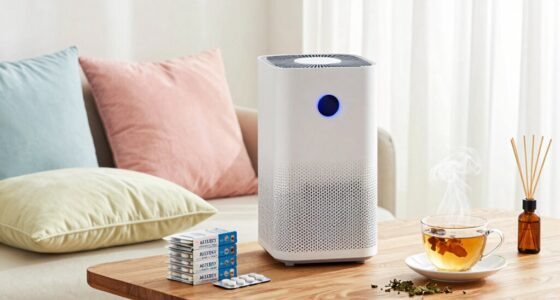

Maintaining ideal humidity levels between 40% and 60% can help reduce sinus congestion caused by dry air or excess moisture. Dry environments dehydrate mucous membranes, making you more prone to irritation and infections, while overly humid conditions promote mold and dust mites that worsen sinus issues. Using a humidifier or dehumidifier, along with regular cleaning, can keep your indoor air balanced. Discover more effective strategies to keep your sinuses clear and comfortable.
Key Takeaways
- Low humidity dries nasal passages, causing irritation and increased congestion risk.
- Excessive humidity promotes mold and dust mites, worsening sinus inflammation and allergies.
- Using humidifiers within 40-60% humidity maintains nasal moisture and relieves congestion.
- Regular cleaning of humidifiers prevents mold and bacteria growth, ensuring sinus health.
- Monitoring indoor humidity levels helps prevent both dryness and excessive moisture-related sinus problems.

Humidity levels substantially influence sinus congestion, as dry air can dry out nasal passages and worsen symptoms, while overly humid environments may promote mold and dust mites that trigger allergies. Understanding how humidity impacts your sinuses is essential for managing congestion effectively. When the air is too dry, the mucous membranes lining your nasal passages become dehydrated, leading to irritation and increased susceptibility to infections. Dry air effects can cause your nasal tissues to become inflamed, making it harder for mucus to trap and eliminate irritants and pathogens. This often results in congestion, a sensation of pressure, and even nosebleeds. Conversely, excessively humid environments can foster mold growth and dust mites, both of which are common allergens that intensify sinus problems. Humidity control is a critical component of preventing these adverse effects. Using a humidifier offers numerous benefits for alleviating sinus congestion caused by dry air effects. Humidifier benefits include adding moisture to indoor air, which helps keep your nasal passages moist and resilient. This prevents the dehydration of mucous membranes, reduces irritation, and promotes better mucus flow, making it easier for your sinuses to drain and clear out irritants. By maintaining ideal humidity levels—ideally between 40% and 60%—you create an environment that supports nasal health and minimizes congestion. A humidifier also helps soothe sore throats, dry eyes, and skin that often accompany dry air, providing all-encompassing relief during dry months or in heated indoor spaces. However, it’s important to control humidity levels carefully. Overly humid environments can lead to mold growth and dust mites, both of which are significant triggers for allergy-related sinus issues. Mold spores thrive in damp conditions and can cause inflammation in your nasal passages, worsening congestion and allergy symptoms. Dust mites flourish in humid settings, exacerbating allergic responses and nasal inflammation. To prevent these issues, regularly clean your humidifier to avoid bacterial and mold buildup, and monitor indoor humidity with a hygrometer. If humidity rises above recommended levels, use a dehumidifier or increase ventilation to keep excess moisture in check.
Frequently Asked Questions
Can Humidity Levels Affect Sinus Infections or Only Congestion?
Humidity levels can influence both sinus infections and congestion. If the air is too dry, it can dry out your nasal passages, making them more vulnerable to infections and irritation. Conversely, high humidity can promote mold and bacteria growth, increasing infection risk. Maintaining ideal humidity helps keep your sinuses healthy, reducing congestion and lowering infection chances. So, humidity effects play a significant role in managing sinus health overall.
Are There Specific Humidity Ranges That Worsen Sinus Symptoms?
Imagine your sinuses battling a storm of humidity fluctuations—too dry or too humid, and it’s like chaos in your nasal passages. Generally, humidity below 30% or above 60% worsens sinus symptoms. Seasonal variations can cause these shifts, making congestion worse. Keeping humidity levels between 40-50% helps stabilize your sinuses, preventing that dramatic, stormy feeling and offering relief from sinus discomfort.
How Quickly Does Humidity Change Impact Sinus Congestion?
Rapid moisture shifts and seasonal humidity fluctuations can affect your sinus congestion within hours. When humidity levels change quickly, your sinuses might react by becoming inflamed or blocked, leading to discomfort. You may notice symptoms intensify soon after these fluctuations occur. To minimize this, try to keep indoor humidity stable and avoid sudden environmental changes. Staying vigilant during seasonal shifts helps you manage sinus symptoms more effectively.
Do Indoor Humidifiers or Dehumidifiers Work Better for Sinus Relief?
Indoor humidifiers generally work better for sinus relief because they add moisture that can soothe dry, irritated sinuses and reduce congestion. Humidifier benefits include maintaining ideal humidity levels, but dehumidifier drawbacks involve removing excess moisture that might worsen sinus dryness. If your space is too dry, a humidifier helps, but if it’s overly humid, a dehumidifier can improve comfort and breathing. Choose based on your specific indoor humidity needs.
Can Humidity Control Prevent Sinus Issues in Allergy Sufferers?
An ounce of prevention is worth a pound of cure, and controlling humidity helps. When you maintain ideal humidity levels, you improve air quality and support nasal hydration, which can prevent sinus issues for allergy sufferers. By keeping indoor humidity in check, you reduce irritants like mold and dust, lowering your allergy triggers. Proper humidity control creates a healthier environment, making sinus problems less likely and helping you breathe easier daily.
Conclusion
So, next time you’re battling sinus congestion, remember that humidity—your sneaky enemy—can either soothe or worsen your misery. Ironically, the very air you breathe might be fueling your discomfort or offering relief if you just tweak the moisture levels. Instead of relying solely on medications, consider embracing the humidity around you. After all, Mother Nature’s own air could be your greatest ally—or your worst enemy—depending on how you manage the very breath you take for granted.