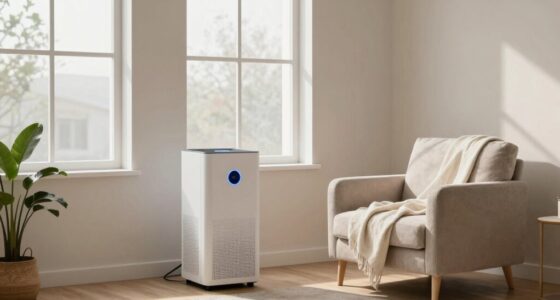
To protect your heart from indoor air pollution, you should maximize ventilation, avoid smoking inside, and use exhaust fans when cooking. Limit household chemicals and choose natural cleaning products. Investing in an air purifier with HEPA and activated carbon filters can considerably reduce harmful particles, VOCs, and odors. Keep your home clean and control humidity to prevent mold. Taking these precautions can help lower inflammation and support your cardiovascular health—if you want to learn more, keep exploring these important steps.
Key Takeaways
- Minimize indoor smoking and ensure proper ventilation to reduce harmful chemical exposure affecting heart health.
- Use air purifiers with HEPA and activated carbon filters to remove airborne pollutants and VOCs.
- Ventilate rooms regularly, especially during cooking, to dilute indoor pollutants and lower cardiovascular risk.
- Limit household chemical use and opt for natural cleaning products to decrease exposure to respiratory and heart irritants.
- Maintain cleanliness and control humidity to prevent mold and allergen buildup that can worsen heart-related conditions.
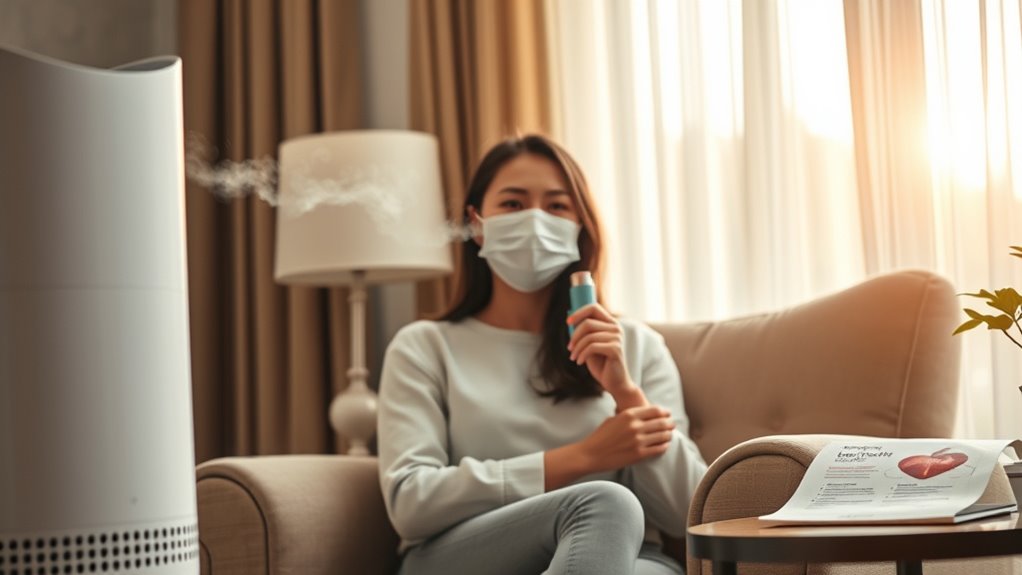
Indoor air pollution can profoundly impact your heart health, especially if you already have underlying conditions or spend a lot of time indoors. The quality of the air you breathe inside your home directly affects your cardiovascular system. Pollution sources such as tobacco smoke, cooking fumes, pet dander, mold, and household chemicals release tiny particles and harmful gases that can trigger inflammation and strain your heart over time. Recognizing these sources and taking steps to reduce exposure is essential in protecting your heart. One effective way to improve indoor air quality is by using an air purifier, which offers numerous benefits. Air purifiers can remove pollutants from the air, capturing airborne particles and reducing the presence of harmful substances. This can markedly decrease your risk of cardiovascular issues caused or exacerbated by indoor pollutants.
Indoor air pollution affects your heart health; using an air purifier can significantly reduce harmful pollutants and protect your cardiovascular system.
Understanding pollution sources helps you identify the most significant risks in your environment. For example, tobacco smoke remains one of the most harmful indoor pollutants, containing thousands of chemicals that can damage blood vessels and increase blood pressure. Cooking fumes, especially when cooking at high temperatures or frying, release fine particulate matter that can penetrate deep into your lungs and bloodstream, promoting inflammation and atherosclerosis. Pet dander and mold spores are common indoor allergens that can also contribute to respiratory and cardiovascular problems. Household chemicals, such as cleaning supplies and air fresheners, release volatile organic compounds (VOCs) that can irritate your lungs and cardiovascular system. Being aware of these sources allows you to take targeted measures, like ventilating your space or reducing the use of certain products, to minimize your exposure. Additionally, reducing exposure to air pollution can help lessen the inflammation that contributes to heart disease.
Investing in an air purifier benefits your heart health by continuously filtering out pollutants from your indoor air. Modern devices are equipped with HEPA filters capable of capturing particles as small as 0.3 microns, including dust, pollen, smoke, and pet dander. Some models also include activated carbon filters that absorb VOCs and odors, further improving air quality. Regular use of an air purifier complements other precautions, such as increasing ventilation, maintaining cleanliness, and avoiding smoking indoors. By doing so, you create a safer environment that reduces your risk of heart disease and promotes overall well-being.
Taking these steps to manage indoor air pollution isn’t just about comfort; it’s an essential part of safeguarding your cardiovascular health. Identifying pollution sources and utilizing air purifier benefits can make a notable difference. You can breathe easier, knowing that you’re actively reducing your exposure to harmful pollutants and supporting your heart’s health every day.
Frequently Asked Questions
Can Indoor Air Pollution Cause New Heart Conditions?
Indoor air pollution can increase your air pollution risk and potentially lead to new heart conditions. When pollutants like tobacco smoke, fumes, or VOCs build up indoors, they can cause inflammation and damage to your cardiovascular system. This heightened cardiovascular impact may result in the development of heart problems over time, especially if you’re already at risk. To protect yourself, improve ventilation and reduce exposure to indoor pollutants whenever possible.
Are There Specific Air Purifiers Recommended for Heart Patients?
Yes, for heart patients, HEPA filters and activated charcoal air purifiers are highly recommended. HEPA filters effectively trap airborne particles like dust, pollen, and pet dander, reducing indoor pollutants. Activated charcoal absorbs odors and chemical fumes, improving air quality further. Choose a purifier with these features, and make certain it’s appropriately sized for your space. Regular maintenance and filters replacement help keep the air clean and safe for your heart health.
How Often Should Air Quality Be Monitored Indoors?
Did you know that indoor air can be up to five times more polluted than outdoor air? You should monitor your indoor air quality daily using air quality sensors, especially if you have heart conditions. Regular monitoring frequency helps catch pollutants early, allowing you to take swift actions. Check your sensors often, ideally once a day, to guarantee your environment stays safe and healthy for your heart.
Do Certain Household Cleaning Products Worsen Air Pollution?
Yes, certain household cleaning products can worsen indoor air pollution by releasing chemical fumes. These fumes increase allergen levels and irritate your respiratory system, especially if you have heart conditions. To reduce risks, opt for natural or fragrance-free cleaners, and guarantee proper ventilation during and after cleaning. Regularly airing out your space helps clear chemical fumes and keeps allergen levels lower, creating a healthier environment for your heart health.
What Are the Long-Term Effects of Indoor Air Pollution on Heart Health?
Ironically, breathing indoor air pollution might be silently boosting your cardiovascular risks over time. The air pollution impact isn’t just a fleeting issue; it can lead to long-term heart problems, increasing your chances of heart disease. You might think your home is safe, but prolonged exposure to indoor pollutants can strain your heart, raising blood pressure and inflammation. Protect yourself now to avoid costly health surprises later.
Conclusion
To protect your heart from indoor air pollution, stay vigilant and follow these precautions. Keep your home well-ventilated, avoid smoking indoors, and use air purifiers when needed. Remember, even in this modern age, a clean environment is your best ally—don’t wait for a plague to take action. By taking these simple steps, you can reduce risks and keep your heart healthier. Stay proactive, and your future self will thank you.