
To create a healthy bedroom environment, choose the right air purifier with HEPA filters to remove allergens and odors, and regularly maintain it. Use a humidifier to keep moisture levels between 40-60%, preventing dry skin and easing breathing. Opt for breathable bedding made from cotton or linen, and wash it frequently in hot water. Taking these steps promotes better sleep and overall health. Keep exploring to discover more tips for a healthier, more comfortable space.
Key Takeaways
- Choose HEPA air purifiers to effectively remove airborne allergens and improve air quality for better sleep.
- Maintain humidity levels between 40-60% using humidifiers or dehumidifiers to enhance comfort and prevent mold growth.
- Select breathable, hypoallergenic bedding with high thread counts and wash regularly to reduce allergens and ensure hygiene.
- Regularly replace or clean filters in air purifiers and humidifiers to maintain optimal device performance and air cleanliness.
- Incorporate somatic awareness and proper bedding choices to identify discomfort early and promote restful, healthy sleep.
Choosing the Right Air Purifiers for Your Bedroom

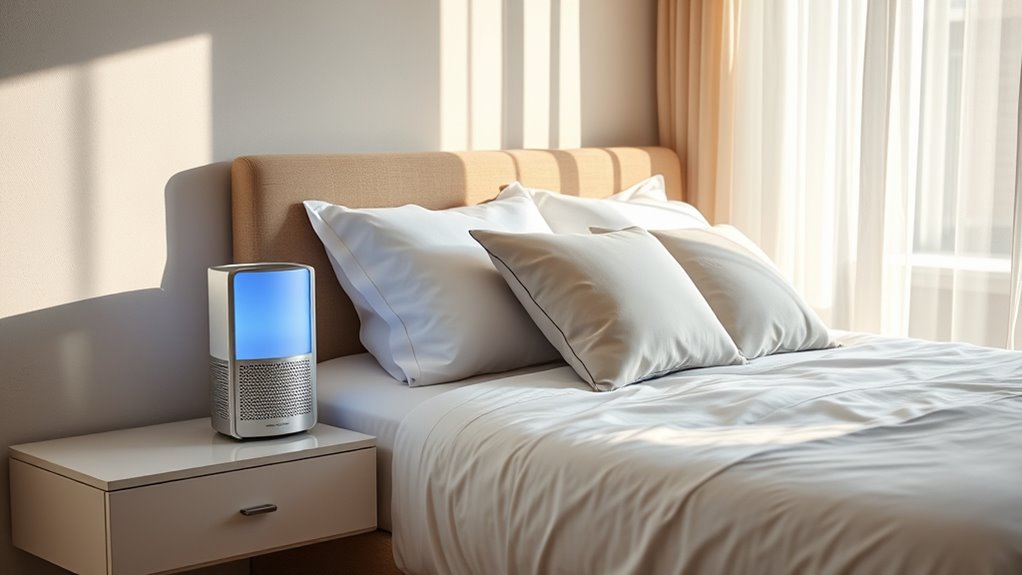
Choosing the right air purifier for your bedroom is essential for creating a healthier sleeping environment. Start by considering different air purifier types, such as HEPA, activated carbon, or UV models, to target specific pollutants like allergens, odors, or bacteria. HEPA filters are excellent for capturing airborne particles like dust and pollen, making them ideal for allergy sufferers. Activated carbon filters help eliminate odors and chemical fumes. When selecting an air purifier, think about how often you’ll need to perform filter maintenance. Some models require regular filter replacements, while others have washable filters that last longer. Proper filter maintenance guarantees your device runs efficiently and maintains air quality. Additionally, selecting a model with HEPA filtration ensures the removal of 99.97% of particles as small as 0.3 microns, significantly improving overall air purity. By choosing the right type and staying on top of filter upkeep, you’ll improve your sleep quality and overall health.
Humidifiers: Maintaining Optimal Moisture Levels for Better Sleep
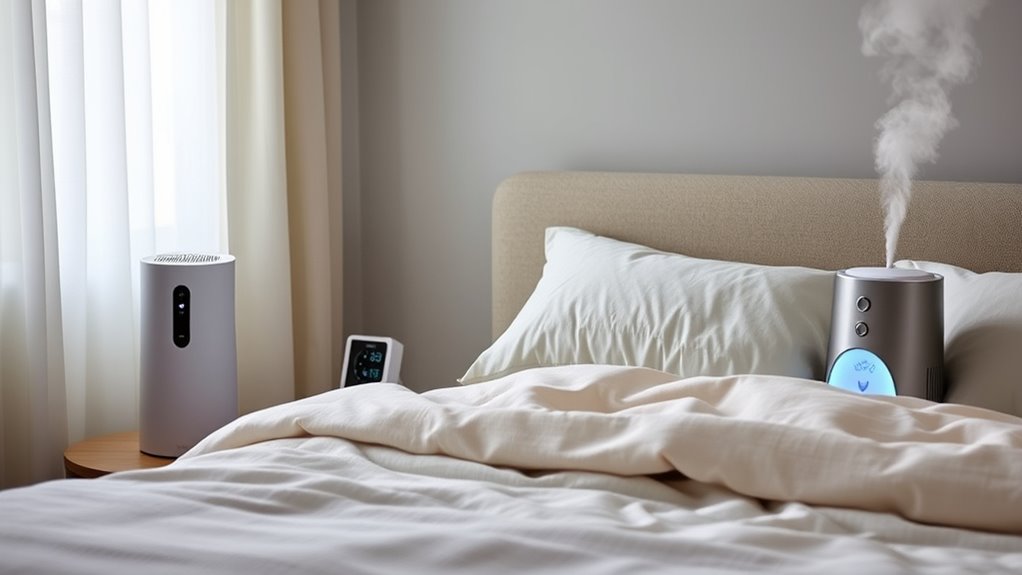
Maintaining the right humidity levels in your bedroom can considerably improve your sleep quality and overall comfort. Using a humidifier helps keep moisture balanced, preventing dry skin and irritated sinuses. Proper humidity also aids mold prevention, reducing potential health risks and musty odors. During seasonal allergy peaks, ideal moisture levels can reduce airborne allergens, easing breathing. To find the ideal humidity, aim for 40-60%. Overly humid air can promote mold growth, so monitor levels regularly. Consistent humidity levels contribute to optimal sleep conditions, enhancing overall health. Here’s a quick guide:
| Humidity Level | Effect | Tips |
|---|---|---|
| Below 40% | Dry skin, irritated sinuses | Use a humidifier |
| 40-60% | Comfort, mold prevention, allergy relief | Maintain consistent levels |
| Above 60% | Mold growth, musty odors | Use dehumidifier if needed |
Adjust your humidifier to stay within this range for healthier sleep.
Selecting Bedding That Promotes Comfort and Reduces Allergens
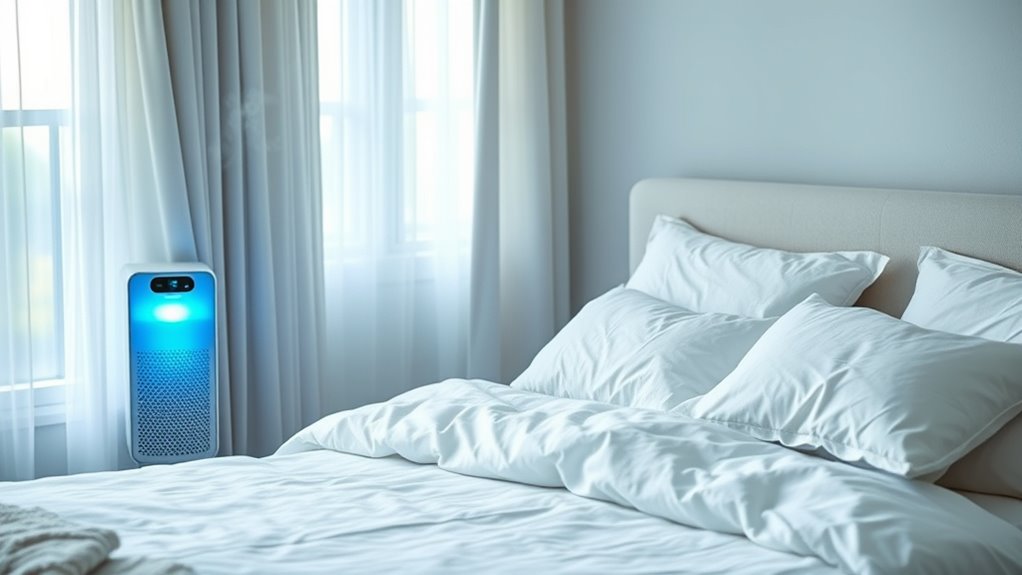
To guarantee a restful night’s sleep, selecting bedding that balances comfort with allergy reduction is essential. Start by choosing fabrics that breathe, such as cotton or linen, which help regulate temperature and prevent moisture buildup that can foster mold and dust mites. Opt for high thread count sheets, ideally between 200 and 400, as they tend to be tighter woven, reducing allergen penetration. Avoid synthetic fabrics, which can trap heat and allergens, causing discomfort. Look for hypoallergenic bedding options designed to resist dust mites and allergens. Regularly washing your bedding in hot water and using allergen-proof covers further enhances allergy control. Incorporating body awareness techniques from somatic therapy can help you tune into physical sensations and identify discomfort or allergens early, promoting better sleep quality. Your goal is bedding that feels cozy yet minimizes irritants, promoting both comfort and healthier sleep.
Frequently Asked Questions
How Often Should I Replace or Clean My Air Purifier Filters?
You should check your air purifier’s filter maintenance and replacement schedules regularly, usually every 3 to 6 months. If you notice reduced airflow or a musty smell, it’s time to replace the filters sooner. Follow the manufacturer’s guidelines for your specific model, and clean or replace filters as recommended to keep your purifier working efficiently and guarantee clean, healthy air in your bedroom.
What Are the Best Natural Methods to Reduce Indoor Allergens?
To reduce indoor allergens naturally, you can dust regularly, vacuum frequently, and keep humidity levels in check. Natural remedies like using houseplants to filter the air, opening windows for fresh airflow, and avoiding clutter help minimize allergen buildup. Allergen avoidance is key, so steer clear of heavy curtains and plush toys that trap dust. By consistently practicing these habits, you create a healthier, allergen-free environment naturally.
Can Certain Bedding Materials Worsen Allergy Symptoms?
Certain bedding materials can worsen allergy symptoms, especially if you have bedding material allergies. Synthetic fabrics or down-filled comforters may trap dust mites, aggravating allergies. Additionally, chemical treatment concerns are valid; some bedding is treated with chemicals that can trigger reactions. To reduce symptoms, choose hypoallergenic, natural fibers like organic cotton or bamboo, and avoid heavily treated or synthetic bedding. Always check labels for chemical treatments to verify a healthier sleep environment.
How Do Humidity Levels Affect Respiratory Health During Sleep?
Humidity levels can make or break your respiratory comfort, transforming your sleep into a nightmare or a dream. When humidity control is off, dry air can irritate your airways, while too much moisture encourages mold and dust mites. Proper humidity helps soothe your respiratory system, reducing congestion and coughing. Aim for 40-60% humidity to create an environment where your breathing feels as smooth as silk, ensuring restful, healthy sleep every night.
Are There Specific Air Purifiers Effective Against Pet Dander?
If you’re concerned about pet dander, look for air purifiers with HEPA filters. These filters effectively trap tiny particles like pet dander, reducing allergens in your bedroom. Make certain the purifier is rated for your room size for ideal results. Regularly changing or cleaning the HEPA filter ensures it continues to capture allergens. This way, you can breathe easier and enjoy a healthier sleep environment.
Conclusion
Creating a healthy bedroom environment isn’t just about comfort—it’s about supporting your overall well-being. Using air purifiers and humidifiers can markedly improve air quality and sleep quality, while choosing the right bedding reduces allergens and promotes relaxation. Some believe that maintaining the perfect sleep environment can even boost your immune system, and recent studies support this. By making these simple changes, you’ll set the stage for restful nights and healthier mornings.