
To guarantee healthy air in shared living spaces like dorms and co-living setups, you should use air purifiers with HEPA filters and keep them in common areas or near beds. Regularly ventilate by opening windows or using mechanical ventilation to bring in fresh air and remove pollutants. Avoid indoor smoking and limit scented products. Maintaining these practices collectively can greatly improve air quality, and exploring more tips can make your space even healthier.

Get home appliances delivered free with Prime
- Fast, free delivery on millions of items
- Prime Video, Amazon Music and more included
- Member-only deals all year
Key Takeaways
- Use air purifiers with HEPA filters in common areas and bedrooms to reduce allergens and airborne pollutants.
- Ensure proper ventilation by regularly opening windows and maintaining ventilation system filters.
- Avoid indoor smoking and limit scented products to minimize airborne contaminants.
- Promote regular cleaning and airflow practices to prevent pollutant buildup in shared spaces.
- Encourage collective responsibility among residents to maintain healthy indoor air quality.
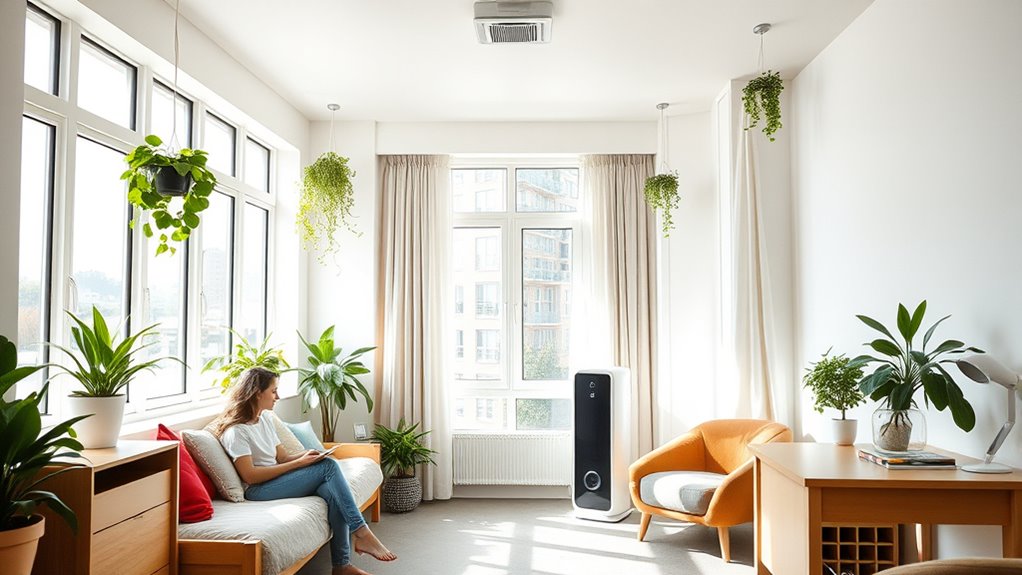
Living in shared spaces means you’re constantly exposed to others’ activities and environments, making good air quality crucial for everyone’s health. Whether you’re in a dorm or a co-living situation, the air you breathe impacts your well-being and overall comfort. To maintain clean, healthy air, investing in air purifiers can be a game-changer. These devices trap dust, allergens, pet dander, and even some bacteria, helping reduce airborne pollutants that can trigger allergies or respiratory issues. When choosing an air purifier, look for models with HEPA filters, which are proven to capture tiny particles and provide cleaner air. Keep in mind that placement matters—position your purifier in common areas or near your bed for maximum benefit.
In shared spaces, air purifiers with HEPA filters improve health and comfort by reducing airborne pollutants.
Equally important is the role of ventilation systems. Proper ventilation ensures a steady flow of fresh air into shared spaces and helps remove stale, contaminated air. If your living environment doesn’t have an effective ventilation system, you can improve indoor air quality by opening windows regularly, especially when cooking, cleaning, or using strong cleaning products. Many dorms and co-living spaces now feature mechanical ventilation systems, which exchange indoor air with outdoor air, reducing indoor pollutants and humidity. These systems can considerably cut down on airborne odors, mold spores, and volatile organic compounds (VOCs) that often accumulate in enclosed spaces.
To optimize air quality, combine the use of air purifiers with good ventilation habits. For example, when someone is sick or cooking, turn on the ventilation system or open windows to allow contaminants to escape. Regularly replacing filters in your ventilation systems is essential to keep them functioning efficiently. Also, avoid overcrowding rooms and limit the use of heavily scented products, as these can introduce additional pollutants into the air. Incorporating air quality awareness and proactive steps is key. Encourage everyone to participate in maintaining good air quality by keeping spaces clean, avoiding smoking indoors, and ensuring proper airflow. If possible, advocate for upgraded ventilation systems or additional air purifiers in communal areas. Doing so not only benefits your health but also creates a more comfortable, inviting atmosphere for everyone. Remember, clean air isn’t just a personal concern—it’s a shared responsibility that enhances the quality of life in any shared living space.
Frequently Asked Questions
How Can I Improve Air Quality in a Small Dorm Room?
You can improve air quality in your small dorm room by increasing air circulation with a fan or opening windows regularly. Use a dehumidifier or keep a bowl of water to control humidity, preventing mold and stale air. Also, avoid smoking or burning candles indoors, and clean your space frequently to reduce dust and allergens. These steps help guarantee fresh, healthy air that keeps you feeling comfortable and alert.
Are Air Purifiers Effective in Shared Living Environments?
Air purifiers can be a reliable shield against pollutants in shared spaces. They’re effective if you stay on top of maintenance—regular filter changes are key—and consider the costs involved. While initial prices vary, investing in a quality air purifier can clear the air like a gust of invigorating spring breeze. Just remember, maintaining it keeps the air clean and the device working at its best, ensuring fresh air always flows in.
How Often Should I Change Air Filters in Shared Spaces?
You should change your air filters every 1 to 3 months, depending on usage and filter lifespan. Regular HVAC maintenance guarantees filters stay effective and air quality remains high. If you or others in the shared space have allergies or respiratory issues, consider changing filters more frequently. Check your filter’s recommended lifespan and inspect for dirt or clogging monthly to keep the air clean and your HVAC system running efficiently.
What Are Natural Ways to Reduce Indoor Air Pollutants?
Did you know indoor air can be 2 to 5 times more polluted than outdoor air? To naturally reduce pollutants, you can increase ventilation by opening windows, use houseplants to absorb toxins, and avoid smoking indoors. Regularly cleaning and dusting also helps eliminate pollutant sources. These natural remedies improve air quality, making your space healthier without relying solely on air filters or chemical solutions.
Can Plants Really Improve Air Quality in Shared Living Areas?
Yes, plants can improve air quality in shared living areas through natural air purification. By selecting the right plant species, like snake plants or pothos, you enhance their ability to filter toxins and increase oxygen. Incorporate these plants into your space, ensuring proper care, to create a healthier environment. Remember, plant selection is key to maximizing their air-purifying benefits and maintaining a fresh, vibrant atmosphere.
Conclusion
Keeping the air healthy in shared living spaces is essential for your well-being. Did you know that poor indoor air quality can increase respiratory issues by up to 50%? By regularly ventilating your dorm or co-living space and using air purifiers, you can substantially improve air quality. Remember, a fresh environment isn’t just more comfortable—it’s crucial for your health. Take proactive steps today to breathe easier and stay healthier in your shared space.
Fall yard work Picks
leaf blowers
As an affiliate, we earn on qualifying purchases.